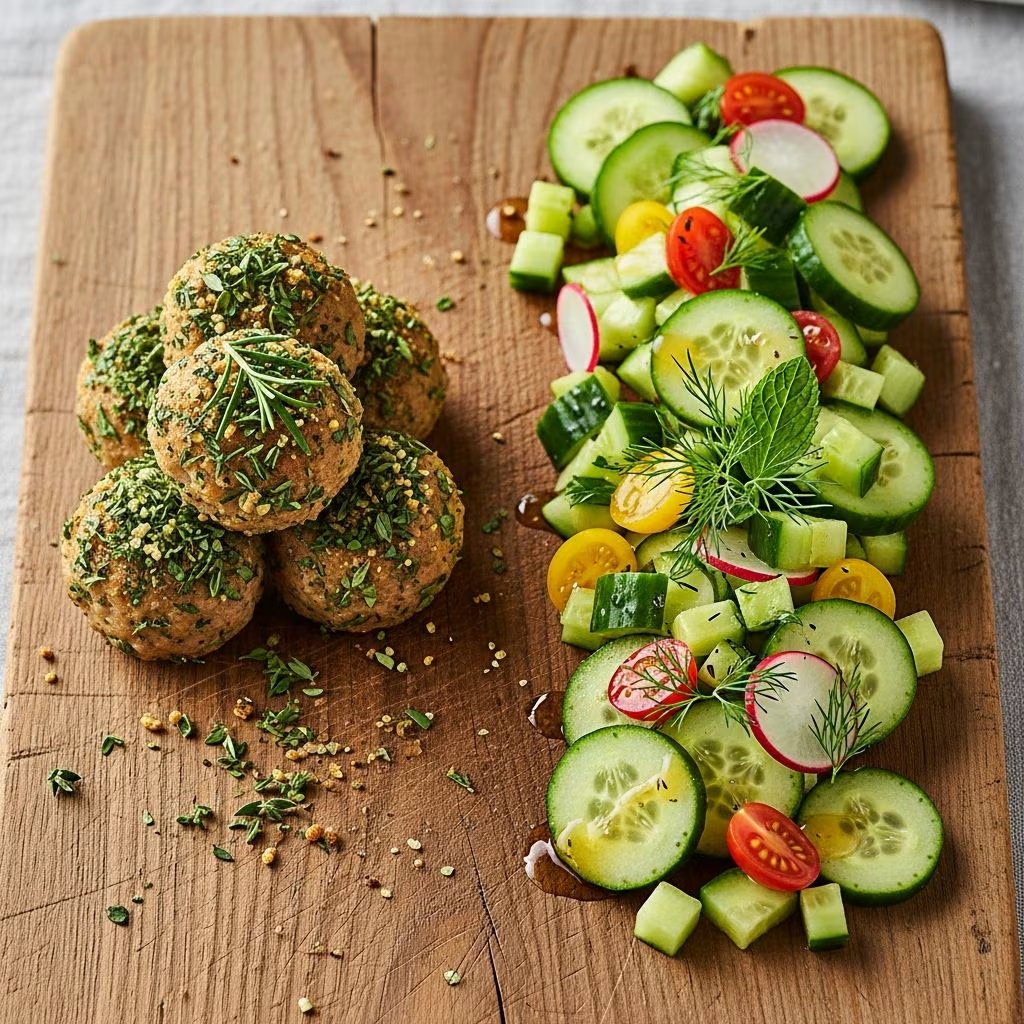
Combining succulent pork meatballs with a crisp cucumber accompaniment creates a sophisticated yet accessible dish suitable for both casual family dinners and more formal gatherings. This recipe demonstrates how thoughtful ingredient selection and proper cooking technique transform simple components into an elegant presentation. The interplay between the savory, herb-forward meatballs and the light, refreshing salad creates a balanced meal that appeals to various dietary preferences.
Understanding the Core Components
The foundation of this dish rests on two distinct elements that complement each other through contrast in texture and flavor intensity. The meatballs serve as the protein-rich centerpiece, featuring a carefully balanced mixture that maintains moisture while developing a slightly caramelized exterior. Meanwhile, the accompanying salad provides textural interest through crisp vegetables and crunchy nuts, while the cool yogurt base offers a creamy counterpoint to the warm, spiced meatballs.
Preparing Your Workspace and Equipment
Success in executing this recipe begins with strategic oven placement and proper preparation. Position your oven racks in both the upper and lower thirds before preheating to approximately 218°C (425°F). This dual-rack arrangement allows for even cooking of the meatballs without requiring rotation. Line your baking sheets with parchment paper or lightly oil them to prevent sticking and ensure easy cleanup. Have all ingredients measured and prepared in advance—a practice professional cooks call mise en place—to streamline the assembly process and prevent mistakes during mixing.
Crafting the Meatball Mixture
The success of tender, flavorful meatballs depends on understanding how each ingredient contributes to the final texture and taste. Begin by rehydrating golden raisins in hot water for approximately five minutes. This step plumps the raisins, distributing their sweetness throughout the mixture more effectively than using them dry. While the raisins soften, finely chop approximately 60 milliliters of pitted olives into small pieces. This ingredient introduces brininess and umami depth characteristic of Mediterranean cuisine.
In a large mixing bowl, combine the chopped olives with one large egg, finely grated garlic cloves, panko breadcrumbs, and finely chopped parsley. Add 1.5 teaspoons of kosher salt, crushed red pepper flakes, and freshly ground black pepper. Drain the rehydrated raisins and add half of them to this mixture, reserving the remainder for the salad component. The combination of these ingredients creates an aromatic base that will permeate the finished meatballs.
Add 450 grams of ground pork to the bowl and, using your hands, gently combine all ingredients until just incorporated. Overmixing develops gluten in the breadcrumbs, resulting in dense, tough meatballs rather than the desired tender texture. The mixture should hold together when pressed but should not be worked into a compact mass.
Divide the mixture into approximately 20 portions, each roughly the size of a golf ball. This sizing ensures even cooking and creates an attractive presentation. Arrange the formed meatballs on oiled baking sheets, spacing them approximately one inch apart to allow air circulation and browning on all sides. If desired, lightly brush or roll the meatballs in a small amount of oil to promote even browning.
Preparing the Cucumber Component
While the meatballs take shape, prepare the cucumber salad to allow flavors to meld and excess moisture to drain. Thin-skinned varieties such as Persian, English hothouse, or kirby cucumbers work best due to their fewer seeds and thinner skin. Cut 900 grams of cucumbers into bite-size pieces and place them in a colander or fine-mesh sieve positioned over a large bowl. Sprinkle the cucumbers with one teaspoon of kosher salt and toss gently to distribute evenly.
This salting step initiates osmosis, drawing out excess water from the cucumber cells. Over the next 15 to 20 minutes, substantial liquid will accumulate in the bowl below. This dehydration process concentrates the cucumber flavor and prevents a watery final salad. Initially, the volume of cucumbers may appear excessive, but they will shrink considerably as moisture releases.
Baking and Finishing the Meatballs
Once the oven reaches temperature and the meatballs are arranged on baking sheets, place one sheet on the upper rack and one on the lower rack. Bake for approximately 18 to 22 minutes, until the meatballs develop a golden-brown exterior and reach an internal temperature of 160°F. The exact timing may vary depending on your oven’s characteristics, so checking a test meatball with an instant-read thermometer ensures accuracy. The meatballs should be cooked through but still maintain their tender, slightly juicy center.
Assembling the Cucumber Salad
After the cucumbers have drained for 20 minutes, gather them into a clean kitchen towel and squeeze gently to expel any remaining liquid. A small amount of compression is acceptable and does not negatively affect texture. Discard the accumulated liquid from the bowl.
Combine the drained cucumbers with the remaining chopped olives (approximately 120 milliliters), toasted pine nuts, very thinly sliced red onion, tender herb leaves such as mint or parsley, and the reserved raisins. Drizzle with the remaining tablespoon of extra-virgin olive oil and red wine vinegar. Toss gently to distribute the vinaigrette evenly. Taste and adjust seasoning with additional salt and black pepper as needed. The salad can be prepared up to two hours in advance, allowing the flavors to develop and meld.
Plating and Service
To plate this dish with visual appeal, place a generous dollop of plain whole-milk Greek yogurt on each serving plate, creating a creamy base and sauce. Arrange the warm meatballs on or alongside the yogurt, then top with a portion of the cucumber salad. The contrast between the warm meatballs and cool salad creates an interesting temperature dynamic. Finish each plate with additional fresh cracked black pepper and red pepper flakes if desired, allowing guests to control the spice level according to their preference.
Ingredient Selection and Quality Considerations
The quality of individual ingredients significantly impacts the final dish. Choose extra-virgin olive oil from a reputable producer, as this ingredient appears twice in the recipe and contributes substantially to flavor. Select panko breadcrumbs over standard breadcrumbs, as the larger particle size creates a lighter, less dense crumb coating in the meatballs. For the Greek yogurt, choose full-fat varieties, which provide superior creaminess and mouthfeel compared to reduced-fat versions.
Ground pork with a fat content between 15 and 20 percent produces the most flavorful and juicy meatballs. Meat that is too lean results in dry, mealy texture, while excessive fat may render out during cooking. Fresh herbs perform better than dried varieties in this recipe; if fresh herbs are unavailable, reduce the dried quantity to one-third of what fresh recipes call for, as dried herbs concentrate flavor significantly.
Flavor Profile and Complementary Pairings
This dish showcases bright, Mediterranean flavors built on umami foundations. The umami intensity derives from olives, garlic, and the combination of herbs and raisins. The briny olive notes provide counterpoint to the slight sweetness of raisins and the heat from red pepper flakes. Pine nuts contribute toasted, buttery undertones that enhance perceived richness without adding fat.
Consider serving this meal with crusty bread to capture the yogurt and pan juices, or alongside roasted vegetables such as eggplant or bell peppers. A crisp white wine such as Sauvignon Blanc or Pinot Grigio complements both the herb-forward meatballs and fresh salad, while lighter red wines like Pinot Noir work equally well.
Make-Ahead and Storage Strategies
The meatballs can be formed several hours in advance and refrigerated on the baking sheet, covered loosely with plastic wrap. This chilling time allows the mixture to set, making the meatballs less likely to break apart during cooking. Add only a few minutes to the baking time if cooking from a chilled state. Cooked meatballs store well in an airtight container for three to four days and can be reheated gently in a 160°C oven for approximately ten minutes.
The cucumber salad maintains its texture best when prepared no more than two hours before serving, though the yogurt base can be prepared in advance and the vegetables tossed with dressing just before plating to preserve crispness.
Nutritional Considerations
This recipe provides substantial protein from both the pork meatballs and Greek yogurt, making it suitable for those prioritizing protein intake for muscle maintenance or recovery. The abundance of fresh vegetables and herbs provides dietary fiber and micronutrients, while the combination of olive oil and pine nuts supplies heart-healthy fats. The meal remains relatively moderate in overall caloric density due to the use of herbs and vegetables to build flavor without excessive oil or cream.
Frequently Asked Questions
- Can I prepare this recipe with alternative proteins?
- Ground turkey, chicken, or beef substitute effectively for pork. Lean proteins may require slightly shorter cooking times and benefit from the addition of a small amount of olive oil to the mixture to maintain moisture. Poultry-based versions pair exceptionally well with Mediterranean herbs.
- What if I cannot find specific cucumber varieties?
- Regular slicing cucumbers work adequately, though they contain more seeds and may require additional draining time. Japanese or Armenian cucumbers provide similar characteristics to the recommended varieties and are increasingly available at mainstream grocery retailers.
- How can I adjust the spice level?
- Reduce or eliminate red pepper flakes for milder heat, or increase them for those preferring more intensity. Sriracha or other chili-based condiments can replace traditional red pepper flakes while adding depth and complexity to the meatball mixture.
- Is this recipe suitable for freezing?
- Raw meatballs freeze excellently for up to three months when arranged on a baking sheet, then transferred to a freezer bag. Cooked meatballs also freeze well for similar periods. Frozen cooked meatballs can be reheated directly from the freezer with minimal additional cooking time. The salad does not freeze successfully due to the high water content of cucumbers.
- What yogurt styles work best?
- Plain whole-milk Greek yogurt provides the richest, creamiest result. Regular Greek yogurt works adequately, while non-Greek yogurt options lack the same body and richness. Avoid flavored varieties, as these introduce competing taste profiles that distract from the carefully balanced flavors in this dish.
Variations and Creative Adaptations
This foundational recipe welcomes creative reinterpretation while maintaining its essential character. Incorporate sun-dried tomatoes into the salad for deeper, more concentrated tomato flavor. Substitute lemon juice for red wine vinegar to brighten the cucumber component. Add crumbled feta cheese to the salad for additional creaminess and tang. For those seeking additional vegetables, shredded carrots or thinly sliced radishes integrate seamlessly into the salad component.
The meatball mixture accepts additions of fresh mint for a more pronounced herbaceous quality, or a small amount of finely grated lemon zest to introduce citrus brightness. Some cooks find that substituting part of the panko with finely grated Parmesan cheese enhances the umami profile and creates subtle textural variation.
References
- Nutritional Guidelines for Ground Pork Preparation — USDA Food Safety and Inspection Service. 2024. https://www.fsis.usda.gov/food-safety/safe-food-handling-and-preparation
- Mediterranean Diet Components and Health Benefits — Harvard T.H. Chan School of Public Health. 2024. https://www.hsph.harvard.edu/nutritionsource/healthy-eating-plates/mediterranean-diet/
- Proper Food Storage and Freezing Guidelines — USDA Food Safety and Inspection Service. 2024. https://www.fsis.usda.gov/food-safety/food-safety-charts/cold-food-storage-charts
- Culinary Applications of Panko Breadcrumbs — Institute of Culinary Education Research. 2023. https://www.ice.edu/culinary-arts
- Olive Oil Quality Standards and Selection — International Olive Council. 2024. https://www.internationaloliveoil.org/