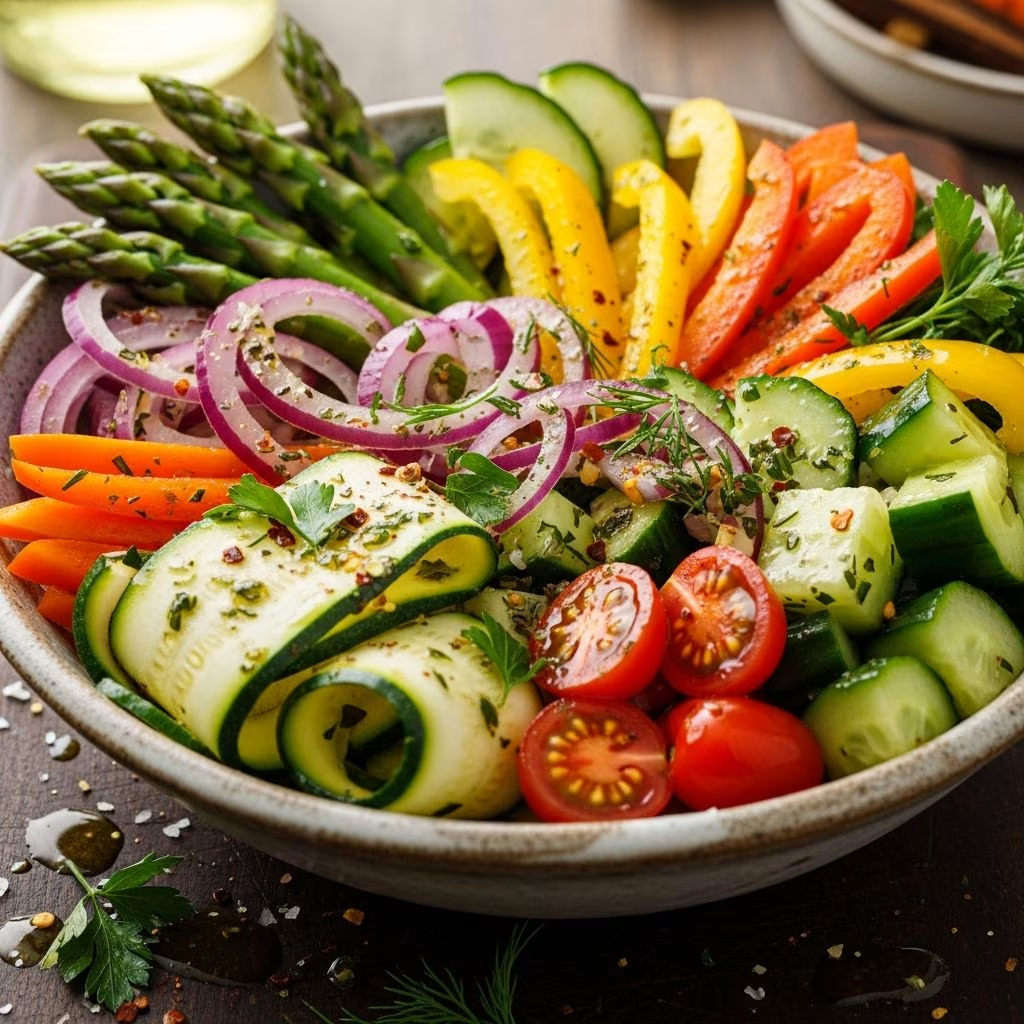
Marinated vegetables offer a refreshing way to enjoy produce in a flavorful, nutrient-packed dish. These tangy creations combine crisp veggies with zesty dressings, making them ideal for summer barbecues, weeknight dinners, or potluck contributions. The magic lies in the marinade, which infuses each bite with sweetness, acidity, and herbs while keeping vegetables crunchy and vibrant.
Why Marinated Veggies Are a Kitchen Staple
These dishes stand out for their versatility and health benefits. Raw or lightly cooked vegetables absorb dressings over time, enhancing natural flavors without added calories. They’re naturally gluten-free, vegan, and low-carb, appealing to diverse diets. Preparation is straightforward—chop, mix, marinate, and serve—often improving with time in the fridge. Common veggies like broccoli, cauliflower, carrots, bell peppers, and onions provide fiber, vitamins, and antioxidants, supporting digestion and immunity.
Unlike wilted salads, marinated versions maintain texture even after days of storage, making them perfect make-ahead options. They pair with grilled meats, pastas, or grains, adding color and crunch to plates.
Selecting the Best Vegetables for Marination
Choose sturdy vegetables that hold up in acidic dressings. Focus on those with firm textures to ensure they stay crisp.
- Cruciferous picks: Broccoli and cauliflower florets break down slowly, absorbing flavors deeply.
- Root veggies: Carrots and celery slices add subtle sweetness and snap.
- Bell peppers: Red, yellow, or green varieties bring color and mild spice.
- Onions and cucumbers: Thinly sliced for sharpness balanced by marinade sweetness.
- Tomatoes and olives: Cherry tomatoes or pitted olives for juicy, briny notes.
Aim for a rainbow of colors to boost visual appeal and nutrition. Wash thoroughly, cut into uniform bite-sized pieces, and pat dry to help the marinade cling better.
Mastering the Marinade: Key Ingredients and Ratios
The dressing is the star, balancing acid, oil, sweet, and savory. A basic formula starts with equal parts oil and vinegar, adjusted for taste.
| Component | Role | Examples |
|---|---|---|
| Acid | Tenderizes and brightens | Balsamic, white wine, apple cider vinegar |
| Oil | Carries flavors, adds richness | Olive, vegetable oil |
| Sweetener | Counters acidity | Sugar, honey |
| Seasonings | Depth and aroma | Garlic, mustard, herbs, salt, pepper |
For a classic tangy version, whisk ½ cup oil, ½ cup vinegar, 1-2 tablespoons sugar, minced garlic, mustard, and herbs. Variations include balsamic for grilled veggies or ketchup-based for sweetness.
Step-by-Step Guide to Preparing Marinated Veggies
- Prep veggies: Chop 3-4 cups total into even pieces. Examples: 1 cup each broccoli, cauliflower, carrots; ½ cup bell peppers, onions, celery.
- Mix marinade: Combine ½ cup oil, ½ cup vinegar, 1 tbsp sugar, 1 tsp mustard, 1 clove garlic, salt, pepper, and herbs in a jar. Shake vigorously.
- Combine: Toss veggies in a large bowl with marinade until coated.
- Marinate: Cover and refrigerate 4+ hours, ideally overnight. Stir occasionally.
- Serve: Drain lightly if desired, or serve with marinade for extra flavor.
Total time: 20 minutes active, plus marinating. Yields 6-8 servings.
Flavor Variations to Suit Every Palate
Customize for occasions or preferences with these twists:
- Mediterranean: Add oregano, feta, olives, and lemon juice.
- Asian-inspired: Soy sauce, sesame oil, ginger, rice vinegar.
- Grilled version: Balsamic marinade, then char on high heat 4-10 minutes.
- Spicy kick: Red pepper flakes, Dijon mustard.
- Sweet and tangy: Apple cider vinegar with extra sugar.
For grilled, slice veggies thickly (zucchini, eggplant, peppers, onions, mushrooms) and marinate 15-30 minutes before cooking.
Health Benefits and Nutritional Breakdown
Marinated veggies pack nutrition: A serving (1 cup) offers ~100 calories, 5g fiber, vitamins A/C/K from produce. Acids like vinegar may aid blood sugar control. Use olive oil for heart-healthy fats. Low-sodium versions support hypertension management.
Compared to creamy salads, these are lighter yet satisfying.
Storage, Serving Ideas, and Make-Ahead Tips
Store in airtight containers up to 1 week; flavors peak day 2-3. Serve chilled as antipasto, over greens, in wraps, or atop proteins.
- Potlucks: Transport in jars.
- Snacks: Pair with cheese or hummus.
- Meals: Top quinoa bowls or burgers.
Freeze drained veggies up to 3 months; thaw and remarinade.
Frequently Asked Questions
Can I use frozen vegetables?
Thaw and pat dry first; they work but lose some crunch.
How long do marinated veggies last?
Up to 1 week refrigerated; discard if odor or slime appears.
Are they safe for canning?
Follow USDA guidelines for pickling; this quick version is fridge-only.
Vegetarian/vegan friendly?
Yes, inherently so; skip honey if strict vegan.
Best vinegar substitute?
Lemon juice or diluted apple cider for milder tang.
Pro Tips for Perfect Results Every Time
- Uniform cuts ensure even marination.
- Taste and adjust seasoning before chilling.
- Glass or non-reactive bowls prevent off-flavors.
- Scale up for crowds; doubles easily.
- Drain excess for drier texture, or keep for saucier.
Experiment seasonally: Summer squash, asparagus; winter roots like beets.
References
- Quick Balsamic Marinated Veggies (for Grilling!) — Real Food Whole Life. 2023-06-15. https://realfoodwholelife.com/recipes/marinated-grilled-vegetables/
- Marinated Vegetable Salad — Valerie’s Kitchen. 2024-05-20. https://www.fromvalerieskitchen.com/marinated-vegetable-salad/
- Marinated Vegetable Salad — That Skinny Chick Can Bake. 2023-08-10. https://www.thatskinnychickcanbake.com/marinated-vegetable-salad/
- Marinated Roasted Vegetables with Garlic and Thyme — Gourmande in the Kitchen. 2022-09-05. https://gourmandeinthekitchen.com/roasted-marinated-vegetables-with-garlic-and-thyme/