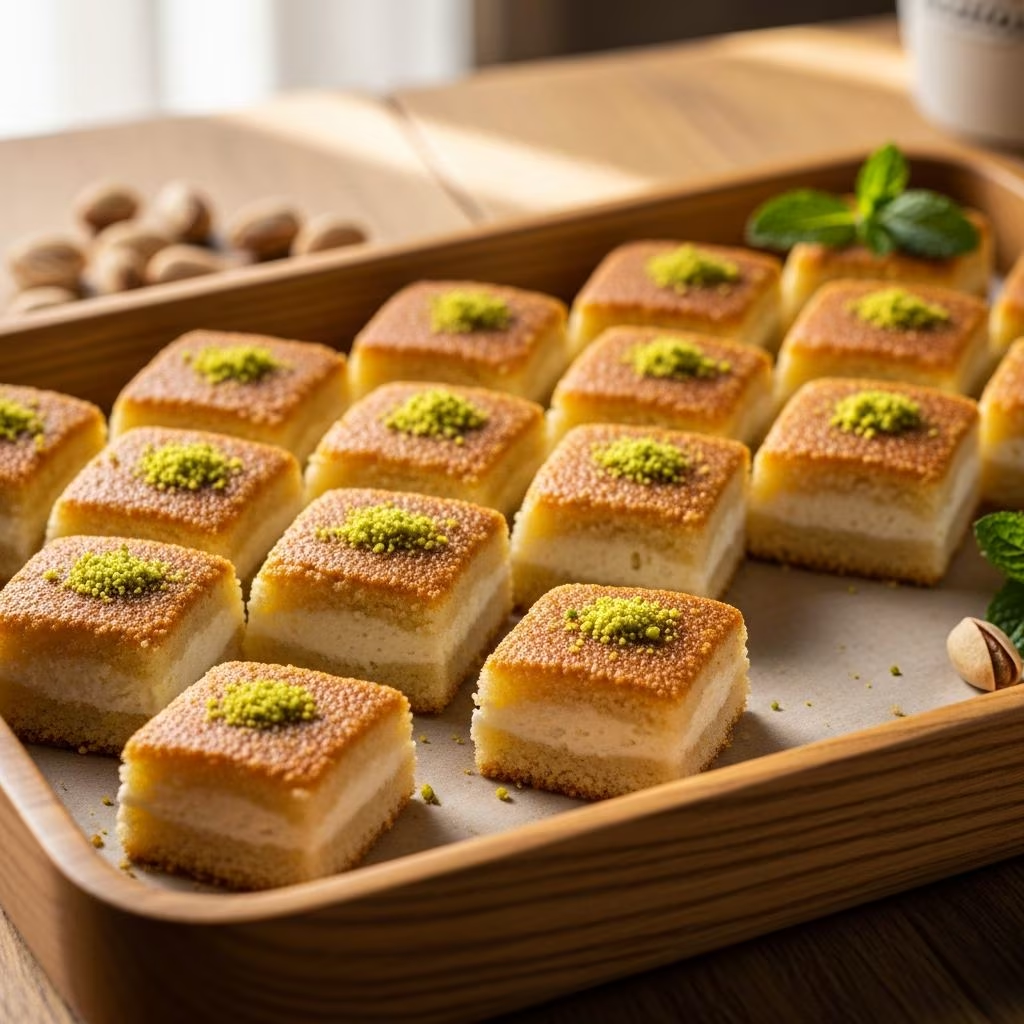
Maamoul Mad bi Ashta stands as a pinnacle of Lebanese confectionery, combining the crumbly richness of semolina dough with a velvety clotted cream filling known as ashta. This dessert, popular during holidays and special gatherings, offers a perfect balance of textures: crisp exterior yielding to a creamy core infused with floral notes.
The Rich Heritage of Maamoul Mad bi Ashta
Rooted in Levantine culinary traditions, Maamoul cookies trace their origins to the Ottoman era, where they were molded into intricate shapes symbolizing religious festivals. The ‘mad bi ashta’ variation elevates this classic by incorporating a luxurious cream filling, transforming individual cookies into expansive bars ideal for sharing. In Lebanon, these treats evoke memories of family gatherings, especially around Easter and Eid, where homes fill with the scent of orange blossom and toasted semolina.
Unlike date or nut-filled maamoul, the ashta version highlights dairy indulgence. Bakers across Lebanon refine recipes passed down generations, adapting semolina coarseness and cream thickness to personal taste. This evolution reflects a culture that prizes both simplicity and sophistication in sweets.
Essential Ingredients for Authentic Flavor
Creating Maamoul Mad bi Ashta requires ingredients that harmonize simplicity with bold flavors. Semolina provides the nutty, sandy base, while ashta delivers creaminess. Key components include:
- Semolina: Coarse for texture, fine for tenderness—2 cups typically.
- Butter: Melted, unsalted for richness—around ⅔ cup.
- Milk and Cream: Full-fat for ashta base—up to 6 cups milk plus extras.
- Orange Blossom Water: ½-1 teaspoon for signature aroma.
- Mastic Gum: Optional, crushed for subtle resinous note.
- Pistachios: Crushed for topping crunch.
Lebanese pantries stock these staples, but substitutes like cornflour for thickeners work in a pinch. Quality matters: fresh semolina toasts beautifully, and pure orange blossom elevates the profile.
Mastering the Ashta: The Heart of the Dessert
Ashta, or clotted cream, is the soul of Maamoul Mad bi Ashta. Traditional methods curdle milk to form areesha curds, blended into a pastry cream base for lightness. Here’s a reliable recipe yielding enough for a standard pan:
- Heat 4½ cups milk until bubbling; add vinegar and lemon to curdle. Strain curds.
- Mix cornstarch with remaining milk, sugar, and cream; thicken over heat.
- Cool pastry cream slightly, fold in curds and orange blossom. Chill with wrap to prevent skinning.
Alternative stovetop versions skip curdling: whisk milk, semolina or cornstarch, and sugar until custard-thick, then flavor. Aim for spreadable consistency—not runny, to avoid leakage during baking.
| Method | Key Steps | Yield | Texture |
|---|---|---|---|
| Curdled Ashta | Milk curds + pastry cream | Generous for 9×13 pan | Light, textured |
| Stovetop Custard | Whisk milk + thickeners | Standard pan | Smooth, dense |
Both yield divine results; curdled ashta mimics artisanal lightness.
Crafting the Perfect Semolina Dough
The dough binds the dessert’s structure. Combine 2 cups coarse semolina, ½ cup sugar, baking powder, soda, and salt. Stir in melted butter and yogurt for a sticky, pliable mass. Rest 30 minutes to hydrate grains.
This no-egg dough relies on fat and yogurt for tenderness. Coarse semolina ensures crunch post-bake; avoid overmixing to preserve crumbliness.
Step-by-Step Assembly Guide
Assembly demands precision for even layers. Preheat oven to 350°F (180°C). Grease a 9×13-inch or 16-inch round pan.
- Base Layer: Press half dough evenly, up sides slightly.
- Filling: Spread cooled ashta; add pistachio layer.
- Top Layer: Roll remaining dough between parchment to match pan; invert over filling. Patch gaps.
- Bake: 25-35 minutes until golden. Cool fully before slicing.
Pro Tip: Chilling assembled pan firms layers, easing clean cuts. Score before baking for neat squares.
Baking Tips for Flawless Results
- Dough Handling: Sticky? Dust semolina lightly; never flour.
- Thickness: Uniform layers prevent sogginess or cracks.
- Cooling: Overnight for set cream; rush risks crumbling.
- Storage: Room temp 2 days; freeze slices up to a month.
Humidity affects semolina; drier climates yield crispier bars. Test doneness by golden edges.
Variations to Suit Every Palate
Customize Maamoul Mad bi Ashta creatively:
- Nutty Boost: Walnuts or almonds in ashta.
- Syrup Finish: Drizzle orange blossom simple syrup post-bake.
- Mini Bars: Use muffin tins for portions.
- Vegan Twist: Coconut cream, plant milk, coconut oil.
These adaptations maintain tradition while innovating.
Pairing and Serving Suggestions
Serve at room temperature with Arabic coffee or tea. Garnish with powdered sugar or more pistachios. Pairs with fresh fruit or labneh for contrast. Ideal for iftar, weddings, or tea time.
Frequently Asked Questions (FAQs)
What is Maamoul Mad bi Ashta?
A Lebanese semolina cake filled with clotted cream (ashta), baked into shareable bars.
Can I make ashta ahead?
Yes, refrigerate up to 3 days; bring to room temp before using.
Why is my dough too crumbly?
Add more yogurt or rest longer for hydration.
Gluten-free option?
Substitute fine cornmeal or gluten-free semolina blend; test small batch.
How long does it keep?
2-3 days covered; freeze for longer storage.
Nutritional Insights
Per slice (1/16th): ~250 calories, rich in calcium from dairy, carbs from semolina. Moderation key for indulgent treat.
References
- Maamoul Mad Bil Ashta — Hadias Lebanese Cuisine. 2023-01-15. https://hadiaslebanesecuisine.com/blog/?p=9487
- Maamoul Mad bi Ashta — Colorful Recipes. 2022-05-10. https://colorfulrecipes.com/maamoul-mad-bi-ashta/
- Maamoul Mad bi Ashta (Semolina Cream Dessert) — Zaatar and Zaytoun. 2023-08-20. https://zaatarandzaytoun.com/maamoul-mad-bi-ashta-lebanese-semolina-cream-dessert/