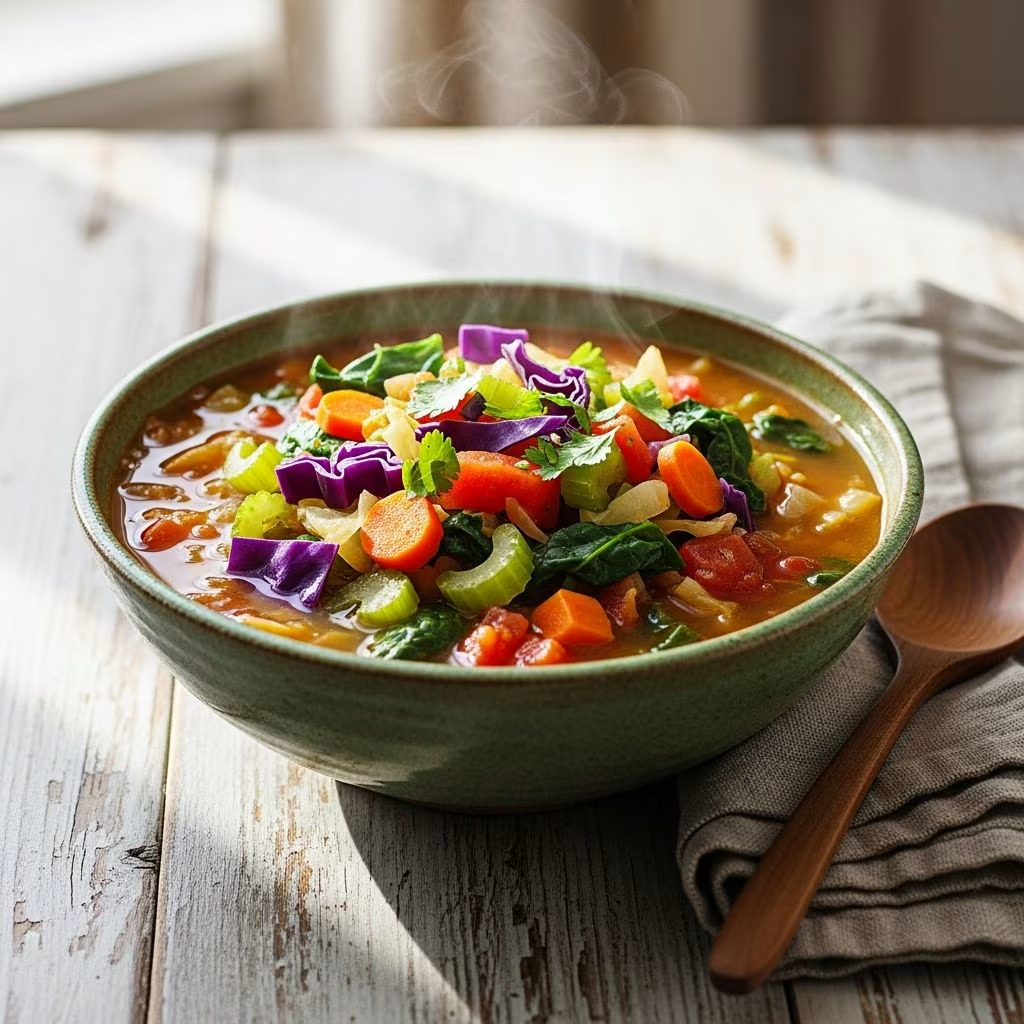
A nourishing blend of fresh vegetables simmered into a hearty, low-calorie soup that promotes satiety and supports wellness goals. This recipe yields multiple servings, making it ideal for meal prep throughout the week.
Why This Soup Fits Your Wellness Routine
Cabbage serves as the star ingredient in this soup due to its high water content, fiber, and low caloric density, which help fill you up without excess calories. Combined with carrots, celery, onions, and peppers, it creates a flavorful base rich in vitamins A, C, and K. Research from the National Institutes of Health highlights cabbage’s role in providing antioxidants that support digestive health and may aid in short-term weight management when part of a balanced diet.
Unlike processed snacks, this soup relies on whole foods for natural seasoning, reducing sodium intake while boosting hydration. Users often report feeling energized rather than deprived, as the volume of vegetables tricks the brain into sensing fullness. At around 50-90 calories per generous cup, it’s versatile for anytime hunger management.
Essential Ingredients for Maximum Flavor
Gather these fresh, accessible items to create a pot of soup that serves 10-14 people:
- 1 medium head green cabbage, cored and shredded (about 6-8 cups)
- 4-5 carrots, peeled and sliced into rounds
- 4 celery stalks, diced
- 1 large onion, finely chopped
- 1-2 bell peppers (green or red), seeded and chopped
- 2 cups fresh or frozen green beans
- 1 can (14 oz) diced tomatoes, no salt added
- 4 cups low-sodium vegetable or chicken broth
- 2 cups water or low-sodium tomato juice
- 2-3 garlic cloves, minced
- 1 packet (1 oz) low-sodium onion soup mix or homemade equivalent (onion powder, garlic powder, herbs)
- 1 tablespoon Worcestershire sauce (or tamari for vegan)
- 1 teaspoon dried oregano
- 1 teaspoon dried basil
- ½ teaspoon black pepper
- Fresh herbs like parsley for garnish (optional)
These components ensure a balance of crunch, sweetness, and savory notes. Opt for organic produce where possible to minimize pesticides, as recommended by the USDA.
Step-by-Step Cooking Methods
Prepare this soup using your preferred appliance for convenience. Each method preserves nutrients while delivering tender vegetables.
Stovetop Method (40-50 Minutes)
- Heat 1 tablespoon olive oil in a large stockpot over medium heat. Add onion, garlic, celery, and carrots; sauté 5-7 minutes until softened.
- Stir in bell peppers, cabbage, green beans, diced tomatoes, broth, water, soup mix, Worcestershire, oregano, basil, and pepper.
- Bring to a boil, then reduce to a simmer. Cover partially and cook 25-35 minutes until cabbage is tender. Stir occasionally.
- Taste and adjust seasoning. Serve hot.
Instant Pot Method (Under 30 Minutes Total)
- Set Instant Pot to sauté mode and heat oil. Sauté onion, garlic, celery, and carrots for 5 minutes.
- Add remaining vegetables, liquids, and seasonings. Stir well.
- Secure lid, set valve to sealing, and pressure cook on high for 6 minutes. Natural release for 5 minutes, then quick release.
- Stir and serve with fresh cracked pepper.
Slow Cooker Method (Hands-Off Approach)
- Combine all ingredients directly in the slow cooker.
- Cook on low for 6-8 hours or high for 3-4 hours until vegetables are soft.
- Stir before serving; add fresh herbs if desired.
Pro tip: For extra flavor, roast half the vegetables before adding to any method—this caramelizes natural sugars without added calories.
Nutrition Breakdown Per Serving
This soup is naturally vegan-adaptable and gluten-free. Here’s an approximate profile for a 1-cup serving (based on 12 servings total):
| Nutrient | Amount | % Daily Value* |
|---|---|---|
| Calories | 75 kcal | 4% |
| Total Fat | 1g | 1% |
| Sodium | 350mg | 15% |
| Total Carbs | 15g | 5% |
| Dietary Fiber | 5g | 18% |
| Protein | 3g | 6% |
| Vitamin A | 4000 IU | 80% |
| Vitamin C | 40mg | 67% |
| *Percent Daily Values based on a 2,000 calorie diet. Values approximate. | ||
High fiber content promotes gut health, while low energy density supports calorie control, aligning with dietary guidelines from the CDC.
Customization Ideas to Keep It Exciting
- Protein Boost: Add shredded chicken, turkey meatballs, or lentils after cooking for staying power.
- Spice It Up: Incorporate turmeric, ginger, or red pepper flakes for anti-inflammatory benefits.
- Grain Addition: Stir in cooked brown rice or quinoa in the last 10 minutes for heartier meals.
- Freezer-Friendly: Portion into zip-top bags and freeze for up to 3 months; thaw overnight and reheat.
- Vegetarian Swap: Use vegetable broth and skip Worcestershire for a fully plant-based version.
Experiment with seasonal veggies like zucchini or cauliflower to maintain variety and nutrient diversity.
Storage and Make-Ahead Tips
This soup stores beautifully: refrigerate in airtight containers for up to 5 days or freeze for longer. Reheat on stovetop or microwave, adding a splash of broth if thickened. Batch cooking saves time and ensures healthy options are always ready, reducing reliance on takeout.
Common Questions About Cabbage Detox Soup
Can I eat this soup every day?
Yes, as part of a varied diet. It’s low-calorie but consult a doctor for prolonged use, especially if aiming for significant weight loss.
Does this soup actually burn fat?
It supports fat loss indirectly through low calories and high volume, promoting a deficit when paired with exercise. No food “burns” fat alone.
Is it suitable for keto or low-carb diets?
Mostly—net carbs are about 10g per cup. Skip tomatoes or grains for stricter keto compliance.
How much weight can I lose eating this?
Results vary; some report 5-10 lbs in a week from water loss and reduced intake, but sustainable loss is 1-2 lbs weekly.
Can I add potatoes or pasta?
For specific diet phases, yes, but they increase calories—add sparingly.
Pairing Suggestions for Complete Meals
Serve alongside lean proteins like grilled fish or a side salad for balanced plates. In colder months, top with a dollop of Greek yogurt for creaminess without fat. This soup shines as a starter, stretching portions and enhancing overall meal satisfaction.
Incorporate it into wellness challenges by eating unlimited portions daily alongside approved foods like fruits, lean meats, and whole grains, mimicking popular detox plans while prioritizing nutrition.
References
- Cabbage and Cruciferous Vegetables: Health Benefits — National Institutes of Health (NIH). 2023-05-15. https://ods.od.nih.gov/factsheets/VitaminC-HealthProfessional/
- Low-Calorie Density Diets for Weight Management — Centers for Disease Control and Prevention (CDC). 2024-02-10. https://www.cdc.gov/healthyweight/healthy_eating/index.html
- Organic Foods: Are They Safer? More Nutritious? — United States Department of Agriculture (USDA). 2022-11-01. https://www.ers.usda.gov/topics/natural-resources-environment/organic-agriculture/
- Dietary Guidelines for Americans — U.S. Department of Health and Human Services (HHS). 2025-01-20. https://www.dietaryguidelines.gov/
- Fiber Intake Recommendations — CDC Nutrition Guidelines. 2024-03-05. https://www.cdc.gov/nutrition/resources-publications/fiber.html
- Weight Loss Myths and Facts — NIH Weight Management. 2023-08-12. https://www.niddk.nih.gov/health-information/weight-management/myths-nutrition-weight