Tomato paste is a versatile ingredient that adds depth and richness to countless dishes, from hearty stews to vibrant pasta sauces. However, its small can sizes often leave you with leftovers that risk going to waste if not stored properly. Freezing tomato paste in smart, portioned amounts solves this problem elegantly, allowing you to keep it fresh for months and grab exactly what you need without thawing. This guide explores effective freezing strategies, drawing from practical kitchen wisdom to help you minimize waste and maximize flavor in your cooking.
Why Freezing Tomato Paste Makes Sense
Tomato paste has a low water content compared to other tomato products, making it exceptionally freezer-friendly. Unlike fresh tomatoes or sauces that can develop ice crystals and alter texture, frozen tomato paste retains its thick consistency and intense umami when stored correctly. This method not only extends shelf life beyond the fridge’s typical 5-7 days but also saves money by reducing the need to buy new cans frequently.
Portioning before freezing ensures you avoid refreezing-thawing cycles, which can degrade quality. Common portion sizes like one-tablespoon dollops match most recipe needs, providing convenience for quick weeknight meals. Proper storage also prevents freezer burn, keeping the paste vibrant and ready to enhance your dishes.
Essential Tools for Freezing Success
Freezing tomato paste requires minimal equipment, most of which you likely have on hand. Here’s what you’ll need:
- Measuring spoons: For consistent 1-tablespoon portions.
- Parchment paper or plastic wrap: To line surfaces and prevent sticking.
- Freezer-safe plate or baking sheet: Flat surface for initial freezing.
- Zip-top freezer bags: Quart-sized for airtight long-term storage.
- Marker: To label with date and contents.
Optional items include silicone ice cube trays for larger portions or reusable silicone bags for eco-friendly storage. Avoid glass containers unless they’re specifically freezer-rated to prevent cracking.
Step-by-Step Freezing Techniques
Several methods exist for freezing tomato paste, each tailored to different needs. Choose based on your storage space and usage habits.
Method 1: Tablespoon Dollops on Parchment
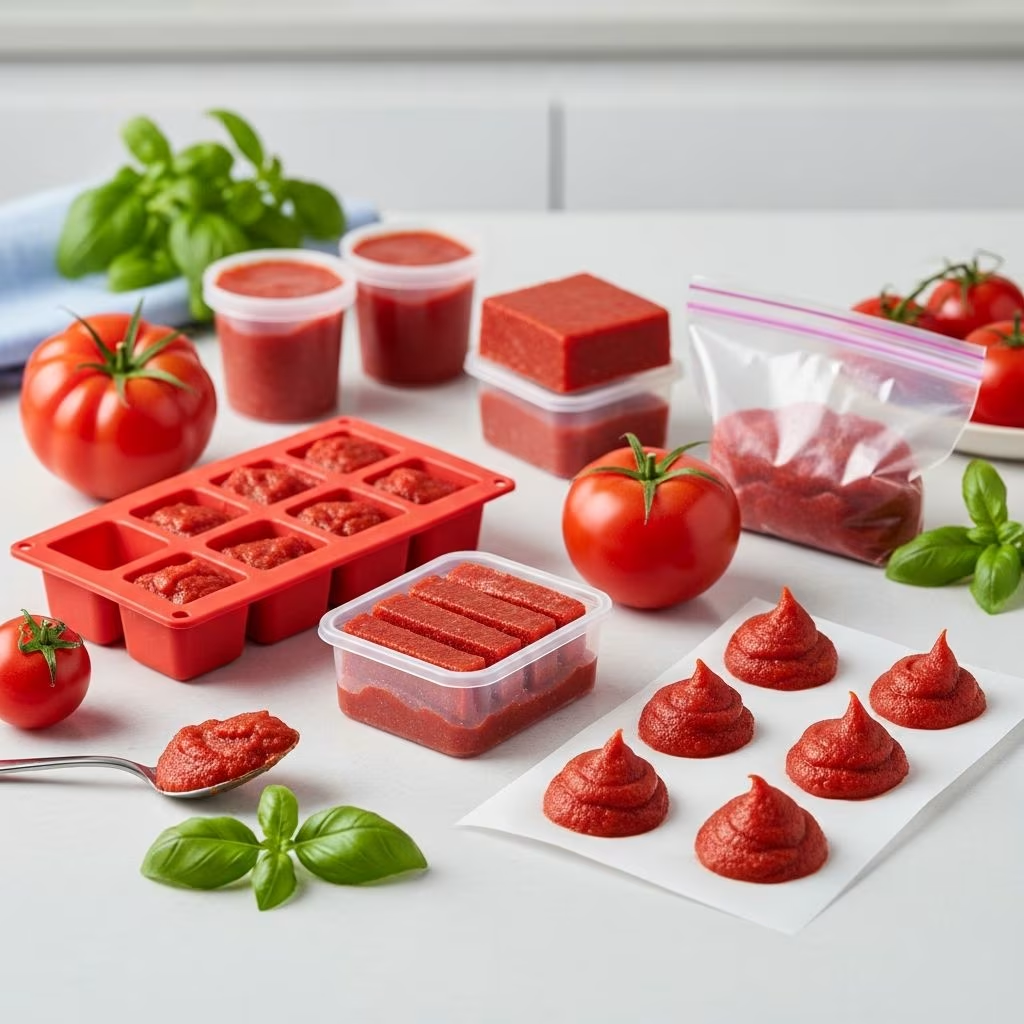
This is the most popular approach for its simplicity and precision. Start by opening your can or tube of tomato paste. Using a tablespoon measure, scoop out uniform dollops and place them on a parchment-lined plate, ensuring at least an inch of space between each to allow independent freezing. Slide the plate into the freezer for 2-4 hours until solid. Once frozen, pop the dollops into a labeled zip-top bag, squeezing out excess air. This creates stackable, grab-and-go portions that won’t fuse together.
Method 2: Plastic Wrap Twists
For a no-plate option, lay out a sheet of plastic wrap. Place tablespoon-sized scoops along the wrap with space between them. Roll the wrap snugly around the dollops, then twist tightly between each to separate them individually. Fold the ends and tuck into a freezer bag. This method is compact and ideal for small freezers, as the twists can be snipped off one at a time.
Method 3: Ice Cube Tray Portions
If you prefer larger servings, fill a silicone ice cube tray with 1-2 tablespoons per well. Freeze overnight, then transfer cubes to a bag. Note that standard trays hold more volume per cube, so adjust for recipes needing smaller amounts. This works well for batch cooking like chili or marinara.
| Method | Portion Size | Space Needed | Best For |
|---|---|---|---|
| Tablespoon Dollops | 1 tbsp | Low | Quick recipes |
| Plastic Wrap Twists | 1 tbsp | Minimal | Small freezers |
| Ice Cube Tray | 1-2 tbsp | Medium | Batch cooking |
Storage Tips for Maximum Freshness
To keep frozen tomato paste at peak quality, store at 0°F (-18°C) or below. Use airtight bags and press out air to minimize oxidation. Label with the freezing date—aim to use within 3-6 months for best flavor, though it can last up to a year. Avoid overcrowding the freezer; good air circulation prevents uneven freezing.
For organization, dedicate a shelf or bin to sauces and pastes. If using reusable silicone bags, they’re microwave-safe for direct melting if needed. Always freeze fresh paste immediately after opening to lock in flavor.
Using Frozen Tomato Paste in Recipes
The beauty of this storage method is its versatility—no thawing required. Drop frozen dollops straight into hot pans, soups, or sauces; they melt seamlessly within seconds. For example:
- In a simmering bolognese, add 2-3 dollops for concentrated tomato essence.
- Stir into braising liquids for stews to boost savoriness.
- Mix into meatloaf or burger patties for moisture and umami.
Since the paste is pre-portioned, you reduce guesswork and waste. In creamy dishes like mac and cheese, it integrates without curdling. Experiment with adding it to vinaigrettes or rubs for grilled meats.
Recipe Ideas Featuring Tomato Paste
Quick Tomato Basil Soup
Sauté onions, add 2 tbsp frozen paste, garlic, broth, canned tomatoes, and basil. Simmer 15 minutes. Blend for creaminess. Serves 4.
Flavorful Chili Base
Brown beef, toss in 3 dollops paste, beans, spices, and stock. Slow-cook for depth. Freezer-ready portions shine here.
One-Pan Sausage Pasta
Cook sausage, pasta, add paste dollops, cream, and cheese. Dinner in 20 minutes.
These recipes highlight how frozen paste streamlines cooking without compromising taste.
Common Mistakes to Avoid
Don’t freeze large blocks; they thaw unevenly and waste space. Skipping the initial separate freezing leads to clumped paste. Overfilling bags invites freezer burn—use smaller bags for frequent access. Never refreeze thawed paste, as it loses texture. If mold appears post-thaw (rare), discard immediately.
Alternatives and Variations
Beyond tubes or cans, freeze roasted garlic-tomato paste blends for gourmet twists. Mix with herbs before portioning. For tube paste, squeeze directly into trays. Eco-conscious cooks can use beeswax wraps instead of plastic.
Compare to fridge storage: Freezing triples usability time. Dried paste rehydrates but lacks fresh intensity.
Frequently Asked Questions
How long does frozen tomato paste last?
Up to 3-6 months optimally; safe longer but check for freezer burn.
Can I microwave frozen dollops?
Yes, but stovetop integration is faster and preserves flavor.
Does freezing change the taste?
No, low moisture preserves umami effectively.
What if I need more than 1 tbsp?
Combine dollops; they melt together quickly.
Is tube tomato paste better for freezing?
Tubes reduce air exposure, but canned works equally well portioned.
Benefits Beyond the Kitchen
Freezing tomato paste cuts food waste, aligning with sustainable habits. Economically, it stretches each $1-2 can across multiple meals. Health-wise, it encourages home cooking with nutrient-dense ingredients. Track your usage to refine portions, turning a common leftover into a pantry staple.
References
- How to Freeze Tomato Paste — My Sequined Life. 2023-05-15. https://www.mysequinedlife.com/how-to-freeze-tomato-paste/
- How to Freeze Tomato Paste — Budget Bytes. 2022-08-10. https://www.budgetbytes.com/how-to-freeze-tomato-paste/
- How to Freeze Tomato Paste in Convenient Portions — Kitchen Parade. 2014-01-20. https://www.kitchenparade.com/2014/01/how-to-freeze-tomato-paste.html