Creating your own infused spice oil transforms the way you cook. This versatile condiment delivers layers of flavor and textural contrast that elevate everything from simple grains to delicate proteins. By combining heated oil with carefully selected aromatics and seeds, you develop a pantry staple that requires minimal effort but yields restaurant-quality results.
Understanding the Foundation of Aromatic Oil
Infused spice oil represents a bridge between traditional cooking oils and complex condiments. Unlike plain oils, these infusions capture the essence of toasted aromatics, releasing their essential flavors directly into your dishes. The process involves heating neutral oil with various seeds, spices, and aromatics until they release their fragrant compounds, then allowing the mixture to cool and meld together.
The beauty of this condiment lies in its simplicity paired with sophisticated flavor development. When oil is heated to the proper temperature, it becomes a vehicle for extracting and preserving the aromatic qualities of spices and seeds. This method has been used across numerous cuisines for centuries, proving its effectiveness as both a flavor enhancer and a preservation technique.
Selecting Your Base Oil and Aromatics
The foundation of any quality infused oil starts with choosing the right base. Neutral oils work best because they don’t compete with the flavors you’re infusing. Sunflower oil, grapeseed oil, and vegetable oil all serve this purpose effectively. These oils have high smoke points, making them suitable for the heating process required to activate the spices.
Your aromatic selection determines the character of the final product. Fresh garlic cloves, when minced finely, become the primary aromatic backbone. Shallots offer a slightly sweet, mellow dimension. Together, these aromatics should be cooked slowly until golden brown, ensuring all moisture evaporates to create that desirable crunch.
The Role of Seeds and Spices
Seeds contribute both flavor and texture to your infusion. Consider these key components:
- Sesame seeds provide an earthy, nutty undertone and satisfying crunch
- Mustard seeds deliver subtle spiciness and a distinctive flavor profile
- Cumin seeds introduce warmth and earthiness
- Red pepper flakes provide heat and vibrant color
- Pink peppercorns offer delicate floral notes with gentle heat
Each seed and spice should be used in measured quantities. The ratio matters significantly—too much of one component can overwhelm the balance. Pink peppercorns, for instance, should be lightly crushed to release their essential oils without creating bitterness. Red pepper flakes should be added thoughtfully, as their heat intensifies as the oil cools and sits.
Temperature Control and Timing
Temperature management separates successful infused oils from mediocre ones. Begin by heating your oil with all the seeds and fresh aromatics over medium-high heat. You’ll notice the oil beginning to shimmer and bubble—this indicates the temperature has reached the optimal point for extracting flavors. This initial phase typically requires about two minutes.
Once the oil reaches this stage, immediately reduce the heat to low. This crucial step prevents burning while allowing continued gentle cooking. Maintain constant stirring for approximately five minutes as the garlic transforms to golden brown. You’ll observe the shallots, if included, becoming translucent and crispy, while the various seeds release their aromatic compounds into the oil.
The sensory cues matter more than precise timing. Your nose becomes your guide—when the mixture smells intensely fragrant and the garlic appears uniformly golden, you’ve reached the perfect point. Remove the pan from heat immediately to prevent overcooking.
Finishing Touches and Flavor Enhancement
Once removed from heat, incorporate the remaining seasonings. Salt enhances and balances all the flavors you’ve developed. Paprika adds both color and a subtle sweetness. A small amount of maple syrup or honey creates a subtle sweetness that rounds out the heat from the peppers, adding complexity without making the oil sweet.
These finishing additions should be stirred thoroughly while the oil remains warm, ensuring even distribution. The residual heat activates these seasonings, allowing them to integrate seamlessly with the already-infused oil.
Cooling and Storage Strategies
Allowing your infused oil to cool completely before storage is essential. This cooling period permits the flavors to continue melding and developing. As the oil cools, the seeds and aromatics settle, creating distinct layers. This natural separation is normal and expected.
Transfer your cooled infusion to an airtight container for storage. Glass jars with tight-fitting lids preserve the oil’s quality longest. Stored in a cool, dark location, homemade spice oils maintain their optimal quality for several weeks. Some recipes include preservative elements like soy sauce, which can extend shelf life and add umami depth.
Customization and Personal Variation
One of the greatest advantages of making infused oil at home is the freedom to customize. If you prefer greater heat intensity, increase the red pepper flakes or add cayenne powder. For those who enjoy more prominent garlic flavor, increase the quantity of fresh garlic cloves or add minced ginger.
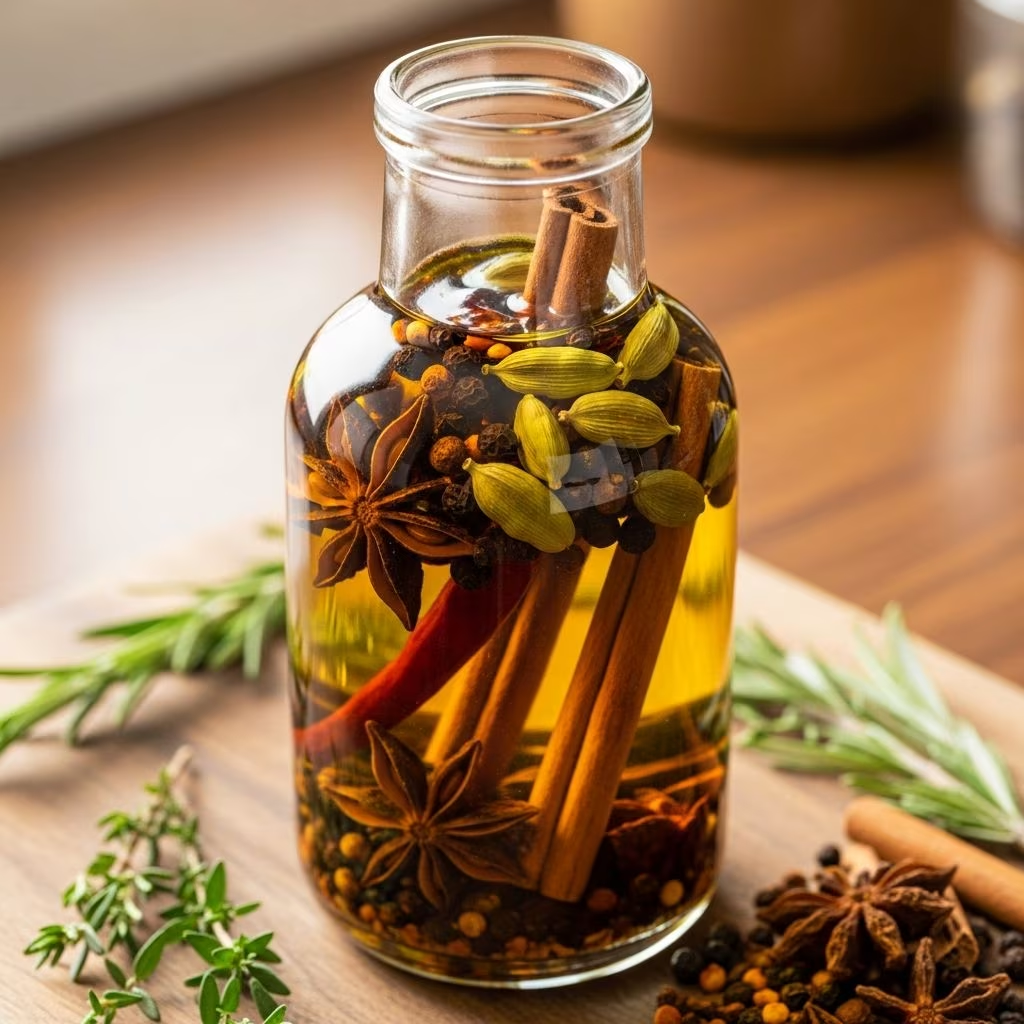
Aromatic additions expand the possibilities. Cinnamon sticks, bay leaves, and star anise create warming, complex notes. Soy sauce adds umami and a subtle saltiness that complements the other elements. Korean red chili flakes offer a different heat profile compared to standard red pepper flakes.
Texture preferences can be adjusted as well. For maximum crunchiness, ensure your aromatics cook completely until crispy. Some people prefer straining the oil through a fine mesh sieve to separate the solids, creating a smoother product, while others enjoy the textural elements present throughout.
Practical Applications in Daily Cooking
The versatility of infused spice oil makes it valuable in countless dishes. Drizzle it over steamed vegetables to transform simple greens into a flavorful side dish. Pour it over creamy foods like tofu or eggs, where it creates textural contrast and flavor enhancement. Use it as a dip for bread, a topping for soups, or a finishing oil for grain bowls.
This condiment works particularly well with Asian cuisines, where similar oils have been fundamental to cooking traditions. However, its applications extend far beyond ethnic cuisine—try it on roasted vegetables, mixed into rice, or as a marinade base for proteins.
Troubleshooting Common Issues
Understanding potential problems helps you achieve consistent success. If your oil appears too greasy without sufficient crunch, the aromatics didn’t cook long enough. Ensure your garlic and shallots cook until completely golden and crispy, with all moisture driven off.
If the heat level seems overwhelming, you likely used too many pepper flakes or didn’t balance them with sweetening elements. Remember that heat intensifies as the oil sits, so start conservatively and taste before making adjustments.
For oil that separates excessively with ingredients sinking to the bottom, this is normal. Stiring before each use ensures you get a balanced combination of oil and crunchy elements in every spoonful.
Frequently Asked Questions
How long does homemade infused spice oil keep?
Properly stored in an airtight container in a cool, dark location, infused spice oil remains fresh for 3-4 weeks. Recipes incorporating soy sauce may last slightly longer due to its preservative properties. Always check for signs of spoilage before use.
Can I use olive oil instead of neutral oil?
While possible, olive oil’s distinct flavor will compete with your infused spices. The high heat required may also damage olive oil’s delicate compounds. Neutral oils with high smoke points work better for this application.
What’s the difference between infused oil and chili crisp?
Infused oil emphasizes the liquid component with suspended aromatics, while chili crisp balances oil with substantial crunchy elements. Both follow similar preparation methods but prioritize different texture ratios.
Should I strain my infused oil?
This depends on personal preference. Straining creates a smoother product with extended shelf life. Keeping the solids suspended provides more textural variety. Both approaches are valid.
Can I make this oil without fresh garlic?
Yes, though the result will be different. You can use dried garlic powder or increase other aromatics like shallots or ginger. The key is developing flavor through your chosen aromatic base.
Building Your Condiment Repertoire
Creating infused spice oil represents an entry point into making your own condiments. Once you master this technique, you can experiment with countless variations. The fundamental process—heating oil with aromatics and spices—remains constant, while your ingredient choices determine the final profile.
This homemade approach offers significant advantages over commercial alternatives. You control the heat level, ensuring it matches your preferences. You choose the quality of your ingredients. You avoid additives and preservatives. Most importantly, you develop a deeper connection to your cooking through hands-on condiment preparation.
Whether you prepare a batch weekly or monthly, having homemade infused spice oil on hand transforms your cooking. Simple dishes become memorable meals, and everyday ingredients gain new dimensions of flavor and texture.
References
- Crunchy Spice Oil Recipe — Patient.info. Accessed April 2026. https://patient.info/recipes/vegan-recipes/crunchy-spice-oil
- How to Make Homemade Crispy Chili Oil Recipe — Simone’s Kitchen. Accessed April 2026. https://insimoneskitchen.com/crispy-chili-oil/
- Garlic Chili Crunch Oil — Milk & Cardamom. January 10, 2020. https://milkandcardamom.com/2020/01/10/garlic-chili-crunch-oil/
- Homemade Garlic Chili Crisp Oil — Table for Two Blog. Accessed April 2026. https://www.tablefortwoblog.com/homemade-garlic-chili-crisp-oil/
- Chili Crunch Recipe in 10 Minutes — White On Rice Couple. Accessed April 2026. https://whiteonricecouple.com/chili-crunch-recipe/