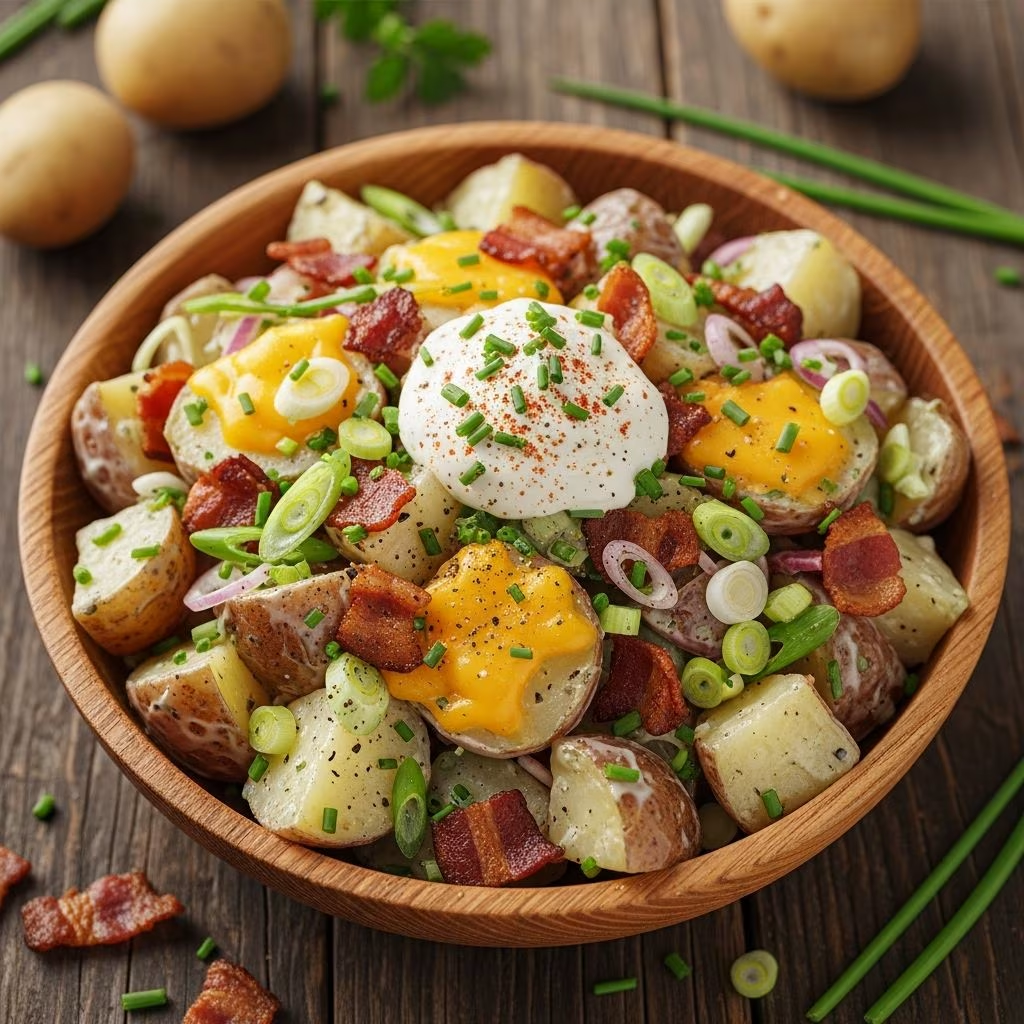
Potato salad has been a staple at American gatherings for generations, but there’s a version that takes this classic to extraordinary heights: the loaded baked potato salad. This creative interpretation brings together all the beloved components of a steakhouse-style baked potato and transforms them into a cohesive, creamy side dish that appeals to diverse palates. Whether you’re planning a summer barbecue, a family reunion, or a casual weeknight dinner, this dish delivers comfort and satisfaction in every bite.
Understanding the Foundation of This Beloved Dish
The concept behind loaded baked potato salad is refreshingly simple yet deeply satisfying. Rather than serving individual baked potatoes with toppings arranged on the side, this recipe combines tender potato pieces with the classic garnishes that make baked potatoes so appealing. The result is a unified dish where flavors meld together through refrigeration, creating something greater than the sum of its parts. The beauty of this approach lies in its ability to feed crowds while maintaining the indulgent qualities people associate with loaded baked potatoes.
What distinguishes this variation from traditional potato salad is its inspiration source. While many potato salads draw from vinegar-based or mayonnaise-forward traditions, loaded baked potato salad centers itself on the decadent toppings of a restaurant-quality baked potato. This perspective shift changes everything about how the dish is constructed and seasoned.
Essential Ingredients for Maximum Flavor
Creating an authentic loaded baked potato salad requires attention to ingredient quality and proportions. The foundation consists of starchy potatoes that hold their shape during cooking and provide a neutral canvas for other flavors.
The Potato Base
Russet potatoes are the traditional choice for this dish, though gold or red potatoes can serve as excellent alternatives. Russets contain more starch, which allows them to absorb dressing flavors effectively while maintaining distinct texture. Most recipes call for four to six pounds of potatoes, which yields enough to serve eight to twelve people comfortably. The potatoes should be cooked until they’re tender enough to pierce easily with a fork, but not so soft that they crumble into mush during assembly.
The Creamy Base
The dressing component distinguishes this salad from lighter alternatives. A combination of sour cream and mayonnaise creates richness and tang that mimics the experience of eating a loaded baked potato topped with butter and sour cream. Recipes typically call for approximately one cup of mayonnaise and between half to three-quarters cup of sour cream, though these proportions can be adjusted based on personal preference. Some versions incorporate Greek yogurt as a lighter substitute for sour cream while maintaining creamy texture.
The Flavor Enhancers
Apple cider vinegar adds subtle acidity that balances the richness of the dressing without overpowering other flavors. Typically, one to three tablespoons suffices. Salt and pepper season the entire dish, with most recipes using one to one-and-a-half teaspoons of kosher salt and half to one teaspoon of ground black pepper.
The Signature Toppings
Three key components deliver the loaded baked potato experience:
- Bacon: One pound of bacon, cooked until crisp and crumbled, provides smoky richness and textural contrast. The bacon pieces should be uniform in size for consistent distribution throughout the salad.
- Cheddar Cheese: Sharp cheddar cheese, shredded rather than grated, adds distinctive flavor and creates pockets of richness. Most recipes call for one to one-and-a-half cups of shredded cheese.
- Green Onions: Four to six green onions, sliced thin, provide fresh brightness and mild onion flavor that prevents the dish from becoming monotonously rich. Reserve some for garnish to enhance visual appeal.
Preparation Methods and Cooking Techniques
Two primary approaches exist for cooking the potatoes: boiling and roasting. Each method produces slightly different results and affects final texture and flavor absorption.
The Boiling Method
This traditional approach involves cutting peeled potatoes into uniform bite-sized chunks, then boiling them in salted water until fork-tender, typically fifteen to twenty minutes. Once cooked, the potatoes are drained and cooled under cold running water to halt the cooking process. This method is faster and requires less equipment, making it practical for those with limited oven space or time constraints.
The Roasting Method
An increasingly popular alternative involves baking whole or halved potatoes in a preheated 400-to-425-degree oven for fifty to sixty minutes. This approach requires piercing the potato skins several times with a fork to prevent explosion, then lightly coating with olive oil and seasoning with salt and pepper before roasting. Once cooled, the potatoes are peeled and cubed. This method develops deeper, more complex flavors through the Maillard reaction that occurs during roasting, though it requires more active oven time.
Post-Cooking Potato Preparation
Regardless of cooking method, allowing potatoes to cool completely before combining with other ingredients is essential. Warm potatoes can break apart or become mushy when mixed. Cutting potatoes into uniform one-inch chunks ensures even distribution and consistent texture throughout the finished salad.
Assembly and Flavor Development Process
The assembly process, while straightforward, significantly impacts the final result. Understanding the proper sequence prevents overseasoning and ensures optimal flavor integration.
Begin by combining the sour cream, mayonnaise, and apple cider vinegar in a separate bowl, whisking until smooth. This creates an emulsified base that distributes evenly throughout the finished dish. Season this mixture generously with salt and pepper, tasting as you go to ensure proper seasoning. Slightly overseasoning this component accounts for dilution that occurs when it mixes with unseasoned potatoes.
Transfer the cooled potato cubes to a large mixing bowl. Pour the prepared dressing over the potatoes, then gently fold in the cooked bacon, shredded cheddar cheese, and chopped green onions. The folding motion, rather than vigorous stirring, prevents potato pieces from breaking apart and becoming mealy. Once combined, taste and adjust seasoning as needed, adding additional salt, pepper, or vinegar to achieve desired flavor balance.
Refrigeration and Flavor Maturation
Unlike some salads that should be consumed immediately, loaded baked potato salad actually improves with time spent in the refrigerator. Most recipes recommend chilling for at least thirty minutes to several hours before serving, allowing flavors to meld and the dressing to fully permeate the potatoes. During this refrigeration period, the potatoes gradually absorb the creamy dressing, creating a more cohesive dish where individual components integrate rather than remaining separate.
This make-ahead characteristic makes loaded baked potato salad ideal for entertaining. The dish can be prepared up to two days in advance and stored in an airtight container in the refrigerator, actually improving in flavor as it sits. Simply remove from refrigeration twenty to thirty minutes before serving to allow temperatures to normalize, then garnish with reserved bacon pieces, cheese, and fresh green onion slices for enhanced visual appeal.
Customization and Creative Variations
While the classic version remains beloved, loaded baked potato salad welcomes creative interpretations that suit various dietary preferences and flavor preferences.
- Substitute Greek yogurt for all or part of the sour cream to reduce fat content while maintaining creamy texture and tang.
- Add ranch dressing mix or select BBQ seasoning blends to the dressing for additional flavor complexity.
- Include fresh parsley for herbaceous brightness and visual interest.
- Incorporate crispy fried onions for textural variation and enhanced savory notes.
- Add roasted garlic or garlic powder for depth without overwhelming other flavors.
- Use smoked bacon or applewood-smoked bacon for additional smoky complexity.
- Try white cheddar or sharp varieties for different cheese flavor profiles.
Serving Suggestions and Pairing Opportunities
Loaded baked potato salad’s versatility extends to serving contexts. This dish functions beautifully as a side complement to grilled meats, particularly beef and pork. The creamy, rich character balances smoky barbecue flavors without competing for attention. It also works well alongside lighter proteins like grilled chicken or fish, where its substantial nature provides satisfying substance to complement leaner main courses.
For casual gatherings, this salad shines as part of a buffet spread alongside coleslaw, corn salad, and grilled vegetables. Its substantial, satisfying nature means smaller portions still feel adequate, stretching servings further than lighter salads might. The cold temperature means it doesn’t require last-minute preparation, allowing hosts to focus on other dishes.
Storage Guidelines and Food Safety
Loaded baked potato salad stores well in the refrigerator for three to four days when kept in an airtight container. The combination of mayonnaise, sour cream, and bacon creates a relatively stable dish that doesn’t deteriorate quickly like some mayonnaise-based salads. However, quality declines gradually as the dressing becomes watery from potato moisture release, so consuming within two days of preparation yields optimal results.
For gatherings where the salad will sit outside for extended periods, keep it in a cooler with ice packs rather than leaving it at room temperature. Discard any portion that has sat unrefrigerated for more than two hours, as the combination of mayonnaise and potatoes creates potential food safety concerns at warm temperatures.
Frequently Asked Questions
Can I prepare this salad the night before serving?
Yes, loaded baked potato salad actually benefits from advance preparation. Prepare it up to two days ahead and store in an airtight container in the refrigerator. The flavors will continue developing and integrating during this time. Simply garnish with fresh bacon, cheese, and green onions immediately before serving.
What potatoes work best for this recipe?
Russet potatoes are traditional and provide excellent texture and flavor absorption characteristics. Gold potatoes and red-skinned potatoes also work well and provide slightly different texture profiles. Avoid waxy potatoes that may become gummy when mixed with creamy dressing.
How can I reduce calories without sacrificing flavor?
Substitute Greek yogurt for some or all of the sour cream, reduce mayonnaise quantities, use lower-fat cheese options, or incorporate less bacon. The key is maintaining enough of each component to preserve the loaded baked potato character without excessive fat content.
Can this dish be made vegetarian?
Absolutely. Omit the bacon and replace it with crispy roasted chickpeas, toasted nuts, or additional cheese varieties. Smoked paprika in the dressing can mimic the smoky character bacon provides.
Is this dish freezer-friendly?
Loaded baked potato salad doesn’t freeze well because the mayonnaise-based dressing separates and becomes grainy upon thawing. Stick to refrigeration for best results.
Why This Dish Remains a Gathering Favorite
Loaded baked potato salad endures as a popular side dish because it successfully bridges familiar flavors with practical execution. It requires no specialized techniques, relies on readily available ingredients, and improves with advance preparation—all qualities that make entertaining less stressful. The dish appeals to diverse palates, from cheese enthusiasts to bacon lovers, without requiring multiple versions.
More fundamentally, this salad captures the indulgent comfort that Americans associate with baked potatoes while presenting that experience in a format that serves crowds efficiently. Whether serving six or sixty, loaded baked potato salad delivers consistent satisfaction, making it an invaluable recipe for anyone who regularly entertains or contributes to community gatherings.
References
- All-American Loaded Baked Potato Salad — PantryLink Recipes. Accessed 2026-04-10. https://pantrylink.app/recipes/all-american-loaded-baked-potato-salad
- Loaded Baked Potato Salad — Foodie With Family. Accessed 2026-04-10. https://www.foodiewithfamily.com/loaded-baked-potato-salad/
- Loaded Baked Potato Salad and a Canyon Cookout — FoodieCrush.com. Accessed 2026-04-10. https://www.foodiecrush.com/loaded-baked-potato-salad-and-a-canyon-cookout/
- Loaded Baked Potato Salad Recipe — WonkyWonderful. Accessed 2026-04-10. https://wonkywonderful.com/loaded-baked-potato-salad-recipe/
- Loaded Baked Potato Salad — Southern Bite. Accessed 2026-04-10. https://southernbite.com/loaded-baked-potato-salad/