When it comes to creating an unforgettable Easter centerpiece, few dishes command attention quite like a beautifully roasted leg of lamb. This elegant protein has graced festive tables for generations, offering both visual drama and exceptional flavor when prepared with care and attention to detail. Whether you’re hosting a formal dinner party or gathering with close family, understanding the fundamentals of lamb preparation ensures you’ll serve a dish that impresses every guest at your table.
Understanding Your Lamb Selection and Preparation
The foundation of any successful roasted lamb leg begins with selecting the right cut and understanding its characteristics. A bone-in leg of lamb typically weighs between four and nine pounds, depending on your guest count and appetite expectations. The bone contributes significantly to both flavor development during roasting and visual presentation when carved at the table. When shopping, look for meat with a deep pink color and visible white marbling throughout, which indicates quality and proper aging.
Before beginning any marinade or seasoning process, proper preparation of your lamb ensures even cooking and maximum flavor absorption. Trim excess external fat, leaving just a thin layer to protect the meat and contribute to browning. Pat the surface dry with paper towels, as this moisture removal facilitates better crust development in the oven. Remove your lamb from refrigeration approximately one hour before cooking, allowing it to reach room temperature for more uniform heat penetration during roasting.
Building Flavor Through Strategic Marinade Development
The secret to lamb that tastes restaurant-quality lies in developing deep, complex flavors through careful marination. Rather than simple surface seasoning, the most effective approaches involve creating flavor pastes that penetrate the meat itself. Mediterranean-inspired marinades form the backbone of exceptional Easter lamb preparations, drawing from centuries of culinary tradition in regions where lamb remains a staple protein.
A classic marinade foundation combines several essential elements working in harmony. Fresh garlic, when processed into a fine paste with salt, becomes the aromatic base that carries flavor deep into the meat structure. Fresh rosemary and lemon zest add brightness and herbaceous notes that complement lamb’s inherent richness. Extra-virgin olive oil acts as both flavor carrier and tenderizing agent, while fresh lemon juice provides acidity that balances the meat’s heavier qualities.
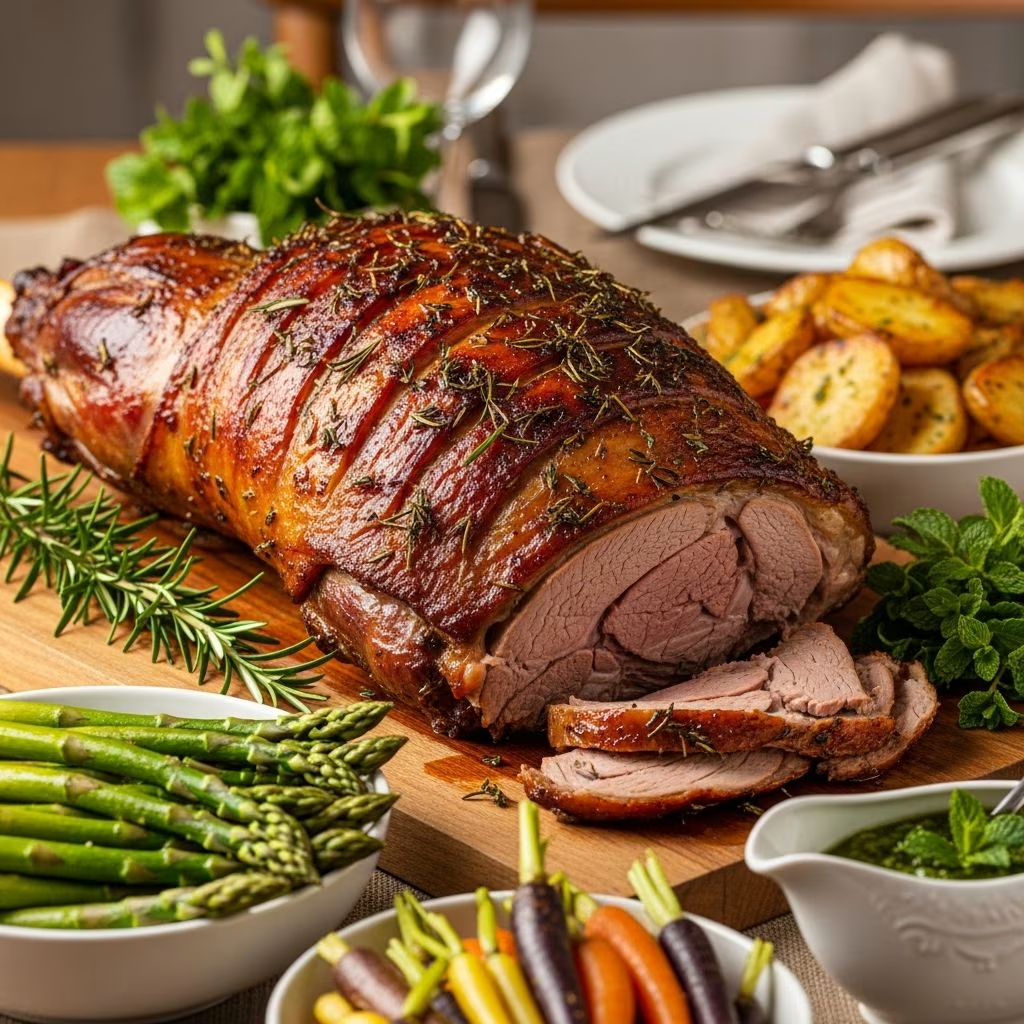
The technique for applying this paste maximizes penetration and ensures every slice contains concentrated flavor. Using a sharp knife, pierce the lamb approximately fifteen times across its surface, creating small slits roughly one inch deep. These intentional cuts serve as channels for your herb paste, allowing the marinade to travel into the meat rather than remaining on the surface. Fill each slit carefully with your prepared paste, then slather remaining marinade across the entire exterior.
After application, wrap your prepared lamb tightly in plastic wrap and refrigerate for at least four hours, though overnight resting produces optimal results. This extended marination period allows flavors to meld with the meat’s proteins, creating integrated taste rather than superficial seasoning. The salt in your marinade also begins the brining process, helping the meat retain moisture during the high-heat roasting that follows.
Roasting Technique and Temperature Management
Successfully roasting lamb requires understanding how different temperatures accomplish different objectives. The two-temperature approach—starting high and finishing low—produces the ideal combination of flavorful crust and perfectly pink interior.
Begin by preheating your oven to a high temperature, typically between 425 and 450 degrees Fahrenheit. Remove your marinated lamb from refrigeration and allow it to reach full room temperature, which takes approximately one hour. Before placing in the oven, sear the lamb on all sides in a hot cast-iron skillet or directly on a preheated grill. This crucial step creates a flavorful brown crust through the Maillard reaction, developing complex tastes that elevate the final dish.
Once seared, arrange your lamb in a roasting pan on a wire rack. Create an aromatic bed beneath the meat using sliced onions, garlic cloves, fresh herbs, and lemon slices. Add approximately two cups of water to the pan bottom, which creates steam that keeps the meat moist while the liquid later becomes the foundation for a pan sauce. Place your prepared lamb in the preheated oven and roast at the high temperature for approximately ten minutes to develop the exterior crust further.
After this initial high-heat phase, reduce oven temperature to 300 degrees Fahrenheit and continue roasting based on your desired doneness level. For medium-rare lamb with a beautiful pink center, plan on approximately fifteen minutes per pound. A five-pound lamb requires roughly seventy-five minutes total roasting time, while a larger nine-pound leg needs approximately two hours and fifteen minutes. Use a meat thermometer to verify doneness, targeting 130 to 135 degrees Fahrenheit for medium-rare results.
Critical Resting and Carving Procedures
Many home cooks make the critical mistake of cutting into lamb immediately after removing it from the oven. This seemingly minor oversight causes catastrophic moisture loss, as the meat’s internal juices haven’t redistributed throughout the protein structure. Proper resting requires patience and strategic planning.
Upon removing your lamb from the oven, loosely tent it with aluminum foil and allow it to rest undisturbed for fifteen to twenty minutes. During this period, internal temperatures continue rising slightly through carryover cooking while muscle fibers relax and reabsorb moisture. This resting period directly impacts the juiciness and tenderness of every slice you carve.
When ready to carve, transfer your rested lamb to a carving board, positioning it so the bone is clearly visible and accessible. Use the leg bone as a natural handle, which provides leverage and allows precise control during cutting. Carve vertically along the boneless area first, creating thin slices roughly one-quarter inch thick. When you reach the shank section containing bone, switch to cutting parallel to the bone to accommodate its structure and maximize usable meat from this often-tougher section.
Complementary Sides and Service Suggestions
The success of your Easter lamb extends beyond the protein itself; thoughtful side dishes and accompaniments elevate the entire dining experience. Mediterranean-inspired sides align naturally with the flavors already developed in your lamb preparation.
Roasted potatoes represent the classic pairing, absorbing flavorful pan juices when nestled alongside your lamb during the final roasting stages. Cut gold potatoes into wedges, toss with olive oil and herbs, and add them to your roasting pan approximately forty-five minutes before the lamb finishes cooking. This timing ensures potatoes achieve golden exteriors while remaining tender throughout.
Fresh vegetables add color, nutrition, and lighter elements to balance the lamb’s richness. Roasted asparagus brushed with olive oil and finished with lemon zest provides elegant visual contrast and crisp texture. Seasonal spring vegetables including fresh peas, new carrots, or tender green beans offer natural sweetness that complements lamb’s savory depth.
Mediterranean-style accompaniments enhance the lamb’s inherent character. A vibrant salsa verde made from fresh parsley, garlic, capers, and lemon juice provides brightness and complexity that cuts through richness. Greek salad featuring crisp lettuce, tomatoes, olives, and feta cheese creates refreshing contrast. Homemade tzatziki, the cooling cucumber and yogurt sauce, offers another traditional option that provides textural and temperature variation across the plate.
Pan Sauce and Gravy Development
The liquid remaining in your roasting pan represents liquid gold for sauce-making, containing concentrated meat juices and aromatics that developed during cooking. Strain this liquid into a saucepan, pressing vegetable solids to extract remaining flavor before discarding them.
For a simple pan sauce, heat the strained liquid over medium-high heat and whisk in a small amount of flour or cornstarch mixed with cold water to create a slurry. This thickening agent transforms thin juices into a silky sauce that clings to lamb slices. Finish with a splash of fresh lemon juice and fresh herbs, tasting and adjusting seasonings as needed. The result provides elegant presentation when spooned over carved lamb slices at the table.
Regional Variations and Flavor Profiles
While Mediterranean preparations dominate Easter lamb traditions, exploring regional variations introduces exciting flavor dimensions to your holiday table. Italian Tuscan preparations emphasize garlic and rosemary with white wine reductions. Greek versions highlight the bright acidity of lemon and oregano, sometimes incorporating black olives and feta cheese flavors. Middle Eastern approaches introduce warm spices including cumin and coriander, creating richer, more complex aromatic profiles.
Understanding these variations allows you to customize lamb preparation based on your family’s preferences and cultural heritage. The fundamental technique remains consistent while specific herbs and aromatics shift to reflect different culinary traditions. This flexibility means you can create new interpretations of this classic dish year after year, keeping your Easter celebrations fresh and exciting.
Frequently Asked Questions
How far in advance can I prepare the lamb marinade?
Prepare your marinade and apply it to the lamb up to twenty-four hours before roasting. Extended marination beyond this window may result in the meat becoming overly salted or developing an unpleasant texture from the acid’s prolonged contact with the protein. Optimal results occur with overnight marination, providing adequate flavor development without pushing past the point of diminishing returns.
What’s the difference between bone-in and boneless lamb legs?
Bone-in legs provide superior flavor development and create more impressive presentation, as the bone serves both a functional and aesthetic purpose. Boneless options offer easier carving and more uniform cooking throughout the roast. For special occasions like Easter, bone-in presentations typically deliver better results and allow dramatic tableside carving that enhances the dining experience.
Can I prepare lamb the day before Easter dinner?
Marinate your lamb the day before, but wait until approximately one hour before roasting to remove it from refrigeration. This timing ensures your meat reaches proper room temperature before entering the oven, promoting even cooking. Complete the entire cooking process on the day of serving rather than attempting to reheat a previously roasted lamb, which compromises texture and moisture content.
How do I know when my lamb reaches the perfect doneness level?
Use a meat thermometer inserted into the thickest part of the meat, avoiding contact with bone. Aim for 130 to 135 degrees Fahrenheit for medium-rare results, which produces a beautiful pink center while ensuring the meat has cooked through. Remember that carryover cooking continues after removal from the oven, so remove your lamb at 125 to 130 degrees and allow it to reach your target temperature during the resting period.
What should I do if my lamb cooks too quickly?
If your lamb reaches target temperature faster than expected, tent it loosely with foil and remove it from the oven immediately. Continuing to cook past your target temperature results in tough, dry meat that disappoints despite your careful preparation. Some ovens run hot, so adjusting your temperature downward slightly in future preparations prevents premature doneness.
Can I substitute fresh herbs with dried varieties?
While fresh herbs are strongly preferred for their superior flavor and appearance, you may use dried alternatives at approximately one-third the quantity. Dried rosemary and oregano provide adequate flavor development, though the results lack the brightness and complexity of fresh herbs. For best results with dried herbs, rehydrate them slightly in olive oil before mixing into your paste.
Troubleshooting Common Lamb Preparation Challenges
Understanding potential obstacles before they arise allows you to prevent disappointing results. One common issue involves uneven cooking, where the thinner shank section reaches doneness before the thicker loin area. Prevent this by positioning your roasting pan so the shank region receives less direct heat, or by tenting the shank loosely with foil once it achieves desired browning.
Insufficient browning often results from inadequate searing before oven roasting or from excess surface moisture preventing crust formation. Always pat your marinated lamb thoroughly dry before searing, and ensure your skillet reaches smoking temperature before making contact with the meat. These simple precautions ensure the Maillard reaction proceeds effectively, creating the flavorful brown crust that characterizes exceptional roasted lamb.
Tough, stringy meat texture indicates overcooking, particularly if the internal temperature exceeded 140 degrees Fahrenheit. Remember that lamb toughens quickly once it passes medium-rare, so careful temperature monitoring and strict adherence to recommended roasting times prevent this common disappointment. Each degree above your target temperature noticeably impacts texture and juiciness, making precision essential.
Presentation and Final Touches
The visual presentation of your finished lamb contributes significantly to the dining experience, suggesting quality and care even before the first bite. Arrange carved lamb slices overlapping slightly on a warmed serving platter, positioning them to showcase the beautiful pink interior. Drizzle pan sauce around the slices rather than covering them, preserving the visual appeal of the meat itself. Garnish with fresh rosemary sprigs and lemon slices, which reinforce the flavor profile while adding elegant color contrast. This thoughtful presentation demonstrates respect for your guests and justifies the effort invested in preparation.
References
- How to Make Leg of Lamb for Easter Dinner — Martha Stewart. Retrieved from https://www.youtube.com/watch?v=01p9JmAvLEg
- Best Lamb Recipes for Easter Dinner (Complete Guide) — Living the Gourmet. 2026. Retrieved from https://livingthegourmet.com/2026/02/best-lamb-recipes-for-easter-dinner-complete-guide.html
- Beyond the Recipe: Easter Leg of Lamb — Porter Road. Retrieved from https://porterroad.com/blogs/news/beyond-the-recipe-easter-leg-of-lamb
- Italian Roast Leg of Lamb with Garlic and Rosemary — Leite’s Culinaria. Retrieved from https://leitesculinaria.com/244823/recipes-tuscan-style-roasted-leg-lamb.html
- Perfect Roasted Leg of Lamb — The Mediterranean Dish. Retrieved from https://www.themediterraneandish.com/mediterranean-style-leg-of-lamb-recipe-with-potatoes/