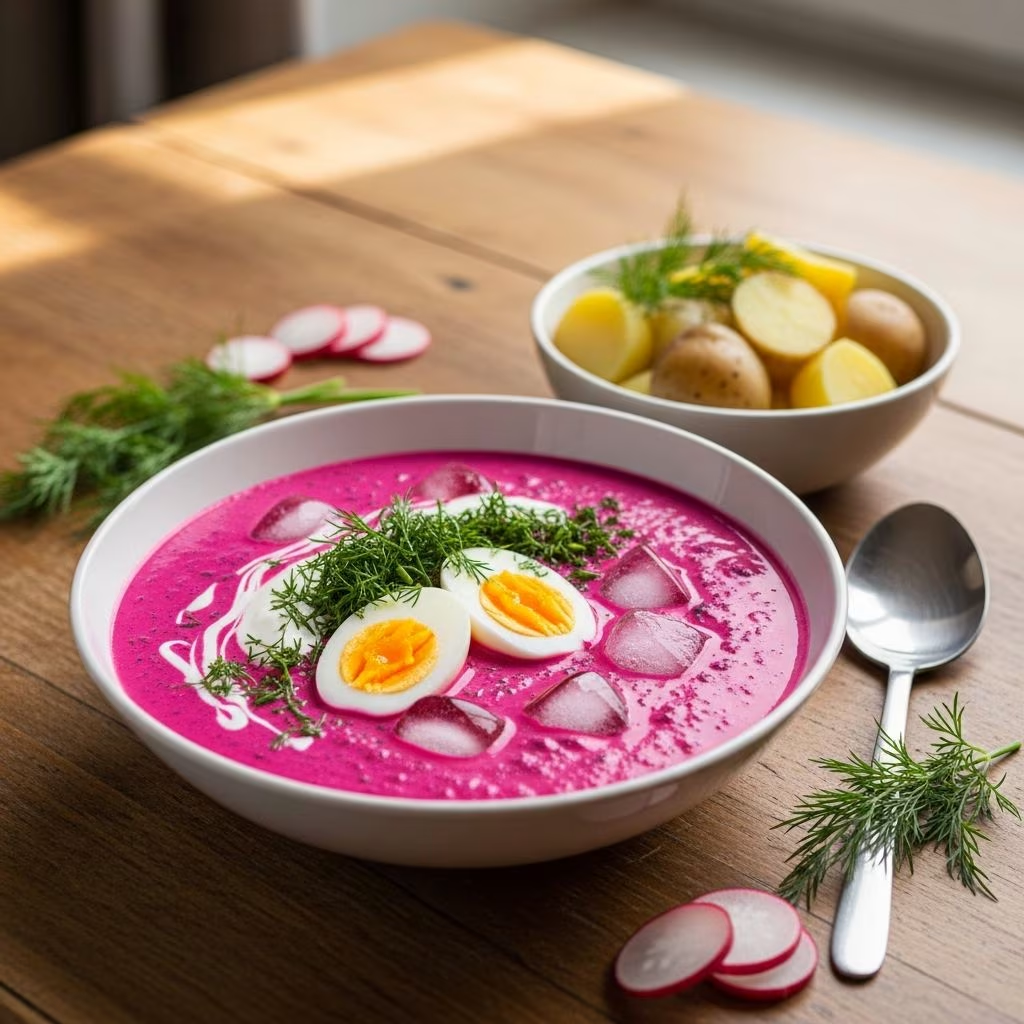
Lithuanian Šaltibarščiai stands as a testament to the ingenuity of Baltic cuisine, transforming humble beets into a vivid, chilled soup that cools the palate during scorching summer days. This iconic dish, often simply called cold beet soup, blends the earthy sweetness of beets with the tangy creaminess of kefir, accented by crisp cucumbers, fresh dill, and hard-boiled eggs. Served alongside steaming boiled potatoes, it offers a perfect balance of cold refreshment and warm comfort.
Origins and Cultural Significance in Lithuania
Šaltibarščiai traces its roots to Lithuania’s agrarian heritage, where beets—a hardy, abundant root vegetable—became a canvas for creative, no-cook meals in the heat of summer. The name ‘Šaltibarščiai’ derives from ‘šaltas’ meaning cold and ‘barščiai’ referring to borscht-like soups, distinguishing it from hot versions popular in other Eastern European cultures. It’s not just food; it’s a seasonal ritual, evoking family gatherings and countryside picnics.
In Lithuania, this soup reigns supreme from late spring through early autumn, when fresh produce floods markets. Its garish pink color, derived from beets, makes it visually striking, while the fermented kefir provides probiotics and a subtle fizz that enhances digestibility. Locals consume it daily during heatwaves, pairing it with new potatoes straight from the garden for a complete, nutrient-dense meal.
Core Ingredients That Define the Flavor
The magic of Šaltibarščiai lies in its simple, fresh components, each contributing to a harmonious profile of sweet, tangy, crunchy, and herbaceous notes. Here’s a breakdown of the essentials:
- Beets: The star ingredient, providing vibrant color and natural sweetness. Use 2-3 medium beets (about 500g), boiled, roasted, or even pickled for extra tang.
- Kefir: 1-1.5 liters of this fermented milk drink is key for creaminess and zest. Substitute with buttermilk or thick yogurt mixed with milk if unavailable.
- Cucumbers: 1-2 pickling or regular cucumbers, finely julienned or diced for crunch. Pickled versions add a briny edge.
- Fresh Herbs: Generous handfuls of dill and chives or spring onions for aromatic freshness.
- Hard-Boiled Eggs: 2-3 eggs, chopped, for protein and richness.
- Seasonings: Salt, pepper, lemon juice, and sometimes garlic for balance.
Boiled potatoes (400-500g) are served on the side to maintain the soup’s chill, absorbing the flavorful liquid like a hearty dip.
Step-by-Step Guide to Crafting Authentic Šaltibarščiai
Preparing this soup is straightforward, requiring minimal cooking and about 45 minutes total, including prep. It’s ideal for batch-making ahead, as flavors deepen after refrigeration.
- Prep the Beets: Wash 2-3 medium beets thoroughly. Boil in salted water for 30-40 minutes until fork-tender, or roast at 200°C (400°F) for 45 minutes drizzled with oil. Cool, peel (skins slip off easily), and julienne into thin matchsticks.
- Boil Eggs and Potatoes: Hard-boil 3 eggs for 10 minutes, cool in ice water, and peel. Chop two finely; reserve one for garnish. Boil 400g peeled potatoes until tender, drain, and keep warm.
- Chop Vegetables and Herbs: Finely dice 1-2 cucumbers, slice 6 spring onions or green onion leaves into 1cm pieces, and mince 1/4 cup dill plus extra for garnish.
- Mix the Soup Base: In a large bowl, pour 1.5L kefir. Stir in beets, cucumbers, chopped eggs, onions, dill, juice of half a lemon, salt, and pepper to taste. Adjust tanginess with more lemon if needed. Refrigerate 1-2 hours for melding.
- Serve: Ladle into chilled bowls, sprinkle with reserved dill, egg, and chives. Plate potatoes separately.
For best results, use room-temperature kefir to avoid curdling, and taste iteratively—Lithuanian palates favor bold acidity.
Nutritional Profile and Health Benefits
Šaltibarščiai is a powerhouse of nutrition, low in calories yet filling. A serving (about 300ml soup + potatoes) delivers roughly 250-300 calories, with beets providing betalains—antioxidants that support detoxification and reduce inflammation. Kefir offers probiotics for gut health, while cucumbers and dill hydrate and aid digestion. Eggs add complete protein (15g per serving), making it a balanced light meal.
| Nutrient | Per Serving | Benefit |
|---|---|---|
| Fiber | 5g | From beets and veggies for satiety |
| Protein | 15g | Eggs and kefir for muscle repair |
| Vitamin C | 20% DV | Boosts immunity from lemon/dill |
| Probiotics | High | Kefir for microbiome support |
It’s naturally gluten-free, vegetarian, and adaptable for vegans using plant-based kefir.
Regional Variations and Creative Twists
While traditional recipes stay true to basics, Lithuanian home cooks experiment. Some roast beets for deeper flavor, others use pickled beets and their juice for intensity. Vegan versions swap eggs for tofu and kefir for soy yogurt-milk blends. In Latvia and Estonia, similar soups appear with sorrel or more garlic. For a fusion twist, add radishes or horseradish for spice.
- Quick Version: Use pre-cooked vacuum beets and Greek yogurt.
- Spicy Kick: Incorporate grated garlic or chili flakes.
- Make-Ahead: Flavors peak after 24 hours; lasts 3 days refrigerated.
Perfect Pairings and Serving Suggestions
Serve Šaltibarščiai ice-cold in clear glass bowls to showcase its pink hue, with potatoes on the side for dipping. Pair with rye bread, sour cream dollops, or a crisp Lithuanian beer like Švyturys. For meals, accompany with smoked fish or herring salad—a classic combo. It’s picnic-perfect or as a starter before grilled meats.
Frequently Asked Questions (FAQs)
What if I can’t find kefir?
Use a mix of thick yogurt (500ml) and buttermilk (1L), or plant-based alternatives for dairy-free.
Can I make Šaltibarščiai in advance?
Yes, prepare up to 48 hours ahead; stir before serving as separation may occur.
Are pickled beets okay?
Absolutely—they add authentic tang; include some juice for color boost.
Is it served hot or cold?
Strictly cold; hot versions are different borscht.
How many servings from this recipe?
6 hearty bowls, scalable easily.
Tips for Mastering the Perfect Pink Soup
Julienne veggies uniformly for texture harmony. Chill bowls and spoons beforehand. Source organic beets for superior sweetness. If too thick, thin with cold water or more kefir. Experiment with fermentation time—overnight resting intensifies flavors.
This soup embodies Lithuania’s resilient spirit: simple ingredients yielding profound refreshment. Whether you’re battling a heatwave or craving Baltic authenticity, Šaltibarščiai delivers every time.
References
- Lithuanian Cold Beet Soup | Šaltibarščiai [Recipe] — My Food Odyssey. 2013-09-21. https://myfoododyssey.com/2013/09/21/lithuanian-saltibarsciai-cold-beet-soup-recipe/
- Šaltibarščiai (Lithuanian Cold Beet Soup) — Galley Pirates. 2020-08-14. https://galleypirate.com/2020/08/14/saltibarsciai-lithuanian-cold-beet-soup/
- Lithuanian Cold Beet Soup (Šaltibarščiai) — The European Dish. N/A. https://theeuropeandish.com/lithuanian-cold-beet-soup-saltibarsciai/
- Šaltibarščiai – Lithuanian Cold Beetroot Soup — Sunberry Jam. N/A. https://sunberryjam.com/saltibarsciai/
- Cold Beet Soup Recipe | How To Make Cold Borscht | Saltibarsciai — YouTube (CookingTidbiT). N/A. https://www.youtube.com/watch?v=jOF6Bb7vBIg