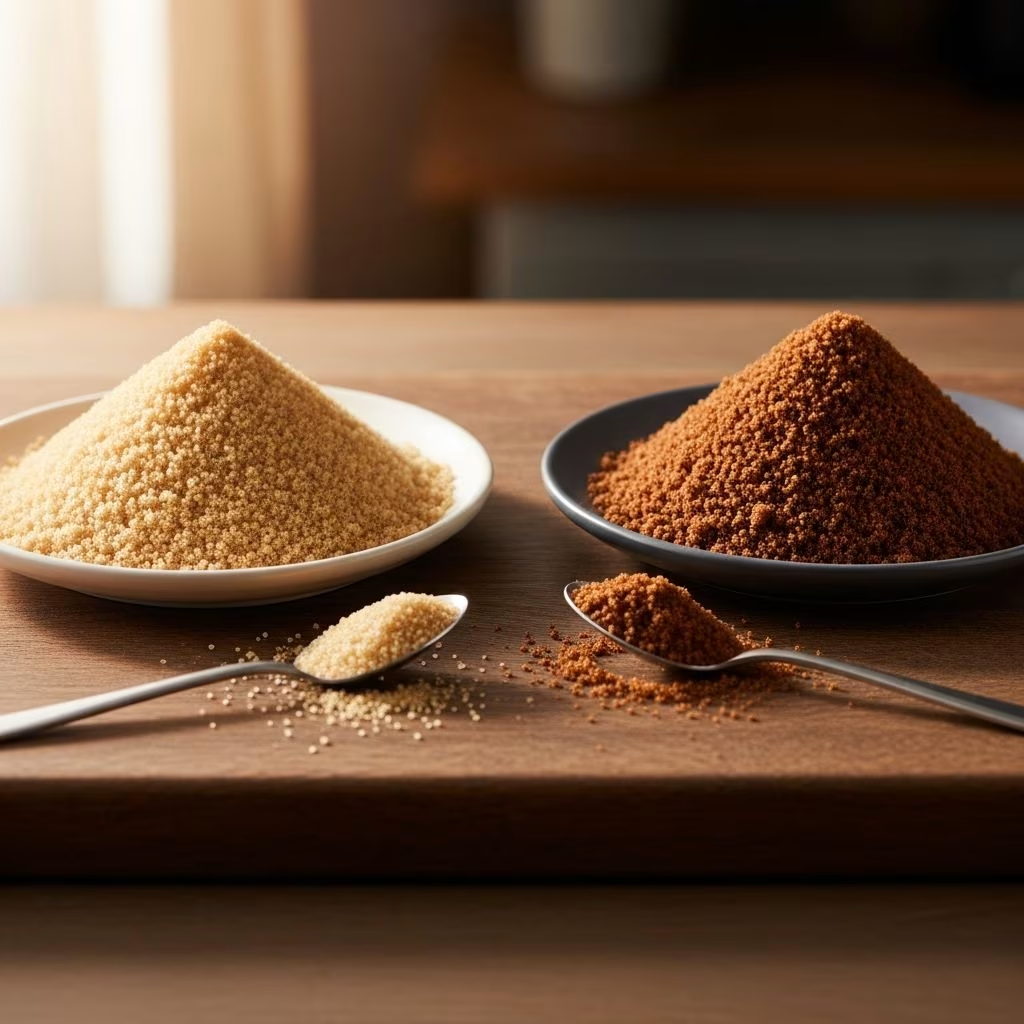
Brown sugar varieties differ primarily in their molasses content, which influences flavor, color, moisture, and texture in baked goods. Light brown sugar contains about 3.5% molasses, while dark has around 6.5%, creating distinct profiles for various recipes.
Understanding Brown Sugar Basics
Brown sugar starts as refined white sugar with molasses reintroduced, mimicking the natural byproduct of sugarcane processing. This addition provides the signature humidity and taste that set it apart from granulated sugar. Historically, unrefined sugars retained molasses naturally, but modern production mixes white sugar with molasses for consistency.
The molasses percentage defines the type: light offers a subtle caramel note, medium bridges the gap, and dark delivers bold, toffee-like depth. This composition affects how sugar interacts with other ingredients, impacting rise, tenderness, and browning in baking.
Molasses Content Breakdown
Molasses is the key differentiator. Here’s a comparison:
| Type | Molasses (%) | Flavor Profile | Color | Moisture Level |
|---|---|---|---|---|
| Light | 3.5% | Mild caramel | Light tan | Moderate |
| Medium | ~5% | Balanced caramel | Medium brown | Higher |
| Dark | 6.5% | Rich toffee, robust | Deep brown | High |
Dark brown sugar’s extra molasses adds acidity and moisture, potentially yielding softer results, while light promotes crispier textures.
Flavor and Aroma Differences
Light brown sugar provides a gentle sweetness ideal for recipes where sugar shouldn’t overpower other flavors. Its milder profile suits everyday baking like vanilla cookies or meringues. Dark brown sugar, conversely, brings intense molasses notes—think burnt caramel or gingerbread spice—enhancing robust dishes.
Medium brown sugar offers versatility, with 1.5 times the molasses of light, adding depth without overwhelming. In taste tests, dark varieties amplify toffee and spice, making them perfect for holiday treats.
Effects on Baking Texture and Structure
Molasses’ hygroscopic nature draws moisture, keeping baked goods chewy. Dark brown sugar’s higher content can make cookies softer and cakes moister due to added liquid and acidity, which interacts with leaveners like baking soda.
- Light: Promotes crisp edges in cookies; lighter crumb in cakes.
- Medium: Balanced tenderness; slight firmness compared to dark.
- Dark: Enhances chewiness; deeper browning via Maillard reaction.
Acidity from molasses slightly lowers pH, boosting browning and tenderness, though differences are subtle in most recipes.
Best Recipes for Each Type
Light Brown Sugar Favorites
Use light for subtle sweetness:
- Classic chocolate chip cookies for chewy centers.
- Butterscotch pudding or sauces.
- Caramel corn or candied nuts.
- Breads and light cakes where molasses shouldn’t dominate.
Medium Brown Sugar Applications
Medium shines in flexible bakes:
- Blondies or bar cookies.
- Spice cakes with moderate flavor boost.
- General substitutions without major taste shifts.
Dark Brown Sugar Standouts
Dark excels in bold flavors:
- Gingerbread, molasses cookies.
- Pecan pies or sticky toffee pudding.
- BBQ rubs or savory glazes.
- Anything with cinnamon, ginger, or cloves.
These choices ensure the sugar complements rather than competes with spices and fats.
Substitution Guidelines
Light and dark are largely interchangeable, with minimal impact on structure since they weigh similarly by volume. Recipes specifying “brown sugar” default to light.
| Substitution | Ratio | Notes |
|---|---|---|
| Light for Dark | 1:1 + 1 tbsp molasses per cup | Boosts flavor if needed. |
| Dark for Light | 1:1 | Stronger taste; moister result. |
| White Sugar Alt | 1 cup + 1-2 tbsp molasses | DIY brown sugar. |
Dark adds moisture and acidity, potentially softening outcomes, but differences are hard to detect casually.
How to Make Your Own Brown Sugar
Combine 1 cup white granulated sugar with 1 tbsp molasses for light, or 2 tbsp for dark. Mix thoroughly by hand or processor until uniform and clumpy. This homemade version matches store-bought closely and prevents waste.
- Measure sugar precisely.
- Add molasses gradually.
- Blend until no streaks remain.
- Store airtight to retain moisture.
Storage Tips to Prevent Hardening
Brown sugar hardens as molasses evaporates. Prevent this with:
- Airtight containers: Glass jars or plastic with tight seals.
- Tight packs: Press sugar down to minimize air.
- Terra cotta savers: Bake a stone at 200°F for 10 min, cool, then bury in sugar.
- Freezer option: For long-term, freeze in bags.
Revive hardened sugar by microwaving in 20-second bursts with a damp paper towel or oven-heating at 250°F.
Nutritional Comparison
All brown sugars are similar calorically to white (~15 cal per tsp), but molasses adds trace minerals like iron, calcium, and potassium—negligible in baking amounts. Dark has slightly more due to higher molasses.
Frequently Asked Questions
Can I always swap light and dark brown sugar?
Yes, for most recipes; flavor shifts are minor, and weights match.
Why does brown sugar clump?
Molasses absorbs moisture from air, then dries out if exposed.
Is brown sugar healthier?
Marginally, from minerals, but use in moderation like white sugar.
What’s unrefined brown sugar?
Centrifugal sugar with natural molasses; less processed but similar taste.
Does molasses type matter in DIY?
Use unsulfured blackstrap for authenticity; avoid light for dark recipes.
Experimenting in Your Kitchen
Test side-by-side in simple recipes like oatmeal cookies: one batch light, one dark. Note color deepening, flavor intensity, and texture. This hands-on approach builds intuition for future bakes, ensuring you select the right sugar every time.
References
- Light vs. dark brown sugar: What’s the difference? — King Arthur Baking. 2025-01-22. https://www.kingarthurbaking.com/blog/2025/01/22/light-vs-dark-brown-sugar
- What’s The Difference Between Light And Dark Brown Sugar? — Food52 (YouTube). Accessed 2026. https://www.youtube.com/watch?v=CVCPHJ6G0Jw
- The Difference Between Light, Medium & Dark Brown Sugar — Sugars.com. Accessed 2026. https://www.sugars.com/the-difference-between-light-medium-dark-brown-sugar