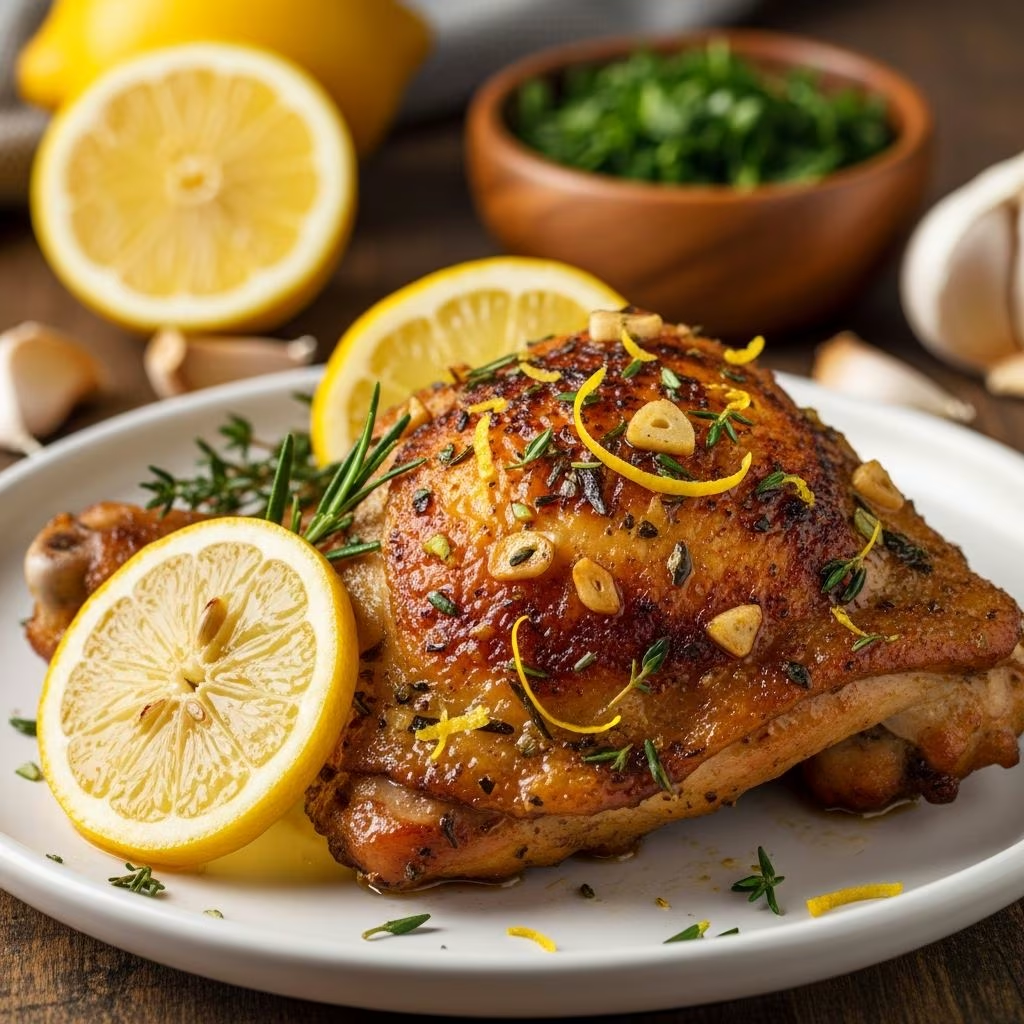
Grilled chicken thighs infused with bright lemon, pungent garlic, and aromatic herbs offer a perfect balance of tangy, savory flavors that make them a standout dish for any occasion. This recipe transforms simple ingredients into a juicy, caramelized main course that’s both healthy and satisfying.
Why Choose Chicken Thighs for Grilling
Chicken thighs stand out as the ideal cut for grilling due to their higher fat content, which keeps the meat moist even under high heat. Unlike leaner breasts, thighs resist drying out, resulting in tender bites with crispy edges when cooked properly. Bone-in options add extra flavor through rendered fat, while boneless versions cook faster for busy cooks.
The dark meat’s natural richness pairs beautifully with acidic marinades like lemon juice, which tenderize without overpowering. Studies from the USDA highlight that thighs provide more iron and zinc compared to breasts, making them a nutritious choice for family meals.
Essential Ingredients for the Marinade
Creating the marinade is straightforward, relying on pantry staples elevated by fresh elements. Key components include:
- Fresh lemons: Juice from 2-3 lemons (about 1/3 cup) for acidity and zest for oils that brighten the dish.
- Garlic: 3-4 crushed cloves for sharp, savory depth that mellows during marination.
- Olive oil: 1/4 cup to carry flavors and prevent sticking on the grill.
- Fresh herbs: Thyme, rosemary, and parsley (2-3 tablespoons chopped) for earthy notes; dried versions work if fresh aren’t available.
- Seasonings: Salt (1 tsp), black pepper (1/2 tsp), and optional red pepper flakes for heat.
Chicken thighs: Opt for 1.5-2 lbs boneless skinless for even cooking, or bone-in skin-on for extra crispiness. Variations can include a touch of honey for subtle sweetness to promote browning.
Step-by-Step Marination Guide
Marination is crucial for flavor penetration and tenderness. Begin by whisking lemon juice, zest, minced garlic, olive oil, chopped herbs, salt, and pepper in a bowl until emulsified. Place chicken in a resealable bag or shallow dish, pour in the marinade, and massage to coat evenly. Refrigerate for at least 1 hour, ideally 4-24 hours for deeper infusion. Reserve a small portion of marinade (pre-chicken contact) for basting to avoid cross-contamination.
Pro tip: Pat chicken dry before marinating to help the mixture adhere better, ensuring maximum flavor absorption.
Perfect Grilling Techniques
Preheat your grill to medium-high (400-450°F) for direct heat. Oil the grates to prevent sticking. Arrange thighs without crowding, searing 5-7 minutes per side until internal temperature hits 165°F. For hatch marks, rotate 45 degrees halfway through each side. Bone-in thighs may need 8-10 minutes per side.
Use a meat thermometer for accuracy—overcooking leads to toughness. Rest chicken 5 minutes post-grill to redistribute juices. Indoor alternative: A cast-iron grill pan on stovetop mimics outdoor results.
| Chicken Type | Grill Time per Side | Internal Temp |
|---|---|---|
| Boneless Skinless | 5-6 minutes | 165°F |
| Bone-in Skin-on | 7-8 minutes | 165°F (thigh) |
| Chicken Breasts (substitute) | 6-7 minutes | 165°F |
Flavor Variations to Try
Customize the base recipe for diversity:
- Mediterranean twist: Add oregano and feta crumbles post-grill.
- Spicy kick: Incorporate smoked paprika or chili flakes.
- Asian fusion: Swap some lemon for lime, add ginger and soy sauce.
- Sweet heat: Mix in honey or maple syrup for caramelization.
These adaptations maintain the core juiciness while introducing global flair.
Healthy Nutrition Breakdown
Per serving (4 oz grilled thigh): Approximately 250 calories, 18g protein, 20g fat (mostly healthy monounsaturated from olive oil), and negligible carbs. Lemon provides vitamin C for immunity, garlic offers antioxidants, and herbs contribute anti-inflammatory compounds. This dish fits keto, paleo, and low-carb diets seamlessly.
Compared to fried versions, grilling slashes added fats, aligning with American Heart Association recommendations for lean proteins.
Creative Serving Suggestions
Pair with grilled vegetables like zucchini, bell peppers, or asparagus for a complete plate. Serve over quinoa salad with cucumber and tomatoes, or in pita wraps with tzatziki. Leftovers shine in salads, tacos, or grain bowls. For meal prep, portion into containers with sides for 3-4 days of lunches.
Storage and Reheating Tips
Cool completely before storing in airtight containers; refrigerate up to 4 days or freeze for 3 months. Reheat gently in a skillet with a splash of broth to restore moisture, or microwave covered. Avoid boiling to preserve texture.
Frequently Asked Questions
Can I use chicken breasts instead?
Yes, but pound to even thickness and marinate longer to combat dryness. Grill 6-7 minutes per side.
How long can I marinate the chicken?
Up to 24 hours for bold flavor; beyond that, acidity may ‘cook’ the meat like ceviche.
What if I don’t have a grill?
Broil in oven at 450°F for 10-12 minutes, flipping halfway, or use an air fryer at 400°F for 15-18 minutes.
Is this recipe gluten-free?
Absolutely, no wheat-based ingredients involved.
Can I make it ahead for a party?
Marinate day before, grill just before serving. Scale up marinade proportionally.
Common Grilling Mistakes to Avoid
Don’t skip the thermometer—visual cues deceive. Avoid high direct heat initially to prevent charring before cooking through. Pressing down on meat squeezes out juices; let it sear naturally.
Pairing Wines and Sides
Crisp whites like Sauvignon Blanc complement the citrus notes. Sides: Couscous tabbouleh, roasted potatoes, or fresh green salad.
References
- USDA FoodData Central: Chicken Thigh Nutrition — United States Department of Agriculture. 2023-05-15. https://fdc.nal.usda.gov/fdc-app.html#/food-details/172385/nutrients
- American Heart Association: Grilling Guidelines — American Heart Association. 2024-02-10. https://www.heart.org/en/healthy-living/healthy-eating/cooking-skills/grilling
- Food Safety and Inspection Service: Safe Minimum Internal Temperature — USDA FSIS. 2023-11-20. https://www.fsis.usda.gov/food-safety/safe-food-handling-and-preparation/food-safety-basics/safe-temperature-chart