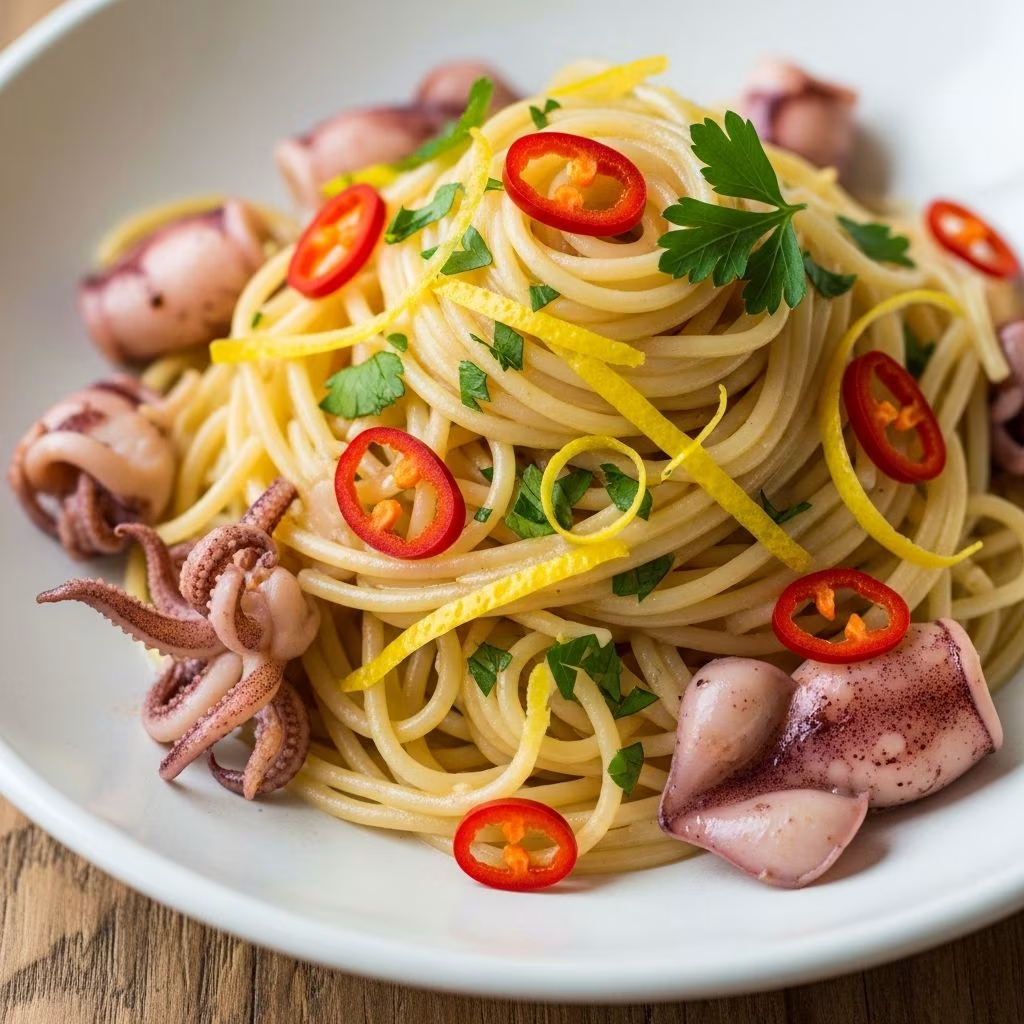
Creating a memorable squid pasta dish requires understanding how three fundamental elements work together: the tender texture of properly cooked calamari, the brightness of fresh lemon, and the complexity of chile heat. This elegant yet straightforward preparation transforms humble squid into a sophisticated pasta course that rivals restaurant presentations. The dish comes together in approximately twenty to thirty minutes, making it accessible for weeknight entertaining or a special dinner at home.
Understanding Your Primary Ingredients
Selecting Quality Squid
The foundation of this dish rests entirely on squid quality. Cleaned squid, whether purchased from a fishmonger or a well-stocked supermarket, should appear pristine white or pale pink with no ammonia smell. One pound of squid typically serves four people when combined with pasta and sauce. The squid body, also called the hood, should be sliced into uniform rings approximately one-quarter inch thick to ensure even cooking. Tentacles require minimal preparation—simply leave them whole or halve larger specimens for consistent bite-sized pieces. This uniformity prevents overcooking thin sections while thicker portions remain tough.
Choosing Pasta Shapes
Pasta selection significantly impacts the final dish’s textural experience. Wider ribbon pastas like pappardelle or tagliatelle showcase the squid and sauce beautifully, allowing pieces to nestle within the pasta curves. For those preferring different presentations, bucatini or spaghetti work equally well, with each shape offering distinct advantages. Bucatini’s hollow center captures sauce throughout, while spaghetti provides traditional elegance. Dried pasta maintains better texture during tossing than fresh versions and requires no advance preparation. The starch released during pasta cooking becomes essential for sauce construction, making pasta water an ingredient rather than waste.
Lemon as Both Acid and Flavor
Lemons perform multiple functions within this preparation. Fresh lemon juice brightens the overall flavor profile while cutting through the squid’s subtle fishy undertones. Lemon zest adds aromatic intensity and visual appeal. Approximately two large lemons yield sufficient juice and zest for this recipe. The lemon juice should be freshly squeezed rather than bottled—the difference in vibrancy proves immediately noticeable. Consider reserving whole lemon halves to squeeze at the finish, delivering maximum citrus punch when the dish reaches the table.
Building Layers of Flavor
The Aromatic Foundation
Garlic and lemon zest create the flavor foundation by developing through quick cooking over medium-high heat. Four garlic cloves, finely minced or grated, distribute evenly throughout the oil, releasing their pungent compounds that mellow into sweetness through heat. This initial phase requires approximately thirty seconds of stirring—just long enough for the aroma to become pronounced and the mixture to begin adhering to the pan. This adherence indicates the garlic sugars are caramelizing slightly, adding depth without bitterness. Adding lemon juice at this stage creates a quick reduction that concentrates acidity and flavor.
Incorporating Chile Heat
Calabrian chile paste, derived from Italian chiles, provides concentrated heat and fruity undertones distinctly different from simple chile powder or fresh chiles. One tablespoon delivers significant warmth without overwhelming the delicate squid. The paste integrates smoothly into the butter-based sauce, distributing heat evenly rather than creating hot spots. For those preferring milder results, reduce the quantity to one-half tablespoon and taste before adjusting. Fresh chiles like Fresno or jalapeños offer alternatives, though the flavor profile shifts from fruity heat to fresh vegetable intensity.
Mastering the Cooking Technique
Preventing Squid from Becoming Rubbery
Squid cooking presents a specific challenge: it becomes tender when briefly exposed to high heat or braised for extended periods, but becomes tough and chewy at medium temperatures. This recipe employs rapid cooking over medium-high heat combined with butter braising, which keeps the squid moist while reaching doneness. Adding squid to the aromatic base along with two tablespoons of butter and half a cup of pasta water creates a gentle braising liquid. The butter emulsifies with the water and pasta starch, creating a silky sauce while squid reaches the perfectly opaque, just-firm texture indicating doneness. This entire phase requires approximately two minutes—any longer risks toughness.
Creating the Silky Sauce
The sauce develops through the combination of fat (butter and olive oil), pasta starch, and lemon juice. Butter, approximately five tablespoons total, emulsifies these components into a cohesive coating that clings to pasta strands and squid pieces. Reserve half the pasta cooking liquid before draining—this starchy water acts as the sauce’s building block. Adding small quantities gradually while tossing constantly allows you to control consistency. A properly constructed sauce coats pasta completely without pooling excessively at the bowl’s bottom. The final two to three minutes of cooking on heat allow the sauce to thicken as water evaporates and emulsification strengthens.
Preparation and Assembly Steps
| Stage | Action | Timing |
|---|---|---|
| Initial | Cook pasta in salted boiling water until al dente; reserve pasta water and drain | 8-12 minutes |
| Preparation | Grate lemon zest and garlic; squeeze lemon juice into measuring glass | 5 minutes |
| Aromatics | Heat olive oil, cook lemon zest and garlic until fragrant, add lemon juice and reduce | 1-2 minutes |
| Squid | Add squid, butter, salt, and pasta water; cook until partially cooked | 2 minutes |
| Assembly | Add cooked pasta, chile paste, remaining butter, and toss with sauce | 2-3 minutes |
| Finish | Remove from heat, stir in basil and remaining lemon juice; season | 1 minute |
Step-by-Step Execution
Beginning with pasta: Fill a large pot with salted water—it should taste like the sea. Bring to rolling boil before adding pasta. Stir occasionally to prevent sticking. Most dried pasta reaches al dente doneness between eight and twelve minutes depending on shape and brand. Taste at the minimum time suggested on packaging, then continue cooking if needed. The pasta will finish cooking slightly during the final tossing phase, so slight undercooking proves preferable to mushiness.
Preparing components: While pasta cooks, grate lemon zest using a microplane grater rather than a box grater, which tends to include bitter white pith. Grate the garlic directly into the zest bowl—this ensures even distribution. Squeeze lemon juice and measure it; you need approximately one-quarter cup total. Slice the cleaned squid into rings and halve tentacles if desired.
Creating the aromatic base: Once pasta drains and you’ve reserved the cooking liquid, heat olive oil in a large skillet over medium-high heat. Add the lemon zest and garlic mixture, stirring constantly for about thirty seconds until extremely fragrant. The mixture should begin sticking slightly to the pan bottom. Pour in half the lemon juice and stir for approximately one minute, allowing it to reduce slightly and create a concentrated base.
Cooking the squid: Add the sliced squid, two tablespoons of butter, salt, and half a cup of reserved pasta water to the aromatic base. Stir frequently for about two minutes until the butter melts completely and the squid becomes partially opaque. The squid will continue cooking during the final tossing phase, so avoid extended cooking at this stage.
Bringing everything together: Add the drained pasta along with one tablespoon of chile paste, half a cup of pasta water, and the remaining three tablespoons of butter. Toss continuously with a wooden spoon or spatula, scraping the pan bottom to incorporate all flavorful browned bits. Add additional pasta water in small increments as the sauce develops. This phase typically requires two to three minutes. The squid should reach an opaque, white appearance indicating perfect doneness.
Final seasoning: Remove the skillet from heat and stir in a generous handful of torn basil—approximately one-half cup—along with the remaining lemon juice. Taste and season generously with freshly ground pepper. The basil adds fresh aromatic notes that contrast beautifully with the chile heat and lemon brightness.
Ingredient Variations and Substitutions
Chile Options
While Calabrian chile paste offers distinctive fruity heat, several alternatives work equally well. Fresh Fresno chiles, thinly sliced with seeds removed for milder heat, provide crisp vegetable notes. Red jalapeños deliver bright heat with less fruity character. Simple dried red chile flakes offer straightforward heat though less complexity. For those avoiding significant spice, reduce quantities substantially and taste frequently during cooking.
Herb Selections
Basil provides traditional Mediterranean flavor, but other fresh herbs offer interesting variations. Fresh mint brings cooling sweetness that balances heat beautifully. Cilantro adds bright herbaceousness for those enjoying its flavor profile. Dill complements squid’s subtle sweetness and works particularly well with lemon. A mixture of herbs often yields more complex results than single varieties. Add herbs exclusively at the finish to preserve their bright character.
Butter and Fat Adjustments
This recipe employs approximately five tablespoons of butter total across cooking phases. Those seeking lighter preparations can reduce butter quantities and increase pasta water slightly, though the sauce will be less silky. Increasing butter to six or seven tablespoons creates an exceptionally luxurious sauce, particularly appealing for special occasions. Some cooks prefer replacing one to two tablespoons of butter with quality extra-virgin olive oil added at the finish for fresher flavor.
Common Challenges and Solutions
Squid Becoming Tough
Overcooking represents the primary cause of tough squid. If squid appears white but feels rubbery, the cooking time exceeded necessary duration. Solutions involve keeping heat at medium-high rather than higher temperatures and removing the skillet from heat as soon as squid reaches opaque appearance. Alternatively, extend cooking significantly longer—beyond fifteen minutes—to achieve tender results through braising, though this contradicts the quick-cooking technique this recipe employs.
Sauce Too Thin or Too Thick
Thin sauce results from insufficient pasta starch or excessive liquid. Add more pasta water gradually rather than dumping it all at once. If sauce becomes too thick, add additional pasta water one tablespoon at a time, stirring well. Remember that sauce continues thickening slightly as it cools, so the consistency during cooking should appear slightly looser than your final preference.
Excessive Chile Heat
If chile overwhelms other flavors, the dish requires more acid to balance intensity. Squeeze additional lemon juice or add a splash of good-quality white wine during the final moments of cooking. More butter also helps, as fat carries heat differently than water-based preparations. Future attempts can employ reduced chile quantities based on your heat tolerance.
Serving Suggestions and Accompaniments
Serve this pasta immediately while the squid remains tender and sauce maintains its silky consistency. Divide among warmed bowls and season each with freshly ground pepper and additional fresh herbs. A crisp white wine like Pinot Grigio or Vermentino complements the lemon brightness and squid delicately. Crusty bread becomes essential for soaking up every drop of sauce. Simple green salads dressed with lemon vinaigrette and quality olive oil provide refreshing contrast without overwhelming delicate seafood flavors.
Frequently Asked Questions
How far in advance can I prepare squid for cooking?
Cleaned squid keeps refrigerated for one to two days in airtight containers. Prepare squid slicing and seasoning shortly before cooking rather than hours in advance, as the flesh begins oxidizing and changing texture when exposed to air. Some cooks marinate squid briefly in lemon juice and oil beforehand, which tenderizes the meat through acidic action.
Can frozen squid be substituted for fresh?
Frozen squid works reasonably well if thawed slowly in refrigeration overnight rather than using heat methods. Freezing breaks down cell structures slightly, making the squid more tender, though texture becomes less firm. Quality differences between excellent fresh squid and properly thawed frozen squid prove minimal for most palates.
What pasta type works best with this sauce?
Ribbon pastas like tagliatelle or pappardelle showcase squid pieces beautifully. However, spaghetti, linguine, bucatini, or even short shapes like campanelle work effectively. Personal preference and available pantry items should guide your selection—the sauce clings well to nearly all pasta shapes.
How does cooking time change with pasta quantity adjustments?
This recipe scales reasonably well for larger portions. For six servings instead of four, use one and one-half pounds squid, half a pound additional pasta, and increase butter to six tablespoons. The cooking times remain essentially unchanged, though final tossing may require slightly longer to integrate sauce evenly throughout larger pasta volume.
Can this dish be made ahead and reheated?
This preparation is best enjoyed immediately, as squid continues cooking from residual heat and reheating toughens it further. However, components can be prepared separately and combined at serving time. Cook pasta ahead and store separately; prepare squid and aromatics as needed; combine just before service.
References
- Lemon-Chile Calamari Pasta — Umami Recipes. Accessed April 2026. https://www.umami.recipes/recipe/3S8jk9puNfAmg0gvLVq5
- Pasta with Crispy Squid, Lemon and Chilli — Image Magazine Ireland. Accessed April 2026. https://www.image.ie/living/looking-inspiring-fish-dish-pasta-squid-will-liven-things-143982
- Squid Linguine with Chili and Lemon — Bowen Appétit. September 17, 2015. https://www.bowenappetit.com/2015/09/17/squid-linguine-with-chili-and-lemon/
- Lemon Squid Chilli Pasta — Safcol. Accessed April 2026. https://www.safcol.com.au/recipe/lemon-squid-chilli-pasta/
- Pasta with Crispy Squid, Lemon, and Chile by Alison Roman — Annie Varberg Food Blog. Accessed April 2026. https://www.annievarberg.com/annie-and-alison-food-blog/pasta-with-crispy-squid-alison-roman