The kouign-amann stands as one of France’s most distinctive and beloved pastries, originating from the Brittany region where it has been perfected over generations. Pronounced “queen ah-mahn,” this remarkable creation represents a unique intersection of technical baking prowess and simple, quality ingredients. The name itself derives from the Breton language, combining “kouign” (cake) and “amann” (butter), a linguistic tribute to this pastry’s fundamental character.
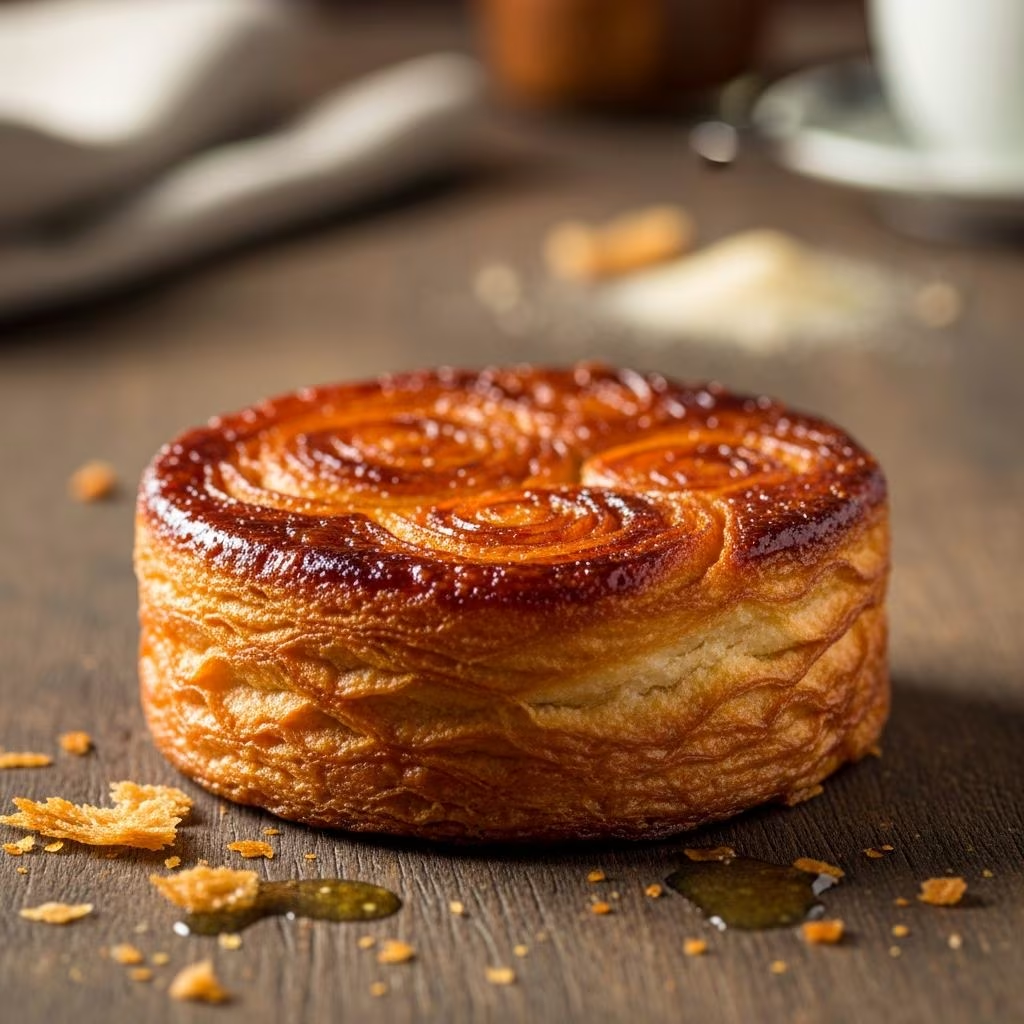
What distinguishes kouign-amann from other laminated pastries lies in its particular combination of textures and flavors. Unlike croissants, which rely primarily on yeast for their airy structure, kouign-amann incorporates both yeast and lamination techniques, resulting in a pastry that achieves multiple textural layers simultaneously. The exterior develops a caramelized, sometimes slightly charred sugar coating that provides a delightful crackling texture, while the interior offers tender, buttery layers with a soft crumb structure.
The Origins and Cultural Significance
Kouign-amann emerged from the Brittany region, a coastal area with a rich culinary heritage and deep-rooted traditions of butter production. The pastry represents both the resourcefulness of Breton bakers and the region’s access to exceptional butter, a fundamental ingredient in French baking culture. Over the centuries, kouign-amann evolved from a simple regional treat into a sought-after pastry throughout France and beyond.
The pastry’s popularity extended beyond Brittany due to its distinctive character and the technical skill required to produce it successfully. Traditional Breton bakeries jealously guarded their recipes, with some bakeries in towns like Douarnenez becoming legendary for their kouign-amann preparations. The pastry became so emblematic of the region that it achieved protected status, with certain bakeries maintaining traditional production methods.
Essential Ingredients and Their Roles
Creating an authentic kouign-amann requires understanding each ingredient’s specific function in the pastry’s development. The ingredient list appears deceptively simple, yet each component plays a crucial role in achieving the desired outcome.
- Bread flour: Provides the structural foundation with adequate protein content to develop gluten networks that support the lamination layers. The bread flour’s higher protein content compared to all-purpose flour creates stronger dough that can withstand the folding and rolling processes without tearing.
- Water and milk: These hydration sources activate the flour and facilitate gluten development. The combination of water and milk creates a dough with optimal moisture balance, with milk contributing slight sweetness and richness.
- Instant yeast: Provides the leavening agent that creates the characteristic rise and texture. The yeast produces gases that create air pockets throughout the dough, contributing to the interior’s tender crumb.
- Unsalted butter (for dough): Incorporates into the initial dough, providing richness and beginning the lamination process. The initial butter addition helps establish the foundation for subsequent lamination layers.
- Unsalted butter (for lamination): This constitutes the primary lamination layer, creating the distinct flaky, layered texture that characterizes the finished pastry. Quality European butter produces superior results due to its higher fat content and complex flavor profile.
- Caster sugar: Applied during rolling and lamination, the sugar melts and caramelizes during baking, creating the distinctive golden-brown exterior and contributing to the pastry’s complex sweetness.
- Sea salt: A pinch of fine sea salt crystals enhances the sugar’s flavor and creates a sophisticated balance between sweetness and salinity, elevating the overall tasting experience.
Dough Preparation: Building the Foundation
The initial dough preparation establishes the framework for successful lamination. Begin by combining the dry ingredients—bread flour, yeast, and salt—in a large mixing bowl or stand mixer fitted with a dough hook. The salt should not directly contact the yeast, as salt can inhibit yeast activity, so distribute the salt separately throughout the flour mixture.
Add the water and milk gradually while mixing on low speed. The dough will initially appear rough and shaggy, but continued mixing develops the gluten structure. Once the liquid has been incorporated, increase the mixer speed to medium-high and add the softened butter in small pieces. The mixing process typically requires 8-10 minutes at this stage, during which the dough transforms from a rough mass into a smooth, elastic ball that cleanly releases from the bowl’s sides.
Transfer the completed dough to a buttered bowl, cover with plastic wrap or a damp cloth, and allow it to rest in a warm environment for approximately one hour. The dough should roughly double in volume during this rise. This fermentation period develops flavor and allows the gluten to relax, preparing the dough for the lamination process.
The Lamination Technique: Creating Flaky Layers
Lamination represents the technical foundation of kouign-amann’s distinctive texture. After the initial rise, turn the dough onto a lightly floured work surface. Using a metal pastry scraper or bench knife helps manage the dough’s stickiness. The goal is to roll the dough into a rectangle approximately 12 by 18 inches, with the shorter sides positioned to your left and right.
The rolling process requires patience and a gentle touch. If the dough proves too elastic and resistant, allow it to rest for 5-10 minutes to permit gluten relaxation. Use minimal flour to prevent excess flour incorporation, which would compromise the pastry’s texture. A metal scraper proves invaluable for coaxing the dough into shape without adding excessive flour.
Once the dough reaches the desired rectangular dimensions, the lamination process begins in earnest. Spread softened butter (typically 250 grams for standard recipes) evenly across the dough’s surface, leaving approximately a half-inch margin around the edges. Sprinkle a generous layer of caster sugar over the butter, creating a sweet, buttery coating.
The folding technique varies among bakers, but a common approach involves folding the dough into thirds, similar to making croissant dough. This creates multiple layers of alternating dough and butter-sugar filling. Some bakers prefer rolling the dough tightly into a spiral log, which produces a different visual presentation while maintaining similar flavor and texture characteristics.
Shaping and Portioning the Pastry
After lamination, the dough requires a second rise period, typically lasting 20-30 minutes. This rest allows the shaped dough to relax and provides additional yeast fermentation. The dough may be refrigerated at this stage if time constraints require, allowing bakers to prepare the pastry in stages.
Portioning the dough into individual pastries can be accomplished through various methods. The most common approach involves cutting the laminated log into equal segments, typically yielding 12-16 pieces depending on desired size. Each piece is then placed into a caramelized sugar-lined muffin tin or tartlet mold, allowing the dough to settle and fill the cavity.
Some bakers prefer shaping individual pieces into spirals or knots before placing them in molds, creating visual interest while maintaining the pastry’s layered texture. The surface of each pastry should be lightly brushed with melted butter and dusted with additional caster sugar, which caramelizes during baking and creates the signature golden exterior.
Baking Conditions and Techniques
Kouign-amann requires precise oven conditions to achieve optimal results. Preheat the oven to 400-425 degrees Fahrenheit (200-220 degrees Celsius), ensuring complete temperature stabilization before introducing the pastries. The high heat promotes rapid caramelization of the sugar coating while allowing adequate time for the interior layers to cook through and set.
Baking typically requires 20-25 minutes, during which the pastries should develop a deep golden-brown to amber color. The sugar exterior will caramelize, creating a crisp, slightly crunchy crust that contrasts beautifully with the tender interior. Bakers should watch carefully during the final minutes, as the sugar can transition from perfectly caramelized to burnt remarkably quickly.
Remove the pastries from the oven when they achieve a rich golden-brown color with slight charring around the edges. Allow them to cool in their molds for several minutes before transferring to a cooling rack. This brief cooling period in the molds allows the caramelized sugar to set slightly, preventing the delicate pastries from collapsing during transfer.
Common Challenges and Solutions
| Challenge | Possible Causes | Solutions |
|---|---|---|
| Dough too sticky to handle | Excessive hydration or warm environment | Refrigerate dough for 15-20 minutes; use metal scraper; work quickly in cooler kitchen |
| Butter leaking from pastry | Inadequate sealing or overly warm conditions | Seal dough edges carefully; chill before baking; ensure mold has sugar coating to prevent sticking |
| Insufficient caramelization | Oven temperature too low | Verify oven temperature with thermometer; increase heat slightly; extend baking time |
| Burnt sugar exterior | Oven temperature too high or excessive sugar | Reduce oven temperature by 25 degrees; monitor baking time carefully; use moderate sugar amount |
| Dense, heavy interior | Insufficient lamination or inadequate rising | Ensure proper fold technique; allow adequate rise time; verify yeast freshness |
Storage and Serving Recommendations
Kouign-amann achieves peak flavor and texture within several hours of baking, while the exterior remains crisp and the interior retains its tender quality. Serve the pastries warm or at room temperature, perhaps with a cup of strong coffee or tea to complement their rich, sweet character.
For storage, place cooled pastries in an airtight container at room temperature, where they will maintain reasonable quality for 1-2 days. The crispy exterior will gradually soften as moisture from the interior migrates outward. For longer storage, freeze cooled pastries in a freezer-safe container for up to two weeks. Thaw at room temperature or briefly warm in a 350-degree Fahrenheit oven to restore the pastry’s texture.
Variations and Creative Adaptations
While the traditional kouign-amann remains beloved for its pure simplicity, creative bakers have developed interesting variations. Some incorporate fleur de sel or other specialty sea salts to enhance the sweet-savory balance. Others experiment with different sugar types, such as muscovado or demerara, which impart deeper caramel flavors.
Adventurous bakers have introduced savory versions featuring cheese or herbs, though these represent departures from the traditional Breton formula. Flavor additions such as vanilla, cardamom, or citrus zest can be incorporated into the dough, creating subtle variations while maintaining the pastry’s essential character.
Equipment and Supplies
Successful kouign-amann production benefits from specific equipment. A stand mixer with a dough hook significantly simplifies the initial dough development, though hand-kneading remains possible with additional physical effort. A metal pastry scraper or bench knife proves invaluable for managing the sticky dough during lamination. Specialized muffin tins or tartlet molds designed for kouign-amann production are available, though standard muffin tins work acceptably with proper sugar caramelization.
A reliable oven thermometer ensures temperature accuracy, preventing common baking failures related to incorrect oven heat. Weighing ingredients using a digital scale provides greater precision than volume measurements, particularly important for baking applications where ingredient proportions significantly affect outcomes.
Frequently Asked Questions
Can instant yeast be substituted with active dry yeast?
While substitution is technically possible, instant yeast produces superior results in kouign-amann due to its finer granule structure and more consistent fermentation. If using active dry yeast, increase the amount by approximately 25% and allow additional rising time.
What type of butter produces the best results?
European-style butter with higher fat content (86-88%) produces superior lamination compared to standard American butter (80% fat). The additional fat creates more distinct layers and contributes to richer flavor.
How far in advance can kouign-amann dough be prepared?
Laminated dough can be refrigerated for up to 24 hours after lamination, allowing flexibility in production scheduling. Cold dough actually improves lamination by keeping butter firm and distinct.
Why is sea salt included if the pastry is already sweet?
The salt enhances and balances the sweetness, creating complexity in flavor perception. A pinch of salt actually amplifies the perception of sweetness while preventing cloying taste.
Can the recipe be scaled for large batch production?
Yes, recipes scale proportionally, though timing and temperature management become more critical with larger volumes. Professional bakers often produce kouign-amann in batches of several dozen using commercial equipment.
Mastering the Craft
Becoming proficient in kouign-amann production requires practice and attention to detail. The first attempt may not achieve perfection, but subsequent batches should improve as bakers develop intuition for dough consistency, timing, and oven behavior. Keep records of adjustments and results to guide future attempts.
The kouign-amann represents more than simply a pastry recipe—it embodies the intersection of culinary tradition, technical expertise, and the joy of creating something truly exceptional. With patience, quality ingredients, and careful technique, home bakers can replicate this Breton masterpiece and experience the satisfaction of producing an authentic French pastry.
References
- Kouign Amann recipe – David Lebovitz — David Lebovitz, professional pastry chef and food writer. Accessed April 2026. https://www.davidlebovitz.com/kouign-amann-recipe/
- How to Make Kouign-Amann: The Perfect Pastry | NYT Cooking — The New York Times Company. Accessed April 2026. https://www.nytimes.com/video/dining/100000004885889/how-to-make-kouign-amann-the-perfect-pastry.html
- Kouign Amann – World’s Best Pastry – Cook with Kushi — Cook with Kushi (professional food blogger and recipe developer). Accessed April 2026. https://www.cookwithkushi.com/kouign-amann-french-pastry-recipe/
- Delicious Kouign-Amann Pastry Recipe – Barbara Bakes — Barbara Bakes (professional pastry blogger). Accessed April 2026. https://www.barbarabakes.com/kouign-amann/
- Kouign Amann (Brittany’s Buttery, Caramelised, Layered Pastry Cake) — Lin’s Food (culinary education and recipe development). Accessed April 2026. https://www.linsfood.com/kouign-amann-brittany-butter-pastry-cake/