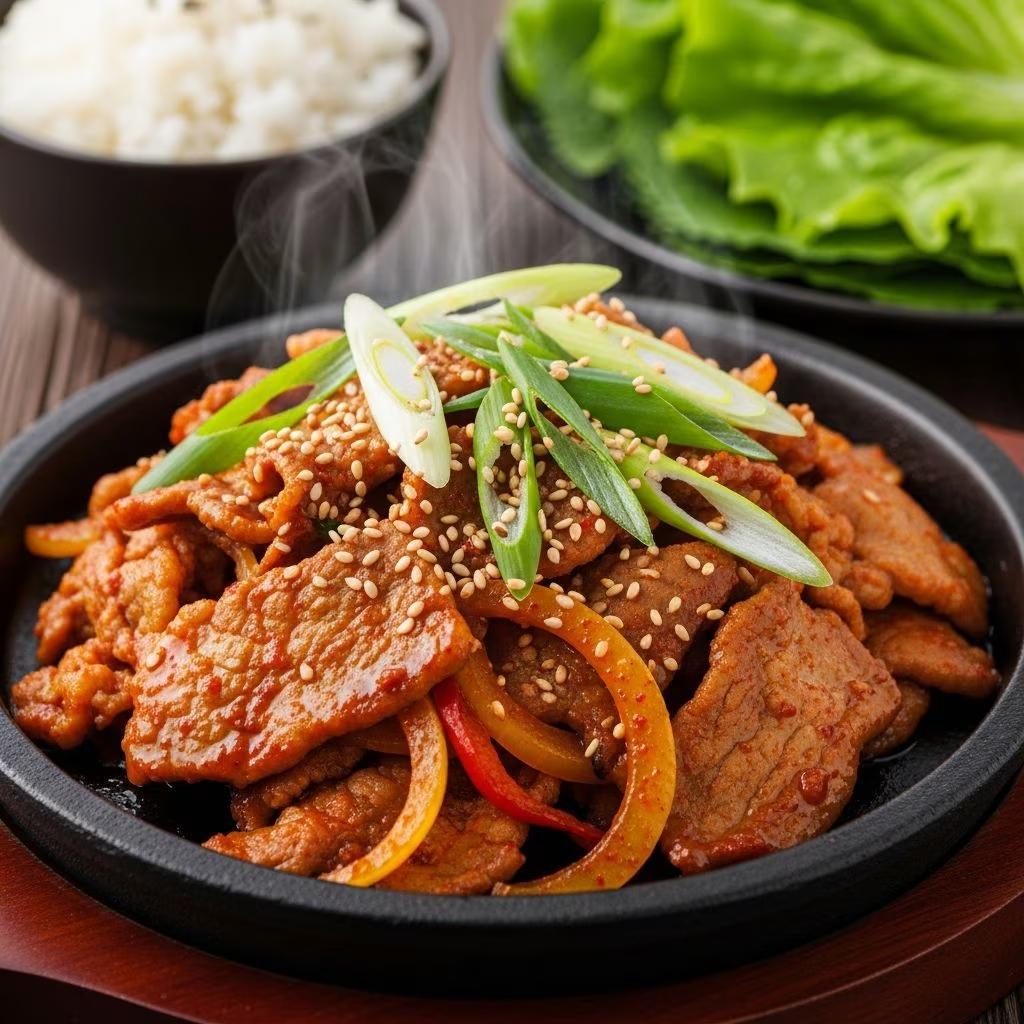
Korean spicy pork bulgogi, known as jeyuk bokkeum or dwaeji bulgogi, stands out as one of the most beloved dishes in Korean cuisine. This stir-fried pork dish features thin slices of pork marinated in a robust, spicy sauce made primarily from gochujang, a fermented chili paste that delivers intense heat and depth of flavor. Unlike beef bulgogi, which relies on a sweeter soy-based marinade, pork bulgogi embraces bold spiciness that pairs perfectly with the meat’s natural fattiness, creating tender, caramelized bites that are irresistible.
Originating from Korean barbecue traditions, this dish has evolved into a staple for both home cooking and restaurant menus. It’s quick to prepare, requiring just minutes of marinating and cooking, making it ideal for weeknight dinners or casual gatherings. The combination of sweet, savory, and spicy elements makes it versatile, appealing to spice lovers and those new to Korean flavors alike.
Understanding the Essence of Korean Pork Bulgogi
At its core, Korean pork bulgogi thrives on balance. The marinade tenderizes the pork while infusing it with layers of taste: the fiery kick from gochujang and gochugaru (Korean chili flakes), sweetness from sugar or fruit purees, umami from soy sauce and sesame oil, and aromatics from garlic and ginger. Pork shoulder or belly is preferred for its marbling, which renders down during cooking to keep the meat juicy.
Thin slicing is crucial—typically 1/8-inch thick—to ensure even cooking and maximum sauce absorption. Onions and green onions add texture and freshness, while optional fruit like Asian pear or apple introduces natural enzymes that further tenderize the meat. This dish shines in its simplicity, yet the interplay of ingredients creates complexity that defines authentic Korean street food and BBQ.
Essential Ingredients for Authentic Flavor
Gathering the right components is key to replicating restaurant-quality results. Here’s a breakdown of the must-haves:
- Pork: 2 pounds thinly sliced pork shoulder or belly for optimal fat content and tenderness.
- Gochujang: 6 tablespoons of this red chili paste forms the spicy base.
- Gochugaru: 1-2 tablespoons chili flakes to adjust heat level.
- Soy Sauce: 3 tablespoons for salty depth.
- Sesame Oil: 2 tablespoons for nutty aroma.
- Garlic and Ginger: 2 tablespoons minced garlic and 1 tablespoon grated ginger to eliminate any gaminess.
- Sweeteners: 2 tablespoons sugar, 1 tablespoon honey, or grated Asian pear/apple for balance.
- Rice Wine or Mirin: 3 tablespoons to tenderize and add subtle sweetness.
- Vegetables: 1 sliced onion and 3 chopped green onions for crunch.
These ingredients are widely available at Asian markets or online, with substitutions like honey for rice syrup maintaining authenticity.
Step-by-Step Preparation Guide
Preparing spicy Korean pork bulgogi takes about 1.5 hours, including marinating time. Follow these detailed steps for success.
1. Prepare the Marinade
In a large bowl, whisk together gochujang, gochugaru, soy sauce, rice wine, sugar, honey, sesame oil, minced garlic, grated ginger, and grated fruit if using. Blend until smooth, tasting to adjust spice—add more gochugaru for extra heat. This creates a thick, vibrant red paste that clings to the meat.
2. Slice and Marinate the Pork
If not pre-sliced, freeze the pork briefly for easy thin cutting. Add pork slices, onions, and green onions to the marinade. Toss thoroughly to coat every piece, ensuring vegetables are well distributed. Cover and refrigerate for at least 30 minutes, ideally 1 hour or overnight for deeper flavor penetration.
3. Cooking Methods
Stovetop Stir-Fry: Heat a large skillet over medium-high. Add marinated pork in batches to avoid crowding. Stir frequently for 8-10 minutes until liquid evaporates, pork browns, and edges caramelize. The sauce thickens into a glossy coating.
Grilling: Preheat grill to medium-high. Grill pork slices 2-3 minutes per side, basting with extra marinade. This method imparts a smoky char perfect for summer BBQs.
Let rest briefly before serving to lock in juices.
| Method | Time | Best For |
|---|---|---|
| Stovetop | 10 min | Quick weeknights |
| Grill | 6-8 min | Outdoor parties |
Perfect Pairings and Serving Suggestions
Serve hot with steamed rice to soak up the spicy sauce. Traditional sides include kimchi for tang, ssamjang (soybean paste dip) with lettuce wraps, and banchan like pickled radish or spinach namul. A fried egg on top adds richness. For a full meal, pair with cold noodles or cucumber salad to cool the heat.
- Vegetable sides: Stir-fried cabbage or zucchini.
- Beverages: Soju, makgeolli, or iced barley tea to complement spice.
- Wraps: Use perilla leaves or romaine for low-carb fun.
Customization and Variations
Adapt to preferences or dietary needs:
- Less Spicy: Reduce gochujang to 4 tablespoons and omit gochugaru.
- Vegan: Swap pork for mushrooms or tofu, using the same marinade.
- Extra Veggies: Add bell peppers, carrots, or rice cakes for heartiness.
- Sweet Twist: Incorporate more pear or plum syrup for fruitiness.
Scale up for crowds by doubling ingredients, marinating in batches.
Pro Tips for Restaurant-Quality Results
- Slice pork uniformly for even cooking.
- Don’t overcrowd the pan—cook in batches to achieve caramelization.
- Taste marinade before adding meat; adjust salt or sugar as needed.
- Garnish with sesame seeds and chopped green onions for freshness.
- Store leftovers in airtight containers for up to 3 days; reheat gently to prevent drying.
Nutrition and Health Considerations
A 4-ounce serving offers about 350 calories, high protein (25g), with fats from pork providing satiety. Gochujang adds probiotics from fermentation. Balance with veggies for a nutrient-dense meal. For lower fat, trim excess or use pork loin.
Frequently Asked Questions (FAQs)
What is the difference between jeyuk bokkeum and dwaeji bulgogi?
They refer to the same dish: stir-fried or grilled spicy pork. Regional names vary, but recipes are interchangeable.
Can I make this ahead?
Yes, marinate up to 24 hours for bolder flavor. Cook fresh for best texture.
Where to buy gochujang?
Asian grocery stores or major supermarkets in the international aisle.
Is it very spicy?
Moderately so; adjust gochugaru for mild to hot levels.
How to slice pork thinly?
Partially freeze for 30 minutes, then use a sharp knife or ask your butcher.
Conclusion: Elevate Your Korean Cooking Game
Spicy Korean pork bulgogi transforms simple ingredients into a flavor explosion. With minimal effort, you can enjoy this authentic dish anytime. Experiment with heat levels and sides to make it your own.
References
- Korean Spicy Pork (Jeyuk Bokkeum) — No Limit Cooking. 2020-08-03. https://nolimitcooking.com/2020/08/03/korean-spicy-pork-jeyuk-bokkeum/
- Pork Bulgogi Recipe (Spicy Korean Pork) — Hungry Huy. N/A. https://www.hungryhuy.com/spicy-pork-bulgogi/
- Spicy Pork Bulgogi (All of Us Are Dead) — Woo Can Cook. N/A. https://www.woocancook.com/spicy-pork-bulgogi
- Spicy Pork Bulgogi (Jeyuk Bokkeum, 제육볶음) — Korean Bapsang (YouTube). N/A. https://www.youtube.com/watch?v=Vk4HJ91ctCQ
- Jeyuk Bokkeum (Spicy Pork Bulgogi) — Korean Bapsang. N/A. https://www.koreanbapsang.com/dweji-bulgogi-korean-spicy-pork-bbq/
- Spicy stir-fried pork (Dwaejigogi-bokkeum) — Maangchi. N/A. https://www.maangchi.com/recipe/dwaejigogi-bokkeum