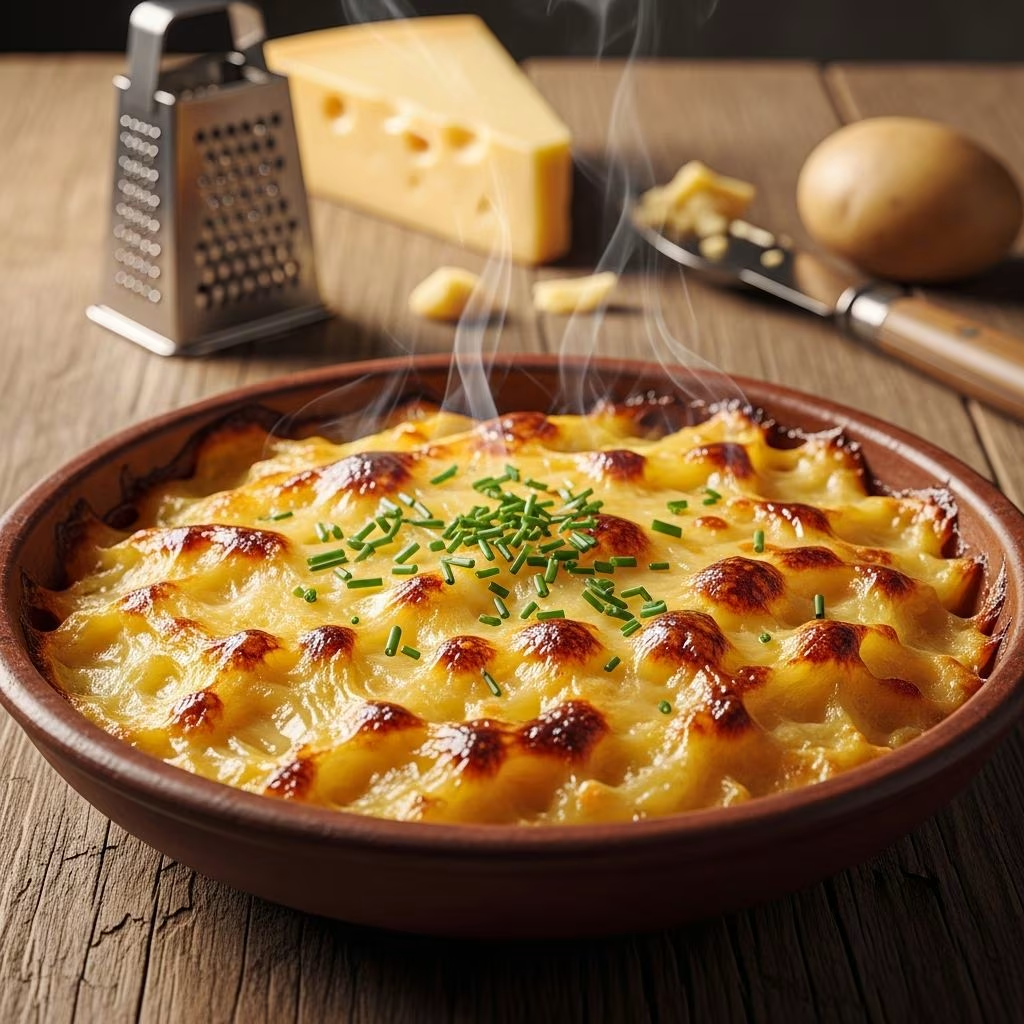
Kartoffelkäse represents one of the most cherished comfort dishes originating from the Alpine regions of Europe, particularly in Austria and Switzerland. This rustic preparation showcases the simplicity and elegance of mountain cuisine, combining humble potatoes with quality cheese to create a dish that warms both body and soul. The name itself translates to “potato cheese,” accurately describing this straightforward yet deeply satisfying casserole that has graced family tables for generations.
Understanding the Alpine Heritage of Kartoffelkäse
The roots of Kartoffelkäse trace back to Alpine farming communities where both potatoes and dairy products were staple ingredients. These regions developed distinctive cooking traditions that maximized locally available resources while creating memorable meals. The dish exemplifies this resourcefulness, transforming basic ingredients into something extraordinary through careful preparation and technique. What makes this casserole particularly special is how the cheese and potatoes interact during baking, creating layers of creamy texture and rich flavor that become far greater than the sum of their parts.
This dish holds particular significance during colder months when hearty, warming foods become essential. Traditionally served alongside simple vegetable preparations or light salads, Kartoffelkäse provides the substantial, satisfying center of a meal. Its popularity extends well beyond its region of origin, with variations appearing throughout Europe and increasingly recognized by international home cooks seeking authentic comfort food.
Essential Ingredients for Authentic Preparation
Creating authentic Kartoffelkäse requires understanding each ingredient’s role in the final dish. While the recipe remains relatively straightforward, ingredient quality directly impacts the finished result.
- Potatoes: Choose waxy or medium-starch varieties that maintain their shape during cooking rather than becoming mealy. Common selections include Yukon Gold or similar yellow potatoes that provide both structural integrity and pleasant flavor.
- Cheese: Alpine cheeses work best, particularly Emmental, Gruyère, or other semi-hard varieties that melt smoothly and develop rich flavor when heated. Avoid pre-shredded varieties containing anti-caking agents, as these can affect melting quality.
- Dairy Components: Heavy cream, whole milk, or a combination thereof creates the luscious sauce binding the potatoes together. Some traditional recipes incorporate sour cream for additional tang and depth.
- Aromatics: Onions and garlic provide foundational flavor, typically sautéed in butter before incorporating other ingredients.
- Seasonings: Sea salt, freshly ground black pepper, and sometimes nutmeg round out the flavor profile with subtle sophistication.
- Fat: Quality butter enriches both the cooking process and topping, contributing to browning and overall satisfaction.
Preparation Techniques and Methods
Two primary approaches characterize Kartoffelkäse preparation, each producing slightly different results while maintaining the dish’s essential character.
Layering Approach: This method involves arranging raw or partially cooked potato slices in a baking dish, alternating with cheese and continuing until all ingredients are incorporated. This technique creates distinct layers that remain somewhat visible in the finished dish, providing interesting textural variation.
Mixed Approach: Alternatively, cooks may prepare a cheese sauce separately, then combine it with pre-cooked or raw potatoes before transferring to the baking dish. This method ensures more uniform distribution of creamy components throughout the casserole.
Regardless of which method appeals to you, the fundamental principle remains consistent: potatoes and cheese must cook together long enough for flavors to meld while the exterior develops appetizing browning.
Step-by-Step Cooking Instructions
Follow these sequential steps to prepare restaurant-quality Kartoffelkäse in your own kitchen:
- Prepare Your Equipment: Preheat your oven to approximately 350-375°F (175-190°C). Select a 9×13-inch baking dish or similar-sized vessel, then butter it generously to prevent sticking and enhance browning.
- Process Your Potatoes: Peel potatoes and cut them into thin, uniform slices approximately 1/8-inch thick. Consistent sizing ensures even cooking throughout the casserole.
- Develop Aromatics: Melt butter in a saucepan over medium heat, then add minced onions and garlic. Cook gently until softened and fragrant, approximately 3-5 minutes, being careful not to brown.
- Build Flavor Base: Sprinkle flour over the aromatic vegetables, stirring continuously for about one minute to create a roux. This step thickens the cream and provides subtle depth.
- Create Sauce: Gradually add milk and cream while stirring constantly to prevent lumps from forming. Continue cooking until the mixture thickens sufficiently to coat the back of a spoon.
- Add Cheese: Remove from heat and stir in freshly shredded cheese, allowing residual heat to melt it completely. Season carefully with salt, pepper, and a whisper of nutmeg if desired.
- Assemble Casserole: Arrange one layer of potato slices in your prepared baking dish, then pour some sauce over them. Repeat this layering process until all ingredients are incorporated, finishing with sauce and a generous cheese topping.
- Initial Baking: Cover the dish with foil to prevent excessive browning and bake for approximately one hour, or until potatoes are tender when pierced with a fork.
- Final Browning: Remove foil during the final 15-20 minutes of cooking to allow the top to develop an appetizing golden crust.
- Rest and Serve: Allow the casserole to rest for 5-10 minutes after removal from the oven, which helps it set slightly and makes serving cleaner.
Timing and Temperature Considerations
Proper baking temperature and duration prove critical to achieving ideal results. Too-high heat may cause the exterior to brown excessively while potatoes remain undercooked at the center. Conversely, insufficient heat results in a pale, uninspiring appearance with potentially mushy texture.
Total cooking time typically ranges from 60-90 minutes depending on potato thickness, oven characteristics, and dish depth. Begin checking for doneness around the 45-minute mark by inserting a sharp knife or skewer through the center. Resistance should be minimal, indicating tender potatoes throughout.
Ingredient Variations and Regional Adaptations
While the classic recipe maintains its essential character, regional and personal variations offer interesting alternatives:
| Variation Type | Key Modifications | Regional Origin |
|---|---|---|
| Alpine Classic | Emmental or Gruyère cheese, minimal seasonings | Switzerland and Austria |
| Bavarian Style | Includes bacon or ham, sometimes mushrooms | Southern Germany |
| Creamy Variation | Higher cream ratio, sometimes includes sour cream | Central European adaptations |
| Vegetable-Enhanced | Incorporates onions, leeks, or herbs throughout | Modern interpretations |
Selecting and Preparing Potatoes
Potato selection significantly impacts the final dish’s success. Waxy potatoes with lower starch content hold their shape during extended cooking, preventing the casserole from becoming gluey or over-mushy. Russet potatoes, while traditional for many dishes, tend to break down too readily for Kartoffelkäse and should generally be avoided.
When preparing potatoes, maintain consistent thickness throughout to ensure even cooking. A mandoline slicer helps achieve uniform slices efficiently, though a sharp knife works equally well with patience. Immediately after slicing, you may soak potatoes briefly in cold water to remove excess starch, then drain thoroughly before layering. This step, while optional, can help achieve a slightly firmer final texture.
Cheese Selection and Quality
The choice of cheese fundamentally shapes the dish’s flavor profile and texture. Alpine cheeses like Emmental and Gruyère offer traditional authenticity, developing complex flavors when heated while maintaining good meltability. These semi-hard varieties also provide pleasant visual appeal, creating an attractive golden-brown crust.
For best results, purchase cheese from the specialty section of your market and ask staff to slice it for you, or purchase blocks and shred them at home using a box grater. Pre-shredded varieties often contain cellulose additives that prevent clumping but interfere with smooth melting and can create a slightly grainy texture in the finished dish.
Make-Ahead Planning and Storage
Kartoffelkäse lends itself well to advance preparation, making it an excellent choice for entertaining or busy weeknights. Assemble the complete casserole several hours or even a full day ahead, then cover and refrigerate. When ready to bake, simply extend cooking time by approximately 15 minutes to account for the cold starting temperature.
Leftover Kartoffelkäse stores well in an airtight container for up to four days under refrigeration. Reheat gently in a moderate oven (325°F) covered with foil until warmed through, approximately 20-30 minutes depending on portion size. Alternatively, individual portions reheat quickly in a microwave, though this method may produce less desirable texture compared to oven reheating.
Complementary Dishes and Serving Suggestions
Kartoffelkäse pairs beautifully with simple, lighter dishes that balance its richness. A crisp green salad with vinaigrette cuts through the creaminess wonderfully, while roasted or steamed vegetables add nutritional balance and color contrast.
Some Alpine traditions pair this dish with cured meats like prosciutto or smoked ham, creating a more substantial meal. A simple tomato-based condiment or fresh fruit compote can provide brightness and prevent the meal from feeling too heavy.
For beverages, consider wines with good acidity such as Sauvignon Blanc or light Pinot Grigio, which complement the cheese and cream without overwhelming delicate flavors. Traditional Alpine fruit liqueurs or even apple cider represent culturally appropriate alternatives.
Troubleshooting Common Issues
Watery Texture: If your finished casserole appears excessively wet, you may have used too much liquid or insufficiently thickened your sauce. In future preparations, reduce cream slightly or add a small amount of flour to the sauce-making step.
Inadequate Browning: Check that your oven temperature is accurate using an independent thermometer. If browning remains insufficient despite proper temperature, increase oven heat to 400°F for the final 10-15 minutes, watching carefully to prevent burning.
Uneven Cooking: Ensure potato slices are consistently thick throughout. Rotate your baking dish halfway through cooking if your oven has hot spots that cause uneven browning.
Cheese Not Melting Smoothly: This typically indicates pre-shredded cheese containing additives. Always shred fresh cheese at home for superior results.
Frequently Asked Questions
Can I make Kartoffelkäse without dairy?
While possible using plant-based cream alternatives and dairy-free cheese, the dish loses much of its essential character and traditional appeal. If following a dairy-free diet, seek out high-quality dairy-free cheeses specifically formulated to melt well rather than standard shreds.
Is it necessary to use Alpine cheeses, or can I substitute others?
While Alpine varieties offer traditional authenticity and superior melting properties, you may substitute other quality semi-hard cheeses like aged cheddar or Gruyère alternatives. Avoid fresh cheeses like mozzarella or feta, which do not provide the desired flavor profile or melting characteristics.
How do I prevent potatoes from browning before cooking?
After slicing, place potatoes in a bowl of cold water to prevent oxidation. This also removes excess starch. Drain thoroughly before layering to prevent excess moisture in your casserole.
Can this dish be frozen?
Freeze unbaked Kartoffelkäse in its baking dish, well-wrapped to prevent freezer burn. Thaw overnight in the refrigerator before baking, extending cooking time by approximately 20 minutes. Freezing baked casserole is not recommended, as reheating often produces undesirable texture changes.
What oven temperature works best?
A temperature of 350-375°F (175-190°C) provides optimal results. Lower temperatures may require extended cooking, risking mushy potatoes, while higher temperatures brown the exterior before potatoes cook through.
References
- Easy Cheesy Potatoes Recipe — I Heart Naptime. 2024. https://www.iheartnaptime.net/recipe-for-cheesy-potatoes/
- Easy Cheesy Potatoes (Grandma’s Recipe) — Cucina by Elena. 2024. https://www.cucinabyelena.com/easy-cheesy-potatoes-grandmas-recipe/
- Homemade Cheesy Potatoes — Simply Scratch. 2024. https://www.simplyscratch.com/homemade-cheesy-potatoes/
- Easy Cheesy Potato Casserole (the BEST Side Dish!) — Oh Sweet Basil. 2024. https://ohsweetbasil.com/my-favorite-cheesy-potato-casserole-side-dish-recipe/
- Dad’s Creamy & Cheesy Au Gratin Potatoes — Ambitious Kitchen. 2024. https://www.ambitiouskitchen.com/au-gratin-potatoes/