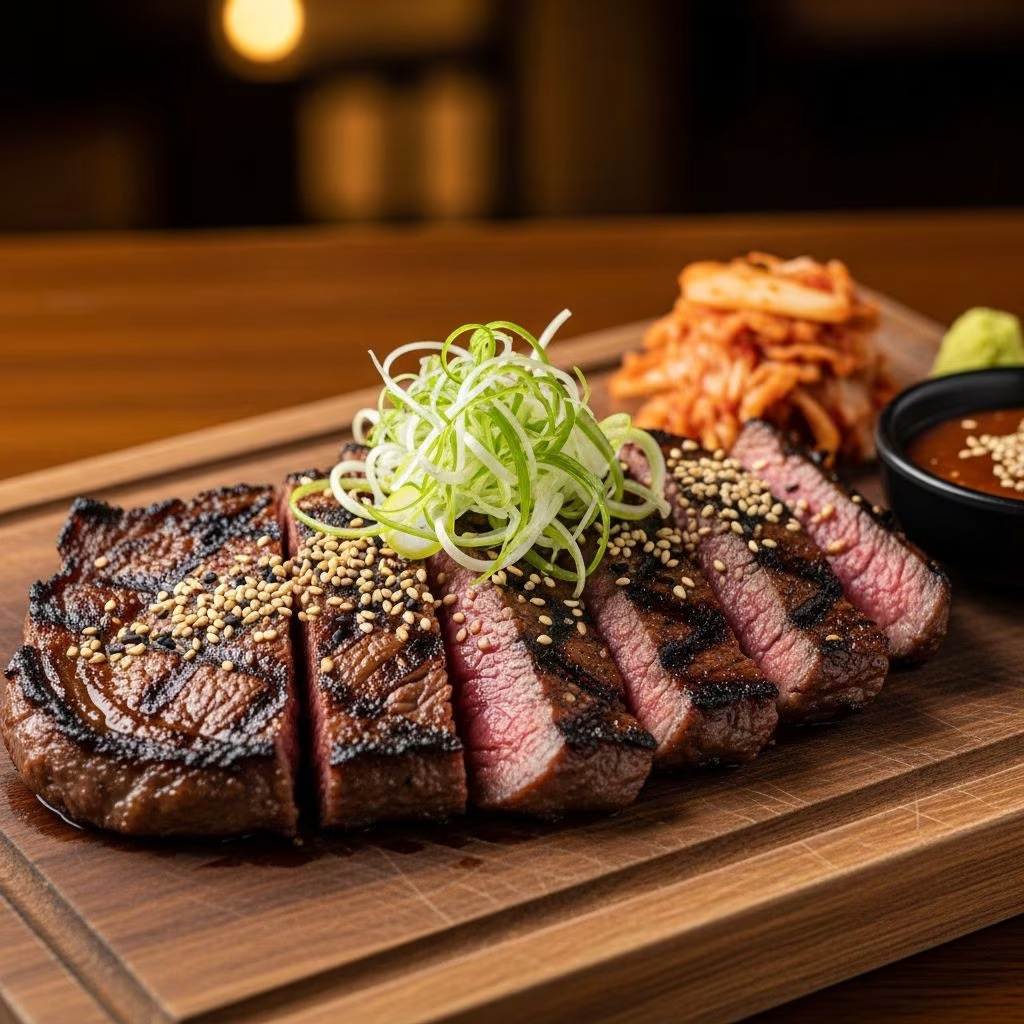
Experience the irresistible allure of Korean grilled steak, where tender beef meets a harmonious blend of sweet, salty, and umami-packed flavors. This dish draws from traditional bulgogi techniques but simplifies them for home cooks, using accessible ingredients like soy sauce, fresh ginger, and sesame oil to create a marinade that tenderizes and infuses the meat with bold taste. Whether you’re firing up the grill for a summer cookout or searing indoors, this recipe delivers restaurant-worthy results in minimal time.
The Essence of Korean Beef Marinades
Korean cuisine excels at elevating beef through marinades that balance sweetness from sugars or fruits, savoriness from soy, and aromatic depth from garlic and ginger. These elements not only flavor the meat but also break down tough fibers for exceptional tenderness. Common cuts like flank, skirt, hanger, or ribeye shine here due to their natural marbling and ability to absorb the marinade quickly.
Unlike heavy American steak rubs, Korean versions are wet marinades applied for 15 minutes to several hours, allowing enzymes from ingredients like pear or ginger to tenderize without over-softening. This method ensures a caramelized exterior from grill heat reacting with sugars, while keeping the interior juicy.
Selecting the Ideal Steak Cuts
Choose cuts that benefit from marinating:
- Flank steak: Lean and fibrous, perfect for slicing thin against the grain after cooking.
- Skirt or hanger steak: Bold beefiness that pairs with strong flavors; quick-cooking for high heat.
- Ribeye or strip steak: Marbled for richness, ideal if you prefer thicker cuts.
Aim for 1.5 to 2 pounds to serve 4-6 people. Look for bright red color with even fat distribution at your butcher or market.
Crafting the Perfect Marinade
The marinade is the heart of this dish. Here’s a foundational recipe yielding about 1 cup, enough for 2 pounds of steak:
| Ingredient | Quantity | Purpose |
|---|---|---|
| Soy sauce (low-sodium preferred) | ½ cup | Umami base and salt |
| Brown sugar or granulated sugar | ¼ cup | Sweetness for caramelization |
| Sesame oil | 2 tablespoons | Nuttiness and aroma |
| Fresh ginger, grated | 1 tablespoon | Tenderizing enzymes and spice |
| Garlic cloves, minced | 3-4 | Pungent depth |
| Green onions or shallots, chopped | ¼ cup | Freshness and mild onion flavor |
| Sesame seeds (toasted) | 1 tablespoon | Texture and nuttiness |
| Optional: Pear or apple juice | 2 tablespoons | Natural tenderizer and subtle fruitiness |
Whisk ingredients until sugar dissolves. For heat, add 1-2 tablespoons gochujang paste. Asian pears or kiwis provide natural tenderizers via enzymes like actinidin, outperforming commercial products for thin cuts.
Step-by-Step Marinating and Prep
- Prepare the steak: Pat dry and score against the grain in ⅓-inch intervals to aid marinade penetration. For faster cooking, slice into thin strips lengthwise with the grain before marinating.
- Marinate: Place steak in a zip-top bag or shallow dish, pour marinade over, and massage to coat. Refrigerate 30 minutes to 4 hours; longer risks mushiness from acids. Flip halfway for even coverage.
- Rest at room temp: Remove from fridge 20-30 minutes before cooking to ensure even grilling.
Discard used marinade or boil it separately if planning to use as a sauce—never baste with raw marinade.
Grilling Techniques for Juicy Results
Preheat grill to medium-high (400-450°F) for gas or hot coals for charcoal. Oil grates to prevent sticking.
- Whole steak: Grill 4-6 minutes per side for medium-rare (130°F internal), flipping once. Sugars char beautifully but watch for flare-ups.
- Sliced strips: Cook 2-3 minutes per side or stir-fry in a screaming-hot skillet with 1-2 tablespoons neutral oil like avocado.
- Resting: Let sit 5-10 minutes tented in foil; juices redistribute for tenderness.
Slice thinly against the grain at a 45-degree angle for maximum tenderness. Internal temps: Rare 125°F, Medium 135°F, Well 160°F.
Stovetop and Broiler Alternatives
No grill? Use a cast-iron skillet or wok over high heat. Sear 3-4 minutes per side for strips, stirring frequently. For broiler, position rack 6 inches from heat; broil 3-5 minutes per side, watching closely to avoid burning sugars. Ventilate well for smoke.
Authentic Serving Pairings
Elevate your steak Korean-style:
- Rice bowls: Layer over steamed rice with pickled veggies, fried egg, and gochujang drizzle—like bibimbap.
- Lettuce wraps: Bundle slices with rice, kimchi, and ssamjang (fermented soybean paste dip).
- Salads: Toss with greens, cucumber, avocado, and sesame vinaigrette.
- Stir-fry: Pair with bell peppers, onions, and snap peas over noodles.
Garnish universally with sliced green onions, sesame seeds, and a lime squeeze for brightness.
Variations to Suit Your Palate
Customize endlessly:
- Spicy gochujang version: Blend 2 tablespoons gochujang with base marinade for heat.
- Fruit-forward bulgogi: Puree Asian pear with garlic and ginger for classic tenderness.
- Low-carb: Skip sugar, use stevia; serve with cauliflower rice.
- Chicken swap: Marinate thighs 2-4 hours, grill similarly.
- Veggie boost: Add mushrooms or zucchini to marinade bag.
Pro Tips for Perfection
- Balance flavors: Taste marinade before adding steak; adjust sugar or soy as needed.
- Avoid over-marinating tough cuts; 15-30 minutes suffices for skirt steak.
- High heat is key for sear without steaming.
- Freeze steak partially for easier thin slicing.
- Pair with banchan like cucumber salad or spinach namul for full Korean meal.
Nutrition Snapshot
Per 4-oz serving (marinated flank steak, grilled): ~300 calories, 25g protein, 15g fat, 10g carbs. High in iron, B12; marinade adds negligible calories if discarded.
Frequently Asked Questions
Can I make this marinade ahead?
Yes, prepare up to 2 days in advance; store refrigerated. Add fresh aromatics like green onions just before using.
What if I don’t have sesame oil?
Substitute neutral oil plus ½ teaspoon toasted sesame seeds, but the nutty flavor will be milder.
Is this gluten-free?
Use tamari instead of soy sauce; check gochujang labels.
How do I know when it’s done?
Use a thermometer: 130°F for medium-rare. Visual cues: Firm but springy to touch.
Can I use frozen steak?
Thaw fully in fridge first for even marinating.
Troubleshooting Common Issues
| Problem | Solution |
|---|---|
| Tough meat | Slice against grain; marinate longer but not over 4 hours. |
| Burnt exterior | Lower heat; pat off excess marinade. |
| Bland flavor | Increase garlic/ginger; add fish sauce for umami. |
| Too salty | Dilute with pear juice; use low-sodium soy. |
Mastering Korean grilled steak opens doors to fusion creativity while honoring time-tested methods. Experiment confidently—these flavors reward bold home chefs.
References
- Korean Style Steak — Leite’s Culinaria. 2016-07-10. https://leitesculinaria.com/105074/recipes-korean-style-steak.html
- Korean style flank steak – easy beef recipe — YouTube (Howie’s Kitchen). N/A. https://www.youtube.com/watch?v=uQUj5ldfBe0
- Korean Bulgogi BBQ Steak and Rice Bowls — Heinen’s Grocery Store. N/A. https://www.heinens.com/recipes/korean-bulgogi-bbq-steak-and-rice-bowls/
- Nubiani – Korean Barbeque Steak — Snake River Farms. N/A. https://snakeriverfarms.com/blogs/srf-journal/nubiani-korean-barbeque-steak
- Korean BBQ Strip Steak — Aberdeen’s Kitchen. 2023-06. https://www.aberdeenskitchen.com/2023/06/korean-bbq-strip-steak/