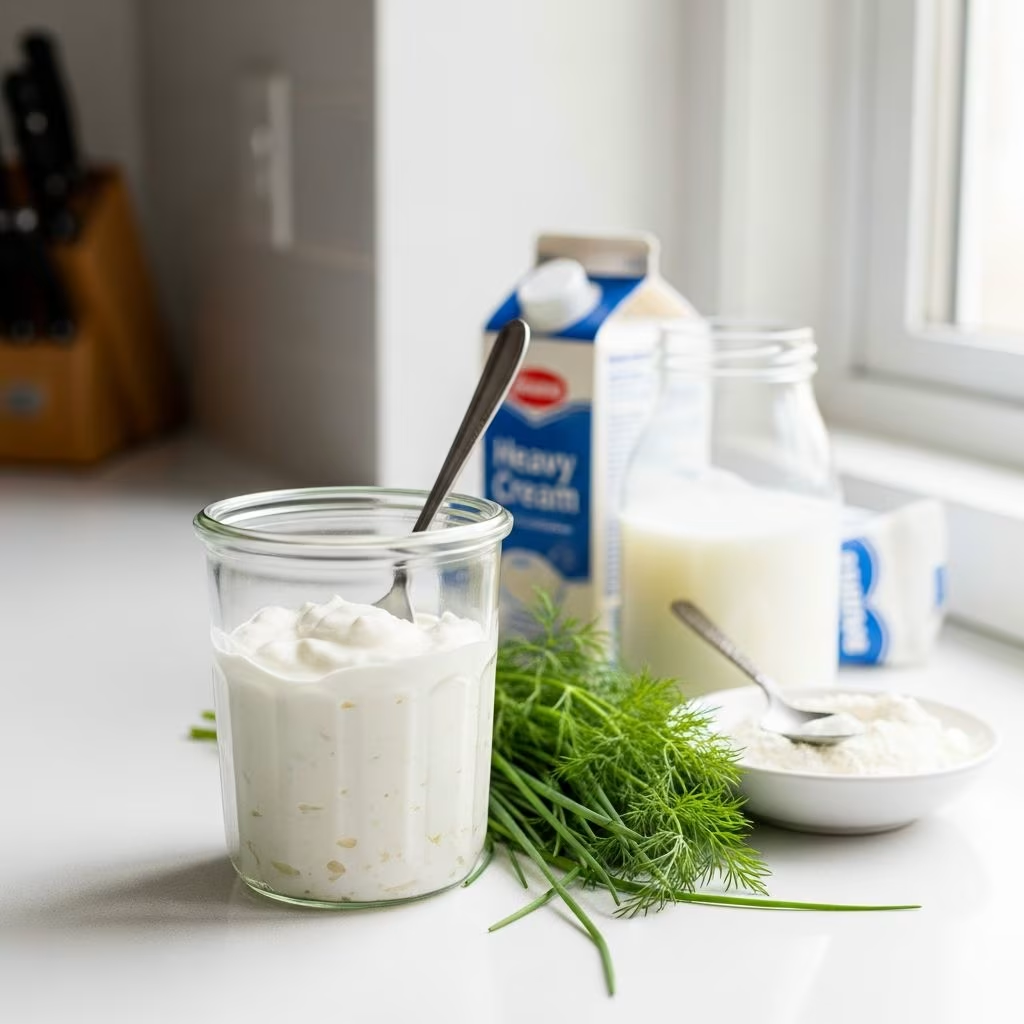
Creating your own sour cream transforms basic dairy into a versatile kitchen staple with a fresh, tangy profile that elevates dishes from tacos to cheesecakes. This process leverages natural fermentation triggered by acid and ambient bacteria, requiring minimal effort for rich rewards.
Why Choose Homemade Over Store-Bought
Commercial sour cream often contains stabilizers and preservatives that alter its natural taste and texture. Homemade versions offer superior creaminess, customizable tanginess, and the satisfaction of controlling ingredients. It’s cost-effective, using everyday items like heavy cream and lemon juice, and avoids additives for a purer product.
Freshly made sour cream integrates seamlessly into recipes, providing better moisture and flavor balance in baking or as a cool dollop on soups. Its live cultures can even aid digestion, mimicking traditional fermented dairy benefits.
Essential Ingredients for Success
The core formula relies on high-fat dairy and a mild acid to initiate curdling and souring. Key components include:
- Heavy whipping cream: Provides the fat base (at least 36% fat) for thickness; substitutes like regular cream yield thinner results.
- Whole milk: Adds fermentable sugars and dilutes for ideal consistency; room temperature enhances bacterial activity.
- Acid source: Lemon juice or white vinegar kickstarts coagulation without overpowering flavor.
Optional enhancers like a pinch of salt or yogurt boost savoriness and culture strength. Always use pasteurized dairy to prevent off-flavors, and ensure utensils are sterilized for safety.
Step-by-Step Guide to Perfect Sour Cream
Preparation takes moments, with fermentation handling the rest. Follow these steps for foolproof results:
Warm ingredients to room temperature (70-80°F) to activate natural bacteria without shocking the mixture.
In a clean 16-oz glass jar, combine ¼ cup whole milk and 2 tablespoons lemon juice or vinegar. Shake gently to integrate.
Add 1-1¼ cups heavy whipping cream. Secure lid briefly, shake lightly to avoid butter formation, then uncover.
Cover with breathable cheesecloth or thin towel, secured by rubber band, allowing air exchange for fermentation.
Rest undisturbed at room temperature for 18-24 hours. Look for whey separation and a jiggly top layer indicating success.
Stir, seal airtight, and refrigerate. It thickens further and lasts 7-14 days.
This yields about 1½ cups, scalable as needed. Total active time: under 5 minutes.
Customizing Your Batch
Tailor sour cream to preferences with these variations:
| Variation | Ingredients Adjustment | Best For |
|---|---|---|
| Extra Tangy | Increase acid to 3 tbsp | Dips, marinades |
| Quick Version | Add 2 tbsp live yogurt; rest 30 min after whipping | Last-minute baking |
| Thicker Texture | Use 36%+ fat cream only | Frostings, toppings |
| Vegan Alternative | Coconut cream + plant yogurt, strain overnight | Dairy-free diets |
| Salted | ⅛ tsp salt post-ferment | Chips, veggies |
Experiment cautiously; over-acidifying risks curdling.
Science Behind the Magic
Sour cream forms through acid-induced denaturation of milk proteins (casein), trapping fat globules for creaminess. Lemon juice or vinegar lowers pH, mimicking bacterial lactic acid production. Room-temperature resting allows ambient lactobacilli to ferment lactose into tangy acids, thickening naturally without heat. Unlike butter, gentle handling prevents fat separation.
This mirrors traditional methods before industrial cultures, yielding nuanced flavors from controlled home environments.
Storage and Shelf Life Tips
Post-fermentation, refrigeration halts activity, firming texture. Use within 1-2 weeks for peak freshness; discard if moldy or off-smelling. Freeze in ice cube trays for up to 3 months, thawing yields spoonable results for cooking. Always label with dates.
Ingenious Ways to Use Homemade Sour Cream
- Baking Boost: Tenderizes cakes, muffins; swap 1:1 in recipes.
- Savory Star: Base for stroganoff, enchiladas, or potato toppings.
- Cool Condiments: Mix with herbs for dips; dollop on borscht or chili.
- Dessert Delight: Whips into frostings or panna cotta.
- Health Hack: Blend into smoothies for probiotics.
Its versatility shines in both sweet and savory, outperforming ultra-pasteurized store versions.
Troubleshooting Common Issues
Encounter problems? Here’s how to fix:
- Too Thin: Extend fermentation or use higher-fat cream next time.
- Curdled/Grainy: Cold ingredients or excess acid; strain for salvage.
- Not Tangy Enough: Warmer spot (75°F) or added yogurt culture.
- Butter-Like: Over-shaking; start over gently.
- Off Odor: Discard; ensure sterile equipment.
Consistency improves with practice.
Scaling Up for Entertaining
For crowds, multiply by 4-5 using larger jars. Ferment in batches to manage space. Pre-portion into serving bowls for events, garnished with chives or paprika. Cost per cup drops below $1, versus $3+ store-bought.
Health and Nutrition Insights
A 2-tablespoon serving offers ~60 calories, 6g fat, and calcium. Fermentation enhances digestibility, potentially supporting gut health via natural probiotics. Opt for organic dairy to minimize hormones.
Frequently Asked Questions
Can I use half-and-half instead of heavy cream?
No, it lacks sufficient fat for proper thickening; stick to heavy whipping cream.
How long does it take to ferment?
18-24 hours at room temp; warmer speeds it up slightly.
Is it safe to leave out overnight?
Yes, with clean tools and breathable cover; acidity inhibits pathogens.
Can I make it without milk?
Heavy cream alone works but thinner; milk improves body.
What’s the difference between sour cream and crème fraîche?
Crème fraîche uses higher heat and cultures for milder, thicker results.
Advanced Techniques for Pro Results
Incorporate buttermilk (2 tbsp) for deeper cultures, or strain through cheesecloth for Greek-style thickness. Temperature control (e.g., yogurt maker) ensures consistency year-round. Track batches in a journal for perfect ratios.
Mastering homemade sour cream unlocks creativity, from ranch dressings to blini toppings. Its simplicity belies gourmet potential, making it a pantry must.
References
- How to Make Sour Cream at Home — Homebrewers Association. 2023. https://homebrewersassociation.org/beyond-beer/how-to-make-sour-cream-at-home/
- How To Make Sour Cream At Home — Preppy Kitchen. 2024-05-15. https://preppykitchen.com/how-to-make-sour-cream/
- Homemade Sour Cream: EASY Recipe — Steph’s Stove by Stephanie Thomas (YouTube). 2025-05-09. https://www.youtube.com/watch?v=QJLGusYkoeY
- How To Make Sour Cream — Bigger Bolder Baking. 2023. https://www.biggerbolderbaking.com/how-to-make-sour-cream/
- How to Make Sour Cream at Home from Scratch — Budget Bytes. 2024. https://www.budgetbytes.com/how-to-make-sour-cream/