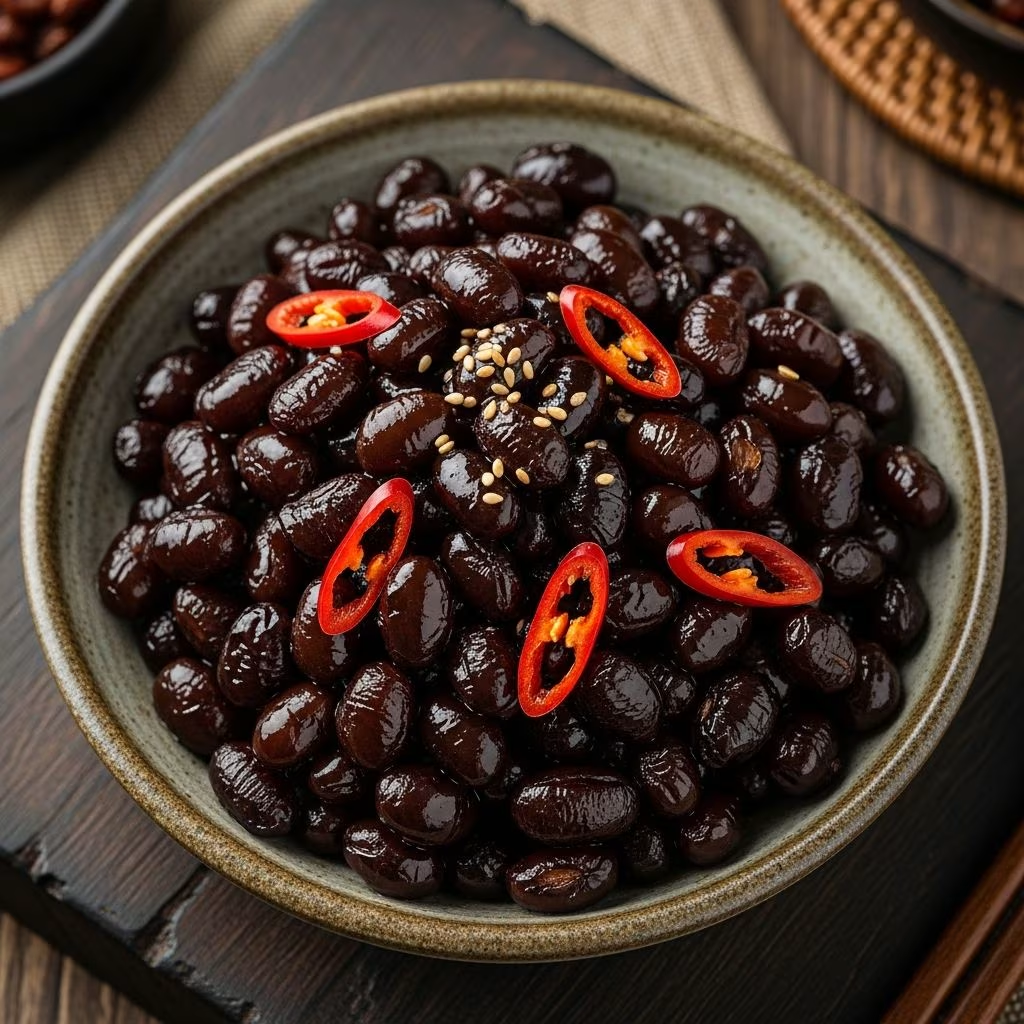
Shiny black beans glistening with a sweet-savory glaze capture the essence of Korean home cooking. Known as Kongjaban or geomeun-kongjorim, this banchan (side dish) transforms humble dried black beans into jewels of flavor. Slow-braised in soy sauce, sugar, and aromatics, they offer a chewy texture and balanced taste that’s addictive with steamed rice or chilled as a snack.
The Roots and Cultural Role of Kongjaban
Kongjaban traces back to traditional Korean jjim and jorim techniques, where beans are braised to tenderness. Black soybeans, often called seoritae, hold cultural significance in Korea for their nutrient density and use in festive dishes. Families prepare them for holidays like Chuseok or as everyday banchan, symbolizing prosperity with their ebony sheen.
In Korean meals, banchan like Kongjaban balance bold flavors. Their mild sweetness cuts through spicy kimchi or grilled meats, making them a staple at hanjeongsik (full-course meals). Modern twists include adding nuts for crunch, reflecting evolving palates while honoring roots.
Why Black Beans Shine in Korean Cooking
Black soybeans differ from Western varieties with thicker skins and nuttier flavor. Soaking prevents splitting, ensuring plump results. Their antioxidants and protein make them healthful, aligning with Korea’s plant-forward diet.
- Nutritional perks: High in fiber, iron, and anthocyanins for heart health.
- Versatility: Sweet profile pairs with beer (anju) or rice.
- Storage: Lasts weeks refrigerated, ideal for meal prep.
Essential Ingredients for Authentic Kongjaban
Gather these for 4-6 servings:
| Ingredient | Quantity | Purpose |
|---|---|---|
| Dried black soybeans (seoritae) | 1-2 cups | Main star; soak for tenderness |
| Soy sauce | ½-1 cup | Umami base |
| Sugar (brown or white) | ½-¾ cup | Sweet glaze |
| Water or dashi | 2-4 quarts | Braising liquid |
| Sesame oil/seeds | 1-2 tbsp each | Aromatic finish |
| Optional: Oil, rice wine, nuts | To taste | Shine and depth |
Substitutes like regular soybeans work, but black ones yield deeper color.
Step-by-Step Guide to Perfect Kongjaban
Patience yields glossy beans. Total time: 12+ hours (mostly soaking).
- Soak: Rinse 1¼ cups beans. Soak in cold water 8-12 hours (overnight). Drain; skins stay intact.
- Initial Boil: Cover beans with 2 quarts water/dashi. Add 1 tbsp oil (prevents bursting). Simmer 1 hour until tender, stirring often as liquid reduces.
- Sauce Infusion: Add soy sauce, sugar, 1 tbsp rice wine (optional). Simmer low 10-20 minutes, evaporating to coat beans. Stir to glaze.
- Finish: Mix in sesame oil/seeds. Cool, refrigerate overnight for flavors to meld. Serve chilled or room temp.
Pro Tip: Add sugar late to avoid toughening skins. Low heat ensures even cooking.
Variations to Elevate Your Kongjaban
Customize for twists:
- Nutty Boost: Add ½ cup peanuts/almonds post-simmer for crunch.
- Kelp Infusion: Use kelp water for subtle umami.
- Spicy Kick: Stir in gochujang for heat, inspired by modern fusions.
- Vegan Glow-Up: Swap honey for rice syrup; use tamari for gluten-free.
For quicker versions, pressure cook beans 20 minutes post-soak.
Common Mistakes and Fixes
| Issue | Cause | Fix |
|---|---|---|
| Split skins | High heat or no oil | Add oil; simmer gently |
| Dull appearance | Early sugar or insufficient stirring | Sugar last; reduce sauce fully |
| Too salty | Excess soy | Balance with more sugar/water |
| Undercooked | Short soak | Extend to 12 hours |
Pairing Ideas: Kongjaban on the Table
Serve cold with hot rice for contrast. As anju, pair with soju or beer. In bibimbap, add for sweetness. Complement spicy stews or grilled fish.
- Meal Ideas:
- Rice bowl with kimchi, egg.
- Banchan spread: With spinach namul, cucumber salad.
- Fusion: Over quinoa or in salads.
Health Benefits and Nutrition Breakdown
Per ½ cup: ~200 calories, 12g protein, 30g carbs, 8g fiber. Anthocyanins fight inflammation; isoflavones support bones. Low-fat, diabetic-friendly.
Korean diets emphasize such plants for longevity. Pair with veggies for complete protein.
Storage, Freezing, and Make-Ahead
Refrigerate 2 weeks in airtight jar. Freeze 3 months; thaw overnight. Reheat gently to retain shine. Make-ahead shines as flavors deepen.
FAQ
Q: Can I use canned beans?
A: No; they turn mushy. Dried only for texture.
Q: Why soak so long?
A: Ensures even cooking without skins peeling.
Q: Sugar alternatives?
A: Maple syrup or honey; adjust for gloss.
Q: Gluten-free version?
A: Use tamari, confirm bean purity.
Q: How to make shinier?
A: Final high-heat stir to caramelize sauce.
Scaling Up for Crowds
Double ingredients; use large pot. Cook in batches if needed. Perfect for potlucks or janchi (feasts).
Kongjaban embodies Korean ingenuity: simple ingredients, profound taste. Master it to elevate any table.
References
- Kongjaban (Braised Soybeans) — Globalbean.eu. Accessed 2026. https://www.globalbean.eu/recipes/kongjaban-braised-soybeans/
- Creamy Gochujang Black Bean Stew — Plantbasedrdblog.com. 2024-10. https://plantbasedrdblog.com/2024/10/creamy-gochujang-black-bean-stew-with-crispy-garlic/
- Juicy Braised Black Beans (Geomeun-kongjorim) — Youtube.com (Maangchi). Accessed 2026. https://www.youtube.com/watch?v=koVeWQSSbc8
- Kong Jaban (Korean Sweet Black Beans) — Tappecue.com. Accessed 2026. https://www.tappecue.com/recipes/kong-jaban-(korean-sweet-black-beans)
- Geomeun-kongjorim (Braised black beans) — Maangchi.com. Accessed 2026. https://www.maangchi.com/recipe/geomeun-kongjorim