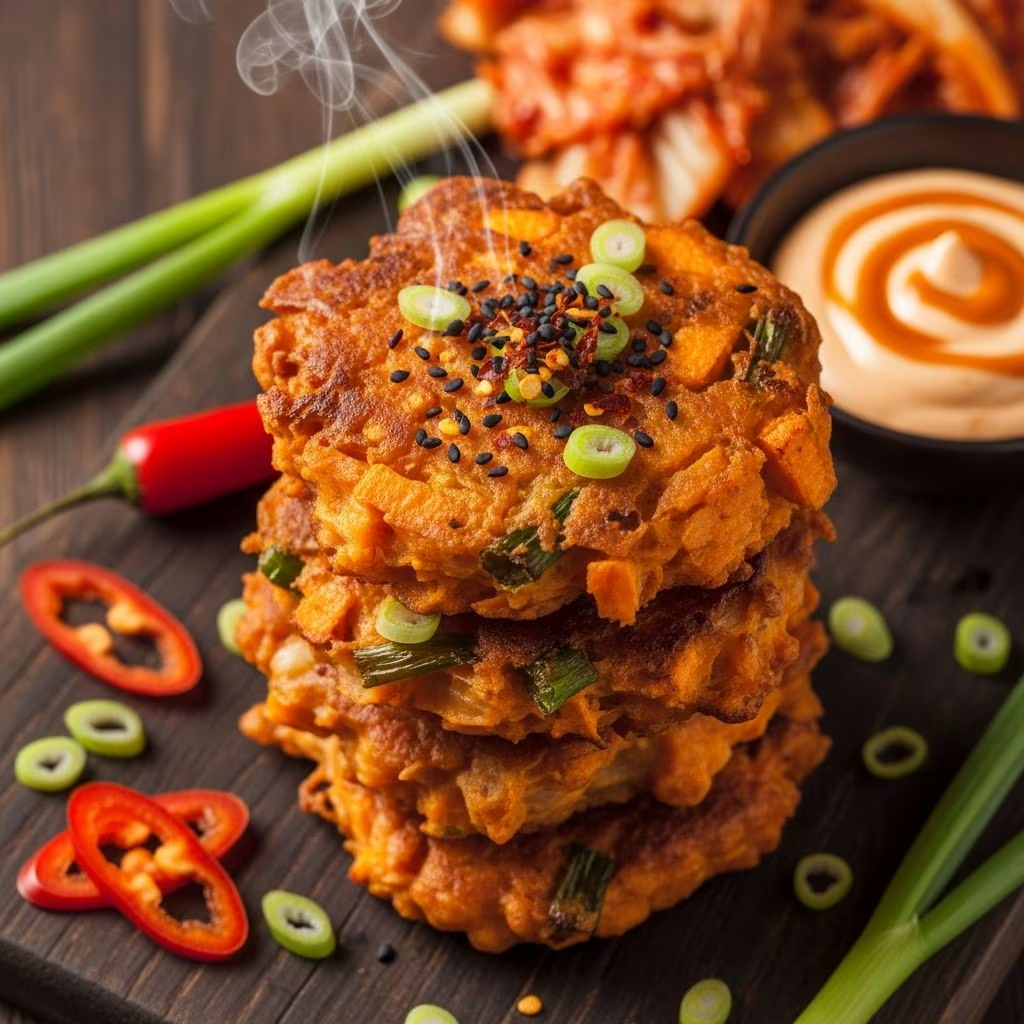
Fritters represent one of the most versatile and approachable cooking techniques, transforming humble vegetables into golden, crispy delights that work equally well as appetizers, side dishes, or casual snacks. When you combine the earthiness of sweet potatoes with the bold, tangy complexity of fermented kimchi, you create a dish that bridges traditional Asian flavors with universally loved comfort food. These fritters showcase how fermentation and seasonal produce can come together to create something remarkably satisfying.
Understanding the Core Components
The beauty of kimchi sweet potato fritters lies in the interplay between three essential elements: the starchy base, the binding agent, and the flavor catalyst. Each component serves a specific function while contributing to the overall texture and taste experience.
The Sweet Potato Foundation
Sweet potatoes bring multiple dimensions to this dish beyond their natural sweetness. When grated, they release moisture and starch that work synergistically with the batter to create structural integrity. The natural sugars caramelize during the frying process, developing complex, slightly sweet notes that provide contrast to the acidic, spicy kimchi. Sweet potatoes also contribute significant nutritional value, containing fiber, beta-carotene, and various vitamins that make these fritters a more wholesome choice than many traditional appetizers.
For optimal results, select firm sweet potatoes without soft spots, and grate them just before mixing your batter to prevent excessive oxidation and water loss. The texture should resemble coarse breadcrumbs rather than a paste.
Batter Options and Their Effects
Different batter bases produce distinct textural outcomes and flavor profiles:
- Chickpea flour creates a lighter, more delicate crust with a slightly nutty undertone and works well for those seeking gluten-free options
- All-purpose wheat flour produces a more traditional, sturdy exterior with excellent structural support
- Rice flour or gram flour yields crispier results with a finer texture that shatters pleasantly when bitten
- Egg-based binders incorporate richness and help bind ingredients more effectively, particularly when combined with kale or leafy greens
The chosen flour should be mixed with water to create a thick paste consistency rather than a thin batter—this ensures adequate coating and proper adhesion during the frying process.
Kimchi: The Flavor Powerhouse
Kimchi serves as the essential flavor component, introducing complexity through multiple dimensions simultaneously. The fermentation process creates lactic acid, contributing tanginess, while red pepper flakes deliver heat, and garlic and ginger provide aromatic depth. Importantly, the kimchi’s liquid should be incorporated alongside the chopped vegetable matter, as this brine contains concentrated flavor compounds and helps adjust the batter consistency.
The type of kimchi you select influences the final result. Napa cabbage-based kimchi offers authentic flavor and tender texture, while other varieties bring their own characteristics. Look for kimchi that has fermented sufficiently to develop robust flavor without being overly mushy or unpleasantly vinegary.
Recipe Components and Preparation Method
Essential Ingredients
To create approximately 12 fritters, gather the following:
- 2 cups grated sweet potato (loosely packed)
- ½ cup chickpea flour (or all-purpose flour, rice flour, or gram flour)
- ½ cup water (adjust as needed)
- 4 heaped tablespoons chopped kimchi plus its juice
- Optional aromatics: 4 tablespoons fresh coriander, 2 chopped green onions, 1 minced garlic clove
- Salt to taste (typically 1 teaspoon, though kimchi provides additional saltiness)
- Optional spices: paprika or additional red pepper flakes for intensified heat
- Oil for shallow frying (vegetable, canola, or peanut oil work well)
Step-by-Step Preparation
Combine dry components first. Measure your chosen flour into a large mixing bowl and whisk thoroughly to break up any lumps. This preliminary step prevents clumping when you introduce moisture.
Introduce wet ingredients gradually. Add water slowly while stirring with a fork or whisk, creating a thick paste consistency. The mixture should look thick and slightly textured rather than smooth or pourable.
Fold in grated sweet potato. Add the freshly grated sweet potato and mix thoroughly, ensuring each strand becomes well coated with the flour mixture. This coating prevents browning and helps the fritters hold together during cooking.
Incorporate kimchi and seasonings. Add your chopped kimchi along with all its liquid, mixing gently but thoroughly. Add salt, coriander, green onions, or other seasonings at this point. Taste a small spoonful of raw batter to assess saltiness and heat levels, adjusting as desired.
Allow resting time. Let the batter rest for 10-15 minutes. This allows the flour to fully hydrate and helps the mixture achieve better cohesion during frying.
The Frying Process
Heat a shallow layer of oil in a heavy-bottomed skillet or frying pan over medium-high heat. The oil should shimmer and move easily but not smoke. Test the temperature by dropping a tiny piece of batter into the oil—it should sizzle immediately and eventually float to the surface after a few seconds.
Using two spoons or a small ice cream scoop, carefully place spoonfuls of batter into the hot oil, flattening slightly with the back of the spoon. Space them to prevent crowding, which would lower the oil temperature and result in greasy fritters. Fry for 2-3 minutes until the bottom achieves a deep golden brown color, then flip carefully using tongs or a spatula. Cook the second side for an additional 2-3 minutes until similarly golden.
Remove fritters with a slotted spoon and transfer to a paper towel-lined plate to drain excess oil. Serve while still warm for optimal texture contrast between the crispy exterior and the tender interior.
Variations and Flavor Enhancements
Vegetable Additions
While the core combination of sweet potato and kimchi works wonderfully, you can expand the ingredient profile:
- Chopped kale or spinach adds nutritional density and textural interest
- Grated regular potato can partially replace sweet potato for a less sweet version
- Diced mushrooms introduce umami richness and earthiness
- Sesame seeds sprinkled on top before serving add nutty flavor and textural contrast
Seasoning Adjustments
The fermented nature of kimchi means you have considerable flexibility in additional seasonings:
- Increase paprika or cayenne pepper for those preferring pronounced heat
- Add soy sauce or tamari for deeper umami notes
- Include fresh ginger for warming spice and digestive benefits
- Mix in a small amount of sesame oil for nutty, complex flavor
Serving Suggestions and Accompaniments
These fritters work effectively across multiple courses and occasions. As appetizers for dinner parties, they impress guests with their sophisticated flavor profile. As casual snacks, they satisfy cravings for something crispy and substantial. In meal prep contexts, they can be cooled, refrigerated, and reheated in a moderate oven to restore crispness.
Complementary Dipping Sauces
A simple sauce enhances the eating experience. Mix sour cream or Greek yogurt with lime juice, garlic, and a pinch of salt for cooling contrast. Alternatively, combine mayonnaise with sriracha and honey for a spicy-sweet option. For those preferring plant-based choices, a combination of coconut milk, lime juice, and chili paste creates similar complexity.
Korean-inspired accompaniments like gochujang mixed with sour cream or a simple soy dipping sauce also pair naturally with these fritters, emphasizing their fermented vegetable heritage.
Storage, Make-Ahead Strategies, and Troubleshooting
Making Ahead and Storage
The raw batter can be prepared up to 4 hours in advance, covered, and refrigerated. This advance preparation makes the recipe practical for entertaining. Cooked fritters remain palatable at room temperature for several hours but are best consumed fresh from the pan. For longer storage, cool completely, arrange on a baking sheet, freeze until solid, then transfer to freezer bags for up to one month. Reheat frozen fritters in a 375°F oven for 10-12 minutes until warmed through and crispy.
Addressing Common Issues
Fritters falling apart during cooking: This typically indicates insufficient batter or inadequate binding. Add more flour, one tablespoon at a time, until the mixture holds together better. Alternatively, incorporate an egg if using a non-vegan preparation.
Greasy or soggy results: Ensure your oil reaches proper temperature before cooking—a thermometer reading of 350-375°F works well. Additionally, avoid overcrowding the pan, which lowers oil temperature and increases oil absorption.
Interior remaining raw or undercooked: Lower heat slightly and extend cooking time, or flatten fritters thinner before cooking to allow more even heat penetration.
Bland flavor: Taste your raw batter and adjust seasonings before cooking. Remember that salt intensifies during frying as moisture evaporates.
Frequently Asked Questions
- Can these fritters be made vegan?
- Yes, the basic recipe using chickpea flour is naturally vegan. Ensure any optional seasonings or sauces align with vegan requirements. Most kimchi products are vegan, though some brands may include fish sauce, so check labels.
- Is it necessary to use freshly made kimchi?
- Homemade or store-bought kimchi both work effectively. Ensure the kimchi has fermented enough to develop flavor, though avoid kimchi that has become extremely soft or unpleasantly sour.
- What flour alternatives work best?
- Chickpea flour, all-purpose flour, rice flour, and gram flour all produce satisfactory results. Gluten-free cooks should choose rice flour or gram flour to ensure the recipe accommodates their dietary needs.
- Can I bake these instead of frying?
- While baking produces crispier results than boiling, pan-frying delivers superior texture. If baking, brush shaped fritters with oil and bake at 400°F for 20-25 minutes, turning halfway through.
- How many fritters does this recipe yield?
- The proportions typically produce approximately 12 medium fritters, though size varies based on individual scooping.
Nutritional Perspective and Fermentation Benefits
From a nutritional standpoint, these fritters combine multiple beneficial components. Sweet potatoes contribute dietary fiber and beta-carotene, supporting digestive health and vision. Fermented kimchi introduces beneficial bacteria that support gut health and nutrient absorption. When prepared with chickpea flour rather than wheat, the recipe increases protein content and creates a more complete amino acid profile.
The fermentation process in kimchi production increases bioavailability of nutrients and creates compounds with potential anti-inflammatory properties. This combination of whole food ingredients and fermented elements positions these fritters as a more nutritionally dense choice than many conventional fried appetizers.
Conclusion: Elevating Simple Ingredients
Kimchi sweet potato fritters demonstrate how straightforward ingredients and fundamental cooking techniques create memorable culinary experiences. The contrast between the crispy, golden exterior and the tender, flavorful interior, combined with the interplay between sweet, savory, and spicy elements, results in a dish that satisfies multiple dimensions of taste and texture preference. Whether prepared for casual weeknight snacking or formal entertaining, this recipe rewards both experienced cooks and kitchen novices with consistently delicious results.
References
- Fermented Foods and the Gut Microbiota: A Review — Journal of Functional Foods, 2021. https://pubmed.ncbi.nlm.nih.gov/
- Kimchi and Bioactive Compounds: Health Benefits and Properties — Nutrients Journal, 2022. https://www.mdpi.com/journal/nutrients
- Sweet Potato Nutritional Profile and Health Applications — Journal of the American College of Nutrition, 2019. https://www.tandfonline.com/
- Chickpea Flour: Composition, Functional Properties, and Applications — Cereal Chemistry, 2020. https://onlinelibrary.wiley.com/journal/17534887