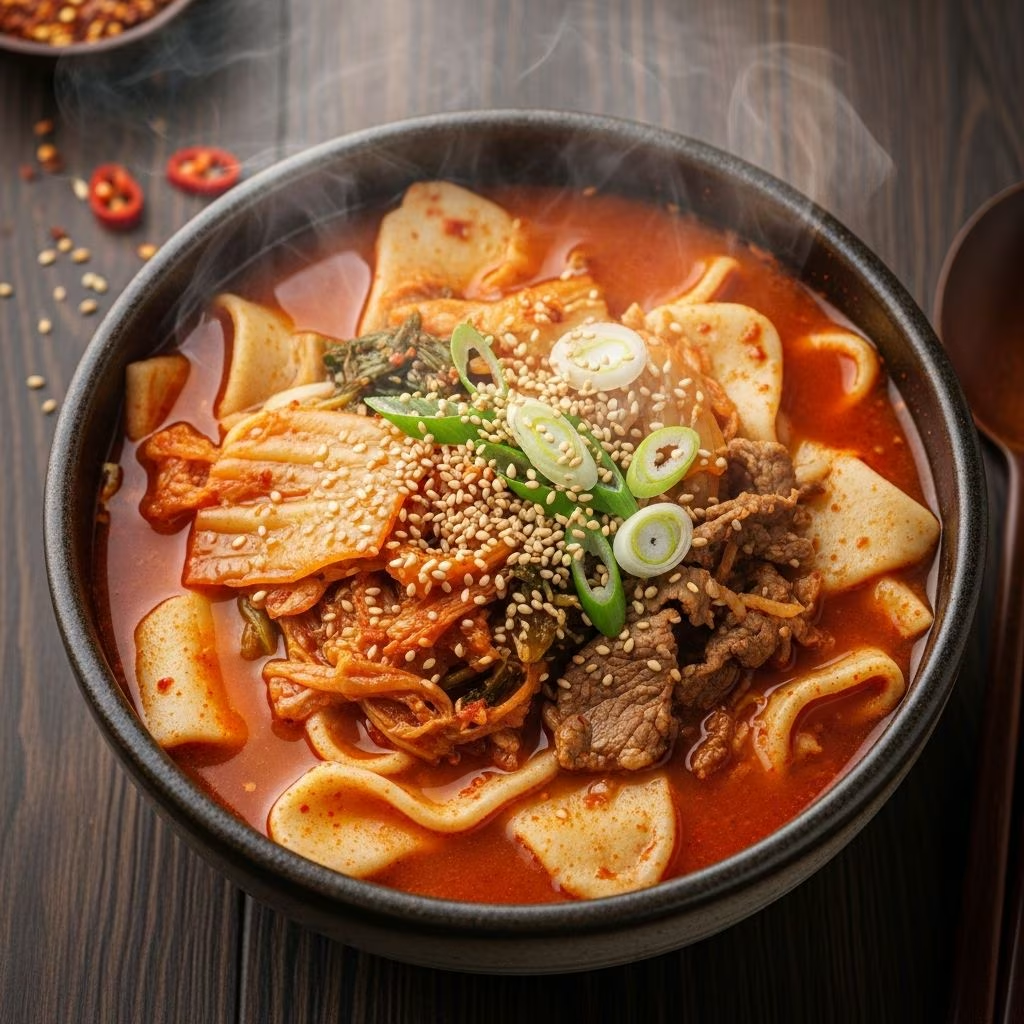
Kimchi sujebi stands as a beloved staple in Korean cuisine, offering a perfect harmony of chewy, handmade noodles submerged in a robust, fermented kimchi broth. This dish captures the essence of home cooking with its simplicity and bold flavors, making it ideal for chilly evenings or casual family gatherings. Unlike noodle soups with pre-formed pasta, sujebi features irregularly torn dough pieces that absorb the spicy tang while maintaining a satisfying bite.
The Roots and Appeal of This Korean Comfort Food
Originating from humble beginnings, sujebi evolved as a resourceful meal using basic pantry staples like flour and leftover kimchi. In Korean households, it’s often prepared as a quick, nourishing option, especially when fermentation adds depth to the broth. The name ‘sujebi’ refers to the ‘hand-beaten’ or ‘torn’ noodles, a technique passed down through generations that emphasizes texture and freshness.
What draws people to kimchi sujebi is its versatility. The fermented kimchi provides probiotics and umami, while customizable add-ins like vegetables or proteins elevate it from simple to spectacular. Health enthusiasts appreciate its balance of carbs from the dough, vitamins from veggies, and gut-friendly fermentation.
Essential Ingredients for Authentic Flavor
Crafting kimchi sujebi starts with quality components. The dough requires minimal ingredients: all-purpose flour, salt, a touch of oil, and water to form a pliable base.
- Dough basics: 2 cups flour, ½ tsp salt, 1 tbsp oil, ¾ cup water – yields chewy pieces for 3-4 servings.
- Broth foundation: 8 oz chopped kimchi with brine, 8 cups water or stock, anchovies or kelp for dashi.
- Aromatics and boosters: Onion, garlic, green onions, gochujang for heat, fish sauce for savoriness.
- Optional proteins/veggies: Beef slices, pork belly, zucchini, potatoes, carrots – add heartiness.
Fermented kimchi is non-negotiable; its age intensifies the soup’s signature sour-spicy profile.
Step-by-Step Guide to Making the Dough
Preparing the sujebi dough is straightforward and therapeutic. Two methods ensure accessibility for all skill levels.
- Food processor method: Attach dough blade, combine water, salt, oil, and flour. Pulse 1-2 minutes until a ball forms. Knead briefly in a bag and rest.
- Hand-kneading alternative: Mix ingredients in a bowl to form lumps, then knead 10-12 minutes into a smooth ball. Rest in plastic for easy handling.
Resting hydrates the flour, preventing tough noodles. Refrigerate up to 3 days for convenience.
| Method | Time | Best For | Texture Result |
|---|---|---|---|
| Food Processor | 5 minutes | Beginners | Smooth, uniform |
| Hand Knead | 15 minutes | Texture lovers | Rustic, chewy |
| Hot Water (variant) | 10 minutes | Soft dough fans | Pillowy soft |
Building a Rich, Flavorful Broth
The broth is the soul of kimchi sujebi. Start by infusing water with an anchovy pouch (heads/guts removed) alongside kimchi, brine, onion, and garlic. Simmer 25 minutes over medium-high heat to meld flavors.
Strain out solids, then season with gochujang, fish sauce, and salt. For variations:
- Vegetarian: Use kelp/shiitake dashi.
- Meaty: Add beef or pork early.
- Extra spice: Gochugaru flakes.
Simmering extracts kimchi’s tang, creating a reddish, aromatic base ready for noodles.
Mastering the Hand-Tearing Technique
The magic happens when tearing dough into the boiling broth. Dip hands in water to prevent sticking, flatten portions thinly, and pinch off bite-sized pieces directly into the simmering liquid.
Cook 5-10 minutes until noodles float and firm up, stirring gently. This irregular shaping yields varied textures – some chewy, others tender – enhancing the dish’s appeal.
Pro tip: For dual textures, mix soft hot-water dough with denser cold-water versions.
Customizations and Regional Twists
Kimchi sujebi adapts effortlessly. Traditionalists stick to anchovy-kimchi base, but modern takes shine:
- Protein-packed: Tuna, beef steak, or pork belly for richness.
- Veggie boost: Zucchini sticks, potato chunks, perilla leaves.
- Broth swaps: Chicken stock or soup soy sauce for depth.
In some recipes, aged kimchi with chili amps heat, while others add sesame oil for nutty finish.
Nutrition Profile and Health Benefits
This dish packs nutrition: Kimchi delivers vitamin C, K, and probiotics for gut health. Noodles provide sustained energy, veggies add fiber. A serving (for 4) offers roughly 400-500 calories, balancing carbs (50g), protein (15g), and minimal fats.
| Nutrient | Per Serving | Benefit |
|---|---|---|
| Probiotics | From kimchi | Gut health |
| Fiber | 5-7g | Digestion |
| Vitamin C | 20% DV | Immunity |
Pairing Suggestions and Serving Ideas
Serve steaming hot in bowls, garnished with green onions and sesame seeds. Pair with banchan like seasoned spinach or cucumber salad for a full Korean meal. It’s forgiving – scales for crowds or leftovers reheat well.
Common Pitfalls and Troubleshooting
- Dough too sticky? Add flour sparingly or use more water dip.
- Broth bland? Increase kimchi brine or gochujang.
- Noodles mushy? Don’t overcook; float indicates doneness.
- Too spicy? Balance with potatoes or zucchini.
FAQs
What is the difference between sujebi and other Korean noodle soups?
Sujebi uses fresh, hand-torn dough instead of dried noodles, offering a homemade chewiness unique to this dish.
Can I make kimchi sujebi vegan?
Yes, replace anchovies/fish sauce with mushroom kelp broth and soy sauce.
How long does the dough last?
Refrigerate up to 3 days; freeze portions for longer storage.
Is older kimchi better?
Fermented, sour kimchi enhances flavor depth.
What’s the cooking time?
Prep 20 min, cook 40 min total for fresh results.
Storage and Reheating Tips
Store leftovers in airtight containers up to 3 days in fridge. Reheat on stovetop with splash of water to loosen noodles. Freezes well for 1 month – thaw before simmering.
References
- Kimchi hand-torn noodle soup (Kimchi-sujebi: 김치수제비) — Maangchi. N/A. https://www.maangchi.com/recipe/kimchi-sujebi
- Kimchi Sujebi l Kimchi hand-torn noodle soup — YouTube. N/A. https://www.youtube.com/watch?v=oblVJnQI_X4
- Kimchi sujebi — Andy Cooks. N/A. https://www.andy-cooks.com/blogs/recipes/kimchi-sujebi
- 韓式面片湯 : Korean Kimchi Sujebi Soup — Ying Chen Blog. 2019-07-25. https://yingchen.life/2019/07/25/kimchi-sujebi-soup/
- Sujebi (Hand-pulled noodle soup) 수제비 — Kimchimari. N/A. https://kimchimari.com/sujebi-hand-pulled-noodle-soup/
- KIMCHI SUJEBI ‘hand-torn noodle soup’ 김치수제비 — YouTube. N/A. https://www.youtube.com/watch?v=7JhIEEAFyok
- Kimchi sujebi (Kimchi hand-torn noodle soup: 1 pot meal: 김치수제비) — YouTube (Maangchi). N/A. https://www.youtube.com/watch?v=ggofyBZwElA