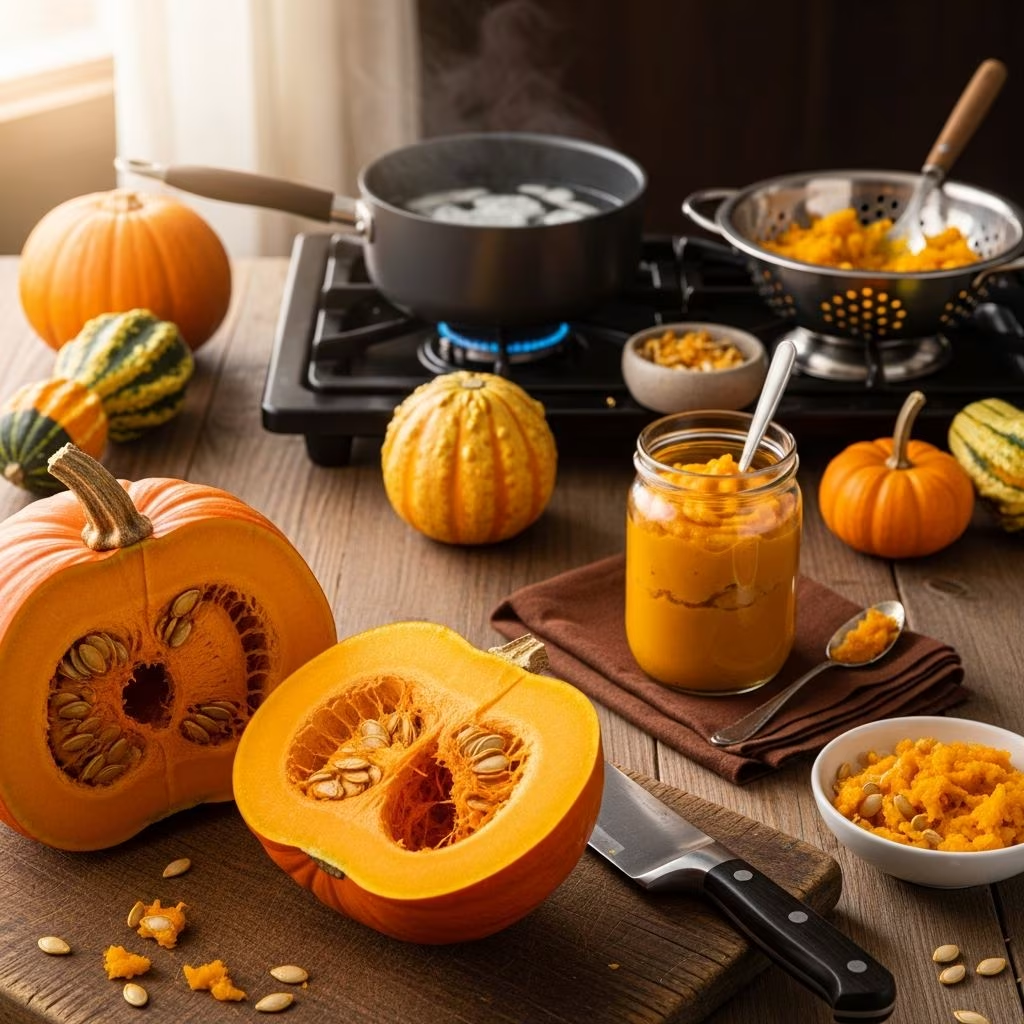
Creating your own pumpkin puree from fresh pumpkins elevates everyday cooking and baking with richer flavor and better texture than canned versions. This comprehensive guide walks you through selecting the right pumpkins, roasting techniques, blending for smoothness, and practical storage solutions, ensuring you can enjoy seasonal taste year-round.
Why Choose Fresh Over Canned
Fresh pumpkin puree offers a vibrant color, nuanced sweetness, and fresh aroma that store-bought cans often lack due to processing.Sugar pie pumpkins yield the densest, sweetest flesh ideal for culinary uses. Home preparation controls moisture levels, preventing watery results common in some canned products.
Nutritionally, fresh puree retains more vitamins like A and C when roasted gently, as high-heat canning can diminish these. It’s also free from additives, allowing customization with a pinch of salt or oil for enhanced taste.
Selecting the Perfect Pumpkins
Opt for smaller varieties weighing 2-5 pounds. Sugar pie, pie pumpkins, or winter luxury types have thick, sweet walls and less stringy pulp compared to jack-o’-lanterns, which are watery and fibrous.
- Look for firm, unblemished skins with a deep orange hue.
- Avoid soft spots or mold, indicating spoilage.
- Choose pumpkins that feel heavy for their size, signaling moist, flavorful flesh.
Test ripeness by pressing the skin; it should resist without denting. Organic options minimize pesticide exposure, though thorough washing suffices for all.
Essential Tools and Ingredients
Minimal equipment yields professional results. Gather:
| Item | Purpose |
|---|---|
| Sharp chef’s knife | Safely halve tough pumpkins |
| Metal spoon or ice cream scoop | Remove seeds and strings |
| Baking sheet and parchment | Roast without sticking |
| Food processor or blender | Puree to silky texture |
| Fine mesh strainer or cheesecloth | Drain excess water |
| Storage containers | Freeze portions |
Ingredients are simple: 2-3 small pumpkins (yielding 4-6 cups puree), optional salt or oil for roasting.
Step-by-Step Roasting Method
Roasting caramelizes natural sugars, intensifying flavor without boiling away nutrients.
- Preheat oven to 375-400°F (190-200°C). Line a sheet with parchment.
- Prepare pumpkins: Rinse, dry, and slice off stem. Halve from top to bottom or into quarters for easier handling. Safety first—use a stable cutting board and steady grip.
- Clean interior: Scrape out seeds and strings. Save seeds for roasting later; discard pulp or compost.
- Season optionally: Brush cut sides with oil or sprinkle salt to draw out moisture and boost taste.
- Position for roasting: Place cut-side down on sheet. Cover loosely with foil if preferring steam-assisted tenderness.
- Bake 45-60 minutes: Until fork pierces flesh easily and edges collapse. Larger pieces need more time.
- Cool safely: 20-30 minutes until handleable.
This method works for 2-4 pumpkins, scaling easily for batches.
Extracting and Pureeing the Flesh
Post-roast, skins loosen naturally. Scoop or peel flesh into a bowl. For stringy bits, additional microwaving with water softens them.
Blend in batches: food processor on high for 2-5 minutes until fluffy. If too thick, add 1-2 tablespoons water; if watery, strain over a bowl for 30 minutes.
- High-speed blenders yield smoothest results.
- Immersion blenders work for smaller yields in deep bowls.
- Aim for applesauce-like consistency.
Adjusting Texture and Flavor
Strain through cheesecloth for ultra-smooth puree, squeezing gently. Taste and season lightly if using immediately. For baking, plain is best to match recipes.
Common issues:
| Problem | Solution |
|---|---|
| Watery puree | Strain longer or roast hotter |
| Lumpy texture | Blend longer or pass through sieve |
| Bitter taste | Use sweeter varieties next time |
| Too dry | Add minimal water while blending |
Bonus: Roasting Pumpkin Seeds
Transform scraps into snacks. Rinse seeds, pat dry, toss with oil, salt, and spices. Roast at 350°F for 10-15 minutes until crisp.
Storage and Freezing Tips
Fresh puree lasts 4-7 days refrigerated in airtight containers. For longer storage, portion into freezer bags (flatten for space), freezing up to 12 months. Thaw overnight in fridge.
- Label with date and yield.
- Avoid refreezing thawed puree.
- 2 cups per bag matches most pie recipes.
Versatile Recipe Ideas
Use in:
- Pies and cheesecakes: Swap directly for canned.
- Breads and muffins: Adds moisture and nutrition.
- Soups and curries: Blend into creamy bases.
- Smoothies and oats: Boosts fall flavors.
Experiment with spices like cinnamon or ginger during pureeing for infused versions.
Frequently Asked Questions
Can I boil pumpkin instead of roasting?
Yes, but roasting preserves flavor better. Boiling dilutes taste; steam or microwave as alternatives.
How much puree from one pumpkin?
A 3-pound sugar pie yields about 2 cups, varying by moisture.
Is fresh puree healthier?
It retains more antioxidants; control ingredients for dietary needs.
Can I use any pumpkin variety?
Stick to pie types for best results; others are too watery.
How to tell if puree is done roasting?
Flesh yields to fork, skin pulls away easily.
References
- Homemade pumpkin puree — Sugarsalted. Accessed 2026. https://www.sugarsalted.com/homemade-pumpkin-puree/
- Homemade Pumpkin Puree — The Pioneer Woman. Accessed 2026. https://www.thepioneerwoman.com/food-cooking/recipes/a11184/make-your-own-pumpkin-puree/
- How to Make Pumpkin Puree from Scratch for Pies, Cakes and more — Nielsen Massey. Accessed 2026. https://nielsenmassey.com/how-to-make-pumpkin-puree-from-scratch-for-pies-cakes-and-more/
- How to Make Fresh Pumpkin Puree — Sharon Palmer. Accessed 2026. https://sharonpalmer.com/how-to-make-fresh-pumpkin-puree/
- Homemade Pumpkin Puree (Easy Recipe!) — Chef Billy Parisi. Accessed 2026. https://www.billyparisi.com/homemade-pumpkin-puree-recipe/
- Homemade Pumpkin Puree — Vanilla and Bean. Accessed 2026. https://vanillaandbean.com/pumpkin-puree/