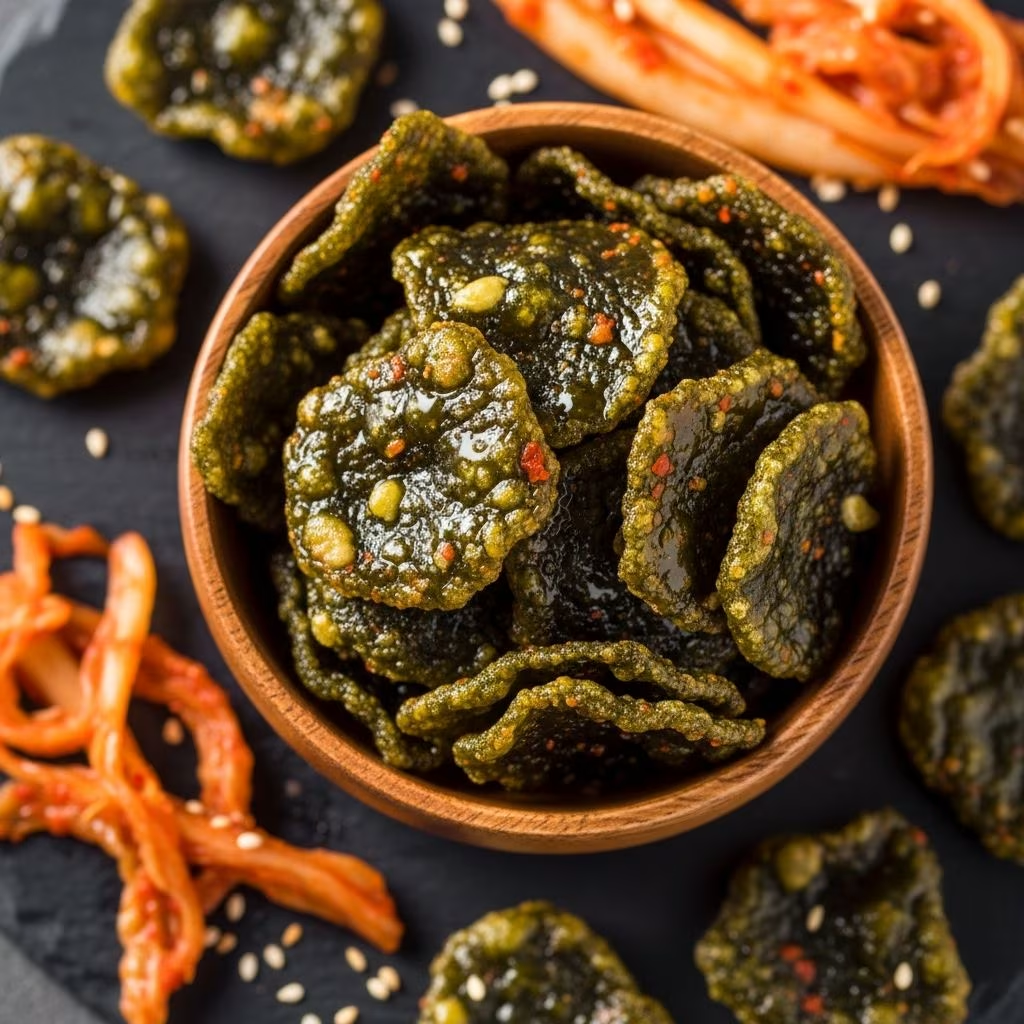
Kimchi gim bugak represents a delightful fusion of Korea’s fermented kimchi tradition and the light, crunchy texture of seaweed crisps. These snacks start with sheets of gim, or roasted seaweed, coated in a seasoned rice paste blended with kimchi elements, then dried and fried to achieve an explosive crunch. This treat captures the umami of the sea paired with the spicy, tangy punch from kimchi, making it an irresistible addition to any snack rotation.
The Heritage of Gim Bugak in Korean Cuisine
Gim bugak has deep roots in Korean culinary history, evolving from simple preserved seaweed into elaborate crispy snacks. Traditionally prepared during harvest seasons, these crisps served as a long-lasting delicacy. The incorporation of kimchi adds a modern twist, infusing the neutral seaweed with bold fermented flavors. Families often make batches for holidays, sharing the labor-intensive process as a bonding ritual. The result is a snack that puffs dramatically when fried, offering a sensory experience of crispiness and subtle spice.
Seaweed, or gim, is nutrient-dense, packed with iodine, vitamins, and minerals essential for health. When transformed into bugak, it becomes a lightweight, airy treat that belies its nutritional punch. Kimchi’s probiotics and vegetables elevate it further, creating a snack that’s both indulgent and wholesome.
Essential Ingredients for Authentic Flavor
Gathering the right components ensures your kimchi gim bugak achieves the perfect balance of crunch, tang, and savoriness. Here’s a breakdown:
- Seaweed sheets (gim): 12-16 sheets of plain, unseasoned roasted seaweed. Opt for high-quality, thinly sliced varieties for even coating.
- Glutinous rice flour: 1 cup, the key to the sticky paste that creates the signature puff.
- Kimchi: ½ cup finely chopped, well-fermented for maximum tang and spice. Use cabbage kimchi for classic results.
- Water: 2-2½ cups, adjusted for paste consistency.
- Kosher salt: 1 teaspoon, to enhance flavors without overpowering.
- Toasted sesame seeds: 3 tablespoons, for nutty crunch and garnish.
- Optional add-ins: Dried chili flakes or shredded young green onions for extra heat and color.
- Frying oil: Neutral vegetable oil with a high smoke point, like canola or grapeseed.
These ingredients are pantry staples in Korean homes, emphasizing simplicity and freshness. Finely chopping the kimchi releases its juices, which integrate seamlessly into the rice paste.
Step-by-Step Guide to Preparing the Rice-Kimchi Paste
The heart of gim bugak lies in the paste, a glossy mixture that adheres to the seaweed and expands during frying. Begin by combining glutinous rice flour, salt, and water in a saucepan over medium heat. Stir vigorously with a wooden spoon until the mixture thickens into a smooth, translucent batter, about 5-7 minutes. It should coat the back of a spoon without dripping.
Remove from heat and stir in the chopped kimchi while warm. The fermentation acids tenderize the paste slightly, infusing it with pink hues and spicy notes. Allow it to cool completely—this prevents soggy seaweed during coating. For best results, prepare the paste a day ahead, letting flavors meld in the refrigerator.
| Step | Action | Time Estimate |
|---|---|---|
| 1 | Mix dry ingredients with water | 2 minutes |
| 2 | Cook until thickened | 5-7 minutes |
| 3 | Incorporate kimchi and cool | 30 minutes+ chilling |
Coating and Drying Techniques for Perfect Texture
Coating requires precision to ensure even coverage. Lay a seaweed sheet shiny-side down on a clean surface. Brush or spread a thin layer of paste over half, fold, and apply another layer on top. Sprinkle sesame seeds generously—they toast beautifully during frying.
Drying is crucial for the snack’s structure. Air-drying takes 1-2 days in a warm, breezy area; flip pieces every few hours to prevent warping. Alternatively, use a food dehydrator at 135°F (57°C) for 6-8 hours until brittle. The dried bugak should snap cleanly when bent, signaling readiness for storage or frying.
- Pro Tip: Freeze dried pieces in airtight bags for up to 6 months; this preserves crispiness and prevents moisture absorption.
- Troubleshooting: If pieces curl, weigh them down gently during initial drying.
Mastering the Frying Process for Maximum Puff
Frying transforms the hard bugak into ethereal crisps. Heat 2 inches of oil to 350°F (175°C) in a deep pot. Hold a piece with tongs over the oil for 5 seconds to soften, then submerge fully. It will bubble and expand rapidly—flip every 5 seconds for even cooking, totaling 20-30 seconds per piece.
Drain on a wire rack or paper towels. The kimchi’s moisture creates internal steam, causing the dramatic bloom. Serve immediately for peak crunch, or store cooled crisps in airtight containers for 1-2 days.
Variations and Creative Twists
While kimchi gim bugak is a classic, experimentation yields exciting results:
- Spicy Gochujang Version: Blend 1 tablespoon gochujang into the paste for deeper red heat.
- Herb-Infused: Add minced garlic chives or perilla leaves for aromatic freshness.
- Gluten-Free: Substitute rice flour with a 1:1 gluten-free blend, maintaining stickiness.
- Baked Alternative: Brush with oil and bake at 400°F for 10-12 minutes, flipping halfway—less indulgent but still crunchy.
These adaptations keep the snack versatile for vegan diets, parties, or lunchbox treats.
Storage, Serving, and Pairing Ideas
Proper storage maintains the bugak’s allure. Unfried dried pieces freeze indefinitely; fried crisps stay fresh for days in cool, dry conditions. Avoid humidity, as it softens the texture irreversibly.
Serve as a banchan alongside rice and grilled meats, or as a standalone snack with iced barley tea. Pair with soju for adults, enhancing the fermented synergy. For kids, break into smaller pieces to mimic chips.
Health Benefits and Nutritional Profile
Kimchi gim bugak offers more than taste—it’s a powerhouse snack. Seaweed provides omega-3s, fiber, and antioxidants; kimchi delivers gut-friendly probiotics. A single serving (about 5 pieces) clocks in at under 100 calories, making it a smart indulgence. Recent studies from Korean food research institutes highlight seaweed’s role in thyroid health and inflammation reduction.
Frequently Asked Questions
What if my paste is too thick?
Add water 1 tablespoon at a time while stirring over low heat until smooth. It should be pourable but not runny.
Can I skip drying and fry immediately?
No—drying removes moisture for proper expansion. Wet paste leads to greasy, flat results.
Is this recipe vegan?
Yes, using plant-based kimchi and no animal products.
How do I know the oil is hot enough?
Test with a small piece; it should sizzle vigorously and puff within seconds.
Can I reuse frying oil?
Strain and store for one more use, but discard if it smells rancid.
Common Mistakes and How to Avoid Them
- Overcrowding the fryer causes steaming instead of frying—work in batches.
- Insufficient sesame leads to blandness; don’t skimp.
- Rushing drying results in chewy textures; patience is key.
With practice, kimchi gim bugak becomes a kitchen staple, blending tradition with everyday enjoyment.
References
- Gim-Bugak Recipe — Maangchi. 2023-01-15. https://www.maangchi.com/recipe/gim-bugak
- Seaweed in Korean Cuisine: Nutritional Analysis — Korea Food Research Institute. 2024-05-20. https://www.kfri.re.kr/en/research/seaweed-nutrition
- Traditional Korean Snacks and Preservation Methods — National Folk Museum of Korea. 2022-11-10. https://www.nfm.go.kr/eng/exhibition/traditional-snacks
- Probiotic Benefits of Kimchi Fermentation — PubMed Central (PMC). 2023-08-05. https://doi.org/10.3390/foods12081567
- Korean Dehydrator Techniques for Bugak — Rural Development Administration (RDA), Korea. 2024-02-14. https://www.rda.go.kr/eng/food-processing/bugak