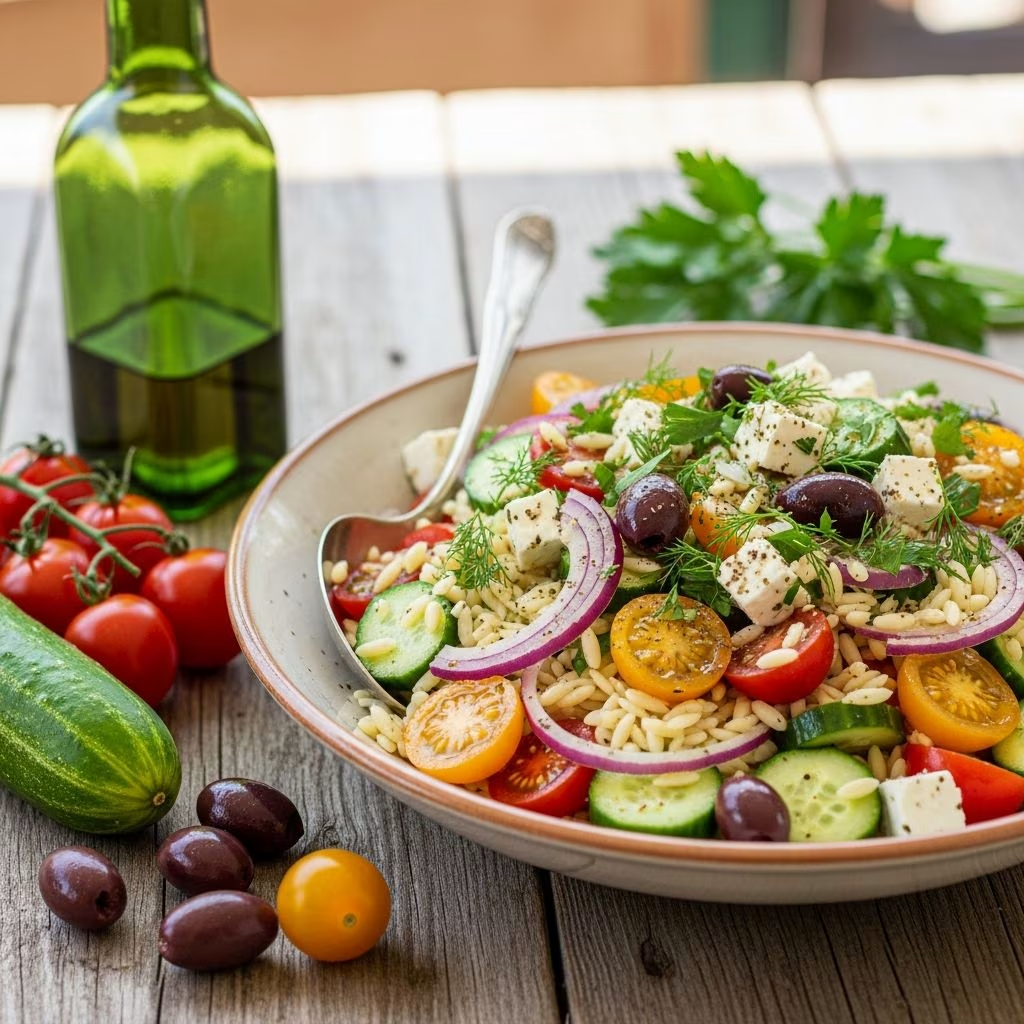
Experience the essence of Mediterranean cuisine through this vibrant Greek orzo salad. Tiny orzo pasta pearls mingle with crisp cucumbers, juicy tomatoes, sharp red onions, briny olives, and creamy feta cheese, all bound together by a bright lemon vinaigrette. This dish captures the sunny spirit of Greece, delivering freshness and bold flavors in every bite. Whether served chilled at a backyard barbecue or at room temperature for a quick lunch, it stands out as a crowd-pleasing option that’s both nutritious and satisfying.
Why This Salad Captivates Palates
Greek orzo salad transcends ordinary pasta dishes by blending textures and tastes seamlessly. The orzo provides a chewy base, while vegetables add crunch and juiciness. Tangy feta introduces creaminess and saltiness, complemented by olives’ earthy brininess. A dressing of olive oil, lemon juice, and herbs ties it all with zesty acidity. This combination not only pleases the taste buds but also offers nutritional balance: complex carbs from pasta, proteins from cheese, healthy fats from olives and oil, and vitamins from veggies.
Its versatility shines in various settings. Pair it with grilled meats like souvlaki or lamb chops for a complete meal, or add chickpeas and grilled chicken to make it hearty enough for a main course. Vegetarians appreciate its plant-forward profile, and with simple swaps like vegan feta, it accommodates dietary needs effortlessly. Preparation is straightforward, requiring about 30-45 minutes total, making it ideal for busy weeknights or entertaining.
Essential Ingredients for Authentic Flavor
Gathering the right components ensures your salad bursts with Mediterranean authenticity. Focus on fresh, high-quality produce for the best results.
- Orzo pasta: 1 pound (about 2.5 cups dry), the star grain-shaped pasta that absorbs dressings beautifully.
- Cucumbers: 2-3 Persian or 1 English, sliced thinly for crispness without excess water.
- Cherry tomatoes: 1-2 pints, halved, providing sweet juiciness and vibrant color.
- Red onion: 1 small, finely diced for sharp bite that mellows when marinated.
- Kalamata olives: 1 cup, pitted and halved, adding savory depth.
- Feta cheese: 8-10 ounces, crumbled, for tangy creaminess.
- Fresh herbs: Basil, parsley, dill, or oregano, about 1/4 cup chopped, to brighten flavors.
For the dressing: extra virgin olive oil (1/3 cup), fresh lemon juice (1/4 cup), red wine vinegar (2 tablespoons), garlic (1-2 cloves minced), dried oregano (1 teaspoon), salt, and pepper. Optional add-ins like artichoke hearts, bell peppers, or chickpeas elevate customization.
Step-by-Step Preparation Guide
Mastering this recipe involves timing to keep ingredients fresh and pasta perfectly textured. Follow these steps for foolproof results.
Cook the orzo: Bring a large pot of salted water to a boil. Add orzo and cook until al dente, about 8-10 minutes. Drain, rinse briefly under cold water to stop cooking, and toss with a teaspoon of olive oil to prevent sticking. Spread on a baking sheet to cool quickly.
Prepare vegetables: While pasta cooks, chop cucumbers, halve tomatoes, dice onion, and slice olives. Place in a large mixing bowl. This overlap saves time.
Whisk the dressing: In a jar or bowl, combine olive oil, lemon juice, vinegar, minced garlic, oregano, salt, and pepper. Shake or whisk vigorously until emulsified. Taste and adjust acidity or seasoning.
Assemble the salad: Add cooled orzo to the vegetable bowl. Pour in dressing and toss gently to coat evenly. Fold in crumbled feta and fresh herbs last to preserve texture.
Rest and serve: Let sit for 15-30 minutes at room temperature for flavors to meld. Garnish with extra herbs or lemon zest before serving.
Total time: 40 minutes. Yields 8-10 servings, about 1 cup each, at roughly 200-250 calories per serving depending on portions.
Customizing Your Greek Orzo Creation
Adapt this base recipe to preferences or pantry staples for endless variety. Use the table below for quick inspiration.
| Variation | Swap/Add | Flavor Profile |
|---|---|---|
| Protein-Packed | Chickpeas (1 can, drained), grilled shrimp | Hearty, satisfying |
| Spicy Kick | Diced jalapeños, red pepper flakes | Bold, fiery |
| Vegan Delight | Vegan feta, skip olives or use green | Plant-based fresh |
| Herb-Heavy | Extra dill, mint, or basil | Aromatic, summery |
| Winter Twist | Roasted veggies, sun-dried tomatoes | Warm, robust |
These tweaks maintain the Greek essence while suiting seasons or diets. For gluten-free, swap orzo for quinoa or rice pasta.
Nutritional Benefits and Dietary Fit
This salad packs health perks aligned with the Mediterranean diet, linked to heart health and longevity. Orzo offers sustained energy via whole grains if using whole wheat variety. Vegetables provide fiber, vitamins C and K, and antioxidants. Olives and olive oil deliver monounsaturated fats reducing inflammation. Feta adds calcium and protein, though moderate due to sodium.
- Per serving (1 cup): ~220 calories, 5g protein, 24g carbs, 6g fat, 2g fiber.
- Low-carb option: Reduce orzo, bulk with veggies.
- High-protein: Incorporate legumes or nuts.
Suitable for vegetarians; easily veganized. Store leftovers in an airtight container up to 4 days; refresh with extra dressing as it absorbs.
Perfect Pairing Ideas
Elevate meals by matching this salad with complementary dishes. It shines alongside grilled proteins: chicken souvlaki, gyros, or fish like sea bass. For vegetarian spreads, serve with hummus, pita, and tzatziki. At barbecues, it balances smoky ribs or burgers. Wine pairings include crisp Assyrtiko or Sauvignon Blanc to echo lemon notes.
Storage, Make-Ahead, and Freezing Tips
Convenience defines this recipe. Prepare up to 24 hours ahead; flavors deepen. Refrigerate covered; stir before serving. Avoid freezing due to vegetable water content causing sogginess, but orzo-dressing mix freezes well for up to a month—thaw and add fresh veggies.
Frequently Asked Questions
Can I make this salad ahead of time?
Yes, assemble 1-2 days in advance. Store dressing separately to prevent sogginess.
Is it safe to use regular pasta if orzo is unavailable?
Absolutely; ditalini or small shells work, maintaining bite-sized appeal.
How do I reduce sodium content?
Rinse feta and olives, use low-sodium versions, and season lightly.
Can this be a main dish?
Yes, add proteins like chickpeas, tuna, or tofu for 400+ calorie meals.
What if my salad is too dry?
Whisk up extra vinaigrette or add olive oil and lemon juice.
Pro Tips for Next-Level Results
To toast orzo lightly before boiling enhances nutty flavor. Use English cucumbers, seeded, to avoid watery salad. Marinate onions in dressing first to soften bite. For color pops, include multi-colored tomatoes or bell peppers. Serve in a chilled bowl for picnics.
This Greek orzo salad embodies simplicity and sophistication, inviting you to savor summer year-round. Experiment confidently—its forgiving nature rewards creativity.
References
- USDA FoodData Central: Orzo Pasta Nutrition — United States Department of Agriculture. 2023-05-15. https://fdc.nal.usda.gov/fdc-app.html#/food-details/169689/nutrients
- Mediterranean Diet and Cardiovascular Health — New England Journal of Medicine (DOI). 2018-06-21. https://www.nejm.org/doi/full/10.1056/NEJMoa1800389
- Olive Oil Health Benefits Review — Harvard T.H. Chan School of Public Health. 2024-02-10. https://www.hsph.harvard.edu/nutritionsource/food-features/olive-oil/
- Feta Cheese Nutritional Profile — USDA FoodData Central. 2023-07-22. https://fdc.nal.usda.gov/fdc-app.html#/food-details/173424/nutrients
- Cucumber and Tomato Vitamin Content — National Institutes of Health. 2022-11-08. https://ods.od.nih.gov/factsheets/VitaminC-HealthProfessional/