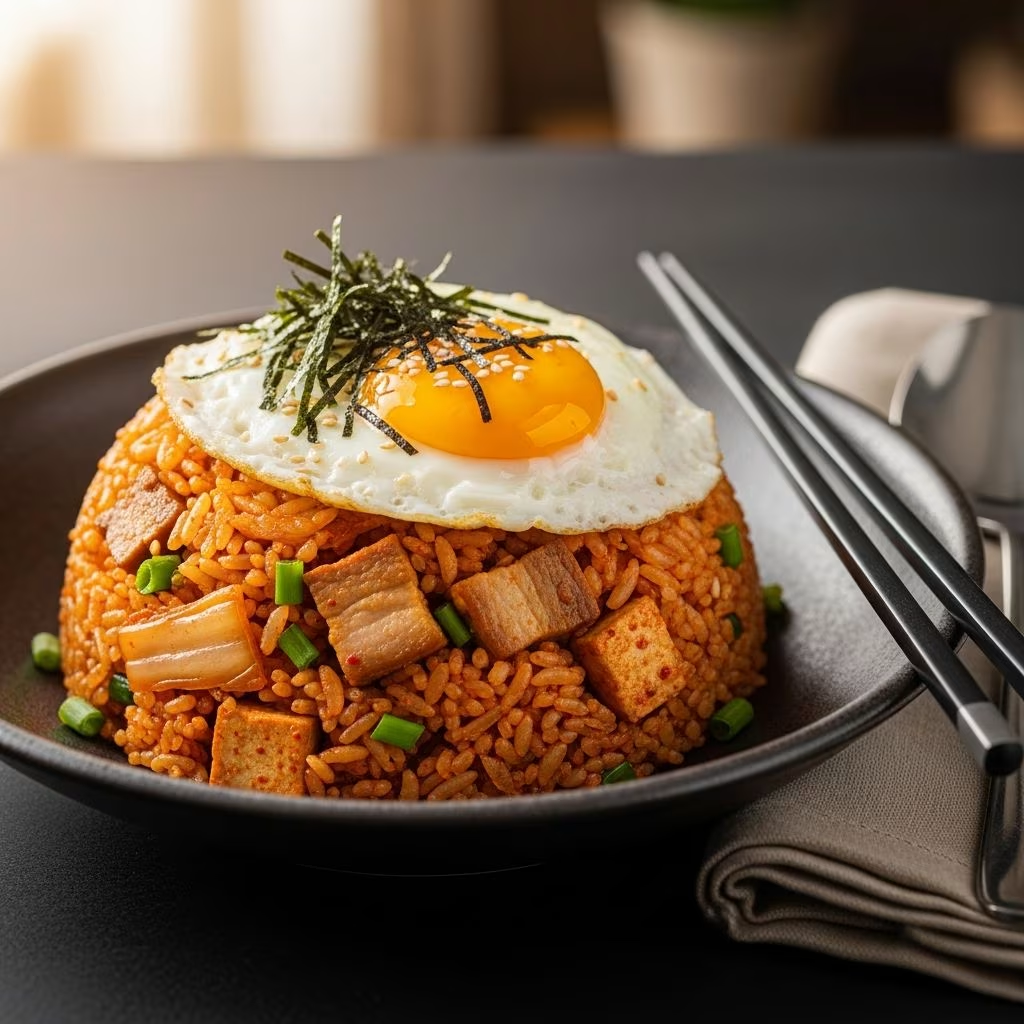
Kimchi fried rice, known in Korean as kimchi bokkeumbap, represents one of the most versatile and satisfying dishes in Korean cuisine. This humble yet flavorful preparation transforms simple ingredients—cooked rice, fermented kimchi, and a few aromatics—into a warming meal that works equally well as a quick weeknight dinner or a creative way to use leftover rice. The dish combines the spicy, tangy characteristics of fermented kimchi with the neutral canvas of rice, creating a harmonious balance of flavors and textures that appeals to both seasoned cooks and beginners alike.
Understanding the Essential Components
The foundation of exceptional kimchi fried rice begins with understanding each ingredient’s role in the final dish. Unlike more complex recipes that require numerous components, this dish achieves its depth through the quality and combination of a relatively modest ingredient list.
The Role of Kimchi in Your Dish
Kimchi serves as the star ingredient and flavor anchor for this entire preparation. The fermented Korean vegetable—typically made from napa cabbage, red chili flakes, garlic, and fish sauce—brings a complex profile of spicy, salty, and umami notes to the dish. The fermentation process creates lactic acid, which not only preserves the vegetables but also develops distinctive tangy and slightly funky flavors that distinguish authentic kimchi from fresh vegetable preparations.
When selecting kimchi for this recipe, opt for well-aged varieties that display deeper red coloration and a more pronounced sour taste. Younger, fresher kimchi works acceptably, but aged versions (typically fermented for at least several weeks) deliver more developed flavor complexity. The kimchi juice—the spicy liquid that collects at the bottom of kimchi containers—becomes equally important, adding both moisture and concentrated flavor to the rice during cooking.
Rice Selection and Preparation
Rice forms the structural component of this dish, and its preparation significantly affects the final outcome. The ideal rice for kimchi fried rice is day-old cooked rice that has been refrigerated overnight. This preparation technique removes excess moisture from the grain, preventing the finished dish from becoming mushy or overly wet.
If you only have access to freshly cooked rice, allow it to cool to room temperature and spread it on a baking sheet before refrigerating for at least thirty minutes. This step mimics the moisture-reduction benefit of overnight storage. Short-grain or medium-grain white rice works best, as these varieties have starch characteristics that promote individual grain separation rather than clumping. Avoid using sticky rice varieties designed for sushi or desserts, as these create an undesirable texture in fried rice preparations.
Building Layers of Flavor
The cooking technique for kimchi fried rice emphasizes sequential addition of ingredients to develop distinct flavor layers rather than mixing everything simultaneously. This methodical approach allows each component to impart its characteristics at the optimal moment.
The Aromatic Foundation
The cooking process begins with heating oil in a large skillet or wok over medium-high heat. Once the oil shimmers, minced garlic and diced onions enter the pan. These aromatics require only brief cooking—approximately two minutes for the onions and thirty seconds for garlic—to release their volatile compounds without browning excessively. Onions provide subtle sweetness that balances the kimchi’s spiciness, while garlic contributes pungent, savory depth.
Some variations incorporate additional aromatics like fresh ginger or scallion whites during this initial stage. These additions amplify the dish’s complexity and create a more robust aromatic profile. The key at this stage involves preventing the garlic from burning, which would introduce bitter flavors that undermine the overall balance.
Incorporating Protein Elements
Many kimchi fried rice preparations include protein components beyond simple vegetarian versions. Common additions include bacon, ham, roast pork, or Chinese-style sausage. These proteins should be pre-cooked or partially cooked before integration, allowing them to develop their flavors independently rather than competing with other ingredients.
When using bacon or sausage, allow it to cook until approximately half-done before proceeding with other ingredients. This prevents overcooking when the protein sits in the pan during subsequent steps. The rendered fat from these proteins also enriches the overall dish, contributing to its savory character. For vegetarian versions, mushrooms—particularly enoki varieties—provide umami depth and textural interest similar to meat proteins.
The Kimchi Cooking Stage
Introducing the chopped kimchi represents a critical juncture in the cooking process. Rather than dumping all the kimchi simultaneously, many experienced cooks advocate for cooking the chopped kimchi in the pan for one to two minutes before adding the rice. This brief cooking period allows the kimchi to release its flavors into the oil and creates a concentrated base that distributes evenly throughout the finished dish.
During this stage, you’ll notice the aromatics combining with the kimchi’s natural juices, creating a flavorful sauce base. Resist the urge to over-stir, as excessive agitation can break down the kimchi pieces excessively or cause them to lose texture.
Bringing It All Together
Adding the Rice at the Right Moment
The cold, pre-prepared rice enters the pan after the aromatics, proteins, and kimchi have begun their flavor development. Separate the rice grains carefully with your fingers or a spatula before adding to the pan, ensuring no large clumps remain. This separation facilitates even heating and flavor distribution throughout the cooking process.
Combine the rice gently with the existing mixture, using folding motions rather than aggressive stirring. Overly vigorous mixing can crush the rice grains, releasing excess starch and creating an undesirably mushy consistency. The rice should retain its individual grain structure while absorbing the surrounding flavors.
Seasoning and Final Adjustments
After the rice reaches the pan, introduce additional seasonings carefully and progressively. The kimchi juice adds both moisture and concentrated spicy-salty flavors. Pour approximately three to four tablespoons of this precious liquid directly over the rice mixture, allowing it to distribute evenly. Sesame oil—typically one to two teaspoons—provides nutty aromatic notes and rounds out the flavor profile.
Soy sauce may be incorporated, though many cooks find that the kimchi and kimchi juice provide sufficient saltiness. When adding soy sauce, apply it judiciously and taste before adding more, as over-salting is easier than under-salting. Gochujang (Korean red chili paste) intensifies the spice level and adds fermented depth, particularly for those who prefer more assertive heat.
Variations and Creative Adaptations
Protein-Forward Versions
Numerous protein options complement the fundamental kimchi fried rice template. Sliced roast pork, ham steak, and Chinese-style sausage all provide different flavor profiles and textural contrasts. Each protein choice subtly shifts the dish’s overall character—bacon adds smoky richness, ham contributes salty-sweet notes, and sausage brings spice and fat that enriches the rice.
Vegetarian and vegan adaptations omit meat proteins entirely, instead emphasizing vegetables like mushrooms, carrots, peas, or bell peppers. Mung bean sprouts add fresh crunch and nutritional value. Fried or scrambled eggs frequently crown the finished dish, providing protein, richness, and textural contrast to the softer rice elements.
Textural Components and Garnishes
The finished kimchi fried rice benefits substantially from strategic garnishes that add textural and visual interest. Toasted sesame seeds contribute subtle nuttiness and pleasing crunch. Thinly sliced scallions or green onions provide fresh onion flavor and bright color contrast. Seaweed strips add oceanic umami and crispy texture. Some preparations incorporate crispy shallots or toasted nuts for additional textural variety.
Practical Cooking Considerations
Heat Management
Maintaining appropriate heat throughout the cooking process ensures proper flavor development without burning components. The initial phase with aromatics and proteins occurs at medium-high heat, promoting caramelization and flavor concentration. Once the rice enters the pan, reducing heat to medium prevents the exterior grains from browning excessively while allowing the interior to heat through completely.
Timing and Texture Control
The entire cooking process typically requires seven to twelve minutes, making kimchi fried rice an exceptionally quick meal option. However, this speed depends on having pre-cooked, chilled rice available. The total hands-on time rarely exceeds fifteen minutes, making this preparation ideal for busy weeknights or quick lunch preparations.
Avoiding mushy texture requires discipline regarding stirring intensity and duration. Unlike some fried rice preparations that benefit from aggressive stirring, kimchi fried rice achieves better results through gentle, periodic folding that distributes ingredients without damaging rice grains.
Frequently Asked Questions
Can I Use Freshly Cooked Rice?
While day-old refrigerated rice is strongly preferred, freshly cooked rice works acceptably if no alternative exists. Spread hot rice on a baking sheet and cool for five to ten minutes at room temperature before refrigerating for at least thirty minutes. This process removes some moisture that would otherwise result in mushy final results. The texture won’t match overnight-refrigerated rice, but the dish remains enjoyable.
What If I Don’t Have Kimchi Juice?
Kimchi juice significantly enhances the final dish, but substitutes exist. A combination of soy sauce, rice vinegar, and a pinch of red chili flakes approximates the spicy-salty-sour profile. Alternatively, reduce the total liquid in the recipe and compensate with additional soy sauce and sesame oil, though the final flavor will differ from versions using authentic kimchi juice.
How Spicy Will This Dish Be?
Spice levels vary based on the kimchi’s age and fermentation, the quantity used, and any additional gochujang additions. Start with modest quantities of gochujang if heat sensitivity is a concern, tasting progressively and adding more as desired. The fermented spiciness of kimchi differs from fresh chili heat, often registering as warmer and more complex.
Can I Make This Vegetarian or Vegan?
Absolutely. Omit all meat proteins and include additional vegetables like mushrooms, carrots, peas, or bell peppers. For vegan versions, skip the egg topping or prepare a silken tofu scramble as a substitute. The kimchi provides sufficient umami to create a satisfying, flavorful dish without animal products.
Storage and Make-Ahead Strategies
Prepared kimchi fried rice keeps well in an airtight container for three to four days under refrigeration. Reheat gently in a skillet over medium heat, adding a splash of water or additional kimchi juice if the rice seems dry. The flavors often develop and meld during storage, making leftovers quite delicious.
For make-ahead preparation, cook all components except final assembly, storing them separately in the refrigerator. Combine and heat through just before serving to maintain optimal texture and flavor vibrancy. This approach works well for meal-prepping or quick entertaining.
Conclusion
Kimchi fried rice exemplifies how simple ingredients, when combined thoughtfully and cooked with attention to technique, create deeply satisfying meals. Whether serving as a quick weeknight dinner, a creative leftover rice solution, or an introduction to Korean cuisine, this versatile dish rewards both beginner and experienced cooks. The balance of spicy, tangy, salty, and umami flavors, combined with the textural contrast between rice grains and various mix-ins, explains its enduring popularity across Korean households and international kitchens alike.
References
- Kimchi Fermentation and Probiotic Content — Journal of Microbiology and Biotechnology, Korean Society for Microbiology and Biotechnology. 2023. https://www.jmb.or.kr/
- Short-Grain Rice Characteristics and Starch Properties — International Rice Commission, Food and Agriculture Organization of the United Nations. 2024. https://www.fao.org/documents/card/en/c/CB8383EN
- Traditional Korean Cuisine and Fermented Foods — Korean Cultural Heritage Administration. 2023. https://www.cha.go.kr/cop/bbs/selectBoardArticle.do
- Sesame Oil Composition and Culinary Applications — Journal of the American Oil Chemists’ Society. 2022. https://www.aocs.org/
- Starch Properties in Cooked Rice and Texture Development — Cereal Chemistry, American Association of Cereal Chemists International. 2023. https://onlinelibrary.wiley.com/journal/17505187