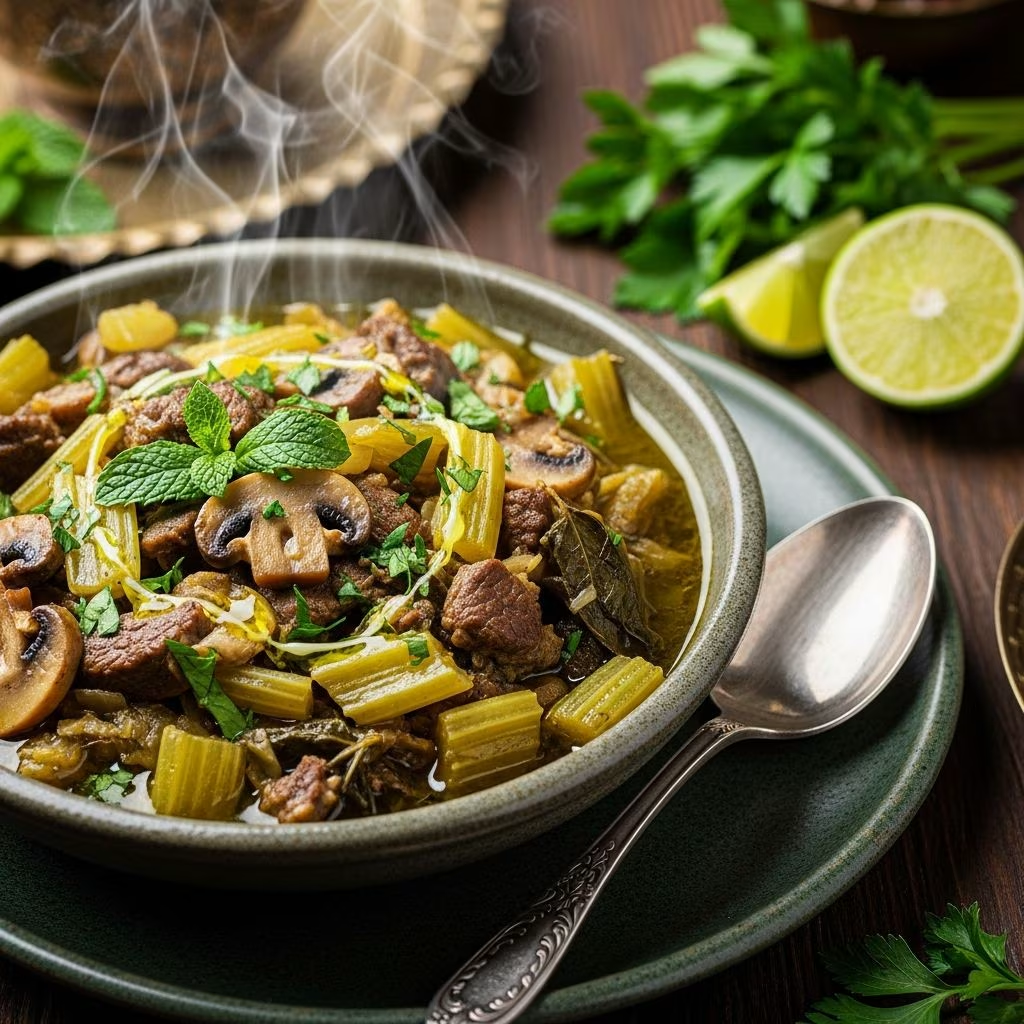
Persian cuisine represents one of the world’s oldest and most sophisticated culinary traditions, with recipes passed down through generations that balance complex spices with fresh, vibrant ingredients. Among these treasured dishes stands Khoresh-e Karafs, a stew that captures the essence of Middle Eastern cooking through its layered flavors and aromatic components. When mushrooms join this classic preparation, they introduce an earthy depth that transforms the dish into something truly remarkable.
Understanding the Essence of Khoresh-e Karafs
A khoresh represents a category of Persian stews that serve as the backbone of traditional Iranian home cooking. These slow-cooked preparations typically combine meat or plant-based proteins with vegetables, aromatics, and distinctive spice profiles that have evolved over centuries. Khoresh-e Karafs specifically celebrates celery as its star ingredient, though modern interpretations have expanded to include mushrooms, creating a more complex and satisfying dish that appeals to various dietary preferences.
The beauty of this stew lies in its ability to balance multiple flavor dimensions simultaneously. Fresh herbs provide brightness, saffron introduces subtle floral notes, lime juice adds sharpness, and mushrooms contribute umami richness that grounds the overall composition. This interplay of tastes makes the dish considerably more interesting than the sum of its individual parts.
The Foundation: Key Ingredients and Their Roles
Fresh Produce and Aromatics
The vegetable base of this stew relies on several critical components working in concert. Celery forms the structural foundation, providing not only its distinctive mild flavor but also a pleasant textural element that persists even after extended cooking. When cut into appropriate lengths, celery maintains its integrity while allowing other flavors to penetrate its fibers.
Mushrooms add complexity that traditional preparations often lacked. Cremini mushrooms work particularly well because their earthy character complements rather than overwhelms the delicate herbal profile. Fresh onions provide the aromatic base upon which all other flavors build, while garlic contributes pungency that deepens during the cooking process.
Herbs That Define the Dish
Fresh parsley, mint, and fenugreek leaves constitute the herbal trinity of this preparation. Each brings distinct characteristics: parsley offers a clean, slightly peppery note; mint provides cooling freshness and aromatic lift; fenugreek leaves contribute subtle maple-like undertones that distinguish this dish from other herb-forward stews. The balance between these three creates a flavor profile that is simultaneously bright and sophisticated.
Spices and Acidic Elements
Saffron threads, when properly dissolved in warm water before incorporation, distribute their golden color and distinctive slightly sweet, earthy flavor throughout the stew. Fresh lime juice serves as the acidic component, cutting through richness and heightening the perception of other flavors. This acidic balance prevents the dish from becoming heavy or cloying despite its slow-cooked nature.
Preparation Methodology: Building Layers of Flavor
Initial Sautéing Technique
The cooking process begins with heating quality olive oil in a substantial pot over high heat. Adding mushrooms first allows them to release their moisture and begin browning, which concentrates their flavor. This technique, known as the Maillard reaction, creates depth that wouldn’t exist if mushrooms were simply simmered from the start. After approximately five minutes, when mushrooms have begun softening, the remaining vegetables enter the pot.
The celery, onion, garlic, and hot pepper (whether fresh jalapeño or dried flakes) are combined and sautéed for roughly ten minutes. This extended initial cooking helps break down cell walls, softens the vegetables partially, and allows them to release aromatic compounds that will flavor the cooking liquid. The heat should remain moderately high during this phase to encourage browning rather than mere steaming.
Liquid Addition and First Simmer
After seasoning with salt and freshly ground pepper, water is added to create the stewing liquid. The quantity typically results in a consistency thicker than soup but thinner than a dry braise. Bringing this mixture to a boil allows flavors to begin melding while the vegetables continue their transformation.
Reducing heat to medium and covering the pot initiates the main cooking phase, typically lasting forty minutes. During this period, vegetable fibers break down, flavors develop through extended contact with moisture and heat, and the overall composition becomes more cohesive. Regular stirring is unnecessary and potentially counterproductive, as it can break apart delicate vegetable pieces prematurely.
Final Flavor Integration
As the initial cooking period concludes, the saffron solution is stirred in along with fresh lime juice, parsley, mint, and fenugreek leaves. These final additions should be timed carefully—too early, and prolonged cooking diminishes their fresh qualities; too late, and insufficient time remains for flavors to integrate properly. Reducing heat to medium-low and simmering for an additional five minutes allows these final components to fully combine while the celery reaches complete tenderness without becoming mushy.
Variations and Adaptations for Different Preferences
Protein Alternatives
While the traditional preparation often includes lamb or beef, the vegetable-forward nature of this stew makes it naturally adaptable. For those following plant-based diets, beans such as black beans or kidney beans provide substantial protein and earthiness that complements the herbal profile. Tofu offers a more neutral canvas that allows the stew’s inherent flavors to shine. Chicken provides a lighter alternative to red meat while still contributing savory depth, and additional mushroom varieties can intensify umami characteristics for purely vegetarian preparations.
Herb Variations
While the specified herbs represent the classic combination, some regional variations emphasize certain components differently. Increasing mint proportion creates a fresher, more Mediterranean interpretation. Reducing or omitting fenugreek produces a less complex but potentially more accessible version. Some preparations incorporate dried herbs in specific proportions if fresh alternatives prove unavailable, though the flavor profile shifts noticeably toward earthiness rather than brightness.
Spice and Acid Customization
Saffron remains expensive and occasionally difficult to source; some cooks substitute turmeric for color and slightly different flavor notes, though purists argue this creates a fundamentally different dish. The lime juice provides essential brightness, but lemon juice creates only marginally different results. Some preparations include dried limes as an additional component, providing slow-release acidity and mineral notes that evolve throughout cooking.
Serving Suggestions and Accompaniments
Traditionally, Khoresh-e Karafs accompanies fluffy Persian rice, which serves multiple purposes: the neutral starch balances the stew’s bold flavors, the light texture contrasts with the stew’s density, and the combination creates a satisfying complete meal. Jasmine rice or basmati rice both work excellently. Some preparations include warming flatbread such as lavash or barbari, which can be used to scoop the stew and absorb its flavorful liquid.
When serving, considering the presentation matters as much as the preparation itself. The vibrant green of fresh herbs should remain visible, indicating their recent addition and the care taken in preparation. A drizzle of quality olive oil and perhaps a garnish of fresh mint elevates the visual appeal and adds final flavor complexity.
Storage and Make-Ahead Strategies
This stew represents an ideal make-ahead preparation—the flavors actually improve with time as individual components continue melding. Refrigerating the prepared stew for one or two days before serving intensifies the herbal profile and allows spices to fully distribute. The stew maintains quality in the refrigerator for up to five days when stored in an airtight container, and freezing is possible for up to three months, though the celery texture softens somewhat upon thawing.
When reheating, gentle warming over low to medium heat prevents further vegetable breakdown and maintains the careful flavor balance developed during initial cooking. Adding a small amount of water may be necessary if the stew has reduced significantly during storage.
Frequently Asked Questions
Can I prepare this dish without mushrooms?
Absolutely—the mushroom component represents a modern addition to classical preparations. Omitting mushrooms creates a lighter, more traditionally herbal stew while maintaining all the essential flavor elements. Some cooks substitute additional quantities of other vegetables such as carrots or potatoes to create textural variety.
What if I cannot find fresh fenugreek leaves?
Dried fenugreek leaves work adequately when fresh versions prove unavailable, though the flavor becomes more concentrated and slightly more bitter. Using approximately one-third the quantity of dried leaves compared to fresh is recommended. Alternatively, increasing the proportion of fresh mint can partially compensate for fenugreek’s absence.
How can I adjust the consistency?
If the stew appears too watery, extending the simmering time allows excess moisture to evaporate. Conversely, adding more water when the stew appears too thick easily adjusts the texture toward preferences. The final consistency should allow the stew to coat a spoon while remaining pourable.
Is saffron truly necessary?
While saffron contributes distinctive flavor and beautiful golden color, it remains optional due to both cost and availability. However, omitting it noticeably changes the character of the dish. If substituting, turmeric offers color but slightly different flavor notes, or simply accepting a more herb-forward stew without golden tones represents another valid approach.
Nutritional Considerations and Health Benefits
This stew presents an excellent nutritional profile featuring vegetables rich in vitamins, minerals, and fiber alongside aromatic herbs known for various beneficial properties in traditional medicine systems. The combination of fresh herbs, saffron, and lime juice creates an antioxidant-rich preparation, while mushrooms contribute beta-glucans and other beneficial compounds. The relatively light use of oil and abundance of vegetables make this appropriate for various dietary approaches.
Conclusion: A Bridge Between Tradition and Modern Cooking
Khoresh-e Karafs with mushrooms represents a beautiful intersection of culinary tradition and contemporary adaptation. By honoring the classical framework while incorporating modern ingredients and preferences, this dish demonstrates how time-honored recipes can evolve while maintaining their essential character. The preparation requires patience and attention to timing, but the resulting stew rewards these efforts with complex flavors, satisfying textures, and the deep satisfaction that comes from preparing thoughtful food that respects both ingredient quality and cooking tradition.
References
- Persian Celery Stew With Mushrooms (Khoresh-e Karafs) — Patient.info. Accessed April 2026. https://patient.info/recipes/vegan-recipes/persian-celery-stew-with-mushrooms-khoresh-e-karafs
- Persian Celery Stew – Khoresht Karafs – Unicorns in the Kitchen — Unicorns in the Kitchen. Accessed April 2026. https://www.unicornsinthekitchen.com/persian-celery-stew-khoreshte-karafs-vegetarian-version/
- Khoresht-e Karafs | Persian Celery Stew — Vegan Middle East. Accessed April 2026. https://veganmiddleeast.com/recipes/khoresht-karafs/
- Khoresht e Karafs // Persian Celery Stew — The Iranian Vegan. Accessed April 2026. https://www.theiranianvegan.com/recipes/vegan-khoresht-e-karafs-persian-celery-stew
- A Comforting Parallel Universe Celery Stew – Khoresh Karafs — Bottom of the Pot. Accessed April 2026. https://bottomofthepot.com/a-comforting-parallel-universe-celery-stew-khoresh-karafs/