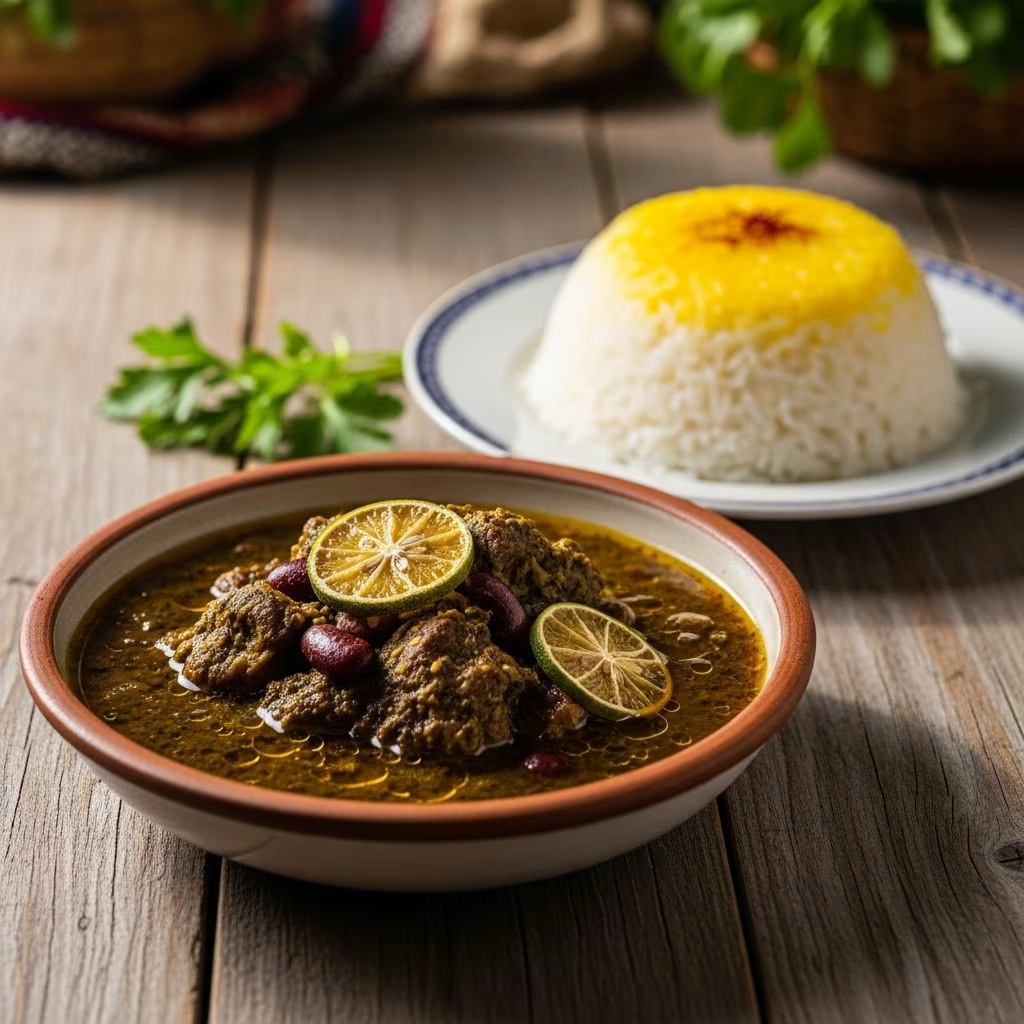
Ghormeh Sabzi stands as one of the most cherished dishes in Persian cuisine, a rich herb stew that embodies the essence of Iranian flavors through its medley of fresh greens, tender meat, and distinctive tangy elements. This khoresh, or stew, combines sautéed herbs with slow-cooked beef or lamb, kidney beans, and dried limes, creating a dish that’s both hearty and aromatic. Often hailed as the “king of stews,” it pairs perfectly with fluffy basmati rice or crispy tahdig, making it a staple at family gatherings and celebrations.
The Heart of Persian Culinary Tradition
In Persian cooking, herbs form the backbone of many dishes, and Ghormeh Sabzi exemplifies this tradition. The name itself translates to “fried herbs,” though the preparation involves sautéing rather than deep-frying, allowing the greens to release their essential oils and develop a deep, earthy flavor. This stew has deep roots in Iranian culture, passed down through generations as a symbol of home and hospitality. Its popularity spans from Tehran households to diaspora communities worldwide, where it evokes nostalgia and comfort.
Historically, Ghormeh Sabzi likely originated in the pastoral regions of Iran, where abundant fresh herbs were readily available. Shepherds and farmers would gather wild greens like fenugreek, blending them with preserved limes and legumes for sustenance during long days. Today, it remains a Friday lunch favorite, with families simmering pots for hours to achieve the perfect tenderness and balance of sourness and savoriness.
Essential Ingredients Breakdown
Mastering Ghormeh Sabzi starts with sourcing quality ingredients. The herb mixture is the star, typically comprising parsley, cilantro, scallions, and fenugreek, with optional spinach for added body. Meat choices include stewing beef or lamb cuts that become melt-in-your-mouth tender after slow cooking. Key unique elements are dried Persian limes (limoo amani) for their citrusy tang and kidney beans for creaminess.
| Ingredient | Quantity (Serves 6) | Role in Dish |
|---|---|---|
| Stewing beef or lamb | 1.5-2 lbs, cubed | Provides rich, tender protein base |
| Fresh parsley | 4 bunches, finely chopped | Main herb for freshness and bulk |
| Fresh cilantro | 2 bunches, finely chopped | Adds bright, citrusy notes |
| Scallions or leeks (green parts) | 1 bunch or 1 small leek | Contributes mild oniony depth |
| Fenugreek leaves (dried or fresh) | 2-3 tbsp dried | Signature aromatic bitterness |
| Dried kidney beans | 1 cup, soaked overnight | Thickens stew and adds earthiness |
| Dried Persian limes | 4-5, pierced | Infuses tangy, sour flavor |
| Onions | 2 large, diced | Base for sautéing and sweetness |
| Turmeric | 1 tsp ground | Earthy spice for color and warmth |
Fenugreek is non-negotiable for authenticity—its maple-like aroma defines the dish but use sparingly to avoid bitterness. Dried limes, available at Middle Eastern markets, are blackened and rock-hard; pierce them to release their juice slowly during cooking.
Step-by-Step Cooking Guide
Preparing Ghormeh Sabzi requires patience, with separate steps for the meat base and herb mixture before combining for a long simmer. This method ensures flavors meld without overcooking the delicate greens.
- Prepare the meat base: In a large pot, heat 2-3 tbsp oil over medium-high. Sauté diced onions until golden, about 8-10 minutes. Add cubed meat, searing on all sides. Stir in turmeric, salt, pepper, and optional garlic. Cover with water (about 3 cups), bring to a boil, then simmer covered for 1-1.5 hours until meat softens.
- Sauté the herbs: In a wide skillet, heat 1/4-1/2 cup oil over medium-high. Add finely chopped parsley, cilantro, scallions, and fenugreek. Stir constantly for 15-20 minutes until dark green and fragrant—do not rush this step, as it intensifies flavors. Some recipes include spinach for volume.
- Combine and simmer: Add fried herbs to the meat pot along with soaked, drained kidney beans and pierced dried limes. Adjust water for a thick stew consistency. Simmer on low for 1.5-2 hours more, stirring occasionally. Taste and adjust seasoning; the stew should be tangy, herbaceous, and savory.
- Rest and serve: Let rest off-heat for 30 minutes. Serve over steamed basmati rice, preferably with tahdig (crispy rice bottom).
Total time: 3-4 hours, mostly hands-off. Pro tip: Cook a day ahead for deeper flavor integration.
Variations and Dietary Adaptations
- Vegetarian version: Swap meat for mushrooms or eggplant, sautéed with extra turmeric for umami. This maintains authenticity while suiting plant-based diets.
- Lamb alternative: Use lamb shoulder for gamier depth, popular in northern Iran.
- Instant Pot shortcut: Sear on sauté mode, then pressure cook meat for 45 minutes, add herbs post-cook to preserve vibrancy.
- Spinach boost: Incorporate baby spinach in the herb mix for tenderness, as in some regional recipes.
For vegan eaters, ensure beans are the star; add vegetable bouillon for richness. These tweaks keep the dish’s soul intact.
Perfect Pairings and Serving Suggestions
Ghormeh Sabzi shines with Persian rice—opt for chelo with saffron-infused grains and yogurt on the side to cut richness. Tahdig adds crunch, while pickled garlic (sir torshi) enhances the tang. A fresh herb platter (sabzi khordan) with radishes complements the stew’s intensity.
Portion generously: one serving includes 1 cup stew over 1 cup rice. Leftovers freeze well for up to 3 months, thawing flavors even more.
Common Pitfalls and Expert Tips
Avoid these mistakes for restaurant-quality results:
- Overdoing fenugreek: Start with 2 tbsp; it intensifies during cooking.
- Skipping the herb sauté: Raw herbs make the stew grassy—high-heat frying is crucial.
- Not piercing limes: This prevents burst and ensures even sourness.
- Rushing the simmer: Low and slow tenderizes meat and beans fully.
Tip: Use a food processor for chopping herbs efficiently, but pulse to avoid mush. Taste midway; add lime juice if more tang needed.
Nutritional Profile and Health Benefits
Per serving (approx. 1.5 cups): 450 calories, 25g protein, 30g carbs, 25g fat. Herbs provide vitamins A, C, K; fenugreek aids digestion; beans offer fiber. The turmeric-lime combo supports anti-inflammatory benefits, making it a wholesome meal.
Frequently Asked Questions (FAQs)
What if I can’t find dried Persian limes?
Substitute with 2-3 tbsp lime juice or verjuice added toward the end, but pierceable limes yield superior infusion.
Can I use canned kidney beans?
Yes, but drain and rinse; add in the last 30 minutes to prevent mushiness.
Is fenugreek essential?
Absolutely for authentic taste; dried works best and is available online or in specialty stores.
How spicy is Ghormeh Sabzi?
Not spicy at all—flavors are herbal and tangy. Add chili flakes if desired.
Freezer-friendly?
Yes, portion into bags; reheat gently with water splash.
Why Ghormeh Sabzi Captures Hearts Worldwide
Beyond its taste, Ghormeh Sabzi fosters connections—its aroma fills homes, drawing loved ones to the table. In a globalized world, it bridges cultures, introducing newcomers to Persia’s sophisticated palette. Whether for Nowruz or weeknights, this stew delivers joy in every spoonful.
References
- Ghormeh Sabzi (Persian Beef Stew with Herbs and Dried Lime) — The Mediterranean Dish. 2023-05-15. https://www.themediterraneandish.com/ghormeh-sabzi/
- Ghormeh Sabzi Recipe (Persian Herb Stew) — Little Spice Jar. 2022-11-10. https://www.littlespicejar.com/ghormeh-sabzi/
- Ghormeh Sabzi – Persian Herb Stew — Cooking With Ayeh. 2024-02-20. https://cookingwithayeh.com/ghormeh-sabzi-persian-herb-stew/
- Khoresh Ghormeh Sabzi – Beef and Fresh Herb Stew — The Caspian Chef. 2019-12-15. https://thecaspianchef.com/2019/12/persian-beef-and-fresh-herb-stew/
- How to Make Ghormeh Sabzi — YouTube (Farideh Sadeghin). 2020-08-12. https://www.youtube.com/watch?v=igo1vFsFAm8