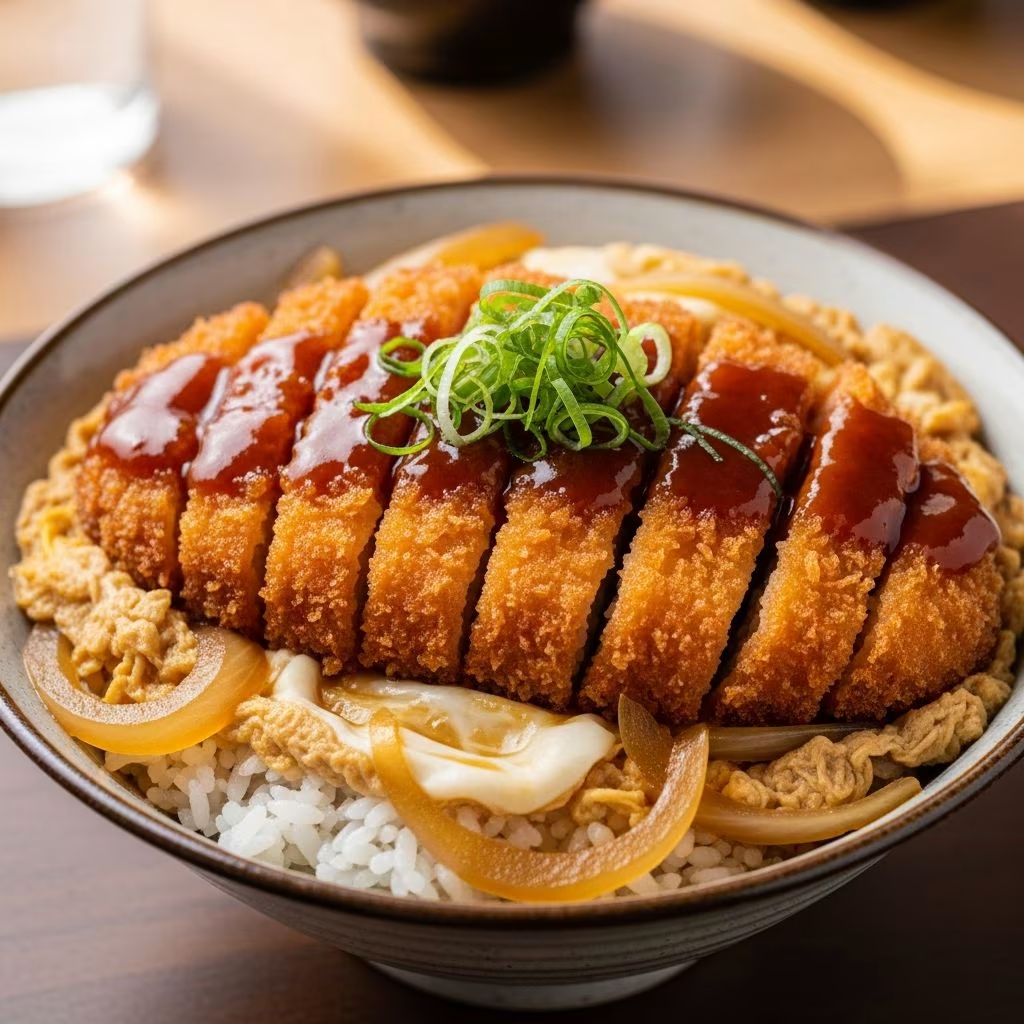
Katsudon combines crispy breaded pork cutlet, known as tonkatsu, with sweet-savory broth, tender onions, and softly cooked eggs, all piled over steamed rice for a satisfying one-bowl meal. This dish captures the essence of Japanese home cooking, offering layers of texture and flavor in every bite.
Understanding Katsudon and Its Place in Japanese Food Culture
Katsudon, or katsu donburi, gets its name from “katsu” meaning cutlet and “don” from donburi, the large rice bowl it’s served in. Originating in the late 19th or early 20th century, it evolved from tonkatsu, a Western-influenced fried pork cutlet adapted into Japanese cuisine. Regional variations abound, with some areas emphasizing sweeter broths or different egg-cooking styles, but the core remains a comforting, quick meal popular among students, workers, and families.
Unlike ramen or sushi, katsudon is a donburi-style dish designed for efficiency—nutritious, filling, and ready in under 30 minutes. It’s commonly found in teishoku sets at casual eateries or made at home for its straightforward appeal.
Essential Ingredients for Perfect Katsudon
The beauty of katsudon lies in its simple, high-quality components. Here’s a breakdown:
- Tonkatsu: Breaded and fried pork loin or tenderloin cutlets, providing crunch and juiciness. Homemade is best, but pre-made works.
- Onions: Thinly sliced for sweetness when simmered.
- Eggs: 2-3 large eggs per serving, gently beaten to create a marbled effect rather than fully whisked.
- Dashi broth: The umami base made from kombu kelp, bonito flakes, or packets.
- Seasonings: Soy sauce, mirin, sugar for balance of sweet, salty, and tangy notes.
- Rice: Short-grain Japanese rice, steamed fluffy.
- Garnish: Chopped green onions for freshness.
Ingredient Substitutions Table
| Original Ingredient | Substitution | Notes |
|---|---|---|
| Dashi | Chicken broth or vegetable stock | Less authentic umami; add mushroom powder for depth. |
| Pork cutlet | Chicken katsu or tofu for vegan | Maintains crunch; adjust cooking time. |
| Mirin | Sake + sugar (1:1 ratio) | Approximates sweetness. |
| Panko | Gluten-free breadcrumbs | For dietary needs. |
These swaps keep the dish accessible while preserving its spirit.
Step-by-Step Guide to Making Katsudon
Prep time: 10 minutes. Cook time: 20 minutes. Serves: 2.
Prepare the Tonkatsu
Pound pork chops to ½-inch thickness, season with salt and pepper. Dredge in flour, dip in beaten egg, coat with panko. Fry in ½-inch hot oil (350°F) until golden, 3-4 minutes per side. Drain and slice into strips. Pro tip: Double-fry for extra crispiness.
Make the Broth
In a pot, combine 1 cup water and dashi packet (or 1 cup homemade dashi from kombu and katsuobushi). Simmer 5 minutes, remove packet. Stir in 2 tsp sugar, 2 Tbsp mirin, 2 Tbsp soy sauce. For vegan, use kombu-only dashi.
Assemble and Simmer
- Slice ½ onion thinly. In a skillet, add onions and pour over broth. Cover and simmer on medium until translucent, 5-7 minutes.
- Place sliced tonkatsu on onions. Cover and heat 2 minutes to absorb flavors.
- Beat 3 eggs lightly with chopsticks (no whisking) for marbled texture. Pour over cutlet, cover, cook 1-2 minutes until just set.
- Serve over hot rice in deep bowls, garnish with green onions.
This lidded skillet method, called oyakodon-pan style, steams the egg perfectly.
Perfecting Texture and Flavor Balance
Key to great katsudon: contrast of crispy cutlet against silky egg and soft rice. Undercook eggs slightly for jammy yolks. Broth should be savory-sweet; taste and adjust sugar or soy. Use day-old rice for better absorption without mushiness. Common pitfalls: over-whisked eggs (flat texture) or soggy cutlet (add last minute).
Regional Variations and Creative Twists
Japan’s prefectures offer unique takes:
- Tokyo-style: Thicker broth, more onions.
- Okayama-style: Half-boiled egg, separate components.
- Chicken Katsudon: Lighter with chicken breast.
For modern twists, try baked tonkatsu to cut oil, or vegan with tofu katsu and mushrooms. Pair with miso soup or pickled veggies for a full meal.
Nutrition and Pairing Suggestions
One serving (½ bowl): ~700 calories, 35g protein, high in iron from pork. Balanced with veggies via onions. Pair with green tea or light sake; avoid heavy beers to let flavors shine.
Frequently Asked Questions (FAQs)
What rice is best for katsudon?
Short-grain Japanese rice like sushi rice for stickiness and broth absorption.
Can I make katsudon ahead?
Prepare components separately; assemble fresh to maintain crispiness.
Is katsudon gluten-free?
Use tamari for soy, gluten-free panko, and ensure dashi is bonito-free.
How spicy is katsudon?
Not spicy; add shichimi togarashi for heat.
What’s the difference between katsudon and oyakodon?
Katsudon uses pork cutlet; oyakodon chicken and onions (“parent-child” bowl).
Storage and Reheating Tips
Store leftovers in airtight containers up to 2 days. Reheat gently in microwave with damp paper towel over rice, or skillet with splash of dashi to revive. Freeze cutlets separately; avoid freezing assembled dish.
Katsudon embodies comfort: warm, hearty, nostalgic. Experiment to find your perfect version.
References
- Katsudon (Pork Cutlet Rice Bowl) (Video) かつ丼 – Just One Cookbook — Just One Cookbook. 2023-01-15. https://www.justonecookbook.com/katsudon/
- Katsudon (Japanese Pork Cutlet Bowl) – Sudachi Recipes — Sudachi Recipes. 2023-05-20. https://sudachirecipes.com/japanese-katsudon-recipe/
- Katsudon Recipe Japanese Pork Cutlet and Egg Rice Bowl — Grantourismo Travels. 2022-11-10. https://grantourismotravels.com/katsudon-recipe/
- Katsudon – Japanese Chicken Cutlet Rice Bowl – Moribyan — Moribyan. 2024-02-14. https://moribyan.com/katsudon-japanese-chicken-cutlet-rice-bowl/
- Katsudon Japanese Pork Cutlet and Egg Rice Bowl – The Woks of Life — The Woks of Life. 2023-08-22. https://thewoksoflife.com/katsudon/