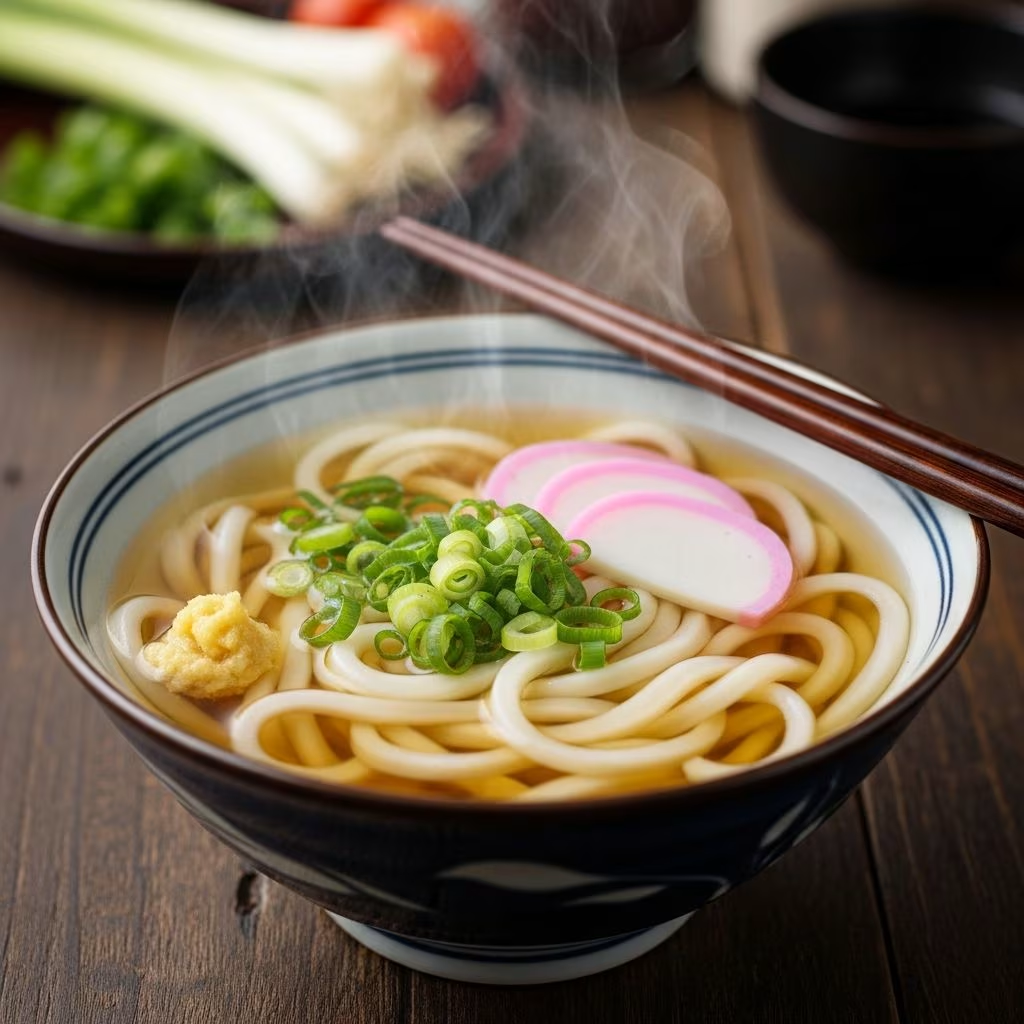
Kake Udon stands as one of Japan’s most beloved comfort foods, celebrated for its straightforward preparation and profound flavors. This hot noodle soup features thick, springy udon noodles submerged in a light, savory broth made primarily from dashi stock, soy sauce, and mirin. Unlike more elaborate udon varieties loaded with proteins or tempura, Kake Udon emphasizes purity, allowing the quality of its core ingredients to shine. Originating from regions like Kanto where it’s known as kake udon, and Kansai where it’s called su udon, this dish offers a canvas for personalization while remaining true to its minimalist roots.
The Essence of Kake Udon: History and Cultural Significance
Tracing back to everyday Japanese cuisine, Kake Udon emerged as a staple in noodle shops and home kitchens, prized for its quick assembly and nourishing qualities. In Kanto-style preparations, the broth achieves a deeper amber hue from bolder soy sauce, contrasting the clearer, lighter version in Kansai. This regional divide highlights Japan’s culinary diversity, where even simple soups reflect local tastes. Today, Kake Udon enjoys global popularity, with adaptations for vegan diets using kombu and shiitake dashi, making it accessible to diverse palates.
Its appeal lies in versatility: a solo diner might savor it plain with scallions, while families elevate it with fish cakes or tempura scraps. Nutritionally, udon provides complex carbs for sustained energy, paired with umami-rich broth that delivers glutamates from dashi for satisfaction without heaviness.
Essential Ingredients for Authentic Broth and Noodles
Building a superior Kake Udon starts with premium components. Focus on these staples:
- Udon Noodles: Opt for frozen sanuki-style for optimal chewiness (about 200-500g per 2 servings). Fresh or dried work but require careful cooking to avoid mushiness.
- Dashi Stock: Traditional awase dashi combines kombu (kelp) and niboshi (dried sardines) or katsuo-bushi (bonito flakes). For vegan, use kombu with shiitake mushrooms soaked overnight.
- Seasonings: Soy sauce (1-1.5 Tbsp per cup dashi), mirin (1-3 Tbsp for subtle sweetness), sake (optional, 1-2 Tbsp), and a pinch of salt or sugar to balance.
- Base Aromatics: Kombu (3-10g per liter water) infuses gentle oceanic notes.
A standard broth ratio: 2⅓ cups dashi, 1½ Tbsp soy sauce, 1 Tbsp mirin, 1 tsp sugar, ⅛ tsp salt. Adjust for taste, simmering briefly to meld flavors.
Step-by-Step Guide to Preparing Kake Udon Broth
Perfect broth is the heart of Kake Udon. Follow this method for 2 servings:
- Prepare Dashi: Soak 10g kombu and 10g niboshi (or shiitake for vegan) in 1L water for 30 minutes or overnight in fridge. Gently heat to 60-80°C (avoid boil to prevent bitterness), then strain.
- Season Broth: In a pot, combine 500ml dashi, 2 Tbsp soy sauce, 2 Tbsp mirin, 1 Tbsp sake, ½ tsp salt. Bring to boil, simmer 1-2 minutes to evaporate alcohol, then taste and adjust.
- Rest for Depth: Cover off-heat for 5 minutes; flavors intensify.
For quick versions, dashi packets dissolve in hot water yield reliable results in 5 minutes.
Cooking Udon Noodles to Chewy Perfection
Noodles demand precision to retain their signature mochi-mochi texture.
- Boil fresh water (never reuse noodle water for broth to avoid cloudiness).
- Cook frozen udon 1-2 minutes until separated; dried 8-10 minutes per package.
- Drain immediately, rinse under hot water to remove starch, preventing stickiness.
- Portion into bowls and ladle hot broth over top for even warming.
Pro tip: Retain a cup of noodle water to thin broth if needed.
Toppings That Elevate Your Kake Udon
While minimalist, toppings transform Kake Udon. Here’s a comparison of classics:
| Topping | Description | Flavor Profile | Prep Time |
|---|---|---|---|
| Green Onions (Negi) | Thinly sliced fresh scallions | Fresh, mild onion bite | 1 min |
| Wakame Seaweed | Rehydrated dried wakame | Briny, oceanic | 2 min |
| Kamaboko | Sliced steamed fish cake | Sweet, bouncy | Ready-to-use |
| Tempura Bits (Tenkasu) | Crispy fried batter scraps | Crunchy, savory | 5 min |
| Aburaage | Fried tofu pouches, simmered in broth | Silky, absorbent | 3 min |
| Shichimi Togarashi | Seven-spice blend | Spicy, citrusy heat | Instant |
Start simple with negi and ginger; progress to kitsune-style with aburaage.
Vegan and Quick Adaptation Variations
Vegan Kake Udon: Replace niboshi with shiitake and kombu dashi. Add sugar for mirin’s sweetness role.
20-Minute Version:
- Use instant dashi powder (1 tsp per cup water).
- Microwave frozen udon 2-3 minutes.
- Simmer seasonings 2 minutes.
Cold Brew Dashi: Soak kombu/shiitake overnight for umami without heat, ideal for subtle broths.
Regional Styles: Kanto vs. Kansai Udon Soups
Kanto kake udon uses darker shoyu for robust color and taste; Kansai su udon prefers usukuchi (light soy) for clarity. Both share chewy noodles but differ in broth intensity, influencing national preferences.
Common Mistakes and Expert Troubleshooting
Avoid these pitfalls:
- Overboiling Broth: Kills delicate dashi notes; simmer only.
- Soggy Noodles: Cook al dente, rinse starch.
- Imbalanced Seasoning: Taste iteratively; mirin tempers soy’s saltiness.
- Cold Serve: Prep toppings ready; assemble last minute.
For silkier broth, strain multiple times.
Pairing Suggestions and Serving Ideas
Serve steaming in deep bowls with chopsticks and short spoons. Pair with Japanese pickles (tsukemono), oshiruko for dessert, or green tea. It’s ideal breakfast, lunch, or late-night fare.
Frequently Asked Questions (FAQs)
What makes Kake Udon different from other udon soups?
Kake Udon is the plainest form, focusing on noodles and basic broth without heavy proteins, unlike tempura or kitsune udon.
Can I make Kake Udon gluten-free?
Use rice-based udon and tamari instead of soy sauce; verify dashi ingredients.
How long does homemade dashi last?
Refrigerate 2-3 days or freeze 1 month; refresh with kombu steep.
Is frozen udon better than dried?
Frozen preserves authentic chew; dried suits pantry storage but cooks longer.
What’s the best way to reheat leftovers?
Separately warm noodles in hot water, broth on stove; combine fresh.
Embrace Kake Udon’s philosophy: simplicity yields sophistication. Experiment responsibly for your signature bowl.
References
- Kake Udon Recipe | Savor At This Broth And Noodle Meal — Hakkohub. 2023. https://hakkohub.com/kake-udon/
- Simple Udon Noodle Soup (Kake Udon) — Sudachi Recipes. 2023. https://sudachirecipes.com/kake-udon-recipe/
- Vegan Kake Udon (Japanese Udon Noodle Soup) — The Foodie Takes Flight. 2023. https://thefoodietakesflight.com/kake-udon-noodle-soup/
- Udon Noodle Soup (Kake Udon) (Video) — Just One Cookbook. 2023-10-01. https://www.justonecookbook.com/udon-noodle-soup/
- Classic Udon Noodle Soup (Light Japanese Broth) — Pickled Plum. 2023. https://pickledplum.com/light-udon-noodle-soup/
- Kakeudon かけうどん — Chopstick Chronicles. 2023. https://www.chopstickchronicles.com/kakeudon/