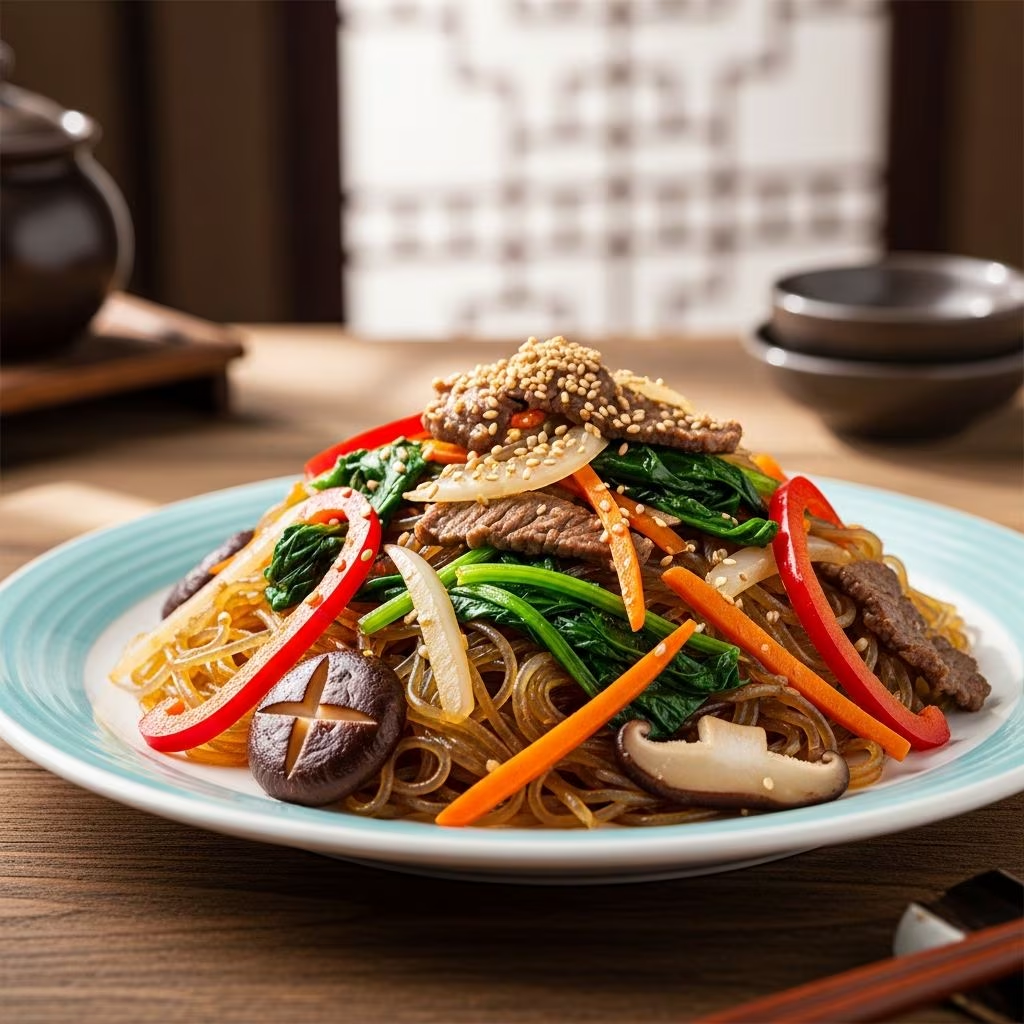
Japchae stands as one of Korea’s most cherished dishes, celebrated for its glossy, chewy noodles intertwined with crisp vegetables, tender protein, and a harmonious sweet-savory sauce. This stir-fry masterpiece, often served at festive gatherings or as a versatile side, showcases the art of balancing textures and flavors in Korean cuisine. Whether you’re new to Korean cooking or a seasoned home chef, crafting Japchae at home brings restaurant-quality results with straightforward techniques.
The Essence of Japchae: A Cultural Staple
Originating from the Joseon Dynasty, Japchae—meaning “mixed vegetables”—has evolved into a staple at celebrations like weddings, birthdays, and Lunar New Year feasts. Its translucent sweet potato noodles, known as dangmyeon, provide a unique chewiness that absorbs seasonings beautifully. Traditionally a banchan (side dish), it doubles as a main course when portioned generously. The dish’s appeal lies in its vibrant colors from carrots, spinach, and peppers, contrasted by umami-rich mushrooms and beef.
Modern adaptations make Japchae accessible for everyday meals, with prep times as short as 30-55 minutes for 6-8 servings. Its adaptability suits vegetarians by swapping beef for tofu or omitting meat entirely, maintaining the dish’s core appeal.
Essential Ingredients for Authentic Flavor
Gathering the right components ensures Japchae’s signature gloss and bounce. Focus on fresh, high-quality produce and specialty items like dangmyeon, available at Asian markets or online.
- Sweet potato starch noodles (dangmyeon): 250g (8-9 oz) for 6-8 servings; these translucent strands are gluten-free and key to the chewy texture.
- Protein: 100-170g ribeye, sirloin, or pork loin, thinly sliced; marinate for tenderness.
- Vegetables: 1-2 carrots (julienned), 1 onion (sliced), spinach (200g blanched), shiitake or wood ear mushrooms (rehydrated), bell peppers for color.
- Sauce base: Soy sauce (1/4-1/2 cup), sesame oil (2-3 tbsp), sugar (2-3 tbsp), minced garlic (1 tbsp), sesame seeds (toasted).
- Extras: Neutral oil for stir-frying, green onions for garnish.
Proportions can scale: use a 1:1:2 ratio of meat:veggies:noodles by weight for balance.
Prepping Ingredients: The Foundation of Success
Preparation is crucial to prevent overcooking and ensure even cooking. Start by marinating proteins and veggies separately to build layers of flavor.
- Marinate meat: Slice beef thinly against the grain, mix with 1 tbsp soy sauce, 1 tsp sesame oil, 1 tsp sugar, garlic, and pepper. Rest 15-30 minutes.
- Prep vegetables: Julienne carrots and peppers (matchstick-thin for quick cooking), thinly slice onions and mushrooms, blanch spinach in boiling water for 30 seconds, then shock in ice water and season with salt and sesame oil.
- Handle mushrooms: Soak dried wood ear or shiitake in hot water 20-30 minutes, slice thinly, and marinate in soy-sesame mix.
- Prepare sauce: Whisk 1/4 cup soy sauce, 2 tbsp sesame oil, 2 tbsp sugar, 1 tbsp mirin (optional), and garlic. Divide for noodles and veggies.
Thin slicing (1-2mm) ensures tenderness and uniform cooking, a technique echoed across recipes.
Step-by-Step Cooking Guide
Cook in stages using high heat for wok hei (breath of the wok) flavor, transferring to a large bowl to combine later. Total cook time: 20-30 minutes.
| Step | Action | Time/Heat | Tips |
|---|---|---|---|
| 1. Noodles | Boil 6-7 min or soak in hot water 15-20 min; drain, rinse cold, cut to 6-8 inches, toss with half sauce. | 6-7 min boil/medium | Avoid overboiling to prevent mushiness; scissors cut prevents tangling. |
| 2. Veggies | Stir-fry carrots/onions/peppers 1-2 min each, mushrooms 1-2 min; blanch spinach separately. | 1-3 min/high | Cook sturdy veggies first; keep crisp-tender. |
| 3. Protein | Sear meat 2-3 min until browned; reserve juices. | 2-3 min/medium-high | Don’t overcrowd pan for proper searing. |
| 4. Combine | Mix all in pan or bowl with remaining sauce; stir-fry noodles 2-3 min until glossy. | 3-4 min/medium | Heat through; noodles absorb sauce fully. |
One-pan hacks exist: soak noodles, cook everything sequentially in sauce without boiling. Garnish with sesame seeds and green onions.
Pro Tips for Perfect Texture and Taste
- Chewy noodles: Underboil and finish in pan; rinse immediately to remove starch.
- Glossy finish: Generous sesame oil and sugar create shine; toss vigorously.
- Flavor balance: Taste sauce before adding; adjust soy for salt, sugar for sweet.
- Scale heat: High for veggies/meat, low-medium for noodles to avoid sticking.
- Freshness: Use veggies at peak ripeness; day-old Japchae tastes even better.
Common pitfalls: Overcooked noodles turn gummy; under-marinated meat lacks depth. Aim for 300kcal per serving with balanced macros.
Variations to Suit Every Palate
Japchae’s flexibility shines in customizations.
- Vegetarian/Vegan: Omit meat, add king oyster mushrooms or tofu; use mushroom stock in sauce.
- Seafood twist: Shrimp or squid instead of beef; cook 1-2 min to avoid toughness.
- Spicy kick: Infuse gochujang (1 tsp) into sauce for heat.
- Quick version: Soak-only noodles, one-pan cook in 40 min total.
- Holiday scale: Double veggies for color; serve room temp.
For gluten-free, confirm tamari replaces soy; low-carb swaps like shirataki exist but alter texture.
Storage, Reheating, and Serving Ideas
Japchae stores well: refrigerate up to 3 days in airtight container; freezes 1 month (noodles may soften). Reheat in skillet with splash of water or sesame oil to revive gloss.
Serve as banchan with rice and kimchi, or main with fried egg. Pairs with bulgogi, bibimbap, or grilled meats at Korean BBQ. Portion 1-1.5 cups per person.
Nutrition and Health Benefits
Per serving (1/6 recipe): ~300kcal, 10g protein, 45g carbs, 10g fat. Veggies provide fiber, vitamins A/C/K from spinach/carrots; sesame seeds add healthy fats. Dangmyeon offers sustained energy without gluten. Moderate sodium by reducing soy.
Frequently Asked Questions (FAQs)
What if I can’t find dangmyeon?
Use sweet potato vermicelli substitutes; rice noodles work but lack chew.
Can Japchae be made ahead?
Yes, flavors deepen overnight; stir before serving.
Why are my noodles sticky?
Rinse thoroughly post-cook and use enough oil/sauce.
Is Japchae vegan-friendly?
Easily: skip meat, ensure vegan soy/sugar.
How spicy is it traditionally?
Mild; customize with gochugaru.
References
- Authentic Japchae Recipe: Korean Glass Noodle Stir Fry — My Korean Kitchen. 2023-05-15. https://mykoreankitchen.com/korean-glass-noodle-stir-fry-japchae/
- Easy Japchae (Korean Glass Noodles Stir Fry) — Pups with Chopsticks. 2022-11-10. https://pupswithchopsticks.com/chewy-korean-glass-noodles-chap-chaejap-chae/
- Japchae (Korean Glass Noodles Made Easy) — Beyond Kimchee. 2024-02-20. https://www.beyondkimchee.com/japchae/
- Korean Glass Noodles Stir Fry (Japchae) — Chef Chris Cho. 2023-08-05. https://chefchrischo.com/japchae/
- Easy japchae (Korean stir-fried noodles and vegetables) — Maangchi. 2021-12-01. https://www.maangchi.com/recipe/easy-japchae