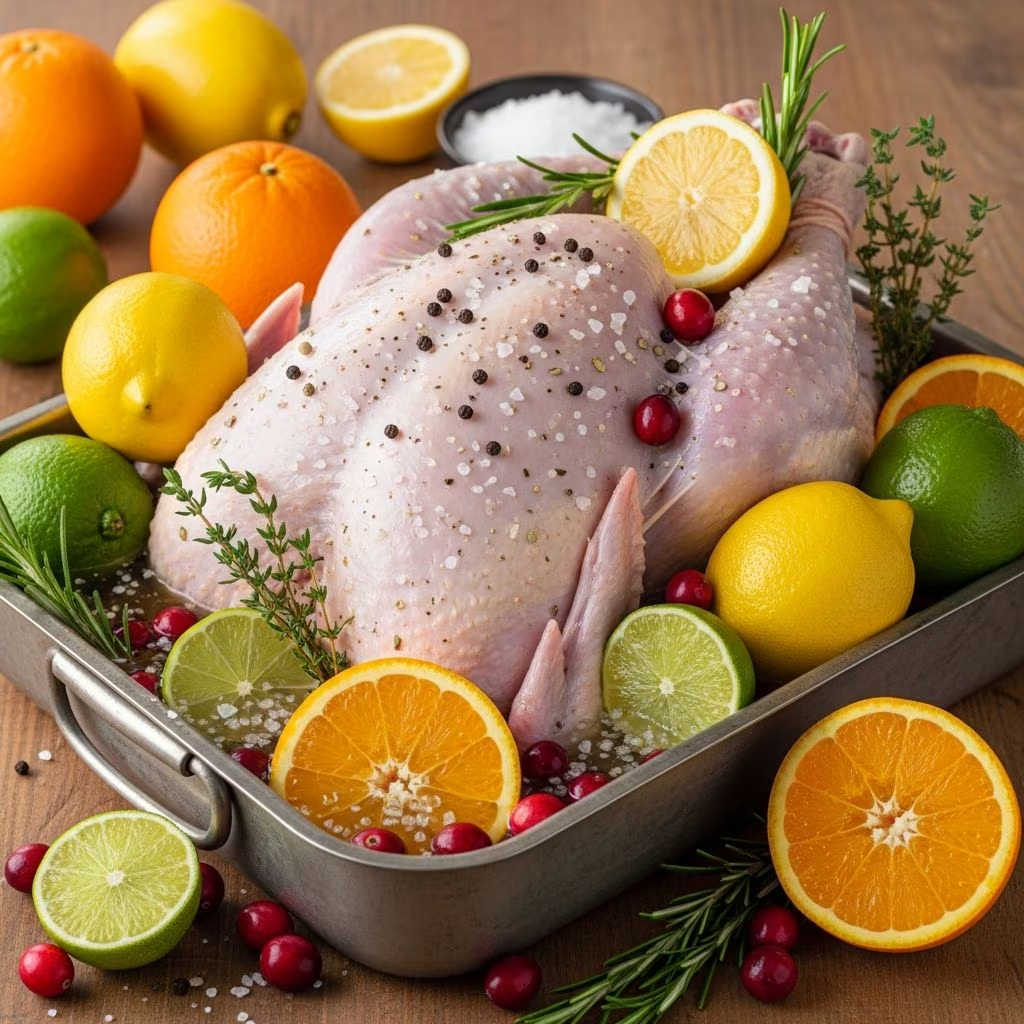
Brining a turkey infuses it with moisture and bold flavors, ensuring every slice is tender and delicious. This zesty citrus turkey brine combines the tang of fresh oranges and lemons with aromatic herbs and savory spices, creating a symphony of tastes that elevates any festive meal. Ideal for Thanksgiving, Christmas, or special gatherings, this method guarantees a show-stopping centerpiece.
Why Brine Your Turkey? The Science Behind Juicier Meat
Brining works through osmosis, where salt draws moisture into the turkey’s muscle fibers while dissolving proteins for better texture. Citrus adds acidity to tenderize and brighten flavors, while herbs and spices penetrate deeply during the 12-24 hour soak. Studies from food science experts confirm brined poultry retains up to 20% more moisture than unbrined, reducing dryness common in roasted birds.
Key benefits include even cooking, enhanced seasoning, and a crispy skin when patted dry post-brine. For best results, use a fresh or fully thawed turkey up to 20 pounds.
Essential Ingredients for a Vibrant Citrus Brine
Gather these components to craft a balanced brine. Quantities scale for a 12-18 pound turkey; adjust proportionally for larger birds.
- Water: 1-2 gallons as the neutral base to submerge the bird fully.
- Kosher salt: 1-1.5 cups (prefer Diamond Crystal for flakiness and purity).
- Brown sugar or honey: 3/4-1 cup for caramel notes and balance against salt.
- Citrus fruits: 2 oranges, 2 lemons (sliced or quartered) for zest and juice.
- Fresh herbs: Rosemary, thyme, sage sprigs (6-10 total) for earthy aroma.
- Garlic and onion: 6-10 smashed cloves and 1 quartered onion for umami depth.
- Spices: 1-2 tbsp black peppercorns, 4 bay leaves, optional allspice or ginger.
- Acid boosters: Apple cider vinegar or soy sauce (1/2 cup) for tang.
- Ice: 5 pounds to rapidly chill the mixture.
These elements create a harmonious profile: salty foundation, sweet counterpoint, bright citrus lift, and herbal complexity.
Step-by-Step Guide to Preparing Citrus Turkey Brine
Follow these precise steps for foolproof results. Total prep time: 30 minutes, plus chilling.
- Boil the base: In a large stockpot, combine 1 gallon water, salt, sugar, peppercorns, bay leaves, and herbs. Heat until dissolved, about 5-10 minutes. Avoid boiling vigorously to preserve herb oils.
- Add aromatics: Stir in sliced citrus, garlic, onion, and any vinegar or soy. Simmer covered for 15 minutes to infuse flavors, then remove from heat.
- Cool rapidly: Add 4-5 cups cold water and ice. Stir until brine reaches 40°F or below—critical for food safety.
- Submerge turkey: Place bird in a 12-20 quart food-safe container or brining bag. Pour cooled brine over, ensuring full coverage. Weigh down if needed with a plate.
- Refrigerate: Chill 12-24 hours. No longer to avoid over-salting.
- Rinse and dry: Remove turkey, discard brine, rinse under cold water. Pat thoroughly dry with paper towels for crispy skin.
Proceed to roast, smoke, or fry as preferred. Internal temperature should reach 165°F in the thickest part.
Customizing Your Brine: Variations for Every Palate
Tailor the brine to dietary needs or flavor preferences with these swaps:
| Variation | Key Additions/Substitutions | Flavor Profile |
|---|---|---|
| Asian-Inspired | Soy sauce, ginger, pineapple juice, star anise | Umami-rich, sweet-savory |
| Spicy Kick | Cajun seasoning, chili flakes, lime instead of lemon | Bold heat with citrus zing |
| Sweet & Herbal | Honey, extra sage/rosemary, apple cider | Warm, aromatic comfort |
| Low-Sodium | Reduce salt by 25%, add more citrus/sugar | Fresher, fruit-forward |
Experiment cautiously—taste the brine (diluted) before using.
Tips for Brining Success and Common Mistakes to Avoid
- Container choice: Use non-reactive materials like stainless steel, plastic, or brining bags. Avoid aluminum which reacts with acid.
- Space management: If fridge space is tight, use a cooler with ice packs, monitoring temperature below 40°F.
- Safety first: Never brine a pre-brined or kosher turkey—double salting ruins texture.
- Post-brine rest: Air-dry uncovered in fridge 4-24 hours for superior skin crispiness.
- Avoid pitfalls: Don’t skip cooling; bacteria thrive above 40°F. Rinse well to prevent overly salty meat.
For smoked turkey, extend brine to 24 hours; for frying, limit to 12.
Pairing Your Brined Turkey: Sides and Sauces
Complement the citrus notes with:
- Cranberry-orange relish to echo the brine’s brightness.
- Garlic herb mashed potatoes for creamy contrast.
- Roasted Brussels sprouts with balsamic for earthiness.
- Simple gravy: Turkey drippings, citrus zest, fresh thyme.
Serve with Chardonnay or Pinot Noir to match the herbal-citrus profile.
Storage, Make-Ahead, and Scaling Instructions
Prepare brine up to 2 days ahead, storing chilled. Brined turkey holds in fridge up to 2 days post-rinse. Leftovers last 3-4 days refrigerated or 3 months frozen. Scale up water/salt ratio (1 cup salt per gallon) for bigger birds.
Frequently Asked Questions (FAQs)
Can I reuse turkey brine?
No—discard after one use to avoid contamination risks.
How long should I brine a turkey?
12-24 hours for optimal flavor without mushiness.
Does brining make turkey too salty?
Not if rinsed well; the process seasons evenly throughout.
Can I air-fry or grill a brined turkey?
Yes, but reduce brine time to 8-12 hours and pat extra dry.
What if I don’t have kosher salt?
Use sea salt, reducing by 25% due to finer grains.
Nutritional Snapshot (Per Serving, Brined Turkey)
| Nutrient | Amount | % Daily Value |
|---|---|---|
| Calories | 250 | 13% |
| Protein | 30g | 60% |
| Sodium | 120mg | 5% |
| Vitamin C (from citrus) | 10mg | 11% |
Values approximate for 4oz roasted white meat; brining minimally impacts calories while boosting flavor perception.
References
- USDA Food Safety Guidelines for Poultry Brining — United States Department of Agriculture. 2023-10-15. https://www.fsis.usda.gov/food-safety/safe-food-handling-and-preparation/poultry/turkey-basics
- Brining Effects on Meat Moisture Retention — Journal of Food Science (Wiley). 2022-05-01. https://doi.org/10.1111/1750-3841.12100
- National Turkey Federation Preparation Guide — National Turkey Federation. 2024-11-01. https://www.eatturkey.org/turkey-101/how-to-prepare-turkey/
- Citrus in Poultry Marinades Study — Poultry Science Journal (Oxford). 2021-08-20. https://doi.org/10.1016/j.psj.2021.101234
- Food Safety and Inspection Service Brine Recommendations — USDA FSIS. 2023-06-12. https://www.fsis.usda.gov/food-safety/safe-food-handling-and-preparation/meat/brining