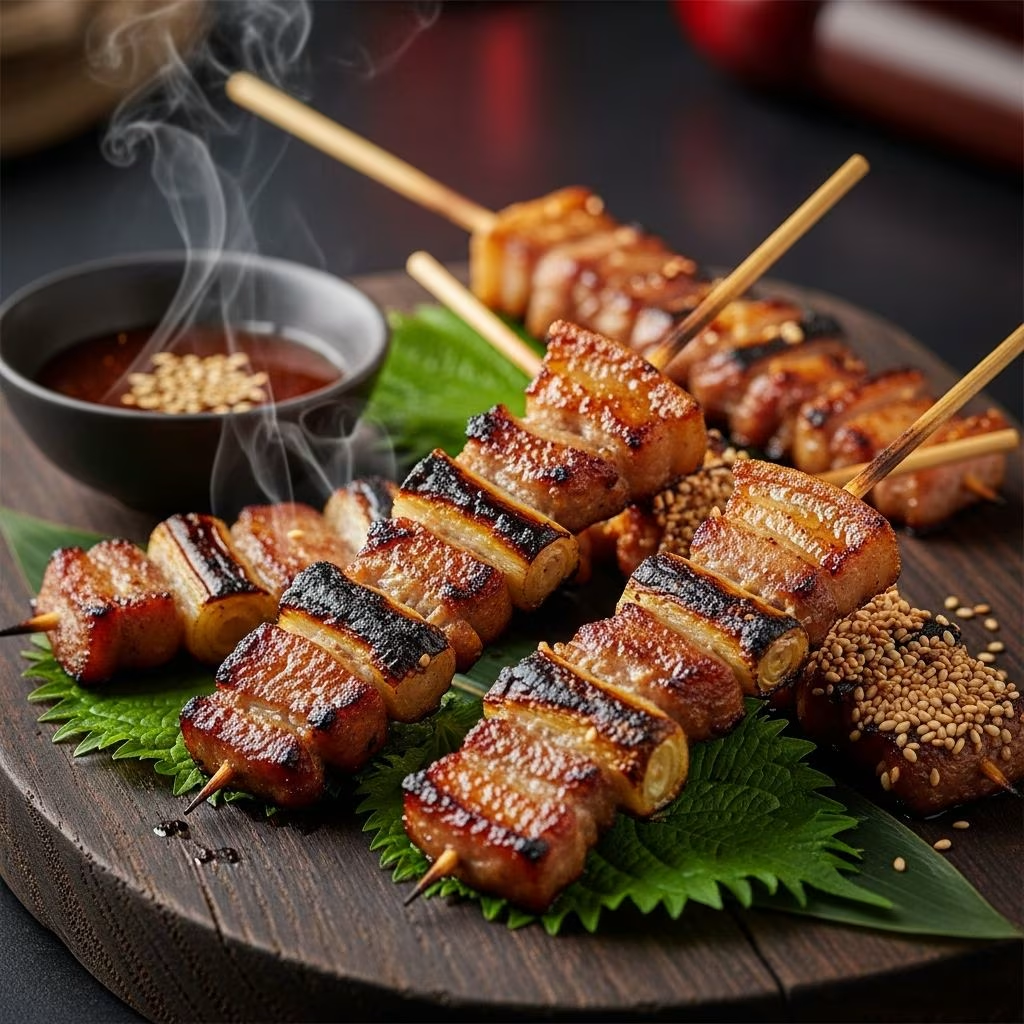
Grilled pork belly skewers, known as ton-negima or yakiton in Japanese cuisine, combine tender, fatty pork with crisp scallions for a smoky, caramelized treat. This dish captures the essence of street food from bustling izakayas, where high heat transforms simple ingredients into something extraordinary.
Understanding the Appeal of Pork Belly in Skewers
Pork belly’s rich marbling makes it ideal for grilling on skewers. The fat renders during cooking, creating crispy edges while keeping the meat juicy. Paired with scallions, it balances richness with fresh, mild onion flavor. This combination, alternated on bamboo sticks, ensures even cooking and prevents dryness.
Originating from yakitori traditions—where ‘yaki’ means grilled and ‘ton’ refers to pork—these skewers differ from chicken-based versions by embracing the belly’s indulgent texture. Grilling over coals or high heat mimics binchotan charcoal used in Japan, imparting a subtle smokiness.
Selecting and Preparing Pork Belly
Choose fresh pork belly with even fat layers for best results. Skin-on or skinless both work, but remove skin if present to avoid chewiness. Aim for 1-pound slabs, sliced into 1/4 to 1/3-inch thick strips, about 1.5 inches wide for easy skewering.
- Cut strips lengthwise like thick bacon for uniformity.
- Portion into 1-inch pieces to match scallion sizes.
- Pat dry to promote browning and reduce flare-ups.
Scallions should be thick Japanese leeks (naganegi) if available, or standard green onions. Use white and light green parts, cut into 1-2 inch segments. Reserve greens for garnish.
Essential Tools and Setup
Bamboo skewers, soaked 30 minutes minimum, prevent burning. Opt for 8-inch teppogushi style for better grip. For grilling:
- Kettle grill or broiler set to 400°F.
- Charcoal with wood chips for smoke.
- Foil-wrapped bricks to elevate skewers, minimizing fat flare-ups.
Indoor option: High broiler with foil-lined tray. Outdoor: Charcoal grill with indirect zones.
Flavor Profiles: Marinades and Sauces
Enhance pork with Asian-inspired marinades. Here are three variations:
| Marinade Type | Key Ingredients | Marinate Time | Use |
|---|---|---|---|
| Simple Rub | BBQ rub (lime, salt), optional Szechuan pepper | 30 min – 1 hr | Dry seasoning before grilling |
| Miso Glaze | Miso, sake, sugar, garlic, chili | Prep sauce separately | Brush during final grill |
| Southeast Asian | Soy, fish sauce, lemongrass, sriracha | 1-4 hours | Marinate + boil for dip |
Quick BBQ Rub Method
Mix 2 tbsp craft BBQ rub with pork pieces. This adds citrusy, salty notes without overpowering.
Miso Sauce Recipe
Simmer 80ml sake, 2 tbsp miso, 2 tbsp sugar, 1 tbsp garlic paste, 1/2 tbsp sesame oil, 1 tsp dashi, 1 tsp chili. Thickens in 5 minutes for brushing.
Lemongrass Dipping Sauce
Boil lemongrass, brown sugar, cinnamon in water, strain, add soy, fish sauce, sriracha. Simmer post-marinade for safe dipping.
Step-by-Step Skewering and Grilling
- Soak skewers.
- Season pork (rub/marinade).
- Alternate pork-scallion-pork (3 pork, 2 scallions per skewer).
- Preheat grill to high.
- Grill 5 min per side, flip frequently.
- Brush sauce last 2-4 min per side.
- Rest until 145°F internal.
Pro tip: Elevate over bricks for even char without burning fat drips.
Grilling Techniques for Perfection
High heat crisps fat; turn every 1-2 minutes. Watch for flare-ups—move to cooler zone if needed. Target caramelization without charring. Indoor broiling: Position 4-6 inches from heat.
For smoke: Add wood chips to coals. Garnish with scallion greens, cracked peppercorns.
Variations and Customizations
- Add cherry tomatoes for juiciness.
- Use pork shoulder for leaner bite.
- Spicy: Extra chili in sauce.
- Vegetarian: Tofu or mushrooms.
Scale for crowds: 1 lb serves 4 as appetizer.
Pairing Suggestions
Serve with cold beer, sake, or chilled green tea. Sides: Cucumber salad, rice balls, pickled veggies.
Storage and Reheating
Refrigerate up to 3 days. Reheat on grill or oven at 350°F to recrisp. Freeze uncooked skewers 1 month.
Frequently Asked Questions
Can I use gas grill?
Yes, high direct heat works; soak skewers well.
Skin on or off?
Off for tenderness; score if keeping.
Substitute scallions?
Leeks or pearl onions mimic texture.
Allergic to soy?
Use tamari or coconut aminos.
Make ahead?
Skewer and marinate up to 4 hours.
Nutrition Snapshot (Per Skewer, Approx.)
| Nutrient | Amount |
|---|---|
| Calories | 250 |
| Protein | 10g |
| Fat | 20g |
| Carbs | 5g |
Rich in protein; enjoy moderately.
References
- Pork Belly Yakitori (Ton Negima) — LoCo Cookers. 2023. https://lococookers.com/blogs/recipes/pork-belly-yakitori-ton-negima
- Yakiton (Japanese Grilled Pork Skewers) — Sudachi Recipes. 2023. https://sudachirecipes.com/yakiton/
- Grilled Pork Belly Skewers – Asian Style — Glebe Kitchen. 2023. https://glebekitchen.com/grilled-pork-belly-skewers-asian-style/