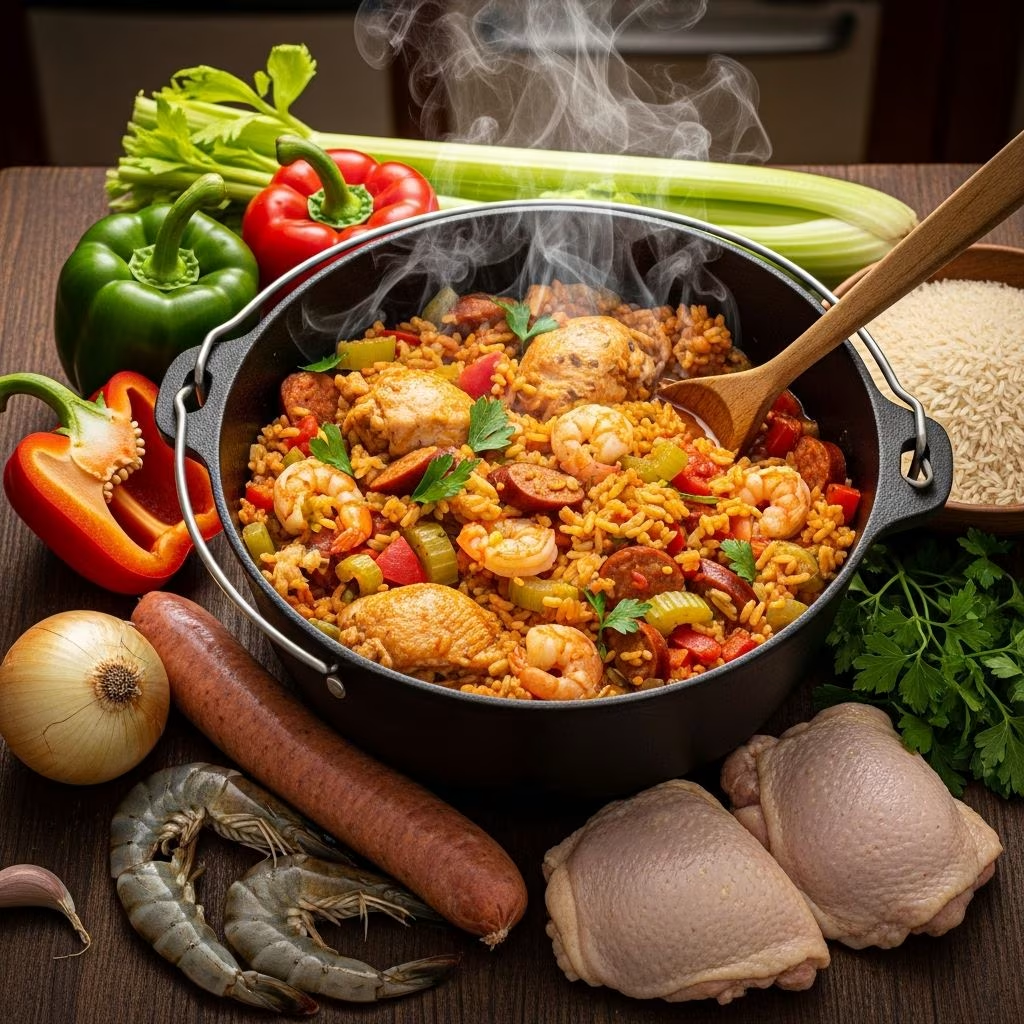
Jambalaya stands as one of America’s most beloved rice dishes, blending African, French, Spanish, and Native American culinary influences into a hearty, flavorful one-pot wonder. Originating from the bayous of Louisiana, this dish captures the essence of Southern hospitality with its smoky meats, vibrant spices, and perfectly cooked rice. Whether you’re hosting a Mardi Gras party or craving comfort food, mastering jambalaya elevates any meal.
In this guide, we’ll dive deep into its rich history, break down key ingredients, provide foolproof recipes for both Creole and Cajun versions, share pro cooking techniques, and offer creative twists. By the end, you’ll confidently create jambalaya that rivals New Orleans restaurants.
The Origins and Cultural Significance of Jambalaya
Jambalaya’s story begins in the 18th century along the Mississippi River, where diverse immigrant communities fused their traditions. The name likely derives from the Provencal word ‘jambalaia,’ meaning a mix of rice and meats, or from the Choctaw term for ‘fried corn.’ French settlers adapted West African jollof rice and Spanish paella, incorporating local seafood and game.
Two distinct styles emerged: Creole jambalaya from urban New Orleans, featuring tomatoes for a red hue, and rural Cajun jambalaya, which skips tomatoes for a brown, roux-based profile. Both reflect Louisiana’s ‘holy trinity’—onions, celery, and bell peppers—as the aromatic base. Today, jambalaya symbolizes communal feasting, often served at crawfish boils, tailgates, and family gatherings.

Essential Ingredients for Authentic Flavor
Great jambalaya hinges on fresh, bold components. Here’s a breakdown:
- Rice: Long-grain white rice like Carolina Gold absorbs flavors without mushiness. Avoid short-grain varieties.
- Proteins: Andouille sausage for smokiness, chicken thighs for juiciness, shrimp for sweetness, and optional ham or crawfish tails.
- Holy Trinity: Equal parts diced onion, celery, and green bell pepper—sautéed to build depth.
- Spices: Cayenne, thyme, oregano, paprika, bay leaves, and garlic powder. Fresh garlic and Worcestershire sauce add umami.
- Liquid: Chicken stock over water for richness; tomatoes (Creole-style) or dark roux (Cajun).
For Creole: Include diced tomatoes. For Cajun: Make a roux with oil and flour. Pro tip: Use homemade stock from shrimp shells for seafood-forward batches.
Creole Jambalaya: The Tomato-Rich Classic
Creole jambalaya shines with its vibrant red color and tangy tomato base, perfect for beginners. Serves 6-8; prep time 20 mins, cook time 45 mins.
Ingredients Table
| Ingredient | Quantity |
|---|---|
| Andouille sausage | 1 lb, sliced |
| Chicken thighs | 1 lb, boneless, cubed |
| Shrimp | 1 lb, peeled |
| Long-grain rice | 2 cups |
| Diced tomatoes | 28 oz can |
| Chicken stock | 4 cups |
| Holy Trinity (onion, celery, bell pepper) | 1 cup each, diced |
| Garlic | 4 cloves, minced |
| Spices | 2 tsp each cayenne, thyme; 1 tbsp paprika |
Step-by-Step Instructions
- Brown sausage and chicken in a large Dutch oven over medium heat. Remove and set aside.
- Sauté holy trinity and garlic until softened, about 5 minutes.
- Add rice; toast for 2 minutes. Stir in tomatoes, stock, spices, and meats. Bring to boil.
- Reduce to simmer, cover, and cook 25 minutes until rice is tender.
- Nestle in shrimp; cover 5 more minutes until pink. Rest 10 minutes before fluffing.
Result: A saucy, tomatoey delight with tender rice and pops of spice.
Cajun Jambalaya: Smoky and Roux-Based
Cajun style delivers deeper, earthier flavors via a dark roux, no tomatoes. Same yield and times.
Key Differences
- Start with ½ cup oil + ½ cup flour roux, cooked to chocolate color (20 mins).
- Omit tomatoes; use 5 cups stock.
- Add smoked paprika for extra depth.
Instructions Variation
After roux, stir in trinity and garlic; cook 10 mins. Add rice to toast, then proteins, stock, spices. Simmer as above, adding shrimp last.

Mastering Techniques for Perfect Results
Avoid common pitfalls with these tips:
- Roux Mastery: Low, slow heat prevents burning. Stir constantly.
- Rice Ratio: 1:2 rice to liquid; don’t stir after adding rice to prevent gumminess.
- Season Gradually: Taste stock first; adjust cayenne for heat tolerance.
- Resting: 10-15 minutes off-heat lets rice steam fully.
- Make-Ahead: Flavors improve overnight; reheat with splash of stock.
Vegetarian swap: Mushrooms, eggplant, and plant-based sausage mimic textures.
Variations and Serving Suggestions
Customize endlessly:
- Seafood Jambalaya: Skip meat; use crab, oysters, crawfish.
- Quick Skillet Version: Use pre-cooked rice; ready in 30 mins.
- Low-Carb: Cauliflower rice base.
- Instant Pot: Sauté mode for browning, then 8 mins high pressure.
Pair with cornbread, coleslaw, or hot sauce. For parties, serve in chafing dishes.
Frequently Asked Questions
What rice is best for jambalaya?
Long-grain varieties like basmati or jasmine work best as they stay fluffy.
Creole vs. Cajun: What’s the difference?
Creole has tomatoes (red); Cajun uses roux, no tomatoes (brown).
Can I make jambalaya in advance?
Yes! It tastes better after 1-2 days refrigerated; freezes up to 3 months.
How spicy is jambalaya?
Adjustable—start mild, add cayenne or hot sauce to taste.
Is jambalaya gluten-free?
Yes, naturally, unless thickened with flour roux (use cornstarch alternative).
Nutrition and Pairing Guide
| Serving (1 cup) | Calories | Protein | Carbs |
|---|---|---|---|
| Classic | 450 | 25g | 50g |
| Seafood | 380 | 30g | 45g |
Balance spice with cold beer, iced tea, or crisp whites like Sauvignon Blanc.
References
- Louisiana Folklife: Jambalaya History — Louisiana Division of the Arts. 2023-05-15. https://www.louisianafolklife.org/lt/articles_essays/food/jambalaya.html
- The Picayune’s Creole Cook Book — Louisiana Cookbook Classic. 2013 reprint (orig. 1901). https://www.loc.gov/item/13005789/
- Cajun and Creole Foodways — National Park Service. 2024-02-10. https://www.nps.gov/articles/000/cajun-creole-foodways.htm
- USDA Nutrient Database: Rice Dishes — United States Department of Agriculture. 2025-01-20. https://fdc.nal.usda.gov/