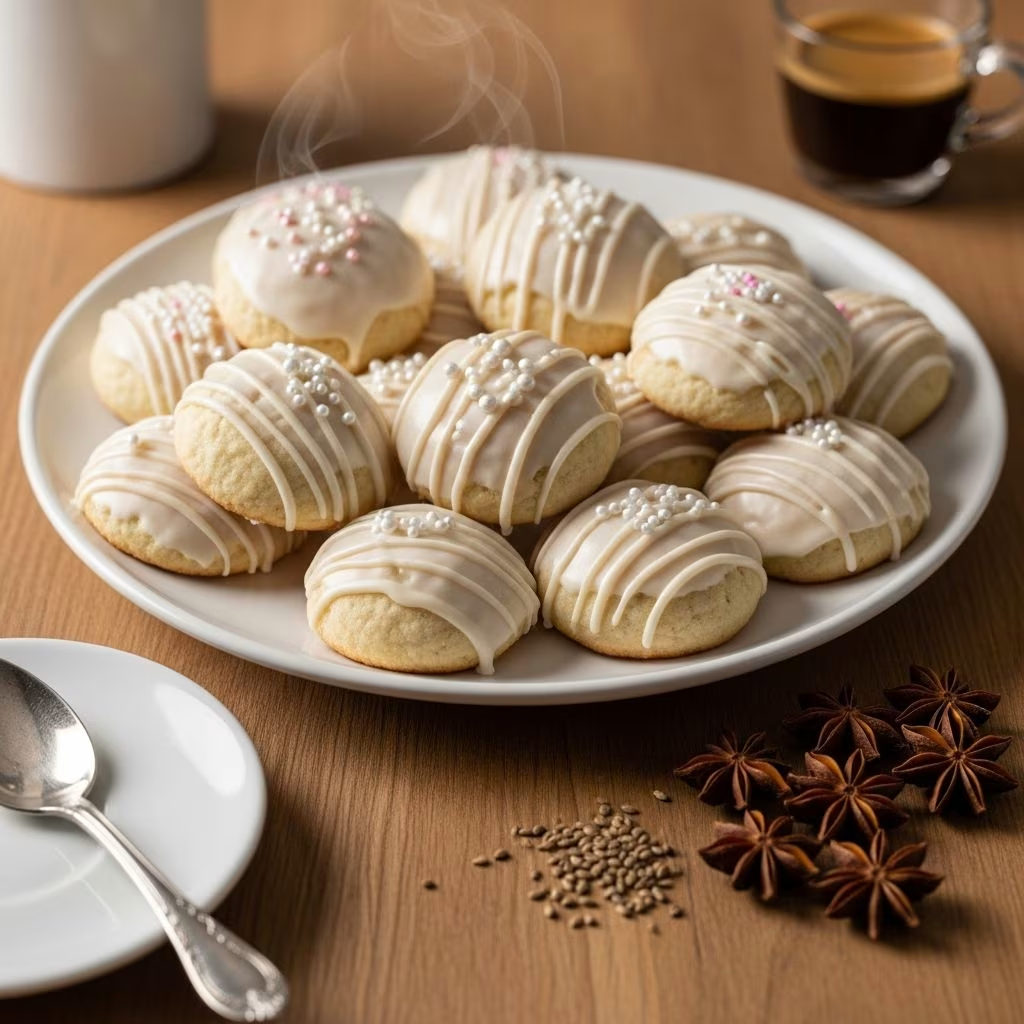
Italian anise cookies, known for their distinctive licorice-like flavor and tender texture, represent a cherished tradition in Italian baking. These treats, often enjoyed during holidays or with morning coffee, combine simple pantry staples with the bold essence of anise seeds or extract. This guide draws from time-honored methods to help you create bakery-quality results at home, covering everything from origins to storage tips.
The Unique Appeal of Anise in Italian Baking
Anise imparts a warm, aromatic taste reminiscent of black licorice, making it a staple in Mediterranean sweets. In Italy, these cookies evoke family gatherings and festive seasons, with variations appearing in regions like Sicily and Abruzzo. Bakers appreciate anise’s ability to pair seamlessly with coffee or sweet wine, enhancing everyday moments into special rituals.
The flavor comes from anise seeds, crushed for intensity, or potent extracts derived from the Pimpinella anisum plant. Unlike overpowering candies, the cookies balance sweetness with this subtle spice, creating an addictive crunch or softness depending on the style.
Essential Ingredients for Success
Core components include flour, sugar, eggs, fat (butter, oil, or shortening), leavening agents, and anise. Here’s a breakdown:
- Flour: All-purpose provides structure; 3-5.5 cups typical for 2-4 dozen cookies.
- Sugar: Granulated for dough (0.5-1.5 cups), powdered for glaze.
- Eggs: 2-4 large, binding and adding richness.
- Fat: Options like vegetable oil (2/3 cup), butter (3/4 cup softened), or shortening for tenderness.
- Leavening: Baking powder (2-5 tsp) ensures lift without yeast.
- Anise: 1.5-4 tsp extract or 2-4 tsp crushed seeds; adjust for preference.
- Add-ins: Salt (pinch), milk (1/4-3 Tbsp), lemon zest for brightness.
For glaze: Powdered sugar (1-2 cups), milk (3-5 tsp), extra anise extract, and sprinkles like nonpareils.
Step-by-Step Baking Instructions
Creating these cookies requires minimal equipment: mixing bowls, electric mixer, baking sheets, parchment paper, and cooling racks. Prep time averages 20-60 minutes, bake 8-15 minutes at 325-350°F.
- Preheat and Prep: Set oven to 350°F (175°C). Line sheets with parchment.
- Mix Dry Ingredients: Whisk flour (4-5.5 cups), baking powder (3-5 tsp), salt (1/4-1/2 tsp), and crushed anise seeds or zest.
- Combine Wet Ingredients: Beat eggs (3 typical), sugar (3/4-1.5 cups), oil/butter (1/2-3/4 cup), milk, and anise extract until frothy (2-4 minutes).
- Form Dough: Gradually incorporate dry into wet on low speed. Dough should be soft but rollable; add flour if sticky.
- Shape Cookies: Scoop teaspoonfuls or roll into 1-inch balls/ovals, space 2 inches apart.
- Bake: 10-12 minutes until edges golden, tops set. Cool 2-3 minutes on sheet, then racks.
- Glaze: Whisk powdered sugar, milk, anise until smooth (slightly runny). Dip tops, add sprinkles, dry 10-30 minutes.
Yield: 2-5 dozen, depending on size. Calories per cookie: ~140-220.
Recipe Variations to Try
Adapt for dietary needs or twists:
| Variation | Key Changes | Best For |
|---|---|---|
| Dairy-Free | Use oil/vegetable shortening, almond milk in dough/glaze. | Vegans, allergies. |
| Loaf-Style | Shape into logs, slice, rebake like biscotti. | Dunking in coffee. |
| Breakfast Bites | Less sugar, more seeds, lemon zest. | Morning treats. |
| Colored Glaze | Add food dye to icing, festive sprinkles. | Holidays. |
| Oil-Based | Extra virgin olive oil (1/2 cup), vanilla boost. | Authentic texture. |
Experiment with anisette liqueur (1-2 tsp) for deeper flavor or nuts for crunch.
Expert Tips for Perfect Texture and Flavor
- Room-temperature ingredients blend evenly, preventing dense cookies.
- Crush seeds lightly to release oils without bitterness.
- Avoid overbaking; interiors stay soft, exteriors crisp.
- Chill dough 10-20 minutes if too sticky, though many recipes skip this.
- Glaze thinly for even coating; thicker sets slower.
- Store airtight: Unglazed up to 2 weeks, glazed 4-5 days. Freeze dough/baked up to 3 months.
Troubleshoot: Flat cookies? Too much fat or warm oven. Pale? Increase temp slightly. Tough? Overworked dough.
Pairing and Serving Suggestions
These cookies shine dunked in espresso, cappuccino, or Vin Santo. Serve at Christmas trays with pizzelle, or Easter spreads. Gift in tins lined with wax paper for holidays. Nutrition highlights: Low-fat options under 150 calories each, with protein from eggs.
Historical Roots and Cultural Significance
Tracing to ancient Rome, anise aided digestion and flavored breads. Modern versions evolved in immigrant communities, especially U.S. Italian-Americans during holidays. Nonnas pass recipes orally, tweaking for family tastes. Today, they bridge generations, symbolizing comfort.
Frequently Asked Questions
What if I can’t find anise extract?
Use crushed seeds (double amount) or substitute with fennel/pernil for similar licorice notes.
Can I make these gluten-free?
Swap all-purpose flour 1:1 with gluten-free blend plus xanthan gum (1 tsp per cup).
How do I store glazed cookies?
Layer in airtight container with parchment; refrigerate if humid, up to 1 week.
Why are my cookies spreading?
Chill dough, use parchment, ensure baking powder fresh.
Are these cookies vegan possible?
Yes: Flax eggs (3 Tbsp flax + 9 Tbsp water), plant milk, oil.
Master these cookies to impress at gatherings. Their simplicity belies the joy they bring.
References
- Easy Italian Breakfast Cookies with Anise — She Loves Biscotti. 2023-10-15. https://www.shelovesbiscotti.com/soft-italian-anise-dunking-cookies-di-fabiana/
- Anise Cookies Recipe (Italian Anisette) — This Italian Kitchen. 2024-05-20. https://thisitaliankitchen.com/anise-cookies/
- Italian Anise Cookies (Dairy Free) — Simply Whisked. 2023-11-10. https://www.simplywhisked.com/italian-anise-cookies/
- Italian Anise Cookies — Love Bakes Good Cakes. 2022-12-05. https://www.lovebakesgoodcakes.com/italian-anise-cookies-holiday-cookie/
- Anise Cookies (Italian Anisette) — Amanda’s Cookin’. 2024-01-12. https://amandascookin.com/italian-anisette-cookies/