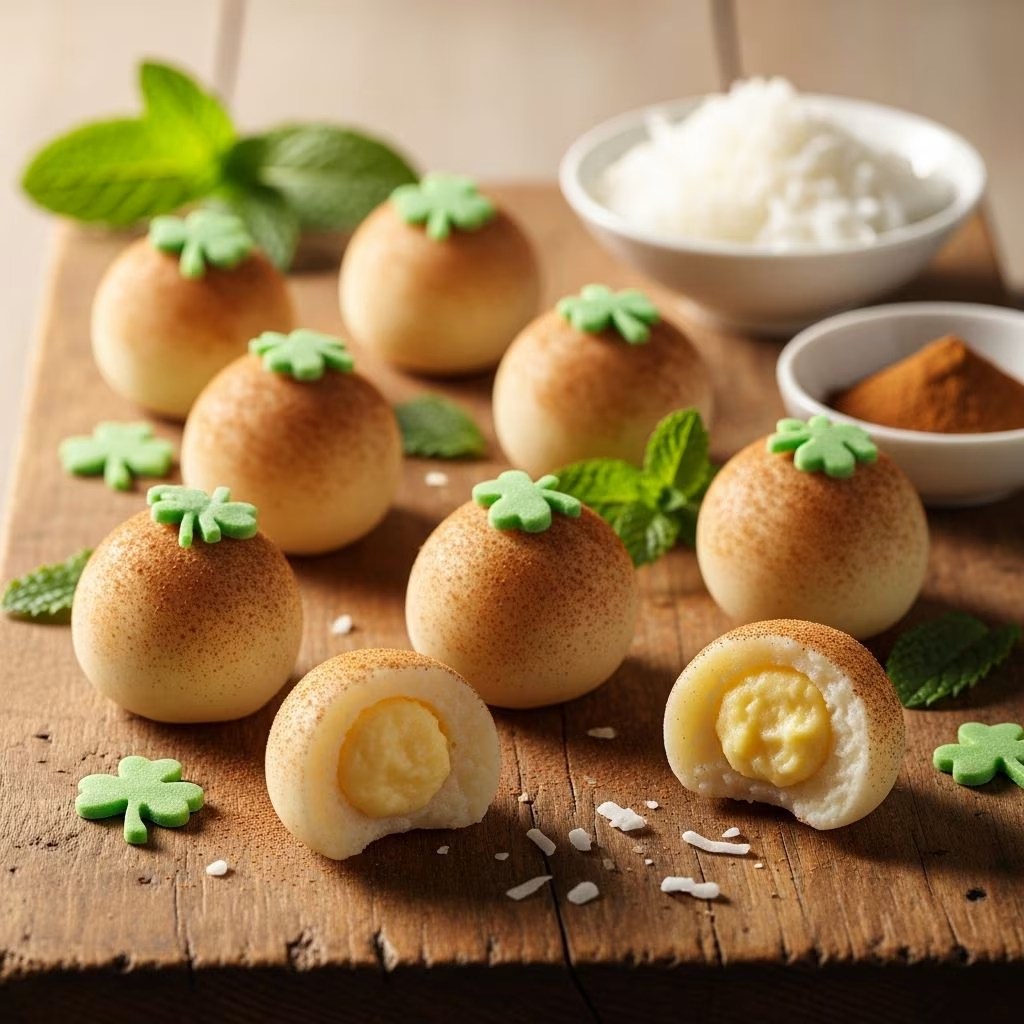
Irish potato candy stands out as a whimsical treat that captures the essence of fun in confectionery. Despite its name, this delicacy contains no potatoes; instead, it features a luscious blend of cream cheese, butter, powdered sugar, and shredded coconut, all rolled in cinnamon to resemble petite tubers pulled fresh from the earth. Originating from Pennsylvania’s Irish-American communities, particularly Philadelphia, these bite-sized wonders have become synonymous with St. Patrick’s Day celebrations and holiday platters.
The Fascinating Origins of Irish Potato Candy
This unique candy traces its roots to the early 20th century in Philadelphia, where Irish immigrants and Pennsylvania Dutch influences merged to create regional specialties. Local candy makers crafted these confections to evoke the humble potato, a staple of Irish heritage, using accessible ingredients that mimicked the vegetable’s earthy appearance through a generous cinnamon dusting. Over decades, family recipes evolved, passed down through generations, turning a simple no-bake sweet into a cultural icon.
Unlike traditional potato-based candies from other regions—which might incorporate mashed potatoes for dough—the Philadelphia version relies on cream cheese for its signature tang and smooth texture. This adaptation made it shelf-stable and easy to produce in home kitchens, contributing to its enduring popularity. Today, it’s a staple in Eastern Pennsylvania candy shops, especially around March 17th, when production ramps up to meet demand from festive gatherings.
Essential Ingredients for Perfect Irish Potato Candy
Creating authentic Irish potato candy requires just a handful of pantry staples, emphasizing quality for the best flavor and texture. The base forms a creamy dough that’s chilled, portioned, and coated.
- Cream cheese (8 oz, softened): Provides creaminess and a subtle tang; full-fat varieties yield the firmest set.
- Unsalted butter (4 oz or 1 stick, softened): Adds richness; ensure it’s at room temperature for smooth blending.
- Powdered sugar (about 32 oz or 7-8 cups): Sweetens and thickens the mixture into a moldable dough.
- Sweetened shredded coconut (7 oz): Delivers chewiness and tropical notes, mimicking potato texture.
- Vanilla extract (1.5 tsp, pure): Enhances aroma without overpowering.
- Salt (pinch): Balances sweetness imperceptibly.
- Ground cinnamon (3-4 tbsp): For the iconic dusty, potato-like exterior.
These measurements produce around 75 small candies, ideal for sharing. Opt for high-quality brands like Philadelphia cream cheese for superior results, as noted in professional recipes.
Step-by-Step Guide to Crafting Irish Potato Candy
Preparation is straightforward and requires no cooking, making it accessible for beginners. Total time, including chilling, is about 1.5 hours.
Prepare the creamy base: In a large bowl or stand mixer with paddle attachment, beat softened cream cheese and butter until fluffy and uniform, about 2 minutes. This emulsion prevents graininess.
Incorporate dry ingredients: Add vanilla and salt, then gradually mix in powdered sugar on low speed to avoid clouds of dust. Scrape down sides for even integration.
Fold in coconut: Stir in shredded coconut by hand or on low speed until fully distributed, creating a cohesive, sticky dough.
Chill the dough: Cover and refrigerate for at least 1 hour (or up to overnight). Chilling firms the mixture, easing shaping.
Shape the candies: Use a small cookie scoop or teaspoon to portion 1-inch balls. Roll between palms into oblong potato shapes, about 1-1.5 inches long.
Apply cinnamon coating: Pour cinnamon into a shallow bowl. Roll each piece thoroughly, tapping off excess for a rustic, dirt-dusted look.
Final chill and store: Arrange on parchment-lined trays, cover, and refrigerate. Enjoy chilled for optimal texture.
Tips for success: Work in batches when coating to prevent sticking, and use a small spoon for precise cinnamon application if desired.
Ingredient Variations and Dietary Adaptations
While the classic recipe shines, tweaks allow personalization. For a dairy-free version, substitute vegan cream cheese and plant-based butter, maintaining structure with coconut’s natural oils.
| Variation | Substitution | Effect |
|---|---|---|
| Cocoa-Cinnamon Coat | 1:1 cocoa powder + cinnamon | Milder, chocolatey hint; authentic Philly twist. |
| Unsweetened Coconut | Plain shredded coconut + extra sugar | Less cloying sweetness. |
| Nutty ‘Eyes’ | Chopped pine nuts pressed in | Realistic potato detail. |
| Smaller Size | Teaspoon portions | More yield, perfect for platters. |
Experiment with almond extract for a nutty profile or add a dash of rum for adult versions during holidays.
Storage, Shelf Life, and Serving Suggestions
Store Irish potato candies in an airtight container in the fridge for up to 1 week; their high sugar content preserves freshness. For longer storage, freeze in single layers up to 2 months—thaw overnight in the fridge. Serve chilled on festive trays with green mints for St. Patrick’s Day or alongside cookies for Christmas.
Pair with Irish coffee, hot cocoa, or tea to complement the cinnamon warmth. They’re also delightful crumbled over vanilla ice cream for an instant dessert upgrade.
Common Mistakes and Pro Tips
- Avoid over-chilling: Dough hardens after 24 hours; soften slightly at room temp if needed.
- Prevent powdery sugar clouds: Always mix on low and cover the mixer bowl.
- Humidity matters: In humid climates, extra chilling aids firming; candies soften at room temperature.
- Scale precisely: Too much liquid yields sticky dough; measure accurately.
Pro pastry chefs recommend a 30-minute chill minimum for handling ease, extending to 1 hour for best results.
Nutritional Profile and Fun Facts
Each candy (approx. 1 oz) offers about 100-120 calories, primarily from sugar and fat, making it an indulgent treat. Rich in coconut’s medium-chain triglycerides, it provides quick energy, though moderation is key due to saturated fats.
Fun fact: Philadelphia produces millions annually for St. Patrick’s Day, with shops like Termini Brothers Confectionery claiming century-old recipes. This candy exemplifies immigrant ingenuity, transforming simple ingredients into beloved tradition.
Frequently Asked Questions (FAQs)
Can I make Irish potato candy ahead of time?
Yes, prepare up to 3 days in advance or freeze for months. Thaw in fridge before serving.
Why is it called Irish potato candy if no potatoes are used?
The name honors Irish heritage; cinnamon coating and shape mimic real potatoes.
Is it gluten-free?
Naturally gluten-free; confirm coconut and extracts are certified if allergies are a concern.
How do I achieve the perfect potato shape?
Roll oblong rather than round, slightly irregular for authenticity; chill well first.
Can I use a food processor?
Yes, pulse dry ingredients first, then add wet; avoid over-processing coconut.
Why Irish Potato Candy Captivates Home Bakers
Its no-bake simplicity, nostalgic appeal, and visual charm make Irish potato candy a crowd-pleaser. Whether for holidays, potlucks, or gifts, it delivers joy in every cinnamon-dusted bite. Customize endlessly while honoring tradition—this treat proves sweets can be both playful and profound.
References
- Irish Potato Candy Recipe | Authentic Philly St. Patrick’s Day Treat — Unpeeled Journal. 2023. https://unpeeledjournal.com/philadelphila-irish-potatoes-candy-st-patricks-day/
- Irish Potato Candy (Pennsylvania Dutch) — Brooklyn Farm Girl. 2022. https://brooklynfarmgirl.com/irish-potato-candy/
- Irish Potato Candy – Easy Fun & Tasty – 100 Year Old Recipe — The Hillbilly Kitchen (YouTube). 2021. https://www.youtube.com/watch?v=PXckl7aUmUI
- Irish Potato Candy (Dairy Free Option) — Simply Whisked. 2023. https://www.simplywhisked.com/irish-potato-candy/
- The Best Irish Potato Candy Recipe — Coley Cooks. 2022. https://coleycooks.com/irish-potato-candies/