Proper storage of olive oil is essential to retain its rich flavor, nutritional profile, and beneficial compounds like polyphenols. Exposure to environmental factors accelerates degradation, leading to rancidity that diminishes taste and health value. This guide explores science-backed strategies to maximize shelf life and quality.
Why Olive Oil Storage Matters
Olive oil, particularly extra virgin varieties, contains delicate antioxidants and healthy fats sensitive to degradation. When stored incorrectly, it oxidizes, producing off-flavors and harmful free radicals. Research shows that optimal conditions can extend usability while preserving bioactive components vital for heart health and anti-inflammatory effects.
Maintaining quality ensures every drizzle enhances meals without compromise. Home cooks often overlook storage, placing bottles near heat sources or in clear containers, hastening spoilage. Understanding key threats empowers better practices.
The Primary Enemies of Olive Oil Quality
Four main factors undermine olive oil: light, heat, oxygen, and time. Each triggers chemical reactions like oxidation and hydrolysis, altering composition.
- Light: Ultraviolet rays break down polyphenols and trigger peroxidation, causing rancid notes. Fluorescent store lights and sunlight exacerbate this during display and home use.
- Heat: Temperatures above 68°F speed oxidation; a study found higher heat doubles rancidity rates by accelerating molecular breakdown.
- Oxygen: Air contact post-opening initiates chain reactions, reducing shelf life dramatically.
- Time: Freshness peaks within months; aging raises acidity, weakening flavor regardless of storage.
Ideal Temperature for Longevity
The sweet spot for olive oil storage is 55-68°F, mimicking cool pantry conditions. At room temperature around 70°F, quality holds for everyday use, but warmer kitchens demand alternatives.
| Condition | Recommended Temp (°F) | Best For |
|---|---|---|
| Cool Pantry | 55-60 | Daily access, premium EVOO |
| Room Temp | 65-68 | Standard storage |
| Refrigeration | Below 40 | Long-term bulk |
Industry guidelines from extension services suggest refrigeration for extended storage, except for high-end extra virgin oils prone to clouding. Solidification occurs below 50°F but reverses upon warming, preserving nutrients unharmed.
Choosing the Right Containers
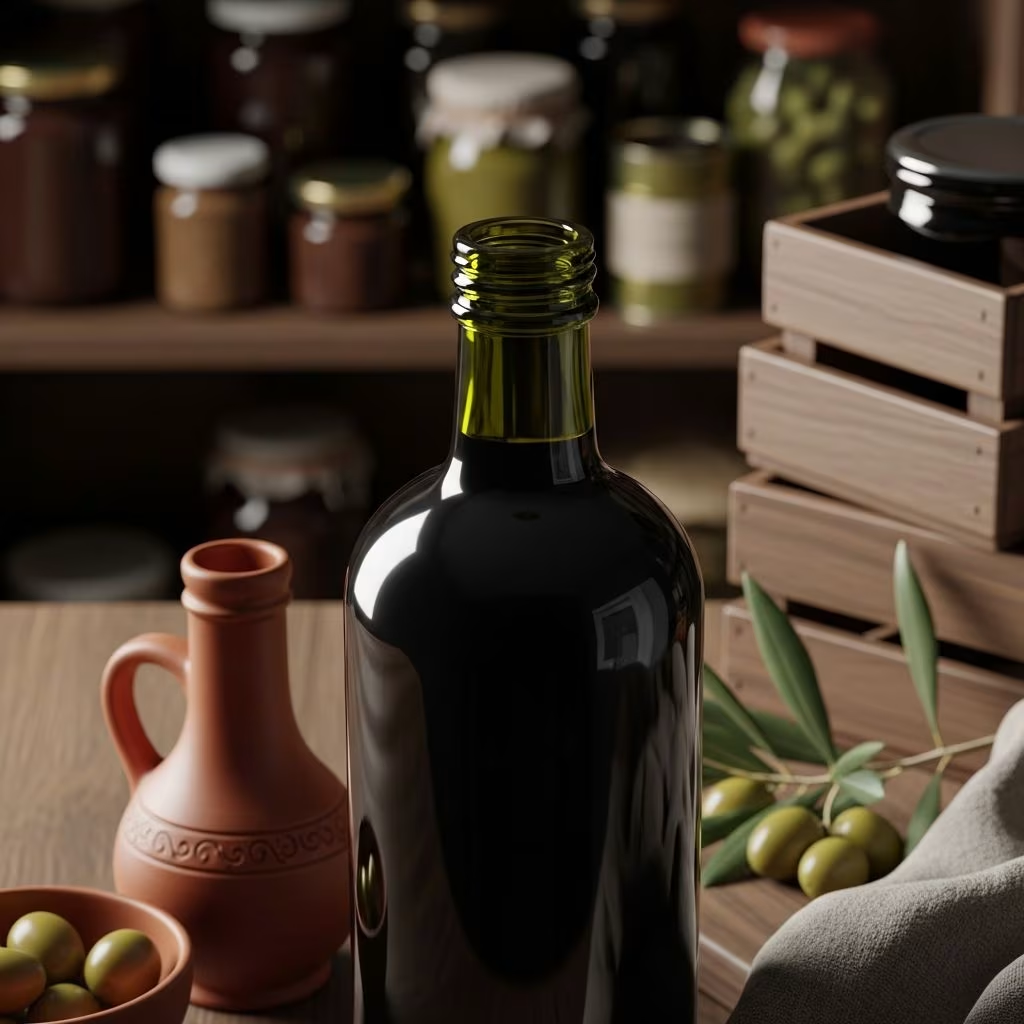
Opaque glass bottles are gold standard, blocking light while allowing airtight seals. Dark-tinted varieties filter UV rays effectively. Avoid clear glass or plastic, as they permit light penetration and potential chemical leaching.
- Decant bulk purchases into smaller tinted glass jars for portion control.
- For convenience, transfer minimal amounts to squeeze bottles, storing originals darkly.
- Stainless steel or nitrogen-flushed tins suit producers but adapt for home with sealed glass.
Post-opening, minimize headspace by using smaller containers to limit oxygen exposure. Producers sparge with nitrogen to displace air, a technique home users approximate with tight seals.
Strategic Storage Locations at Home
Select spots away from stoves, windows, and appliances generating heat or light. A deep cupboard or pantry corner idealizes conditions.
- Keep working supply (1-2 months) at room temp in kitchen for quick access.
- Reserve bulk in fridge, using wide-mouth jars for easy spooning of solidified oil.
- Avoid countertops, doors, or sunny shelves where fluctuations degrade quality.
For frequent users, dual-system works: ambient for daily drizzles, chilled for reserves. This balances convenience and preservation.
Handling Refrigeration Challenges
Chilling causes opacity and thickening, but these are cosmetic. Nutrients remain intact; simply allow 15-30 minutes at room temp to reliquify. For immediate use, store in narrow-neck bottles where partial warming suffices.
Repeated cycles don’t harm if minimized. Australian research confirms cold storage halts oxidation better than warmth in hot climates, prioritizing quality over aesthetics.
Maximizing Shelf Life After Purchase
Use within 12-18 months of harvest date, ideally 30-60 days post-opening for peak vibrancy. Check labels for pressing dates; fresher oils last longer.
- Buy in small quantities matching consumption to avoid aging.
- Freeze portions in ice cube trays for months-long extension, thawing as needed without quality loss.
Bulk buyers decant into dated jars, labeling with acquisition info to track freshness.
Signs Your Olive Oil Has Gone Bad
Rancidity manifests as cardboard-like, greasy, or metallic tastes. Visual cues include dull color or unusual cloudiness persisting after warming. A whiff reveals musty or paint-like odors. Taste a drop: fresh oil is fruity, peppery, grassy; spoiled lacks vibrancy.
Storage Tips for Different Olive Oil Types
| Type | Storage Priority | Notes |
|---|---|---|
| Extra Virgin | Dark, cool, airtight | Most sensitive; fridge for long-term |
| Virgin | Cool pantry | Moderate protection needed |
| Refined | Room temp OK | Less prone to oxidation |
| Infused | Refrigerate always | Herbs accelerate spoilage |
Common Storage Mistakes to Avoid
- Leaving in cruets: Excessive air exposure rancidifies quickly.
- Clear bottles on counters: Light and heat combo deadly.
- Fridge without planning: Inconvenient solidification if not portioned.
- Overbuying without space: Time enemy strikes unused stock.
Pro Tips from Producers
Commercial operations use temperature-controlled tanks and nitrogen capping. Home parallels include vacuum-sealing or CO2 displacement tools. For bulk pouches, pour into glass promptly.
FAQs
Can I store olive oil in the fridge?
Yes, especially for long-term; it solidifies but reliquefies safely.
What’s the best container for olive oil?
Opaque glass with tight seal.
How long does opened olive oil last?
30-60 days at optimal storage.
Does freezing olive oil work?
Yes, preserves for 6+ months; thaw small amounts.
Is plastic safe for olive oil?
Avoid long-term; use briefly for dispensing.
Advanced Preservation Techniques
For enthusiasts, invest in wine fridges set to 57°F or dark dispensers. Label bottles with dates and test periodically via taste/aroma. Pair storage with quality purchases from harvest-dated sources.
References
- Store olive oil to avoid spoilage and maintain nutritional quality — Michigan State University Extension. 2023. https://www.canr.msu.edu/news/store_olive_oil_to_avoid_spoilage_and_maintain_nutritional_quality
- How to Store Olive Oil to Preserve Its Polyphenols — Frantoio Grove. 2023. https://frantoiogrove.com/blogs/olive-oil-101/how-to-store-olive-oil-to-preserve-its-polyphenols
- The Do’s and Don’ts of Storing Olive Oil — California Olive Ranch. 2023. https://www.californiaoliveranch.com/articles/the-dos-and-donts-of-storing-olive-oil