Mushrooms are delicate ingredients prized for their earthy taste and versatile uses in cooking. Proper storage is essential to prevent spoilage, slime, or loss of quality. This guide explores effective ways to store mushrooms, drawing from agricultural best practices to help home cooks and growers alike extend shelf life while preserving nutritional value.
Understanding Mushroom Biology and Storage Needs
Mushrooms are not plants but fungi, living organisms that continue respiring after harvest. They release moisture and ethylene gas, which accelerate decay if not managed. Ideal conditions include cool temperatures around 41°F (5°C), low humidity to avoid sogginess, darkness to prevent discoloration, and good airflow to curb mold growth. Overcrowding traps moisture, leading to sliminess, so space them out during storage.
- Temperature control: Refrigerate promptly after purchase or harvest, ideally within one hour.
- Humidity balance: Too much moisture causes rot; too little leads to drying and weight loss.
- Air circulation: Essential to remove excess water vapor from respiration.
Short-Term Refrigeration for Fresh Mushrooms
For everyday use, refrigerate fresh mushrooms in breathable containers. Avoid plastic bags or airtight seals, as they trap moisture and promote bacterial growth. Paper bags or boxes with ventilation work best for 1-2 weeks of freshness.
Recommended Containers and Setup
Commercial growers favor stainless steel pans or wax-lined cardboard boxes for their durability and airflow. Line the bottom with paper towels to absorb condensation, but leave the top open. For home use, adapt these principles:
| Method | Container | Capacity | Duration |
|---|---|---|---|
| Refrigerator Pan | Stainless steel hotel pan | Multiple pounds | 2-3 weeks |
| Box Storage | Wax-lined cardboard (15x20x4 inches) | 6-7 pounds max | 1-2 weeks |
| Paper Bag | Grocery-style paper bag | Small batches | 3-7 days |
Replace paper towels weekly and transfer to clean containers if storing beyond seven days. Baskets suit short-term holding but mold quickly in fridges.
Preventing Common Storage Pitfalls
Slimy mushrooms result from excess moisture. Rinse only before use, as washing adds water they absorb like sponges. If harvested, brush off dirt gently. Store caps up in trays to expose gills to air, avoiding touch between pieces. Dark storage preserves color; light exposure causes browning.
- Wipe with a dry cloth instead of washing.
- Avoid stacking; use single layers.
- Monitor for off odors or spots; discard affected ones promptly.
Long-Term Preservation: Freezing Techniques
Freezing halts enzymatic activity but requires pre-treatment to maintain texture. Shiitake and similar varieties respond well to blanching or sautéing before freezing.
Step-by-Step Freezing Process
- Soak in an acid bath: 1 tsp lemon juice or 1.5 tsp citric acid per pint of water for 5 minutes to prevent darkening.
- Steam: Whole mushrooms for 5 minutes, quarters/buttons for 3.5 minutes, slices for 3 minutes.
- Cool rapidly in ice water, drain thoroughly.
- Package in freezer bags with ½-inch headspace; freeze small batches first for quick chilling.
Frozen mushrooms last 8-12 months at 0°F (-18°C). Thaw in the fridge and use immediately in cooked dishes, as texture softens.
Drying Mushrooms: A Time-Honored Method
Drying reduces moisture to 13%, shrinking weight to one-seventh original, concentrating flavors ideal for stocks and powders. Select firm, undamaged caps; discard moldy or insect-ridden ones. Remove tough stems.
Drying Methods Compared
| Method | Pros | Cons | Time/Temp |
|---|---|---|---|
| Sun/Outdoor | Free, boosts vitamin D | Weather-dependent, slow | Varies (days) |
| Dehydrator | Fast, consistent | Energy use, small batches | 6-12 hours at 95-115°F |
| Oven | High quality, quick | Fuel needed, equipment | 24 hours at 100-125°F |
Arrange gills up on trays, ensuring no overlap. Dry until leathery but flexible, not brittle. Store in sealed polyethylene bags in cool, dark places for up to a year. Rehydrate in warm water before use.
Special Considerations for Mushroom Varieties
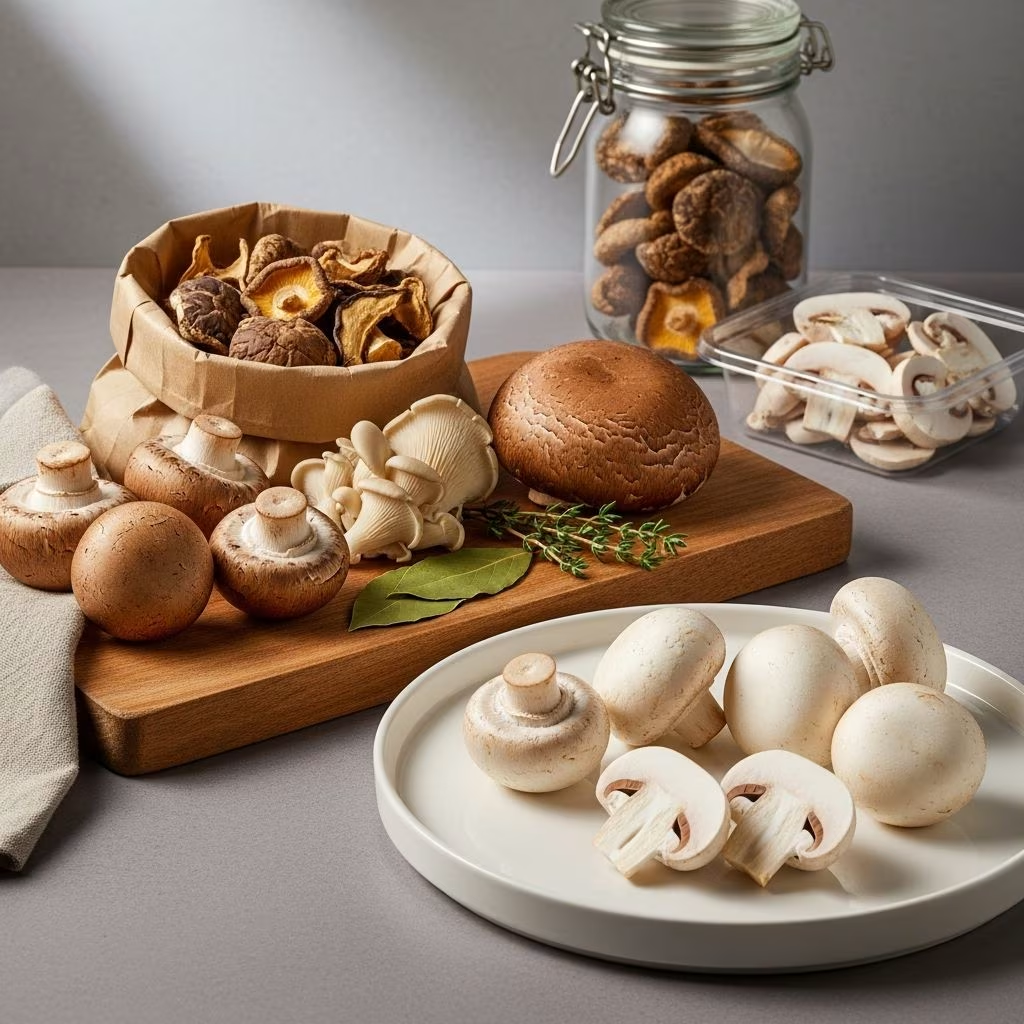
Delicate varieties like oyster need gentler handling than sturdy portobellos. Shiitake excel in drying due to thick caps. Cremini and button mushrooms store similarly in paper but wrinkle faster if overdried.
- Shiitake: Prime for drying/freezing; stems compost well.
- Oyster: Fragile; use within days, freeze sliced.
- Wild types: Refrigerate loosely; cook thoroughly.
Commercial vs. Home Storage Innovations
Growers use modified atmosphere packaging for transport, but home cooks benefit from simple tweaks. Invest in a dedicated fridge drawer for humidity control. For bulk, consider vacuum sealing dried product post-cooling.
Reviving Slightly Past-Prime Mushrooms
If edges brown, trim and use in sautés. Soak dried ones fully. Slimy? Compost to avoid waste.
Frequently Asked Questions (FAQs)
Can you store mushrooms in the fridge door?
No, door fluctuations cause faster spoilage. Use main compartments.
How long do dried mushrooms last?
Up to 12 months in airtight containers away from light and heat.
Is freezing better than drying?
Freezing retains moisture for some recipes; drying intensifies flavor for others.
Do mushrooms need light for storage?
No, darkness prevents vitamin loss and discoloration.
What’s the best way to clean before storing?
Brush or wipe; never soak until ready to cook.
Health and Safety Notes
Proper storage minimizes bacterial risks like Listeria. Discard if slimy, discolored, or foul-smelling. Dried mushrooms may enhance vitamin D via sun exposure.
By adopting these methods, reduce waste and elevate your culinary game. Experiment to find what suits your harvest or market buys.
References
- Storage & Preservation – Methods of Commercial Mushroom Cultivation in the Northeastern United States — Cornell Small Farms Program. Accessed 2026. https://smallfarms.cornell.edu/projects/mushrooms/methods-of-commercial-mushroom-cultivation-in-the-northeastern-united-states/7-storage-preservation/