Bananas ripen quickly due to ethylene gas production, but proper storage techniques can extend their freshness significantly, often up to a month with the right methods.
Understanding Banana Ripening Science
Bananas emit **ethylene gas**, a natural plant hormone that accelerates ripening. This gas is primarily released from the stem end, influencing nearby fruits and causing rapid softening and browning. Factors like temperature, light exposure, and physical pressure exacerbate this process, leading to spoilage if not managed.
Optimal storage maintains bananas at around **12°C (54°F)** in a dark, ventilated area to slow ethylene buildup without halting natural development. Heat speeds ripening, while excessive moisture promotes rot. Knowing these basics empowers better preservation.
Bringing Bananas Home: Initial Preparation Steps
Upon purchase, avoid plastic bags from stores, as they trap moisture and hasten decay. Instead, prepare bananas immediately for longevity:
- Wash in a **saltwater solution** (1 tablespoon salt per liter of water) to remove surface ripening agents and pesticides, extending shelf life by 5-7 days.
- Follow with a **baking soda soak** (1 teaspoon per liter) to neutralize residues, then rinse and dry thoroughly.
- Trim blackened stem portions to prevent mold spread, which accelerates ethylene release.
These steps create a clean base, reducing chemical influences and bacterial growth from the outset.
Countertop Storage: Best Practices for Daily Use
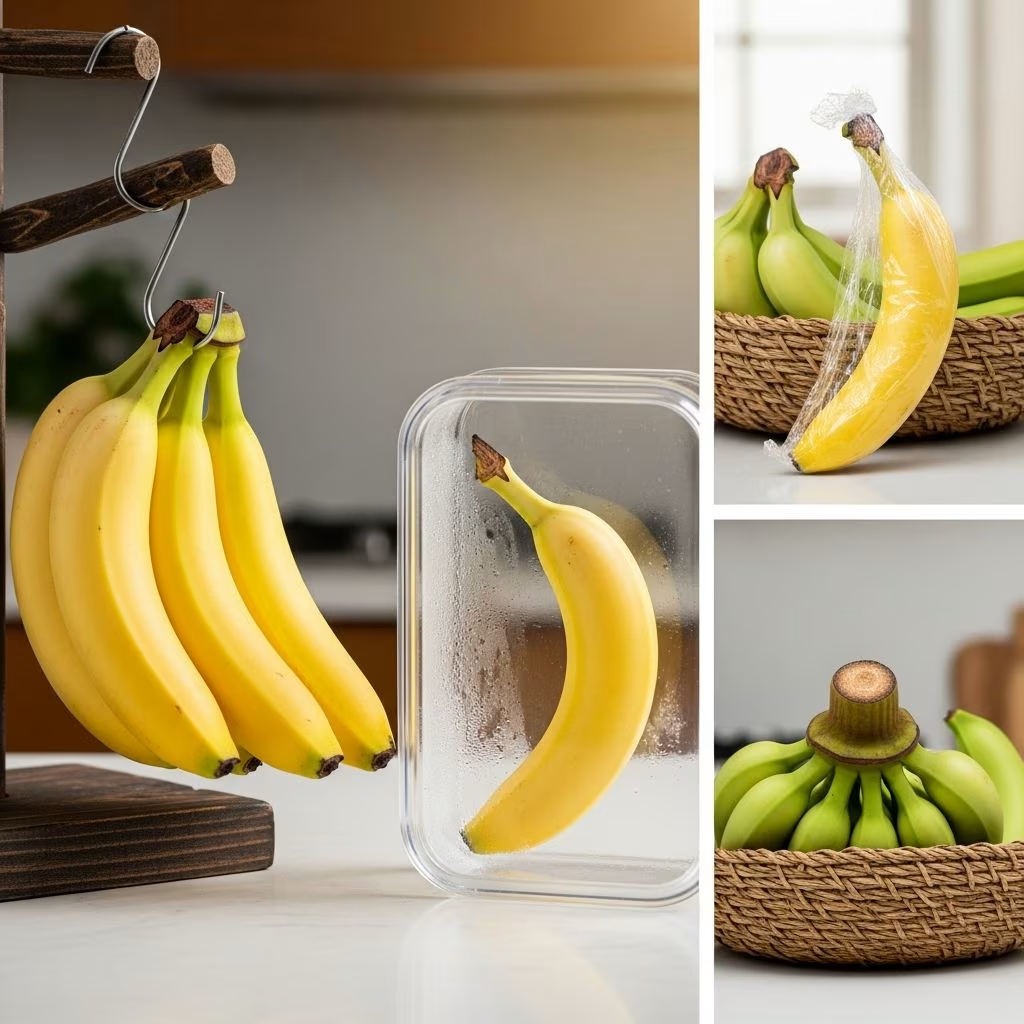
For unripe green bananas, room temperature storage on the counter is ideal until they yellow. Hang bunches using a hook or stand to minimize bruising and ensure air circulation, preventing pressure-induced dark spots.
Key guidelines include:
- Position stems upward in their natural curve to distribute weight evenly.
- Select a cool, shaded spot away from heat sources, drafts, or direct sun.
- Maintain separation from ethylene producers like apples or tomatoes.
| Storage Method | Pros | Cons | Best For |
|---|---|---|---|
| Hanging Hook | Prevents bruising; improves ventilation | Requires space | Whole bunches |
| Counter (curved side up) | Simple; no equipment needed | Risk of minor pressure spots | Small quantities |
| Open Basket | Good airflow | Potential rolling | Ripening stage |
Hanging reduces skin splits, limiting oxygen exposure to the flesh.
Controlling Ethylene: The Stem Wrapping Technique
The crown (stem end) is the main ethylene source. Wrapping it tightly in plastic wrap or foil traps the gas, slowing bunch-wide ripening. Re-wrap after detaching individual bananas.
- Use multiple layers for airtight seal.
- For singles, wrap each stem separately to customize ripening rates.
- Experiment: Bunches may stay uniform, while separates allow staggered ripeness.
This method can add 7-10 days to freshness without altering taste.
Refrigeration: When and How to Chill Bananas
Refrigerate only **fully ripe yellow bananas**; green ones stall and develop chill injury (black peels). Ripe bananas last 1-2 extra weeks in the fridge, though skins blacken harmlessly—the fruit inside remains tasty.
Pro Tip: Store in crisper drawers away from produce emitters. For baking stock, keep overripe ones up to 8 weeks in sealed containers.
- Peel before refrigerating slices to avoid mushiness.
- Sprinkle with lemon or pineapple juice to prevent oxidation on cut surfaces.
Refrigeration suits short-term extension but not initial ripening.
Freezing Bananas: Long-Term Preservation
Freezing ripe bananas preserves nutrients and flavor for up to 6 weeks, ideal for smoothies or baking. Process as follows:
- Peel and slice into 1-inch chunks or purée.
- Flash-freeze on a tray to prevent clumping.
- Transfer to airtight freezer bags, removing air.
Frozen bananas thaw in the fridge or blend directly. Overripe fruit yields sweetest results for desserts.
Preserving Cut Bananas and Slices
Cut bananas brown quickly from enzyme exposure. Mitigate with:
- **Citrus juices**: Lemon or pineapple (acidic antioxidants).
- Airtight wrapping post-treatment.
- Cool storage, fridge preferred for slices.
For fruit salads, combine with compatible items and consume within 24 hours.
Common Storage Mistakes to Avoid
Steer clear of these pitfalls for maximum freshness:
- Plastic bagging whole bunches—traps moisture and ethylene.
- Clustering with other fruits—cross-ripening occurs.
- Fridge for green bananas—causes blackening and poor texture.
- Stacking or surface resting—leads to bruises.
- Direct sunlight or heat—accelerates decay.
Ripeness Stages and Tailored Storage
| Ripeness | Color/Texture | Best Storage | Duration |
|---|---|---|---|
| Green/Unripe | Firm, tart | Counter, hung, 12-15°C | 5-7 days to yellow |
| Yellow/Ripe | Softening, sweet | Fridge or freeze | 1-2 weeks fridge |
| Brown/Overripe | Spotted, mushy | Freeze for baking | Up to 6 weeks frozen |
Match method to stage for peak usability.
Advanced Tips for Extended Freshness
- Use ventilated hooks near kitchens but shaded.
- Separate bunches into smaller groups for controlled ripening.
- Monitor weekly, using overripe for recipes promptly.
These tweaks minimize waste, saving money and resources.
FAQs
Can you store bananas in the fridge?
Yes, but only when fully ripe; peels blacken but fruit is fine.
How do you slow banana ripening?
Hang away from other fruits, wrap stems, keep cool and dark.
Is freezing bananas a good idea?
Absolutely—peel, slice, and freeze for up to 6 weeks.
Why do banana peels turn black in the fridge?
Chill injury from cold shocking enzymes, but interior stays edible.
How long do bananas last on the counter?
2-7 days depending on ripeness; hanging extends this.
Reducing Food Waste with Smart Storage
Proper techniques cut banana waste by 50%, per general produce studies. Repurpose overripe into bread, smoothies, or ice cream bases. Track purchases to match consumption.
References
- Storing Bananas: Tips and Tricks — Dole. Accessed 2026. https://www.dole.com/en-gb/blog/storing-bananas-correctly-dos-and-donts
- How to keep your bananas fresh — Chiquita. Accessed 2026. https://www.chiquita.com/blog/how-to-keep-your-bananas-fresh-by-chiquita/
- Bananas Stay Fresh for a Whole Month with This Old Farmer’s Trick! — YouTube (Video Transcript). Accessed 2026. https://www.youtube.com/watch?v=TQ7d2X5RCYE