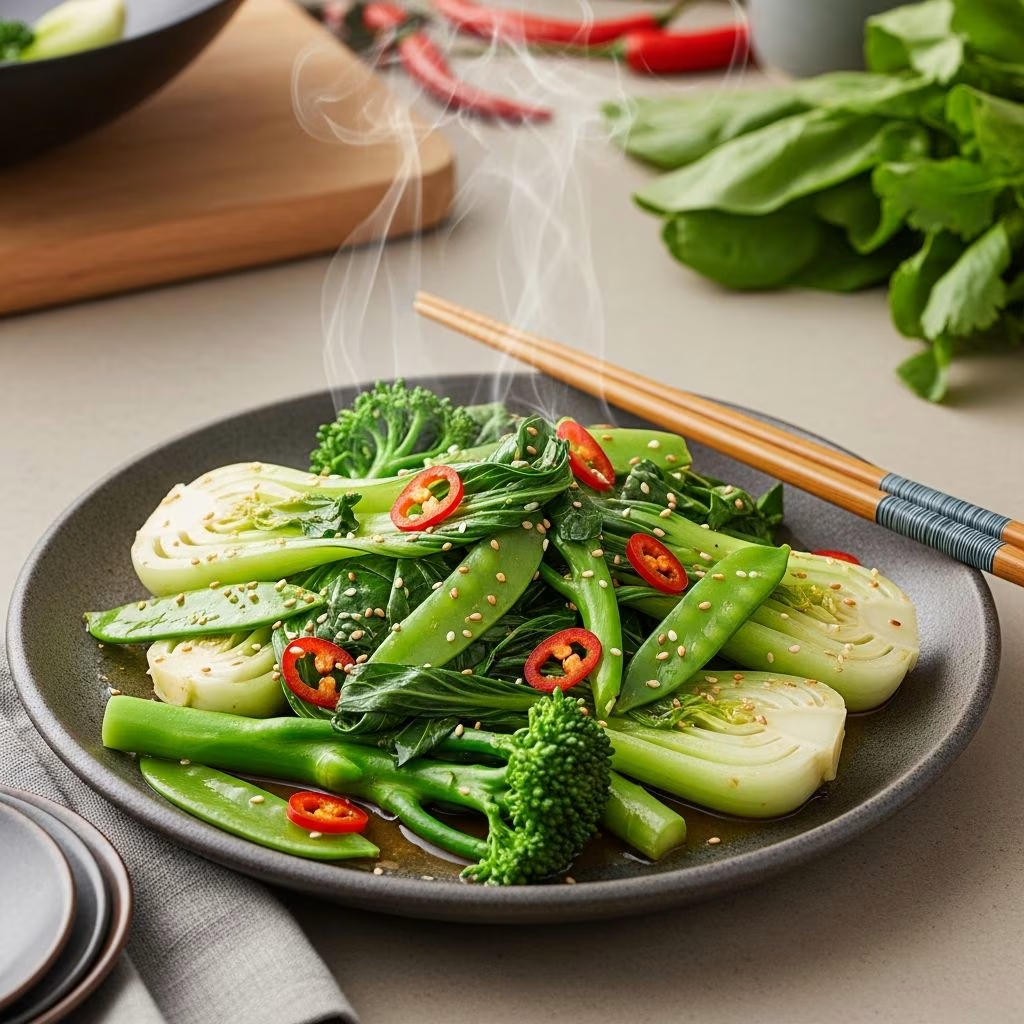
Stir-fried Asian greens represent a cornerstone of quick, healthy cooking, delivering crisp textures and bold flavors in minutes. These dishes highlight the natural freshness of leafy vegetables like gai lan, choy sum, and mustard greens, transformed by high heat and simple seasonings into irresistible sides or mains.
Why Asian Greens Shine in Stir-Fries
Asian greens offer unparalleled versatility and nutrition. Packed with vitamins A, C, and K, plus fiber and antioxidants, they support heart health and digestion while keeping calorie counts low. Their sturdy stems and tender leaves hold up beautifully to wok heat, creating a contrast of textures that’s signature to stir-frying.
Unlike delicate salad greens, varieties like Chinese broccoli (gai lan) and ong choy retain vibrancy when cooked rapidly, avoiding sogginess. This method preserves nutrients better than prolonged boiling, making it ideal for weeknight meals.
Essential Varieties of Asian Greens to Know
The world of Asian greens is diverse, each bringing unique qualities to the wok. Here’s a breakdown:
- Gai Lan (Chinese Broccoli): Thick stems and slightly bitter leaves; perfect for garlic-heavy stir-fries.
- Choy Sum: Tender stems and yellow flowers; mild flavor suits light sauces.
- Ong Choy (Water Spinach): Hollow stems and hollow leaves; adds juicy crunch.
- Mustard Greens (Gai Choy): Peppery bite; pairs with savory add-ins like aburaage.
- Bok Choy or Pea Shoots: Baby versions for quicker cooking and sweetness.
Choose based on availability—farmers’ markets or Asian grocers stock the freshest bunches.
Selecting and Preparing Your Greens
Start with vibrant, crisp greens without wilting or yellowing. Rinse thoroughly under cold water to remove grit, especially in hollow-stemmed types. Pat dry to ensure even cooking—excess moisture steams rather than stir-fries.
Preparation varies by type:
| Green Type | Prep Steps | Cut Size |
|---|---|---|
| Gai Lan | Trim ends, separate stems from leaves | 2-3 inch pieces |
| Mustard Greens | Separate thick stems from leaves | 2-3 inch segments |
| Ong Choy | Trim roots, cut into 4-inch lengths | Whole sections |
| Choy Sum | Halve or quarter if large | Bite-sized |
Always cook stems first—they need more time than leaves.
Tools and Techniques for Perfect Results
A wok or large skillet is essential for even high heat. Carbon steel woks season over time for non-stick performance. Heat oil until shimmering (around 400°F) before adding ingredients—this creates the wok hei, or breath of the wok, for smoky depth.
Key techniques:
- High Heat, Constant Motion: Stir continuously to prevent burning.
- Order Matters: Aromatics first (garlic, ginger), then stems, leaves last.
- Sauce at End: Add after wilting to coat without diluting.
Use neutral oils like vegetable or peanut for high smoke points.
Flavor Profiles: Building Umami and Balance
Stir-fries thrive on harmony—salty, sweet, sour, and spicy. Core ingredients include:
- Soy sauce or tamari for saltiness.
- Fresh garlic and ginger for pungency.
- Sesame oil for nutty finish.
- Optional: Shiitake mushrooms, aburaage, or chili for depth.
For a Japanese twist, shiro dashi adds subtle seafood notes without fishiness. A cornstarch slurry thickens sauces, clinging to greens.
Recipe 1: Classic Gai Lan with Ginger Soy
This beginner-friendly dish serves 4 as a side.
Ingredients
- 1 bunch gai lan (about 1 lb)
- 2 tbsp vegetable oil
- 3 cloves garlic, sliced
- 1 tbsp grated ginger
- 2 tbsp soy sauce
- 1 tsp sesame oil
- 1 tsp cornstarch mixed with 1 tbsp water
Steps
- Prep gai lan: Cut stems into 2-inch pieces, leaves halved.
- Heat wok over high; add oil, garlic, ginger. Stir 30 seconds.
- Add stems; stir-fry 2 minutes until bright green.
- Add leaves; cook 1 minute until wilted.
- Stir in soy, sesame, slurry. Toss 30 seconds. Serve hot.
Ready in under 10 minutes.
Recipe 2: Mixed Greens Trio Medley
Elevate your plate with three greens for variety. Serves 4-6.
Ingredients
- 2 cups ong choy, chopped
- 2 cups choy sum, quartered
- 1 bunch gai lan, prepped
- 1 cup shiitake slices
- 3 tbsp soy sauce
- 1 tbsp grated ginger
- 1 tsp white pepper
- Sesame seeds for garnish
Steps
- Heat wok dry; add mushrooms and ong choy with water splashes as needed. Stir 3-5 min; add 1 tbsp soy.
- Transfer to platter. Repeat with choy sum: 2 min stir-fry + soy.
- Gai lan last: Boil-like with ½ cup water 3-5 min, then soy. Combine and sprinkle seeds.
Nutrient-dense and colorful.
Recipe 3: Mustard Greens with Aburaage
A textured, savory option inspired by Japanese flavors. Serves 4.
Ingredients
- 250g mustard greens
- 2 sheets aburaage, blanched and sliced
- 1 tbsp oil
- 2 tsp shiro dashi
- 1 tsp soy sauce
Steps
- Separate stems and leaves; cut into 2-3 inch pieces.
- Stir-fry stems 1 min in oil.
- Add leaves until half-wilted; mix in aburaage.
- Off heat, toss with dashi and soy.
Aburaage adds chew and absorbs seasonings.
Customizing for Diets and Preferences
Go vegan with tamari; gluten-free soy alternatives work too. Add protein like tofu or mushrooms for mains. Spice with chili oil or fresh chilies. For low-sodium, use half soy and water.
Common Mistakes and Fixes
- Overcrowding: Cook in batches for crispness.
- Low Heat: Crank it up—steam ruins texture.
- Sauce Too Early: Greens release water, diluting flavors.
- Not Drying Greens: Leads to steaming; use a salad spinner.
Storage and Reheating Tips
Store leftovers in airtight containers up to 3 days. Reheat in a hot wok to revive crispness—microwaving softens. Freezes well blanched.
Health Benefits Backed by Science
These greens lower inflammation and support immunity. A study from the Journal of Nutrition highlights sulforaphane in mustard greens for cancer prevention. High fiber aids gut health per USDA data.
FAQs
What if I can’t find Asian greens?
Substitute kale, spinach, or broccoli rabe—adjust cooking times.
Can I make this oil-free?
Yes, use water or broth splashes as in Forks Over Knives method.
How spicy can I make it?
Add sliced chilies with garlic or chili oil at end.
Best oil for wok cooking?
Peanut or avocado for high smoke points.
Pairing ideas?
With steamed rice, grilled fish, or tofu for balanced meals.
References
- Chinese Greens Stir-fry — RecipeTin Japan. 2023-05-15. https://japan.recipetineats.com/chinese-greens-stir-fry/
- Sautéed Chinese Greens Trio — Forks Over Knives. 2022-08-10. https://www.forksoverknives.com/recipes/vegan-salads-sides/sauteed-chinese-greens-trio/
- How to Stir-Fry Asian Greens — Lefty Spoon. 2014-10-10. https://www.leftyspoon.com/2014/10/10/how-to-stir-fry-asian-greens/
- Stir Fried Greens with Garlic and Chilli Oil — Supper in the Suburbs. 2022-03-30. https://supperinthesuburbs.com/2022/03/30/stir-fried-greens-with-garlic-and-chilli-oil/