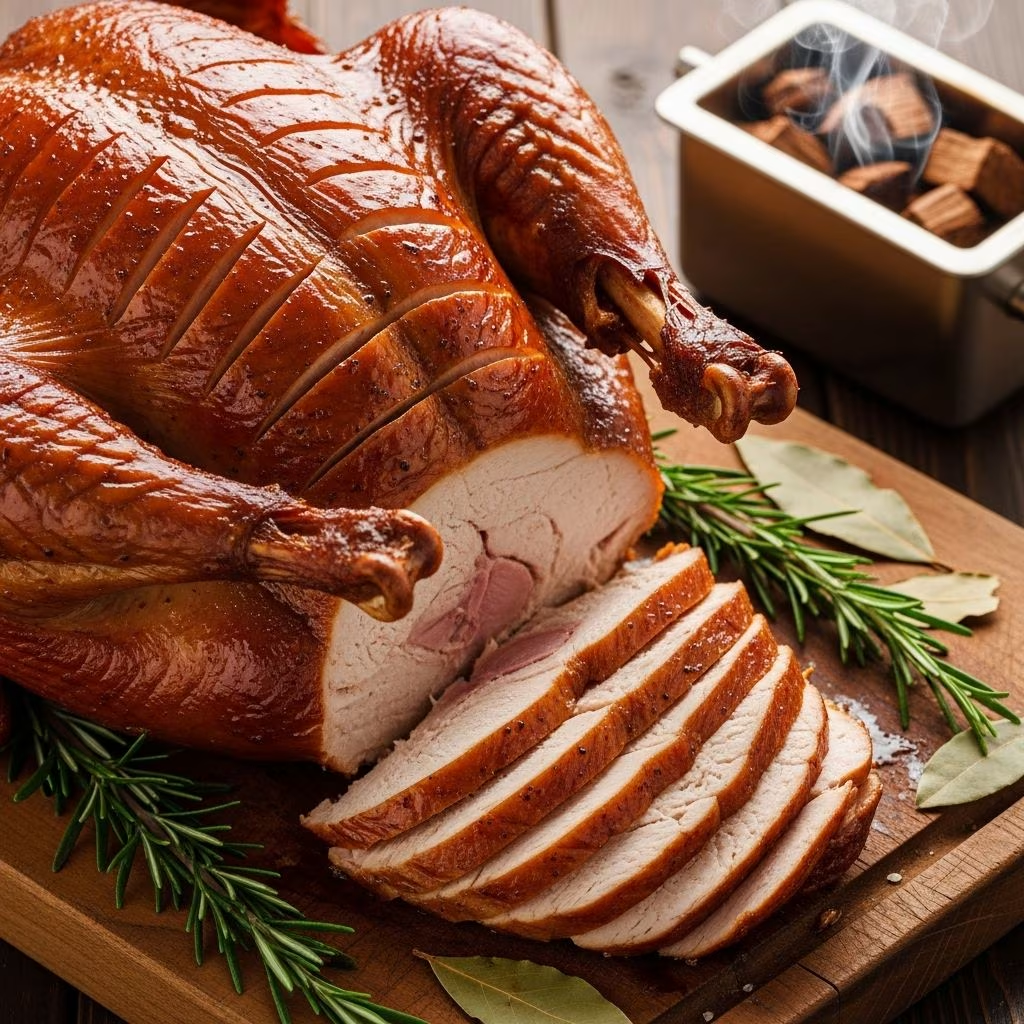
Smoking a turkey transforms a simple bird into a centerpiece of smoky, tender perfection. This method infuses deep flavors while keeping the meat moist, making it ideal for holidays, barbecues, or family dinners. Whether you’re new to smoking or refining your skills, this guide covers everything from selecting the right turkey to achieving crispy skin and safe internal temperatures.
Why Choose Smoking Over Roasting?
Smoking offers unique advantages: low, slow heat preserves moisture, while wood smoke adds layers of flavor impossible in an oven. Unlike roasting, which can dry out the breast, smoking evenly cooks the bird, especially with proper preparation. Expect a cooking time of 30-40 minutes per pound at 225-250°F, resulting in a bird that’s juicy inside with a mahogany exterior.
Selecting the Perfect Turkey
Opt for a fresh or fully thawed turkey weighing 12-15 pounds for even cooking. Smaller birds smoke faster and stay in the safe temperature zone (40-140°F) within four hours, preventing bacterial growth. Remove giblets and neck immediately. For best results, choose heritage or organic birds for superior flavor and texture.
- Fresh vs. Frozen: Fresh turkeys yield better smoke adhesion; thaw frozen ones in the fridge at 24 hours per 4-5 pounds.
- Size Matters: Avoid birds over 16 pounds unless spatchcocking to flatten and speed cooking.
- Grade Check: Look for USDA Grade A for plump, well-shaped birds.
Brining for Maximum Juiciness
Brining—a saltwater soak—seasons deeply and locks in moisture. Submerge the turkey in a solution for 18-24 hours. Basic recipe: 1 gallon water, 1 cup kosher salt, ½ cup sugar, aromatics like bay leaves and peppercorns. Refrigerate during brining; pat dry thoroughly afterward for crispy skin.
| Brine Type | Ingredients | Benefits |
|---|---|---|
| Wet Brine | Saltwater with sugar, herbs | Deep penetration, ultra-moist |
| Dry Brine | Kosher salt, spices rubbed on skin | Concentrated flavor, drier skin |
| No Brine | Inject broth | Quick option, still juicy |
Skip brining if buying pre-brined; rinse to avoid over-saltiness.
Crafting the Ideal Spice Rub
A good rub builds a flavor crust. Mix brown sugar, paprika, garlic powder, onion powder, black pepper, salt, and cayenne for balance. Apply generously after oiling the skin. For sweetness, add maple syrup or cola elements in a baste.
- Classic BBQ: Paprika, cumin, mustard powder.
- Herbal: Thyme, rosemary, sage.
- Sweet Heat: Brown sugar, chili powder.
Preparing the Smoker and Wood Choices
Preheat your smoker—pellet, electric, charcoal, or offset—to 225-250°F. Maintain steady temperature with vents or digital controls. Wood selection is key:
- Apple or Cherry: Mild, fruity smoke for subtle sweetness.
- Hickory: Bold, bacon-like intensity.
- Pecan: Nutty, pairs with herbs.
- Mix: Oak base with fruit woods for complexity.
Add chunks or chips soaked for electric smokers; use dry for others. Aim for thin blue smoke, not thick white.
Step-by-Step Smoking Process
- Prep the Bird: Pat dry, tuck wings, truss legs. Stuff cavity loosely with onion quarters, lemon, apple, garlic, and fresh herbs like rosemary or thyme for aroma infusion.
- Season: Coat with olive oil or melted butter, then rub. Place in a foil pan for easy basting and cleanup.
- Smoke: Insert probe into thickest thigh. Smoke breast-side up at 225-250°F. Baste hourly with broth, butter, or cola mixture if not brined.
- Monitor Temps: Target 160°F breast, 175°F thigh. Total time: 4-8 hours depending on size. Crank to 350°F last 30 minutes for crispy skin.
- Rest: Tent with foil 30-60 minutes; carryover cooking finishes it safely.
Troubleshooting Common Issues
Problems arise but are fixable:
- Dry Meat: Brine longer or baste more; don’t overcook.
- Pale Skin: Increase heat end-stage or air-dry overnight post-brine.
- Stall at 150°F: Wrap in foil (Texas crutch) to push through.
- Too Smoky: Use milder woods, ensure good airflow.
Advanced Techniques for Pros
Spatchcock by removing backbone for even cooking and crispier skin; smoke at 375-400°F for 2-4 hours. Butter under skin with garlic and herbs amps richness. For regional twists, glaze with bourbon-maple or cola-butter in final hour. High-altitude? Add 10-15 minutes per pound above 5,000 feet.
Serving and Storage Tips
Carve against grain: legs first, then breast slices. Serve with gravy from pan drippings. Leftovers store 3-4 days refrigerated or freeze for months. Repurpose into chili, sandwiches, or pot pies.
Nutrition and Safety Facts
A 3-ounce serving offers 25g protein, low fat if skin removed. Always verify 165°F final breast temp per USDA. Use food thermometer; discard stuffing cooked inside bird.
FAQ
Can I smoke a frozen turkey?
No—fully thaw first for even cooking and safety.
What’s the best wood for beginners?
Applewood: forgiving, mild flavor.
How long does a 12-pound turkey take?
5-6 hours at 250°F; check temps, not clock.
Should I stuff the turkey?
Aromatics only; cook real stuffing separately for safety.
Electric vs. charcoal smoker?
Electric for set-it-forget-it; charcoal for flavor control.
References
- Smoked Turkey Recipe — Dinner at the Zoo. 2023-11-15. https://www.dinneratthezoo.com/smoked-turkey-recipe/
- Best Smoked Turkey Recipe — Tastes of Lizzy T. 2023-10-20. https://www.tastesoflizzyt.com/best-smoked-turkey-recipe/
- Easy Smoked Turkey Recipe With Crispy Skin — The Kettle Guy. 2024-05-10. https://www.thekettleguy.com/easy-smoked-turkey-recipe/
- Smoked Turkey 5 Ways — Pit Boss Grills. 2023-12-01. https://www.pitboss-grills.com/blogs/blog/smoked-turkey-5-ways
- Best Smoked Turkey Guide — Traeger Grills. 2024-02-28. https://www.traeger.com/learn/how-to-smoke-turkey