The Caesar salad stands as one of the most beloved dishes in culinary history, combining crisp greens, rich dressing, and crunchy elements into a harmonious bite. Originating in the early 20th century, this salad has transcended its humble beginnings to become a staple on menus worldwide. What makes it enduringly popular is its balance of tangy, savory, and fresh flavors, all tied together by a meticulously crafted dressing. In this comprehensive guide, we’ll explore every aspect of preparing an exceptional Caesar salad at home, from selecting the finest ingredients to perfecting the execution. Whether you’re hosting a dinner party or seeking a luxurious weeknight meal, these techniques will empower you to create a version that rivals any professional kitchen.
Understanding the Essence of Caesar Salad
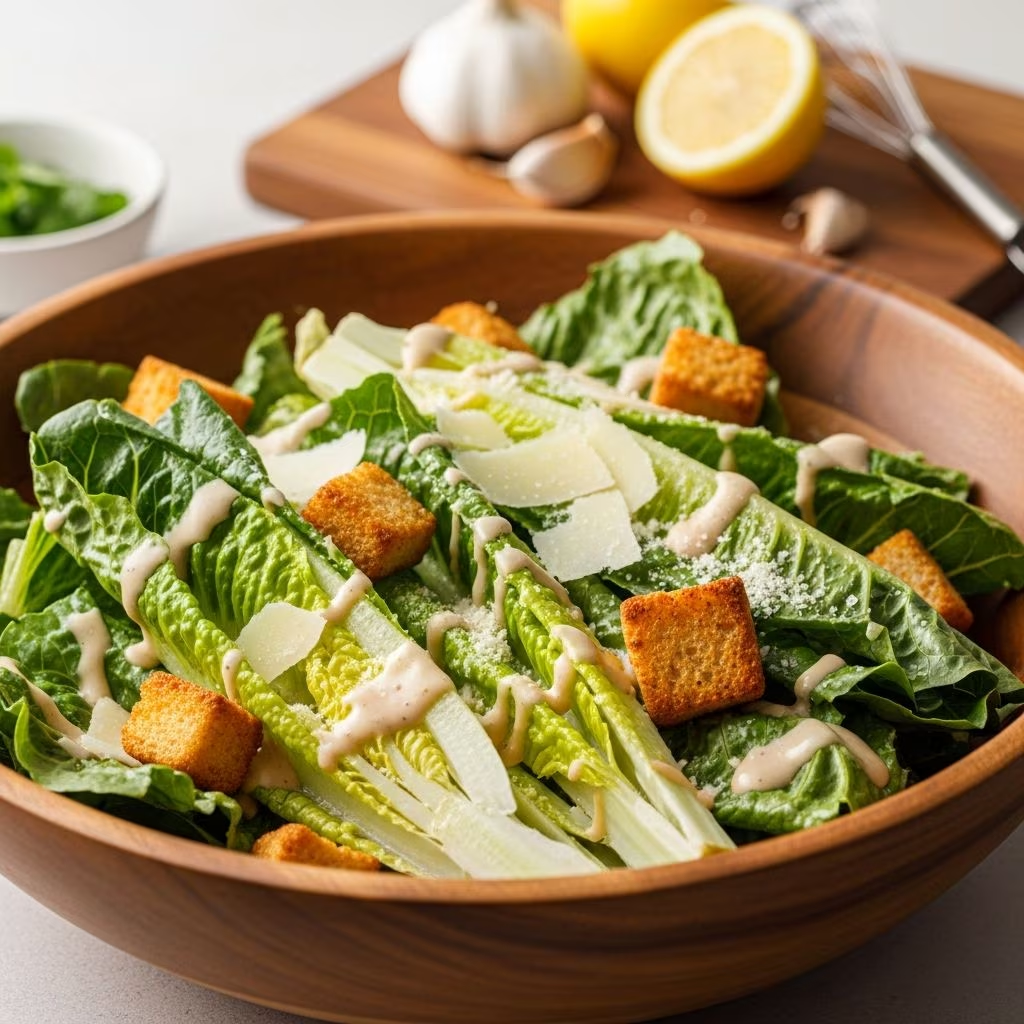
At its core, a great Caesar salad relies on high-quality components working in unison. The foundation is fresh romaine lettuce, whose sturdy leaves hold up to the robust dressing without wilting. The dressing itself is the star, featuring a creamy emulsion of egg yolks, garlic, lemon, Worcestershire sauce, and anchovies that delivers umami depth. Golden, garlicky croutons add texture, while a generous sprinkle of Parmesan cheese provides a nutty finish. Mastering this salad means appreciating how each element contributes to the whole—too much acid overwhelms, insufficient salt dulls the flavors, and soggy croutons ruin the crunch.
Historically, the salad was invented by Italian immigrant Caesar Cardini in Tijuana, Mexico, during a busy night in 1924 when he improvised with available pantry staples. This origin story underscores the dish’s improvisational spirit, yet precision is key to replication. Modern variations abound, but sticking to the classic formula yields the most satisfying results.
Selecting Premium Ingredients
Quality ingredients are non-negotiable for an outstanding Caesar. Start with romaine hearts, which offer tender inner leaves and crisp outer ones. Look for heads that are vibrant green with no wilting or browning. For the dressing, use pasteurized eggs if concerned about raw yolks, fresh lemons for bright acidity, and high-quality anchovy fillets packed in olive oil rather than the brined variety for superior flavor.
- Romaine lettuce: 2-3 hearts, about 1.5 pounds total.
- Anchovies: 4-6 fillets, finely minced.
- Garlic: 2 cloves, preferably fresh and firm.
- Parmesan: A block for grating, not pre-shredded, to ensure freshness.
- Bread for croutons: Day-old country-style loaf for optimal texture.
Other essentials include Dijon mustard for emulsification, extra-virgin olive oil, and neutral oil like canola to balance richness. Avoid bottled dressings; the homemade version’s vibrancy is unmatched.
Crafting the Signature Dressing
The dressing is where magic happens, requiring careful blending to achieve a silky texture. Begin by mashing garlic and anchovies into a paste using a mortar and pestle or the side of a knife. This releases their potent flavors. In a bowl, whisk egg yolks with Dijon mustard, then slowly drizzle in oils while whisking vigorously to form an emulsion. Add lemon juice, Worcestershire, and black pepper gradually, tasting as you go. The result should coat the back of a spoon without being overly thick.
| Ingredient | Quantity | Notes |
|---|---|---|
| Egg yolks | 2 large | Pasteurized for safety |
| Anchovy fillets | 4-6 | Oil-packed, minced |
| Garlic | 2 cloves | Finely minced or pasted |
| Lemon juice | 2 tbsp fresh | Plus zest for extra punch |
| Olive oil | 1/2 cup | Extra-virgin |
| Canola oil | 1/4 cup | For lighter emulsion |
| Worcestershire sauce | 1 tsp | Quality brand |
| Dijon mustard | 1 tsp | Smooth variety |
Pro tip: If the emulsion breaks, start over with a new yolk and gradually whisk in the broken mixture. Refrigerate the dressing for at least 30 minutes to let flavors meld.
Preparing Irresistible Croutons
Croutons elevate the salad from good to great, providing crucial contrast. Cube day-old bread into 3/4-inch pieces, yielding about 4 cups. Toss with olive oil, minced garlic, salt, and pepper. Spread on a baking sheet and bake at 375°F for 10-15 minutes, stirring halfway, until deeply golden. For extra flavor, rub the baked croutons with a garlic clove half. These can be made ahead and stored in an airtight container for up to two days.
Assembling the Salad with Precision
Wash and dry romaine thoroughly—use a salad spinner for best results. Tear leaves into bite-sized pieces, discarding tough stems. In a large bowl, toss leaves lightly with some dressing to coat evenly, adding more as needed. Plate the dressed greens, then top with croutons and freshly grated Parmesan. Serve immediately to preserve crispness. Aim for 2-3 ounces of dressing per large head of romaine.
Advanced Techniques and Variations
For a grilled Caesar, char romaine halves on a hot grill for smoky notes, then dress. Add protein like grilled chicken or shrimp for a heartier meal. Vegan adaptations swap anchovies for capers and use aquafaba instead of eggs. Experiment with herb-infused croutons or aged Pecorino Romano for a twist.
Popular Twists
- Kale Caesar: Massage kale for tenderness.
- Caesar Wedge: Use iceberg for retro appeal.
- Spicy Version: Add Calabrian chiles to dressing.
Common Mistakes and How to Avoid Them
Overdressing is a frequent pitfall; start sparingly. Using bagged lettuce often leads to sogginess—opt for whole heads. Finely grate cheese for even distribution, and ensure oils are at room temperature for smooth emulsification. Salting too early can prevent proper tossing.
Nutritional Profile and Pairings
A single serving (about 2 cups) offers roughly 250 calories, with healthy fats from olive oil and protein from Parmesan and anchovies. Pair with grilled steak, roasted chicken, or a crisp Sauvignon Blanc. For wine, seek those with citrus and herbal notes to complement the dressing.
Frequently Asked Questions
Can I make the dressing ahead?
Yes, it stores in the fridge for up to 3 days. Whisk before using.
Is raw egg safe?
Use pasteurized eggs or coddle them briefly in simmering water.
How do I achieve perfect emulsion?
Whisk constantly and add oil in a thin stream.
Gluten-free option?
Use GF bread for croutons.
With these steps, you’ll consistently produce a Caesar salad that’s crisp, flavorful, and worthy of acclaim. Practice refines the craft—soon, it’ll be your signature dish.
References
- Food Timeline: History Notes – Salad — Food Timeline. 2023-05-15. https://www.foodtimeline.org/foodsalads.html#caesar
- USDA FoodData Central – Romaine Lettuce — United States Department of Agriculture. 2024-01-10. https://fdc.nal.usda.gov/fdc-app.html#/food-details/169247/nutrients
- The Flavor Bible – Anchovies — Karen Page & Andrew Dornenburg. Penguin Books, 2008 (reprint 2021). https://www.penguinrandomhouse.com/books/43800/the-flavor-bible-by-karen-page-and-andrew-dornenburg/
- CDC Guidelines on Raw Egg Safety — Centers for Disease Control and Prevention. 2023-08-22. https://www.cdc.gov/foodsafety/foods-linked-illness.html
- Journal of Food Science: Emulsification Techniques — Institute of Food Technologists. 2022-11-01. https://doi.org/10.1111/1750-3841.12456