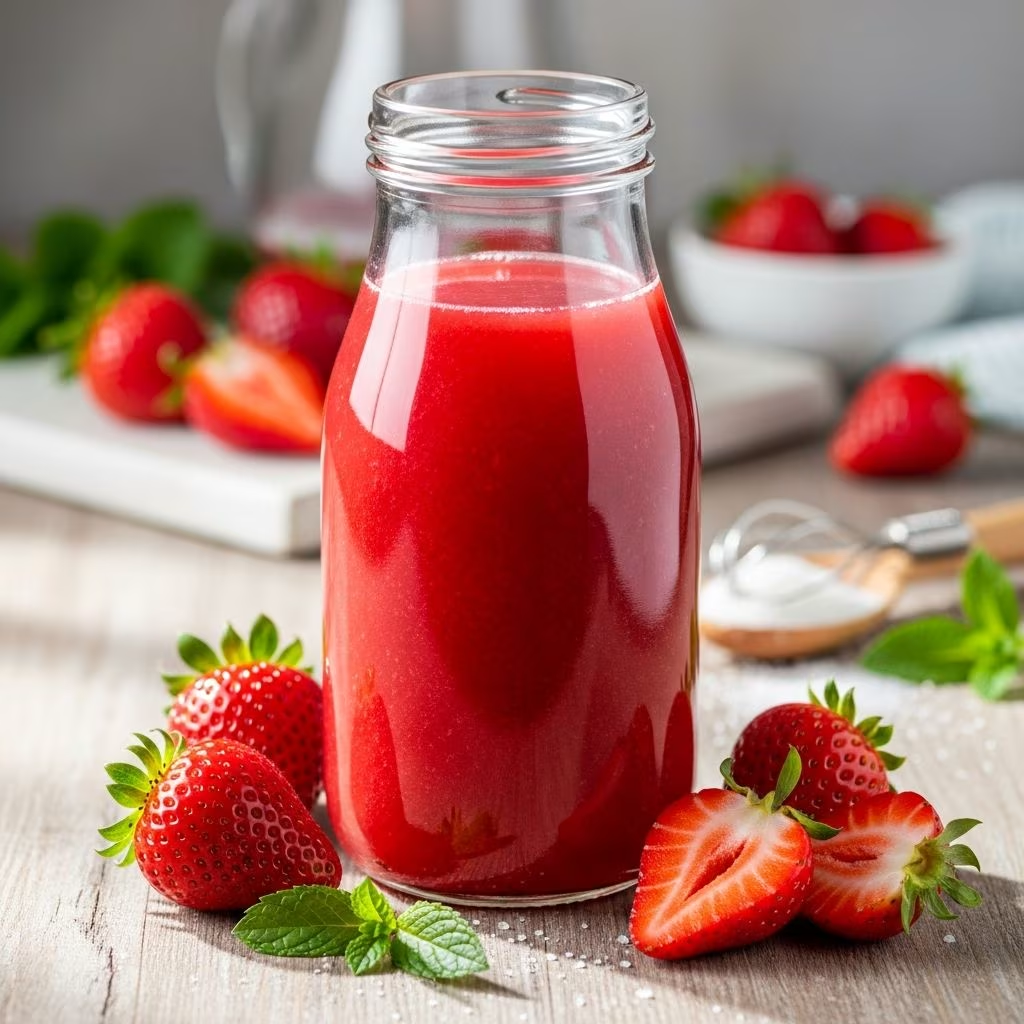
Strawberry nectar represents a delightful way to capture the essence of fresh berries in a smooth, concentrated beverage. Unlike traditional fruit juices, nectar maintains a thicker consistency and delivers a more intense flavor profile. Making strawberry nectar at home allows you to control sweetness levels, preserve nutritional value, and enjoy a beverage free from artificial additives or preservatives.
Understanding Strawberry Nectar Basics
Strawberry nectar differs from conventional strawberry juice in several meaningful ways. The beverage features a denser texture and less transparent appearance than standard juice preparations. According to Food and Agriculture Organization standards, any liquid bearing the strawberry nectar designation must contain a minimum of 40 percent juice and puree content. This requirement ensures that what you consume genuinely represents the fruit rather than merely flavored water.
The primary distinction lies in the extraction method and processing approach. While juice extraction focuses on separating clear liquid from solid components, nectar production embraces a fuller fruit experience. This approach captures beneficial fiber, natural sugars, and phytonutrients that standard filtering processes might eliminate.
Essential Equipment for Preparation
Creating quality strawberry nectar requires specific tools that facilitate smooth processing and efficient extraction. Understanding what each piece of equipment accomplishes helps you make informed purchasing decisions.
- Vacuum Sealing System: This equipment creates an airtight environment around your strawberries, allowing them to break down naturally through freezing and osmosis. The vacuum sealer removes air from specially designed bags, concentrating flavors while releasing liquid from the fruit cells.
- Chinois Strainer: This conical-shaped mesh strainer features fine openings that separate solid pulp from liquid without damaging delicate fruit particles. The angled design facilitates smooth straining and prevents clogging.
- Blender or Food Processor: For alternative preparation methods, a high-powered blender efficiently breaks down fresh strawberries into smooth pulp without excessive heating.
- Fine Mesh Strainer: This versatile tool works well for removing pulp if you prefer a clearer final product, offering flexibility in texture preferences.
- Storage Containers: Glass jars or nonreactive containers prevent chemical interactions between acidic fruit and metal surfaces, preserving flavor integrity.
Ingredient Selection and Preparation
The foundation of excellent strawberry nectar begins with choosing ripe, flavorful berries. Look for strawberries that display deep red coloring throughout, indicating full ripeness and maximum sugar content. Berries harvested at peak ripeness contain higher concentrations of natural acids and sweetness, creating superior final products.
Preparation starts with removing the green leafy tops and any damaged sections. Rinse berries gently under cool water to eliminate surface dirt while preserving delicate flesh. Pat them dry with paper towels before proceeding to your chosen extraction method.
Sweetener selection profoundly influences your final nectar’s character. While traditional white sugar provides neutral sweetness, you might explore alternatives such as maple syrup, agave nectar, honey, or lime cordial. Each sweetening agent introduces subtle flavor dimensions that complement or enhance strawberry’s natural taste profile.
The Vacuum Sealing Method
This innovative technique leverages freezing and osmosis to extract strawberry essence without heat application or mechanical processing. The method proves particularly effective for creating clear, smooth nectars with concentrated flavor.
Step One: Prepare Your Berries
Remove stems and cut strawberries into manageable pieces. Place prepared berries into a vacuum sealing bag, ensuring the bag remains no more than one-third full. Overfilling compromises the vacuum seal and prevents proper berry breakdown.
Step Two: Add Sweetener
Include your chosen sweetening agent—whether lime cordial, sugar syrup, or another preferred option. The sweetener facilitates osmotic action, drawing liquid from fruit cells while enhancing preservation.
Step Three: Vacuum Seal and Freeze
Follow your vacuum sealer manufacturer’s instructions carefully. Once the bag is properly sealed, gently press down to crush berries into pulp. Place the sealed bag in your freezer for a minimum of 15 hours, though overnight freezing provides optimal results.
Step Four: Extract the Liquid
Remove the frozen bag from your freezer. Cut the bag open and break the frozen berry mixture into smaller chunks. Position a chinois strainer over a large pot and carefully pour the frozen pulp into the strainer. Allow gravity to work naturally—this slow straining process typically requires three hours but yields exceptionally clear, smooth nectar.
Alternative Blender-Based Approach
For those without vacuum sealing equipment, a straightforward blender method produces excellent results with minimal preparation time. This technique works particularly well when you want a fresher-tasting nectar with less processing.
Ingredient Combination
Gather two cups of fresh, hulled strawberries, one cup of water, one teaspoon of lemon or lime juice, and sweetener to taste. These simple ingredients combine to create a satisfying beverage.
Blending Process
Add all ingredients into a high-powered blender and blend until smooth. If you prefer thinner consistency, add additional water and blend again. For those who enjoy pulp, the mixture is immediately ready for consumption. Those preferring smoother texture can strain the blend through fine mesh strainer or cheesecloth to remove solids.
Creating Strawberry Syrup Concentrate
Strawberry syrup represents a versatile preparation that functions as nectar concentrate. This concentrated version offers extended shelf life and convenient portioning for various applications.
Combine two pounds of fresh strawberries with one quart of water in a large pot. Bring the mixture to a boil, then reduce heat and simmer for approximately 15 minutes to extract maximum flavor and color. Pour the mixture through a fine mesh strainer, discarding the solid berries and retaining the liquid.
Return the strained liquid to your pot and add two cups of sugar. Bring back to a boil, allowing sugar to dissolve completely. Skim any foam that rises to the surface. Remove from heat and allow the syrup to cool completely before transferring to storage containers.
Storage and Preservation Techniques
Proper storage extends your nectar’s shelf life while maintaining quality and preventing spoilage. Transfer cooled nectar into clean, nonreactive containers—glass jars work excellently for this purpose. Avoid metal containers that might interact with the fruit’s natural acids.
Refrigeration preserves nectar for approximately one to two weeks, depending on initial cleanliness and storage conditions. For extended storage, freeze nectar in ice cube trays, then transfer frozen cubes to freezer bags for long-term preservation. This approach allows convenient portioning and extended usability.
Flavor Variations and Enhancement Ideas
While pure strawberry nectar offers delicious simplicity, creative variations expand your beverage possibilities. Consider these enhancement approaches:
- Infuse mint leaves during processing for cooling, refreshing character
- Add a small amount of balsamic vinegar for sophisticated depth
- Include fresh basil for subtle herbaceous notes
- Combine with other berries such as raspberries or blueberries for complexity
- Incorporate ginger for warming spice elements
- Mix in vanilla extract for smooth, rounded flavor
Nutritional Considerations
Strawberry nectar retains significant nutritional value from its fruit source. Fresh strawberries contain vitamin C, manganese, folate, and beneficial antioxidants. The nectar format preserves these compounds while offering concentrated natural sugars that provide quick energy.
The minimal ingredient approach means you avoid high-fructose corn syrup, artificial colors, and synthetic preservatives commonly found in commercial beverages. Homemade preparation allows dietary customization for those monitoring sugar intake or managing specific health conditions.
Serving Suggestions and Applications
Beyond enjoying nectar as a standalone beverage, numerous serving options enhance your experience. Pour nectar over ice during warm weather for refreshing hydration. Combine with sparkling water to create lighter, effervescent drinks. Use nectar as a cocktail or mocktail base, paired with rum, vodka, or complementary spirits. Drizzle over desserts, yogurt, or breakfast items for natural sweetness and berry flavor enhancement.
Frequently Asked Questions
Can I use frozen strawberries instead of fresh berries?
Frozen strawberries work acceptably, though they typically yield less flavorful results than fresh berries. If using frozen fruit, thaw completely before processing and drain excess liquid to prevent diluting your final nectar.
How do I achieve a clearer nectar without visible pulp?
The vacuum sealing method naturally produces exceptionally clear results. If using the blender approach, strain through fine mesh strainer or cheesecloth to remove suspended particles. Allowing the strained nectar to settle undisturbed in the refrigerator for several hours further clarifies the liquid.
What sweetener provides the most strawberry-forward flavor?
White sugar allows strawberry’s natural taste to dominate without competing flavors. Maple syrup and honey introduce distinctive characteristics that some enjoy but others find overpowering for strawberry preparations.
Can I make nectar without any added sweetener?
Yes, ripe strawberries contain sufficient natural sugars for a satisfying beverage. However, the sweetening agent also facilitates osmotic extraction in the vacuum method, potentially affecting yield and concentration.
How long does homemade nectar last in the freezer?
Properly frozen strawberry nectar maintains quality for up to three months. After this timeframe, oxidation and cellular breakdown gradually diminish flavor intensity, though the product remains safe for consumption.
References
- Strawberry Nectar Standards — Food and Agriculture Organization of the United Nations. https://www.fao.org/
- Homemade Strawberry Juice — In the Kitch. https://inthekitch.net/strawberry-juice/
- Strawberry Nectar Preparation Techniques — Webstaurant Store. https://www.webstaurantstore.com/blog/1636/strawberry-nectar.html
- Homemade Strawberry Syrup — Tori Avey. https://toriavey.com/strawberry-simple-syrup/
- Strawberry Concentrate Recipes — Cook’s Hideout. https://www.cookshideout.com/strawberry-crush-strawberry-concentrate-recipe