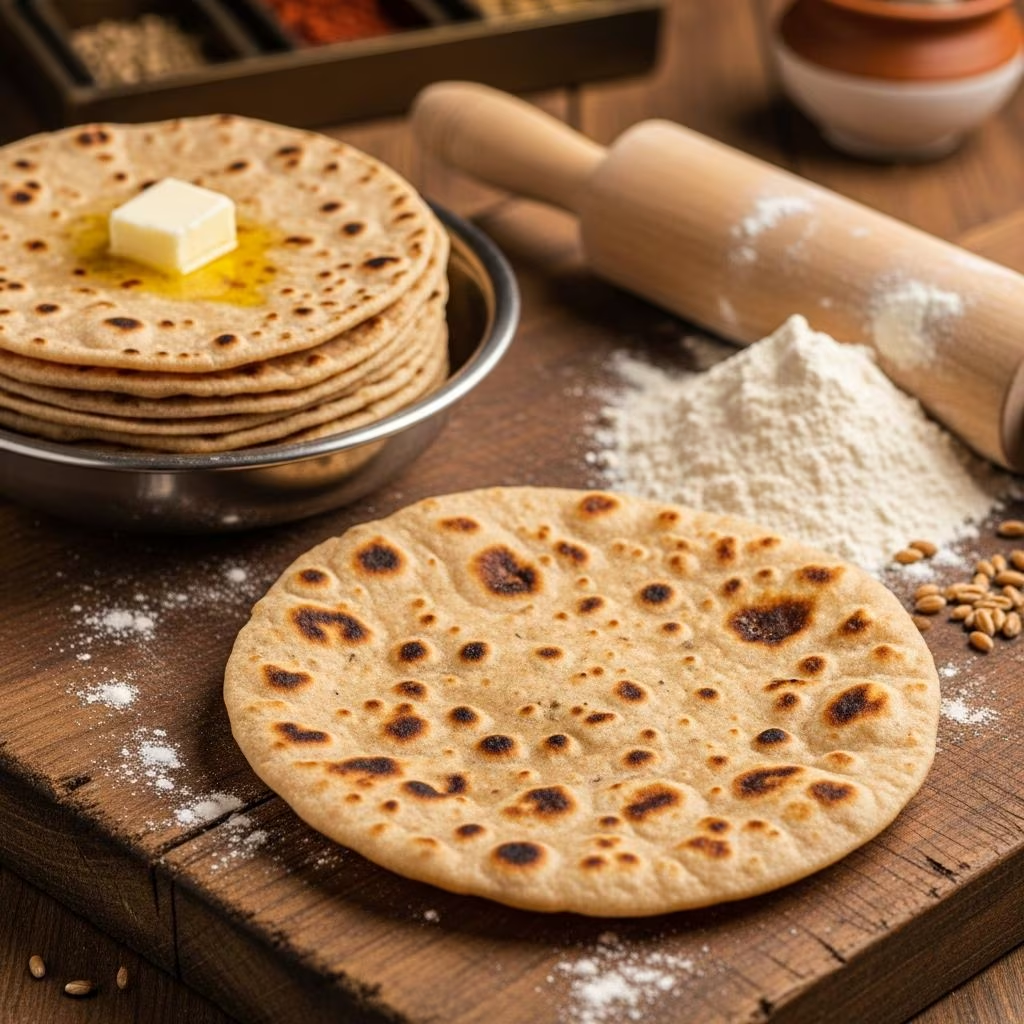
Chapati stands as a cornerstone of Indian cuisine, a simple yet versatile unleavened flatbread that graces tables across households daily. Crafted primarily from whole wheat flour, water, and a touch of oil or ghee, it embodies rustic simplicity and nutritional wholesomeness. Unlike leavened breads, chapati puffs up during cooking due to steam trapped within its thin layers, creating a soft interior and slightly crisp exterior perfect for scooping curries, dals, or vegetables.
The Origins and Cultural Significance of Chapati
Derived from the Hindi word “chapat,” meaning to slap or flatten, chapati reflects its traditional preparation method where dough was shaped by hand clapping before modern rolling pins became common. This flatbread traces its roots to ancient India, evolving as a staple in North Indian and Maharashtrian diets, often called roti, phulka, or ghadichi poli regionally. In many homes, it symbolizes everyday nourishment, paired with nutrient-rich accompaniments to form balanced meals.
Nutritionally, chapati made from atta (stone-ground whole wheat flour) offers fiber, protein, and complex carbohydrates. Atta flour’s high protein content, around 15%, contributes to its unique texture and chew. Consumed fresh, it supports digestion and provides sustained energy, making it ideal for all ages.
Selecting the Right Ingredients for Authentic Chapati
The beauty of chapati lies in its minimalism, typically requiring just three core elements: whole wheat flour, water, and salt. However, subtle variations elevate texture and flavor.
- Whole Wheat Flour (Atta): Opt for chakki atta, freshly stone-milled for finer bran and superior softness. Avoid refined flours; they yield tougher results.
- Water: Use warm or hot water (around ¾ cup per 2 cups flour) to activate gluten gently, ensuring pliability without toughness.
- Salt and Oil/Ghee: A pinch of salt (¼ tsp) enhances taste; 1-2 tbsp oil kneaded in prevents dryness and promotes layering.
For ghee enthusiasts, brushing during cooking imparts a buttery richness, while oil keeps it vegan-friendly.
Step-by-Step Guide to Perfect Chapati Dough
Success begins with dough preparation. Aim for a soft, smooth consistency that’s neither sticky nor stiff.
- Mix Dry Ingredients: In a large bowl, sift 2 cups atta with ¼ tsp salt. This aerates the flour, preventing lumps.
- Incorporate Water Gradually: Pour warm water in increments, stirring with fingers to form shaggy bits. Knead 5-8 minutes until elastic.
- Add Fat: Drizzle 1 tbsp oil, poking holes and working it in for suppleness. Cover and rest 20-30 minutes; resting relaxes gluten for easier rolling.
Pro Tip: If dough cracks, add water sparingly; if sticky, dust with flour. Maharashtrian styles incorporate oil early for flakiness.
Techniques for Rolling Flawless Chapati
Rolling transforms dough into thin discs, about 6-7 inches diameter and 1-2mm thick.
- Dust surface and hands with atta to prevent sticking.
- Portion lemon-sized balls (golf ball size), flatten slightly.
- Roll from center outward, rotating for uniformity. Avoid overworking to retain air pockets for puffing.
Advanced method: Layer for softness—roll small circle, apply oil, dust flour, fold into triangle or cone, then roll out again. This creates flaky layers.
| Common Rolling Issues | Solution |
|---|---|
| Dough tears | Rest longer; use more dusting flour. |
| Uneven shape | Rotate pin; roll gently from edges. |
| Too thick | Press thinner gradually; practice portions. |
Cooking Chapati to Golden Perfection
A hot tawa (cast-iron griddle) is essential, heated to medium-high until a droplet of water sizzles instantly.
- Place rolled chapati on tawa; bubbles form in 10-15 seconds.
- Flip when bottom browns lightly; press gently with cloth for even cooking.
- Flip again, move to direct flame (or high heat) to puff fully. Use tongs if needed.
- Brush with ghee, stack under towel to stay soft.
Phulka variation: Direct flame puffing yields lighter, airier bread.
Troubleshooting Common Chapati Pitfalls
Even seasoned cooks face issues; here’s how to fix them:
- Doesn’t Puff: Ensure thin rolling, high heat, and dry tawa. Moisture kills steam.
- Hard Texture: Over-kneading or insufficient rest; use hotter water next time.
- Burns Quickly: Lower heat initially; preheat properly.
- No Layers: Skip oil folding; try triangle method.
Healthy Variations and Customizations
Adapt chapati for diets:
- Oil-Free: Knead dry, cook on non-stick; slightly denser but healthy.
- Mixed Flours: Half white-half atta for lighter chew; more water needed.
- Multigrain: Add millet or oats for fiber boost.
- Stuffed: Enclose spiced potatoes before rolling for paratha-style.
Store extras airtight; reheat on tawa with water sprinkle for freshness.
Pairing Chapati with Iconic Indian Dishes
Chapati elevates simple meals:
- With dal tadka or vegetable sabzi for hearty dinners.
- Maharashtrian bhaji or usal for regional flair.
- Breakfast: ghee and jaggery or pickle.
It absorbs flavors without overpowering, making it endlessly versatile.
Nutrition Profile of Homemade Chapati
Per chapati (from 2-cup dough yield ~8-10):
| Nutrient | Amount |
|---|---|
| Calories | ~80-100 |
| Carbs | 18g |
| Protein | 3g |
| Fiber | 3g |
Rich in manganese and B-vitamins from atta; ghee adds healthy fats.
Frequently Asked Questions (FAQs)
What flour is best for chapati?
Chakki atta or stone-ground whole wheat for optimal softness and nutrition.
Why doesn’t my chapati puff?
Check thinness, heat level, and dryness; practice flame exposure.
Can I make chapati ahead?
Yes, dough lasts 1-2 days refrigerated; roll and cook fresh.
Is ghee necessary?
No, oil or none works; ghee enhances flavor and softness.
How to store chapati?
Stack in cloth-lined container; freezes well up to a month.
Scaling Up for Family Meals
Double ingredients seamlessly; knead in larger bowl. For 20 chapatis: 4 cups atta, 1.5 cups water, etc. Batch-roll for efficiency.
Mastering chapati rewards patience with daily delights. Experiment confidently using these foundations.
References
- Chapati Recipe (Indian Flatbread) – Swasthi’s Recipes — Indian Healthy Recipes. Accessed 2026. https://www.indianhealthyrecipes.com/chapati/
- Authentic Maharashtrian Chapati (Soft, Layered Rotis with Mom’s …) — Ministry of Curry. Accessed 2026. https://ministryofcurry.com/chapati/
- Easy Chapati Recipe (Indian Flatbread) – The Conscientious Eater — The Conscientious Eater. Accessed 2026. https://theconscientiouseater.com/how-to-make-traditional-indian-flatbread-chapati/
- Chapati (Indian Flat Bread) – Rasa Malaysia — Rasa Malaysia. Accessed 2026. https://rasamalaysia.com/chapati-recipe/
- Chapati (Indian Flatbread) – Roti Recipe – Sanjana Feasts — Sanjana Feasts. 2017-02. https://www.sanjanafeasts.co.uk/2017/02/roti-recipe-homemade-chapati/