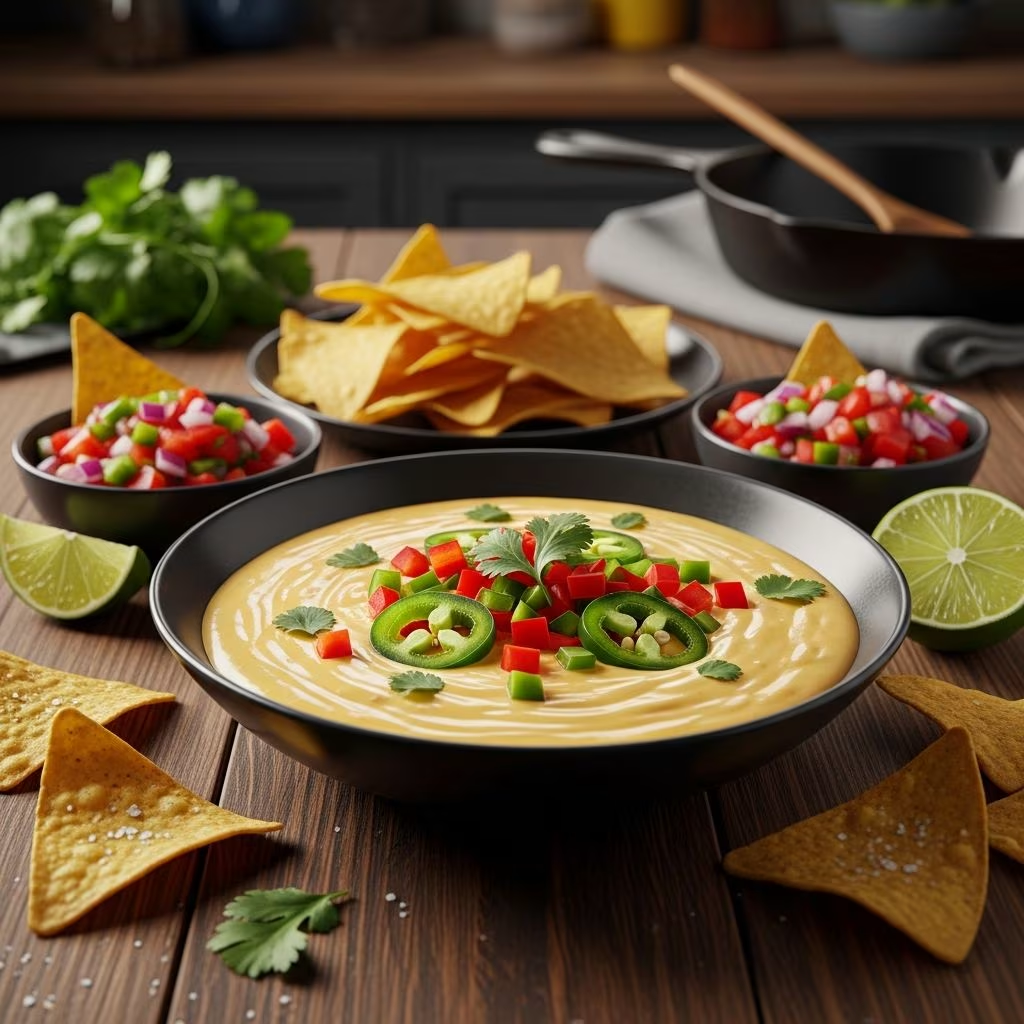
Nothing beats the warm, gooey allure of a well-made queso dip. Whether you’re hosting a watch party, family gathering, or just craving a snack, mastering queso at home elevates your culinary game. This comprehensive guide walks you through creating a velvety dip that’s far superior to store-bought versions. We’ll explore cheese types, essential techniques for smooth texture, flavor boosters, and endless variations to suit any palate.
Why Make Queso from Scratch?
Store-bought queso often relies on processed ingredients that lack depth and freshness. Homemade versions let you control quality, customize heat levels, and impress with restaurant-level results. The magic lies in emulsification—blending fats, liquids, and proteins for that irresistible stretchy consistency. With minimal equipment and pantry staples, you’ll achieve a dip that’s dippable with chips, veggies, or even as a nacho topper.
Selecting the Best Cheeses for Queso
Cheese is the star, but not all melt equally. Opt for young, high-moisture varieties that emulsify smoothly without separating.
- American Cheese: The gold standard for meltability due to its emulsifiers. Use slices or blocks for ultra-smooth results.
- Mild Cheddar: Adds tangy sharpness; shred it yourself to avoid anti-caking agents in pre-shredded bags.
- Monterey Jack or Asadero: Neutral and creamy, ideal bases for bold add-ins.
- Blend Tip: Combine 50% American with 50% flavorful cheese like cheddar or pepper jack for balance.
Avoid aged cheddars or low-moisture mozzarellas—they release oil and become grainy. Aim for 1-1.5 pounds of cheese per quart of dip.
Key Ingredients for Perfect Emulsification
Beyond cheese, these components ensure silkiness:
| Ingredient | Role | Amount (for 4 cups) |
|---|---|---|
| Evaporated Milk | Liquid base, prevents curdling | 12 oz |
| Butter or Sodium Citrate | Emulsifier | 2 tbsp or 1 tsp |
| Cornstarch Slurry | Thickener | 1 tbsp + 2 tbsp milk |
| Spices (cumin, garlic powder) | Flavor | 1 tsp each |
Sodium citrate, available online or at specialty stores, mimics processed cheese magic. It’s a game-changer for foolproof results.
Step-by-Step Recipe for Classic Queso
Prep Time: 10 min | Cook Time: 10 min | Serves: 8
- Warm evaporated milk in a saucepan over medium heat. Whisk in cornstarch slurry until thickened, about 2 minutes.
- Add butter or sodium citrate, stirring until melted.
- Reduce heat to low. Gradually add shredded cheese in handfuls, stirring constantly until fully melted before next addition.
- Season with garlic powder, onion powder, cumin, salt, and cayenne. Simmer gently 2-3 minutes.
- Stir in diced tomatoes, green chiles, or jalapeños for freshness. Serve immediately.
Pro Tip: Use a double boiler or microwave in short bursts for gentler melting if stovetop scares you.
Flavor Variations to Suit Every Taste
Customize your queso for variety:
- Spicy Chorizo Queso: Brown 8 oz chorizo, drain fat, fold in at end.
- Roasted Poblano: Char, peel, and dice poblanos for smoky depth.
- Guac Queso: Swirl in mashed avocado and lime post-melt.
- Beer Queso: Sub half the milk with lager for malty notes.
- Vegan Version: Use cashew milk, nutritional yeast, and vegan shreds.
Troubleshooting Common Queso Pitfalls
Grainy texture? Too much heat—cheese proteins tighten. Fix by adding more liquid and whisking vigorously off-heat.
- Seized/ Curdled: Splash of hot milk or baking soda neutralizes acids.
- Too Thick: Thin with milk or cream; re-emulsify.
- Oily Separation: Blame low-quality cheese—next time, grate fresh.
- Keeps Breaking? Sodium citrate to the rescue; it’s scientifically superior.
Serving and Storage Tips
Keep warm in a mini fondue pot or slow cooker on low. Pair with sturdy tortilla chips, pretzels, or crudités. Leftovers? Refrigerate up to 5 days; reheat gently with milk splashes. Freezes poorly due to texture changes—best fresh.
Science Behind the Perfect Melt
Cheese melting is chemistry: caseins and fats need balanced moisture and pH. Heat above 150°F without liquid causes proteins to clump. Emulsifiers like sodium citrate (trisodium citrate) bind calcium, keeping everything suspended for that pourable glory. Studies from the Institute of Food Technologists confirm young cheeses excel here due to higher moisture content.1
Pairing Ideas for Your Queso Spread
Elevate with:
- Chips: Thick, restaurant-style for no sogginess.
- Mexican Lager: Crisp beers cut richness.
- Nacho Boards: Ground beef, pickled onions, cilantro.
Healthier Twists Without Sacrificing Flavor
Swap half the cheese for pureed white beans or cauliflower for creaminess with fewer calories. Use low-fat milk, but never skip emulsifiers. Per USDA guidelines, full-fat versions provide calcium and protein—enjoy in moderation.2
FAQ: Your Queso Questions Answered
- Can I make queso ahead?
- Yes, but reheat slowly. It thickens in fridge—stir in milk.
- What’s sodium citrate?
- A food additive for smooth melts; buy from culinary suppliers.
- Dairy-free queso?
- Try coconut milk + tapioca starch with vegan cheese.
- How spicy to make it?
- Start mild, add hot sauce drop-by-drop; taste as you go.
- Best cheese combo?
- American + cheddar for melt + flavor.
With these techniques, your queso will be the talk of any gathering. Experiment boldly— the base recipe forgives tweaks. Dive in and dip away!
References
- Cheese Emulsification and Melting Properties — Institute of Food Technologists. 2023-05-15. https://www.ift.org/news-and-publications/food-technology-magazine/issues/2023/may/features/understanding-cheese-melting
- Nutritional Composition of Cheeses — United States Department of Agriculture (USDA). 2024-02-10. https://fdc.nal.usda.gov/fdc-app.html#/food-details/173414/nutrients
- Sodium Citrate in Modern Cheese Making — Journal of Dairy Science (American Dairy Science Association). 2022-11-01. https://doi.org/10.3168/jds.2022-21987
- Food Emulsifiers Guide — FDA (U.S. Food and Drug Administration). 2025-01-20. https://www.fda.gov/food/food-additives-petitions/food-additive-status-list