Crafting pork dumplings from your own kitchen transforms a beloved Chinese staple into a rewarding culinary experience. Whether you are a novice cook or an experienced home chef, mastering this traditional dish opens doors to countless variations and family meal traditions. This comprehensive guide walks you through every stage of dumpling preparation, from mixing the dough to achieving that perfect golden-brown exterior.
Understanding the Foundation: Dumpling Dough Essentials
The quality of your dumpling dough determines the texture and mouthfeel of your finished product. Unlike bread dough, dumpling wrappers require a delicate balance of hydration and kneading to achieve the ideal chewy-yet-tender consistency.
Dough Preparation Fundamentals
Begin by combining all-purpose flour with a measured amount of salt in a medium mixing bowl. The salt enhances flavor development and strengthens the gluten network, contributing to better texture. Create a well in the center of your dry mixture and gradually introduce boiling water, stirring continuously with a spoon or chopsticks. This initial hydration step requires patience—add the hot water slowly to prevent the flour from becoming clumpy.
After incorporating the boiling water, allow the mixture to cool slightly before adding cold water in measured increments. This two-temperature approach—beginning with heat and finishing with cold liquid—produces superior dough consistency. Continue mixing until you achieve a very wet, sticky dough that barely holds together.
Kneading and Resting Process
Dust your work surface generously with flour and transfer the dough onto it. Begin kneading by pressing the dough with the heel of your hand, folding it back toward you, rotating it slightly, and repeating. Add flour gradually as needed to prevent excessive sticking, but be cautious not to add too much, which would make the dough dry and difficult to work with. Knead for 8-10 minutes until the dough transforms into a smooth, elastic ball with minimal stickiness.
Place your finished dough in a bowl, cover it with a damp towel or plastic wrap, and allow it to rest for at least 20-30 minutes. This resting period permits gluten relaxation and allows moisture to distribute evenly throughout the dough. Proper resting time is crucial for achieving wrappers that roll out smoothly without snapping back.
Building Layers of Flavor: The Filling Strategy
The filling represents the heart of your dumpling—where texture, flavor, and juiciness converge. A successful filling balances the richness of pork with fresh vegetables and aromatic seasonings.
Preparing Vegetables with Purpose
Napa cabbage serves as the traditional vegetable component, chosen for its delicate flavor and natural moisture content. Wash your cabbage thoroughly and chop it into small, uniform pieces approximately one-eighth inch in size. Place the chopped cabbage in a colander and sprinkle with salt, then allow it to rest for 10-15 minutes. This process, called sweating or marinating, draws out excess water that would otherwise make your dumplings soggy. After the resting period, squeeze the cabbage firmly with your hands to remove all accumulated liquid before adding it to your pork mixture.
Meat and Seasoning Integration
Ground pork forms the protein base of your filling. Place approximately one pound of ground pork in a large mixing bowl and create a small depression in the center. Add one beaten egg to this well and mix it thoroughly into the pork. The egg acts as a binder, helping ingredients cohere while contributing moisture and richness.
Next, incorporate your aromatic ingredients: freshly minced ginger (approximately one teaspoon), minced garlic (2-3 cloves), and finely chopped scallions. These components build a flavor foundation characteristic of traditional Chinese dumplings. Add soy sauce (approximately 1-2 tablespoons) for umami depth and saltiness, sesame oil (1-2 teaspoons) for nutty undertones, and white pepper for subtle heat.
Mix all ingredients with a spoon or fork in one consistent direction—this unidirectional mixing prevents overworking the pork, which can result in a dense, unpalatable texture. Continue mixing until all components are evenly distributed and the filling achieves a smooth, almost paste-like consistency.
The Art of Wrapping and Shaping
Transforming your rested dough into individual dumpling wrappers requires technique and practice. After the resting period, divide your dough into manageable portions—typically creating two to four long cylindrical segments.
Rolling and Shaping Technique
Using a traditional Chinese rolling pin or a standard rolling pin, flatten each dough cylinder into a long, thin sheet approximately one-eighth inch thick. Cut this sheet into small circles, each approximately 3-4 inches in diameter. Each circle should have a slightly thicker center than the edges—this design prevents the center from tearing during cooking while ensuring even texture throughout the wrapper.
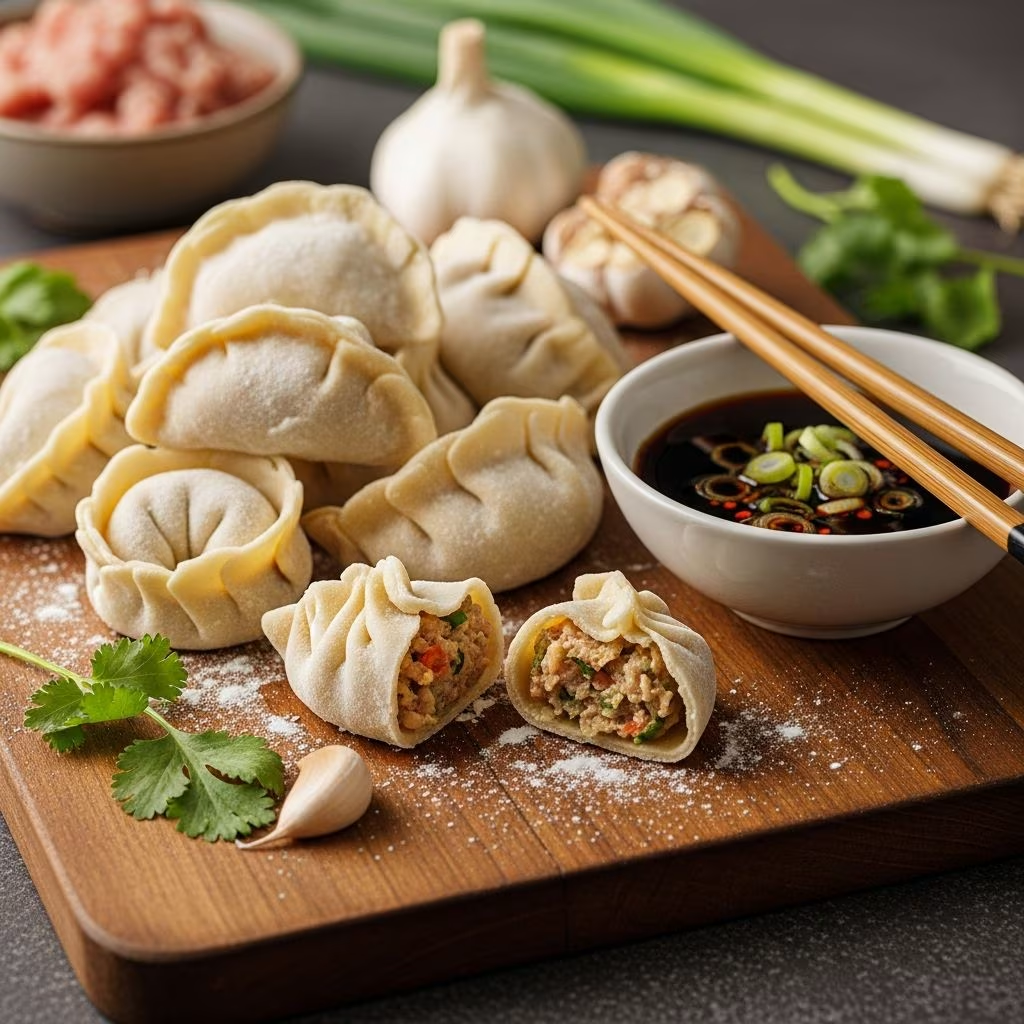
Alternatively, divide your rested dough into approximately 24-30 equal portions, then roll each portion individually into a thin circle. Place approximately one tablespoon of filling in the center of each wrapper. Dampen the wrapper’s edges with water using your fingertip, then fold the wrapper in half to create a half-moon shape. Press the edges together firmly to seal, ensuring no air pockets remain. For enhanced visual appeal, create small pleats along the sealed edge by pinching and folding the dough at regular intervals.
Cooking Methods: Multiple Paths to Perfection
Dumplings accommodate several cooking techniques, each producing distinct textural results. Your preferred method depends on your desired outcome and available kitchen equipment.
Pan-Frying for Crispy Bottoms
Heat a large skillet or wok over medium-high heat and add 2-3 tablespoons of oil. Once the oil shimmers, carefully arrange dumplings flat-side down in a single layer. Allow them to fry undisturbed for 2-3 minutes until the bottoms achieve a golden-brown color. Pour approximately one-third cup of water into the pan (be cautious of splattering hot oil), immediately cover with a lid, and reduce heat to medium. Steam the dumplings for 8-10 minutes until the water largely evaporates. Remove the lid and allow any remaining moisture to evaporate completely, checking that the bottoms remain crispy and golden.
Boiling for Traditional Preparation
Fill a large pot with water and bring it to a rolling boil over high heat. Add salt to the water to enhance flavor and prevent sticking. Carefully lower dumplings into the boiling water in batches of 8-10, allowing the water to return to a boil before adding more dumplings. Dumplings are ready when they float to the surface and continue cooking for 1-2 minutes longer. Remove cooked dumplings with a slotted spoon and transfer to a colander to drain.
Steaming for Delicate Results
Line a bamboo steamer basket or metal steaming rack with parchment paper. Arrange dumplings on the parchment without overlapping. Bring water to a boil in a wok or large pot with a lid, then place your steamer basket or rack over the boiling water. Cover and steam for 12-15 minutes until the wrappers become translucent and the filling is cooked through. Steamed dumplings have a softer, more delicate texture compared to other methods.
Storage and Make-Ahead Strategies
Dumplings freeze exceptionally well, making them ideal for batch preparation. After assembling your dumplings, place them on a flour-dusted baking sheet in a single layer and freeze for at least 2-3 hours until completely solid. Transfer frozen dumplings to a freezer-safe container or bag and store for up to three months. Cook frozen dumplings directly without thawing—simply add 1-2 minutes to cooking time depending on your chosen method.
Flavor Variations and Creative Additions
Once you master the traditional pork and cabbage dumpling, experimentation becomes enjoyable and rewarding. Consider adding minced dried shrimp to the filling for briny complexity, or incorporating finely chopped water chestnuts for textural contrast. Substitute ground chicken or turkey for pork to create lighter variations, or add baby bok choy, shiitake mushrooms, or bamboo shoots for vegetable-forward versions.
Common Challenges and Solutions
| Challenge | Cause | Solution |
|---|---|---|
| Dough too sticky to work with | Insufficient flour or excessive hydration | Dust surface and hands with additional flour; avoid adding more water during mixing |
| Wrappers tear during folding | Dough insufficiently rested or rolled too thin | Ensure adequate resting time; maintain wrapper thickness of 1/8 inch |
| Soggy dumpling texture | Excessive vegetable moisture in filling | Thoroughly squeeze cabbage after salting; avoid adding filling liquid |
| Dumplings stick to cooking surface | Insufficient flour dusting | Dust assembly surface and storage sheets generously with flour |
| Raw filling despite cooked exterior | Overcrowding pan or insufficient heat | Cook in smaller batches; maintain appropriate cooking temperature |
Dipping Sauces and Accompaniments
Enhance your dumpling experience with simple, flavorful dipping sauces. A basic combination of soy sauce, rice vinegar, and minced garlic creates a balanced condiment. Add a small amount of sesame oil for richness, or include minced fresh ginger and thinly sliced scallions for aromatic notes. For heat lovers, combine soy sauce with chili oil or hot sauce. These accompaniments complement both the dumpling filling and the subtle wrapper flavor.
Frequently Asked Questions
Can I use store-bought dumpling wrappers instead of making dough from scratch?
Yes, absolutely. Pre-made wrappers significantly reduce preparation time while maintaining quality results. Ensure they are thawed if frozen before using, and keep them covered with a damp towel to prevent drying during assembly.
How do I know when my dumplings are fully cooked?
Boiled dumplings are done when they float and cook for 1-2 minutes longer. Pan-fried dumplings are ready when the bottoms are golden and the water has evaporated. Steamed dumplings are cooked when the wrappers become translucent and slightly shiny.
What’s the best way to prevent dumplings from sticking together?
Dust your work surface, hands, and finished dumplings generously with flour. Store finished dumplings on a flour-dusted baking sheet in a single layer before cooking or freezing.
Can I prepare dumplings several hours in advance?
Yes. Keep assembled dumplings on a flour-dusted baking sheet in the refrigerator, covered with plastic wrap, for up to 4 hours. Cook within this timeframe for optimal texture.
Which cooking method produces the crispiest dumplings?
Pan-frying produces the crispiest results, as it creates direct contact between the dumpling bottom and hot oil, achieving a golden, crunchy exterior while maintaining tender filling.
References
- Pork Dumplings — Umami Girl. Accessed April 2026. https://umamigirl.com/chinese-dumplings-recipe-pork/
- Authentic Chinese Pork Dumplings — The Floured Camera. Accessed April 2026. https://www.theflouredcamera.com/pork-cabbage-dumplings/
- Pork Dumpling with Napa Cabbage — Red House Spice. Accessed April 2026. https://redhousespice.com/pork-cabbage-dumpling/
- Traditional Chinese Dumplings — Dash of Soy Culinary School. Accessed April 2026. https://www.dashofsoy.com/recipes/dumplings
- The Woks of Life Dumpling Recipe — The Woks of Life. Accessed April 2026. https://thewoksoflife.com/dumpling-recipe-youll-ever-need/