Pickled jalapeños represent one of the most versatile and rewarding culinary projects for home cooks. Whether you’re preserving a bountiful harvest or simply craving a spicy condiment that elevates everything from tacos to nachos, the process is surprisingly straightforward. This guide walks you through every aspect of creating professional-quality pickled jalapeños right in your own kitchen, with methods ranging from quick refrigerator pickling to long-term shelf storage.
Understanding the Pickling Process and Its Benefits
Pickling transforms fresh jalapeños through the action of vinegar and salt, creating an acidic environment that preserves the peppers while developing complex flavors. The process is not merely about preservation—it fundamentally alters the taste profile, introducing a tangy brightness that complements the peppers’ natural heat. Unlike fermented pickles that require weeks of patience, quick-pickled jalapeños can be ready for consumption within minutes to hours.
The appeal of homemade pickled jalapeños extends beyond flavor. Creating your own allows complete control over ingredient quality, heat levels, and flavor additions. Commercial versions often contain additives and preservatives, while homemade versions feature pure, clean ingredients. Additionally, the cost savings are substantial when processing multiple pounds of peppers simultaneously.
Essential Ingredients for Your Pickling Project
The foundation of exceptional pickled jalapeños rests on understanding the core components and their roles in the final product.
The Pepper Selection
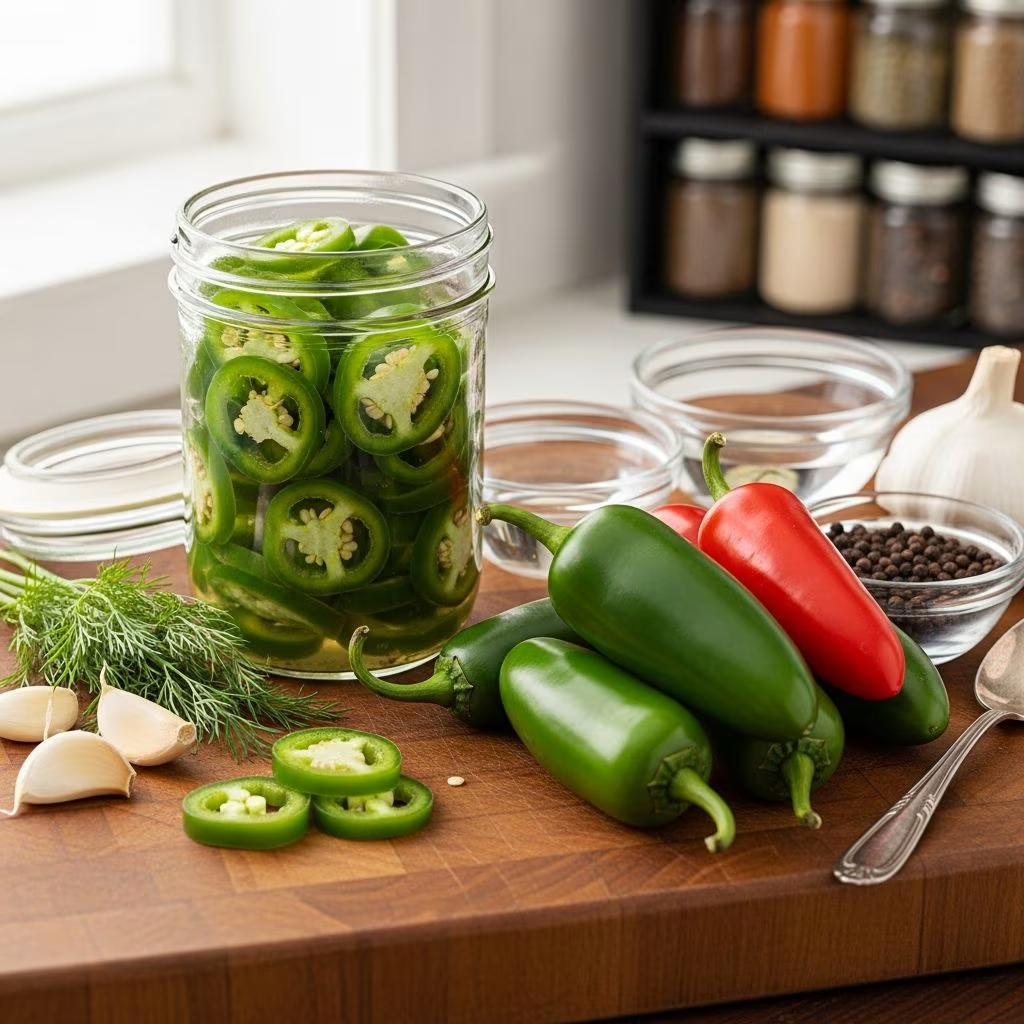
Begin with fresh, firm jalapeños displaying bright green coloring, typically containing between 2,500 to 8,000 Scoville Heat Units. One pound of peppers yields approximately 10 to 20 medium-sized peppers, depending on variety and growing conditions. Selecting peppers at peak ripeness ensures optimal texture and flavor. While seeds contribute additional heat, removing them produces a milder final product. The skin should be glossy and unblemished, with no soft spots or wrinkles.
The Vinegar Component
Distilled white vinegar with 5% acidity serves as the pickling agent. This specific type prevents cloudiness and off-flavors that might result from other vinegar varieties. The acidic strength ensures proper preservation and prevents spoilage. Some recipes employ equal parts vinegar and water, while others use a 2:1 ratio of vinegar to water, creating varying levels of tanginess.
Salt and Sugar Balance
Pickling salt—a non-iodized variety—dissolves cleanly and doesn’t cloud the brine. Sugar serves a dual purpose: it balances the vinegar’s acidity and enhances the peppers’ natural sweetness. Some recipes omit sugar entirely for those preferring a purely savory profile, while others include up to 1/4 cup for pronounced sweetness.
Aromatic Enhancements
Garlic cloves provide pungent depth, with typically 2 to 8 cloves per batch depending on personal preference and recipe scale. Optional additions include coriander seeds, black peppercorns, dried oregano, and bay leaves—each contributing distinctive flavor dimensions.
Detailed Step-by-Step Instructions for Quick Pickling
Preparation Phase
Begin by thoroughly washing fresh jalapeños under cool running water to remove any surface debris. Pat them dry with clean paper towels. Wearing disposable latex gloves protects your hands from capsaicin oils that cause irritation. Using a sharp knife, slice peppers into uniform 1/4-inch rings, discarding the stem end. The uniform thickness ensures even pickling and consistent texture throughout the batch.
Brine Creation
In a medium saucepan, combine your chosen ratio of vinegar and water along with salt and sugar. Heat the mixture over medium-high heat, stirring occasionally until both salt and sugar completely dissolve. The brine should transition from cloudy to crystal clear, with no granules visible at the pan’s bottom. This typically takes 3 to 5 minutes. Do not allow the brine to boil rapidly, as this can reduce the vinegar’s pickling power through evaporation.
Packing and Infusion
While the brine heats, pack sterilized glass jars—typically one-quart Mason jars—with sliced jalapeños and smashed garlic cloves. Fill the jars to approximately 1/4 to 1/2 inch below the rim. Using a wooden spoon or rubber spatula, press the peppers down to ensure they remain submerged. Carefully pour the hot brine over the peppers until they are completely covered, maintaining the specified headspace.
Cooling and Setting
Allow the filled jars to cool at room temperature on the counter. The peppers will gradually change color from bright green to a muted yellow-green as they absorb the brine. This transformation typically occurs over 10 to 20 minutes. Any pepper slices that float above the liquid should be gently pressed down with a fork several minutes into the cooling process to ensure even pickling.
Comparison of Pickling Methods
| Method | Time to Ready | Storage Duration | Equipment Needed |
|---|---|---|---|
| Quick Refrigerator | 5-10 minutes | 2-3 months in fridge | Mason jar, saucepan |
| Stovetop Soak | 20-30 minutes | 2-3 months in fridge | Mason jar, pot, lid |
| Water Bath Canning | 45-60 minutes | 12+ months shelf-stable | Canning canner, jars, lifter |
Advanced Preservation Through Water Bath Canning
For those seeking shelf-stable preservation lasting over a year, water bath canning provides reliable long-term storage. This method involves placing filled, sealed jars into a boiling water bath for 10 minutes, creating a hermetic seal that prevents bacterial growth and spoilage.
Begin by filling a large water bath canner with water, submerging the jars by 1 to 2 inches. Bring the water to a boil before carefully placing sealed jars into the hot bath. Maintain a rolling boil for exactly 10 minutes, as underprocessing risks spoilage while overprocessing may damage the peppers’ texture. After processing completes, remove the canner lid and allow jars to remain inside for approximately 5 minutes before carefully removing them with a jar lifter and placing on a clean, draft-free towel.
Flavor Customization and Variation Ideas
The basic pickling formula accommodates numerous flavor additions. Incorporating 1/2 teaspoon coriander seeds and 1/2 teaspoon black peppercorns introduces subtle complexity. Dried oregano contributes Mediterranean notes, while a single bay leaf provides gentle herbal undertones. For heat enthusiasts, adding whole dried chili peppers or red pepper flakes intensifies the final product’s spiciness.
Carrot slices add sweetness and visual appeal, while thinly sliced onions contribute sharpness and crunch. Sliced ginger creates an unexpected warmth that complements the vinegar’s acidity. Fresh cilantro or dill add herbaceous brightness when included in the packing phase.
Storage Guidelines and Shelf Life Expectations
Quick-pickled jalapeños stored in the refrigerator maintain optimal quality for 2 to 3 months. The cold temperature slows flavor degradation and prevents fermentation. Always cover jars securely with clean lids to prevent contamination and oxidation. Over time, the peppers gradually soften and the flavors meld into increasingly harmonious combinations—many cooks report that jalapeños taste noticeably better after one week than immediately after preparation.
Water bath canned jars, when properly sealed and stored in a cool, dark location, remain shelf-stable for 12 months or longer. Check sealed jars periodically for signs of seal failure, unusual discoloration, or mold growth. Unsealed jars should be refrigerated immediately and consumed within 2 to 3 weeks.
Practical Usage Ideas and Serving Suggestions
Pickled jalapeños enhance countless dishes. Layer them onto tacos, nachos, and quesadillas for signature spicy crunch. Chop them finely and stir into cream cheese for an elevated spread. Add them to deviled eggs, potato salads, or grain bowls for unexpected flavor jolts. Use them to top pizza, burgers, or hot dogs. Incorporate them into salsa verde or pico de gallo for increased complexity. They pair beautifully with cured meats on charcuterie boards and can be chopped into coleslaw for tangy heat.
Frequently Asked Questions
Can I reduce the heat level of pickled jalapeños?
Yes. Removing the white membrane and seeds before pickling significantly reduces heat while maintaining flavor. This membrane contains concentrated capsaicin oils responsible for spiciness. For milder results, use this technique exclusively.
How do I know if my canned jalapeños have spoiled?
Signs of spoilage include bulging lids, cloudiness beyond normal sediment, unusual odors, or visible mold. Discard any jars displaying these characteristics immediately without tasting, as harmful bacteria may be present.
What if my pickled peppers taste too vinegary?
This typically indicates using a vinegar-to-water ratio that is too acidic. For the next batch, adjust toward equal parts vinegar and water rather than 2:1 ratios. Rinsing finished peppers briefly before serving also reduces vinegar intensity.
Can I reuse the brine for multiple batches?
While some cooks do this, it compromises the pickling liquid’s acidity strength and introduces residual contamination risks. Fresh brine for each batch ensures consistent results and food safety.
How long until pickled jalapeños are ready to eat?
Quick-pickled versions are immediately edible after cooling to room temperature, typically 10 to 20 minutes. Flavors continue developing and intensifying over the following week, offering superior taste after extended storage.
Conclusion: Mastering the Craft
Creating homemade pickled jalapeños transforms simple peppers into a sophisticated condiment through straightforward technique and quality ingredients. Whether pursuing quick refrigerator versions or investing in water bath canning for year-round pantry access, the process rewards both beginners and experienced home cooks. Experimentation with flavor additions, pickling ratios, and storage methods allows customization to personal preferences and household needs. The result—crispy, tangy, spicy peppers ready for countless culinary applications—justifies the minimal time and effort investment.
References
- Easy Homemade Quick-Pickled Jalapeños — Alexandra’s Kitchen. 2021-08-03. https://alexandracooks.com/2021/08/03/quick-pickled-jalapenos/
- Quick Pickled Jalapeños (Easy Recipe) — YouTube. https://www.youtube.com/watch?v=rGrlPAzr3PE
- Easy Pickled Jalapeno Recipe — The Mountain Kitchen. https://www.themountainkitchen.com/pickled-jalapenos/
- How to Make Pickled Jalapenos — Feet Under My Table. https://feetundermytable.com/how-to-make-pickled-jalapenos/
- Easy Pickled Jalapeños — Budget Bytes. https://www.budgetbytes.com/pickled-jalapenos/
- Easy Homemade Pickled Jalapeños — Simply Scratch. https://www.simplyscratch.com/easy-homemade-pickled-jalapenos/
- Quick pickled jalapeños (without sugar) — Cadry’s Kitchen. https://cadryskitchen.com/quick-pickled-jalapenos/