Peanut butter cookies represent one of the most beloved and straightforward desserts in American baking tradition. Their appeal lies in their simplicity—requiring only basic pantry staples and minimal equipment—while delivering rich, satisfying flavor with each bite. Whether you’re a seasoned baker or someone picking up a mixing bowl for the first time, understanding the fundamentals of peanut butter cookie preparation can help you achieve consistent, bakery-quality results in your own kitchen.
These cookies have endured for generations because they strike an ideal balance between indulgence and accessibility. The combination of creamy peanut butter with sugar and butter creates a naturally tender crumb, while proper technique ensures they remain soft and chewy rather than becoming hard or overly crisp. This guide walks you through everything needed to master this timeless treat.
Understanding Your Essential Ingredients
The foundation of exceptional peanut butter cookies begins with selecting quality ingredients and understanding what each component contributes to the final product.
Peanut Butter: The Star Ingredient
Creamy peanut butter works best for traditional cookies because it distributes evenly throughout the dough, creating a smooth, consistent texture. Commercial brands like Jif or Skippy are specifically formulated for baking and contain added stabilizers that help maintain proper consistency. While all-natural peanut butter might seem like a healthier choice, the separation of oil and solids makes it challenging to achieve uniform results, potentially compromising the cookie’s texture.
Crunchy peanut butter can be used if you prefer added texture, though this variation tends to produce crumbly cookies rather than the traditional tender bite. The amount of peanut butter typically ranges from half a cup to one full cup, depending on how prominent you want the peanut flavor to be in the finished product.
Fats: Butter and Shortening
The fat component requires careful consideration. Butter provides essential flavor and richness that defines quality cookies. However, butter alone can cause excessive spreading during baking. Shortening, which has minimal flavor, helps control spread while creating a tender crumb. Professional bakers often recommend using both ingredients—typically equal parts—to achieve optimal results. If using only butter, select a salted variety unless you specifically want to control sodium content through your own additions.
Sweeteners and Their Impact
Combining granulated sugar and brown sugar produces superior flavor and texture compared to using a single sweetener. Granulated sugar encourages spread and creates crispy edges, while brown sugar adds moisture and promotes a chewier interior. The standard ratio involves equal portions of each, though some bakers adjust this based on their texture preferences. Firmly packed brown sugar should be measured correctly to avoid adding excess moisture to your dough.
Eggs and Flavor Enhancers
A single large egg provides necessary binding and moisture while maintaining the proper dough consistency. Vanilla extract, typically one teaspoon, amplifies the overall flavor profile without adding dominant vanilla notes. These ingredients should be at room temperature before mixing to ensure proper incorporation and aeration.
Dry Ingredients
All-purpose flour serves as the structural foundation, with most recipes calling for one and a half to two and a half cups. Baking soda and baking powder work together to provide proper rise and texture—typically one-quarter to two teaspoons combined. Salt, usually one-quarter teaspoon, balances sweetness and enhances the peanut flavor. Measure flour correctly by spooning into your measuring cup rather than scooping directly, which can pack too much flour and create dense cookies.
The Mixing and Preparation Process
Creaming Method Fundamentals
The traditional creaming method forms the backbone of peanut butter cookie preparation. Begin by beating softened butter and sugars together at medium speed until the mixture becomes light and fluffy—typically three to five minutes. This process incorporates air into the dough, resulting in cookies with improved texture and a more tender crumb. Proper creaming distinguishes homemade cookies from dense, compact versions.
Incorporating Wet Ingredients
After the butter and sugar reach the proper consistency, add the egg and vanilla extract, continuing to beat until completely combined. Some recipes call for adding peanut butter at this stage and beating again to ensure smooth integration. This step should take one to two minutes, and you should scrape down the bowl periodically to incorporate all ingredients evenly.
Combining Dry Ingredients
Rather than adding all flour mixture at once, divide it into thirds and add it gradually while beating at low speed. This approach prevents overmixing, which can develop gluten strands and create tough cookies. Mix only until all flour streaks disappear—you’re aiming for just-combined, not overdeveloped dough. Some recipes recommend chilling dough for an hour before shaping, which helps control spread and improves handling.
Shaping and Decorating Techniques
Ball Formation and Sugar Coating
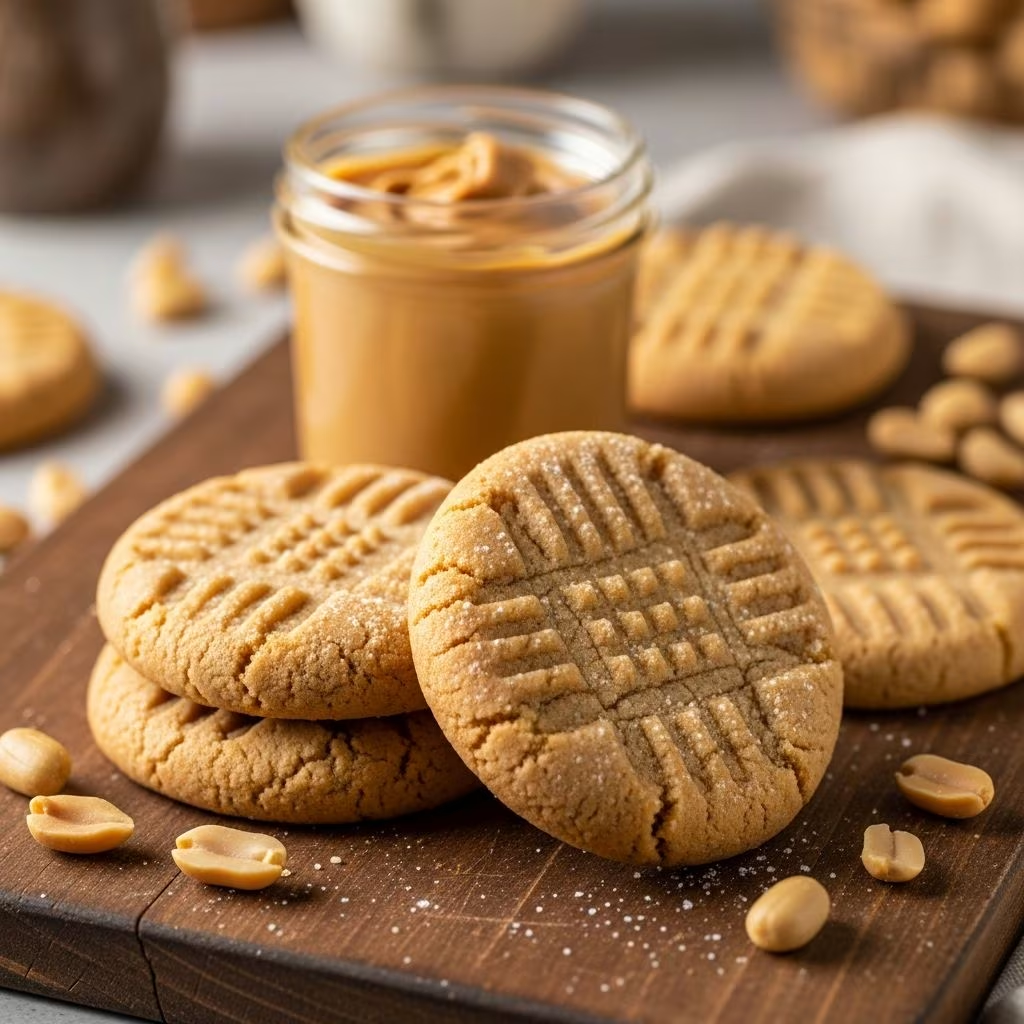
Roll dough into uniform balls, approximately one and a half inches in diameter. Coating these balls in granulated sugar before flattening creates an attractive sparkly finish while adding subtle textural contrast. Roll gently but firmly to ensure the sugar adheres properly.
The Iconic Fork Pattern
The distinctive criss-cross pattern isn’t merely decorative—it serves practical purposes by:Flattening cookies uniformly to promote even baking, Creating visual appeal associated with authentic peanut butter cookies, Allowing surface area to caramelize slightly during baking.
To achieve this pattern, dip a fork in granulated sugar (preventing sticking), position it at a forty-five-degree angle, and press down to create the first line. Rotate your fork ninety degrees and press again to form the cross pattern. Place decorated cookies two inches apart on baking sheets to allow for proper expansion.
Baking Techniques and Temperature Control
Oven Preparation
Preheat your oven to 350 degrees Fahrenheit, which provides consistent results across most recipes. Line baking sheets with parchment paper or leave them ungreased as specified. Ungreased sheets often produce slightly crispier edges, while parchment paper provides easier removal and cleaner results.
Baking Duration and Doneness Indicators
Most peanut butter cookies require eight to sixteen minutes in the oven. The exact timing depends on your oven’s characteristics and desired texture. Watch for these visual cues:Edges beginning to turn light golden brown, Tops remaining relatively pale or developing only slight color, Centers still appearing slightly soft when removed from oven.
Remember that cookies continue cooking on the baking sheet after removal from the oven. Underbaking by one to two minutes results in chewier cookies, while additional baking time produces crunchier versions. Allow cookies to cool on the baking sheet for five minutes before transferring to a wire rack for complete cooling.
Texture Variables and Personal Preference
| Desired Texture | Key Modifications | Baking Time |
|---|---|---|
| Soft and Chewy | Use more brown sugar; slightly underbake | 8-10 minutes |
| Balanced | Equal brown and granulated sugar | 11-13 minutes |
| Crispy and Crunchy | Use more granulated sugar; fully bake | 14-16 minutes |
Your texture preferences should guide adjustments to the basic recipe. Some bakers prefer the addition of one-quarter to one-half teaspoon of sea salt to enhance flavor complexity. Others experiment with the butter-to-shortening ratio, using less shortening for a softer, more buttery cookie or more shortening for a firmer result.
Common Baking Challenges and Solutions
Dough Consistency Issues
If your dough appears too dry and refuses to come together, add water gradually—a tablespoon at a time—until reaching a cohesive consistency. Overly wet dough benefits from brief refrigeration before shaping. If cookies spread excessively, ensure all ingredients were at proper temperature and that you’ve added sufficient flour.
Uneven Browning
Rotate baking sheets halfway through cooking if your oven has hot spots. Convection ovens may require slightly lower temperatures and shorter baking times. Allow cookies to cool completely before evaluating their actual doneness, as warm cookies appear more golden than they do after cooling.
Texture Problems
Tough, dense cookies typically result from overmixing the dough or measuring flour incorrectly. Add flour by weight when possible, or use the spoon-and-level method rather than scooping directly. Cookies that spread too thin need more peanut butter or flour, or the addition of one-quarter teaspoon of baking soda for extra lift.
Storage and Shelf Life
Store completely cooled cookies in an airtight container at room temperature for up to one week. Separate layers with parchment paper to prevent sticking. For extended storage, freeze cookies in an airtight container for up to three months. You can also refrigerate dough for several days before baking or freeze dough balls for baking fresh cookies throughout the week.
Frequently Asked Questions
Can I use natural peanut butter instead of commercial brands?
Natural peanut butter’s oil separation makes it unsuitable for consistent baking results. The separated oil can lead to overly greasy dough and texture problems. Stick with stabilized commercial varieties.
What’s the difference between baking powder and baking soda?
Baking soda requires an acidic ingredient (like the brown sugar in this recipe) to activate and produces immediate rise. Baking powder contains added acid and works more gradually. Most peanut butter cookie recipes use both for optimal texture and rise.
Should I chill the dough before baking?
Chilling dough for one hour before shaping improves handling and produces better results, though it’s optional. This step prevents excessive spread and helps cookies maintain their shape.
Why do my cookies spread too much?
Excessive spread typically results from warm dough, insufficient flour, too much butter, or an oven that’s not hot enough. Ensure ingredients are at room temperature, not warm, and verify your oven temperature with a thermometer.
How can I make softer cookies?
Use more brown sugar than granulated sugar, underbake by one to two minutes, and remove cookies from the oven when edges are light golden but centers still look slightly underdone.
References
- Classic Peanut Butter Cookies Recipe — Land O’Lakes. 2024. https://www.landolakes.com/recipe/6668/classic-peanut-butter-cookies/
- Classic Peanut Butter Cookies Recipe — King Arthur Baking. 2024. https://www.kingarthurbaking.com/recipes/classic-peanut-butter-cookies-recipe
- Classic Peanut Butter Cookies! | Super Easy Recipe! — YouTube. 2024. https://www.youtube.com/watch?v=grqFn9HVZ8A
- Classic Peanut Butter Cookies: A Simple, Delicious Recipe — My Homemade Roots. 2024. https://myhomemaderoots.com/classic-peanut-butter-cookies-a-simple-delicious-recipe/
- SKIPPY® Classic Peanut Butter Cookies — Peanut Butter. 2024. https://www.peanutbutter.com/recipe/classic-peanut-butter-cookies/
- Peanut Butter Cookies Recipe — Preppy Kitchen. 2024. https://preppykitchen.com/peanut-butter-cookies-recipe/