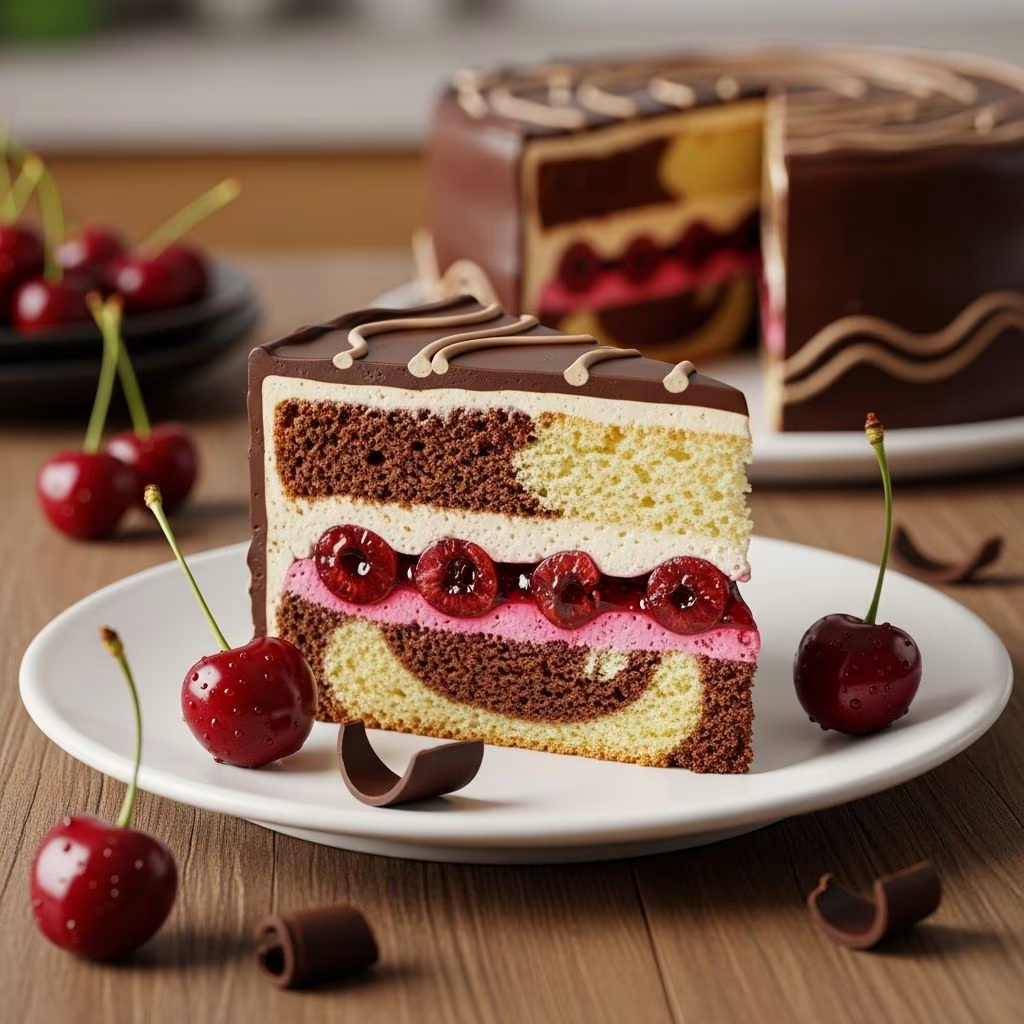
Donauwelle, which translates to “Danube Wave” in English, stands as one of the most beloved cake varieties throughout Germany and Austria. This traditional sheet cake captivates bakers and dessert enthusiasts with its distinctive visual appeal: alternating bands of vanilla and chocolate sponge create a striking pattern that resembles the flowing waves of the Danube River. The cake’s charm extends beyond its appearance, as each slice reveals layers of tender cake, juicy sour cherries, rich buttercream, and a glossy chocolate ganache topping.
The cake earned its poetic name from the undulating pattern created when sour cherries sink into the batter during the baking process, producing the signature wave effect that gives this dessert its character. What makes Donauwelle particularly special is how these seemingly complex layers come together to create a harmonious blend of flavors and textures that appeals to both traditional bakers and modern home cooks.
Understanding the History and Cultural Significance
The origins of Donauwelle trace back to the mid-20th century in the regions of southern Germany and Austria, though no single inventor has been definitively credited with creating this masterpiece. Food historians generally agree that the recipe likely emerged from local bakers who experimented with combining vanilla and chocolate cake bases alongside cherry filling—a combination that resonated deeply with the culinary traditions of the Alpine region.
The widespread popularity of Donauwelle grew substantially during the 1960s when major German baking companies, including Dr. Oetker, began featuring versions of the recipe in their product collections and cake mix boxes. This commercial distribution transformed Donauwelle from a regional specialty into a household staple across Germanic countries. The cake became so embedded in local culture that it spawned an alternative name: Schneewittchenkuchen, or Snow White Cake, referring to the contrast between the white and dark layers.
The Essential Components: What Makes Donauwelle Distinctive
Donauwelle’s appeal lies in its layered construction, where each component serves a specific purpose in creating the final dessert. Understanding these elements helps bakers appreciate why this cake has endured for generations and how to execute each layer successfully.
The Sponge Cake Foundation
At its core, Donauwelle begins with a two-tone sponge cake base. This typically consists of a vanilla cake layer paired with a chocolate cake layer, both baked simultaneously in the same pan. The key to achieving the characteristic wave pattern involves pouring the two batters strategically so that when sour cherries are pressed into the surface, they create natural divisions between the vanilla and chocolate portions.
The sponge itself should be lightly sweetened—a hallmark of traditional German baking—allowing the other components to shine without overwhelming sweetness. The texture needs to be tender yet sturdy enough to support the weight of the buttercream and ganache layers that will eventually crown the cake.
The Sour Cherry Layer
Sour cherries occupy a central role in Donauwelle’s composition and visual presentation. These cherries, typically sourced from canned or jarred options, are pressed into the batter before baking. As the cake rises in the oven, the cherries naturally sink, creating the undulating pattern that inspired the cake’s name. The tartness of these cherries provides essential balance to the rich buttercream and chocolate elements, preventing the overall dessert from becoming cloying.
Proper preparation of the cherries is crucial—they should be thoroughly drained and patted dry with paper towels to remove excess liquid that could compromise the cake’s structure.
The Buttercream Layer
German buttercream, known for its distinctive richness and velvety texture, forms the primary filling between the cake and the chocolate ganache. This component represents one of the more labor-intensive steps, as the buttercream must be beaten to the perfect consistency—light, fluffy, and spreadable. The buttercream’s generous butter content creates a luxurious mouthfeel that distinguishes Donauwelle from simpler cake varieties.
The Chocolate Ganache Topping
The final crown of Donauwelle consists of a smooth, glossy chocolate ganache that seals the cake and adds visual sophistication. The ganache typically covers the entire top surface, and many bakers create decorative wave patterns using a pastry comb while the ganache remains slightly set but still workable.
Ingredients You’ll Need
Building a successful Donauwelle requires gathering quality ingredients and ensuring they’re at the correct temperature before beginning.
For the Cake Component
- Unsalted butter at room temperature (approximately 1.25 cups)
- Granulated sugar (around 1 cup)
- Large eggs at room temperature (4 eggs)
- Vanilla extract (1 teaspoon)
- All-purpose flour (approximately 3.75 cups)
- Baking powder (3 teaspoons)
- Cocoa powder, sifted (3.5 tablespoons)
- Whole milk (1 tablespoon)
- Canned sour cherries in water, drained thoroughly (2 cans of 14.5 ounces each, or approximately 2 cups drained weight)
For the Buttercream and Topping
- Butter for the cream layer (250 grams at room temperature)
- Sugar for the cream (100 grams)
- Milk for the custard base (500 milliliters)
- Cornstarch (45 grams)
- Vanilla paste or extract (1 teaspoon)
- Egg yolk (1 yolk)
- Bittersweet chocolate for ganache (8 ounces, approximately 70% cacao)
- Heavy cream for ganache (1 cup)
Step-by-Step Preparation Guide
Preparing Your Workspace
Begin by preheating your oven to the temperature specified in your recipe, typically around 350°F (175°C). Line your baking pan (ideally 12 by 16 inches, though a 10 by 13-inch pan works acceptably) with parchment paper for easy removal. Allow all dairy and eggs to sit at room temperature for at least one hour before combining—this ensures proper emulsification and a more uniform cake texture.
Creating the Cake Batter
Combine flour, baking powder, and a pinch of salt in a separate mixing bowl and reserve. In your electric mixer’s bowl fitted with a paddle attachment, cream together softened butter and granulated sugar on medium speed until the mixture becomes light, fluffy, and pale—typically 3-4 minutes. This creaming process incorporates air, which helps the cake achieve its tender crumb.
Add eggs individually, beating briefly between each addition until the mixture appears smooth and homogeneous. Incorporate vanilla extract, then add the flour mixture in two additions, beating on low speed just until the ingredients combine. Avoid overmixing at this stage, as excessive stirring can develop gluten and result in a tougher cake.
Dividing and Flavoring
Divide your prepared batter into two portions of approximately equal size. To one portion, sift the cocoa powder and combine it with the milk, then fold these ingredients gently into the chocolate batter until no streaks remain. Keep both batters separate but ready for the pan.
Creating the Wave Pattern
This step determines whether your Donauwelle achieves its iconic appearance. Spread a portion of the vanilla batter into your prepared pan, then add portions of the chocolate batter in a pattern that will create visual interest. The traditional approach involves alternating bands or creating a checkerboard effect. Once you’ve distributed both batters, carefully press the well-drained sour cherries into the surface at regular intervals. As the cake bakes and rises, these cherries will sink naturally into the batter, creating the characteristic wave pattern.
Baking and Cooling
Place the cake in your preheated oven and bake for approximately 30-40 minutes, or until a toothpick inserted into the cake (avoiding the cherries) emerges clean. The top should spring back lightly when touched. Allow the cake to cool in the pan for 10-15 minutes before turning it out onto a wire rack to cool completely. This cooling period is essential before adding the buttercream layer.
Constructing the Buttercream and Final Layers
Preparing the German Buttercream
German buttercream differs from American-style frostings in that it typically incorporates a custard base for added richness and stability. Combine milk, sugar, and cornstarch in a saucepan and heat while stirring constantly until the mixture thickens into a pudding-like consistency. Remove from heat and allow to cool slightly, then whisk in the egg yolk and vanilla paste. Once cooled completely, beat this custard mixture together with softened butter until light, fluffy, and spreadable.
Applying the Buttercream
Once your cooled cake is ready, spread an even layer of German buttercream across the entire top surface. Some bakers prefer a thin, elegant layer, while others apply a thicker coating for additional richness. Refrigerate the frosted cake for at least 30 minutes to allow the buttercream to set slightly before adding the final ganache layer.
Creating the Chocolate Ganache Finish
Chop your bittersweet chocolate into small, uniform pieces and place in a heat-resistant bowl. Heat the heavy cream until it just begins to steam (do not allow it to boil), then pour it over the chocolate. Let the mixture rest for 1-2 minutes, then whisk until the chocolate melts completely and the ganache becomes smooth and glossy. Allow the ganache to cool slightly so it reaches the ideal consistency for pouring—warm enough to be fluid but cool enough to set properly.
Pour the ganache over the buttercream layer, allowing it to flow naturally across the surface. Many bakers create decorative wave patterns by drawing a pastry comb or fork through the ganache while it remains slightly set but not fully hardened. Return the finished cake to the refrigerator for 1-2 hours to allow all layers to set firmly before serving.
Frequently Asked Questions
- Can I use fresh cherries instead of canned sour cherries?
- Yes, fresh or frozen sour cherries can be substituted for canned varieties. If using fresh cherries, pit them first and allow them to drain on paper towels. Frozen cherries should be thawed and drained before use. The flavor profile will be slightly different, but the cake will remain delicious and visually striking.
- How long does Donauwelle keep after baking?
- Properly stored in the refrigerator, Donauwelle remains fresh for 3-4 days when covered with plastic wrap or stored in an airtight container. The cake can also be frozen for up to one month before serving, though the buttercream and ganache layers may separate slightly upon thawing.
- What should I do if my batter is difficult to spread in the baking pan?
- Thick cake batters can be challenging to distribute evenly. If you encounter this issue, use a slightly smaller baking pan (such as 10 by 13 inches instead of the traditional 12 by 16 inches), which will result in a thicker but equally delicious cake. Alternatively, use an offset spatula or the back of a spoon to gently coax the batter into an even layer.
- Can I make Donauwelle without eggs?
- Traditional Donauwelle relies on eggs for structure and rise. While egg substitutes exist for baking, they may alter the final texture and flavor. For best results, follow the traditional recipe with eggs, as this ingredient is central to achieving the characteristic tender crumb.
- Is German buttercream different from American buttercream?
- Yes, significantly. German buttercream incorporates a cooked custard base rather than relying solely on butter and powdered sugar. This results in a lighter, less sweet, and more custard-like texture that many European bakers prefer. German buttercream is less prone to greasiness and provides better stability in warm conditions.
Serving and Storage Recommendations
Donauwelle is best served well-chilled, directly from the refrigerator. The cold temperature allows the layers to maintain their distinct texture and prevents the buttercream and ganache from becoming too soft. Use a sharp knife dipped in hot water and wiped clean between cuts to achieve clean, attractive slices that showcase the cake’s beautiful interior pattern.
For storage, wrap any leftover cake tightly with plastic wrap and refrigerate for up to four days. The cake does not freeze well due to the buttercream texture changes upon thawing, though the unfrosted cake layers can be frozen separately for up to one month if needed.
Why Donauwelle Remains a Treasured Classic
Donauwelle’s enduring popularity across German and Austrian communities reflects more than just its delicious taste—it represents a culinary connection to tradition and heritage. The cake’s visual appeal makes it suitable for celebrations, while its relatively straightforward construction puts it within reach of home bakers willing to invest time in its preparation. Whether prepared for a family gathering, holiday celebration, or simply as an indulgent weekend project, Donauwelle continues to captivate new generations of bakers who appreciate its elegant layers and harmonious flavors.
References
- The history of Danube Wave Cake — La Pâtisserie du Monde. Accessed April 2026. https://lapatisseriedumonde.com/recipes/danube-wave-cake-history
- Donauwelle (Danube Cake / Schneewitchen Kuchen) — My Dinner. Accessed April 2026. https://mydinner.co.uk/donauwelle/
- Donauwelle Kuchen (Danube Wave Cake) — Magnolia Days. Accessed April 2026. https://magnoliadays.com/donauwelle-kuchen-danube-wave-cake/
- Donauwelle Kuchen (Danube Wave Cake / Snow White Cake) — Mission Food. Accessed April 2026. https://mission-food.com/donauwelle-kuchen-danube-wave-cake/