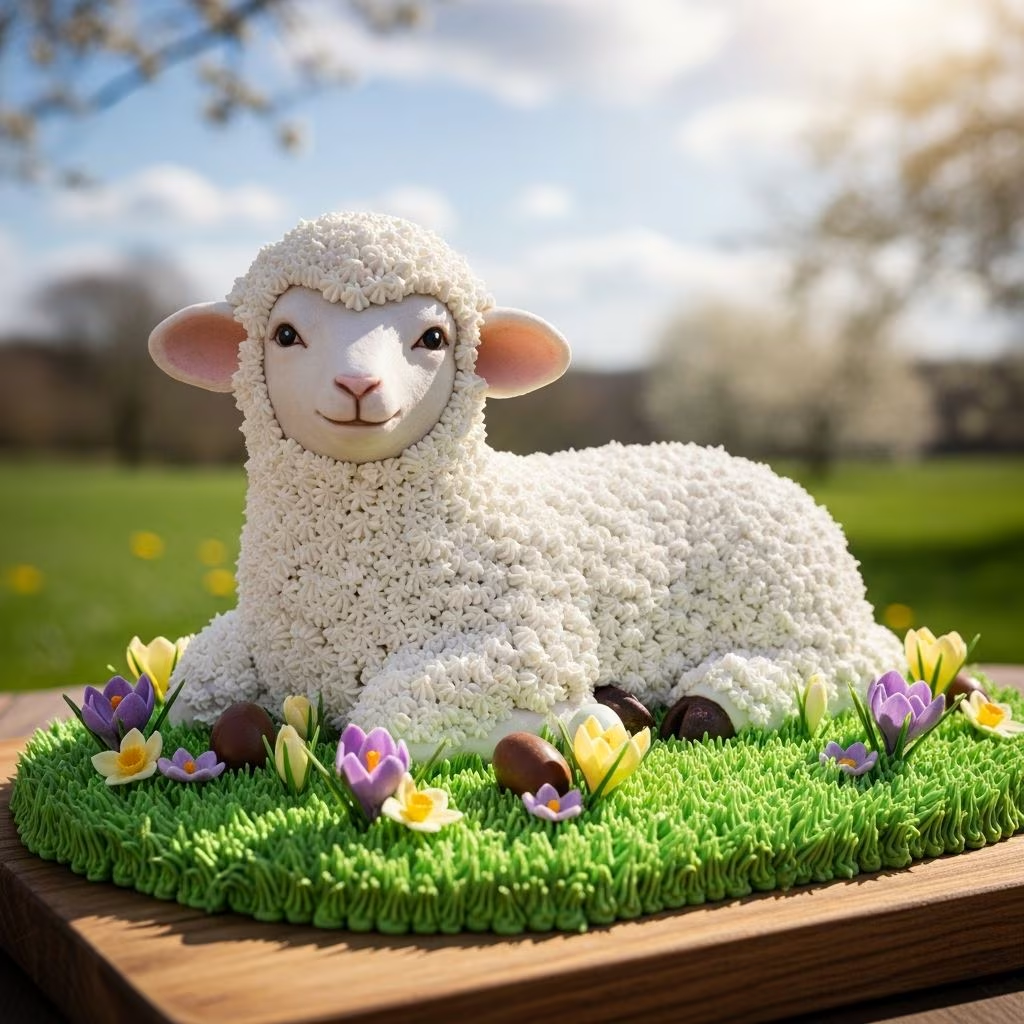
The Easter lamb cake stands as a cherished symbol of renewal and innocence, transforming ordinary baking into a festive ritual. This delightful dessert, shaped like a gentle lamb, graces tables across cultures, blending simple ingredients with artistic presentation. Whether you’re drawing from family traditions or starting anew, crafting one requires attention to detail for success.
Historical Roots and Symbolic Meaning
Lamb imagery in Easter celebrations traces back centuries, representing purity and sacrifice in Christian lore. In European baking traditions, particularly German and Polish communities, the lamb cake emerged as a molded pound cake centerpiece. Families pass down molds—often ornate metal pans—generation after generation, turning the process into a rite of spring.
These cakes differ from typical sweets by their sturdy batter, designed to hold intricate shapes without crumbling. The tradition spread to American tables via immigrants, evolving with local flavors while retaining its core symbolism. Today, it evokes nostalgia, uniting gatherings around a shared creation.
Choosing the Right Mold and Tools
Success begins with quality equipment. Opt for a two-part aluminum lamb mold, typically 9-10 inches long, with clamps for secure assembly. Brands like Nordic Ware offer durable options that conduct heat evenly, preventing cracks.
- Essential tools: Pastry brush for greasing, fine mesh sieve for flour dusting, cooling rack, offset spatula for batter smoothing.
- Preparation tips: Ensure room-temperature ingredients to avoid dense textures; chill the mold briefly after greasing for better release.
Inspect your mold for wear—scratches can cause sticking. Vintage pottery molds add charm but demand extra care due to fragility.
Perfect Pound Cake Bases for Stability
A reliable batter is key to a lamb that stands tall. Pound cakes excel here, offering density without sogginess. Classic ratios—equal parts butter, sugar, flour, and eggs—provide structure for detailed features like ears and face.
| Recipe Variation | Key Ingredients | Bake Time | Unique Twist |
|---|---|---|---|
| Classic Butter Pound | Butter, sugar, eggs, flour, buttermilk | 60 minutes at 325°F | Vanilla-infused moisture |
| Sour Cream Rich | Sour cream, flour, sugar, extracts | 50-55 minutes at 350°F | Tender crumb with rum hint |
| Nutty Almond | Ground almonds, confectioners’ sugar, milk | 35-45 minutes at moderate heat | European nutty depth |
These variations ensure versatility. For instance, buttermilk adds tang and lift, while sour cream guarantees tenderness.
Step-by-Step Baking Guide
1. Preheat and Prep the Mold
Heat oven to 325-350°F, positioning racks centrally. Generously coat mold halves with softened butter or shortening using a brush, reaching crevices around the head and legs. Dust with plain breadcrumbs or flour, tapping out excess. This non-stick layer is crucial—skip it, and the face may tear.
2. Mix the Batter Precisely
Cream butter and sugar until pale and fluffy, about 5 minutes. Incorporate eggs one by one, beating thoroughly. Sift dry ingredients—flour, baking powder, salt—alternating with liquids like milk or buttermilk. Fold gently to preserve air pockets, avoiding overmixing that leads to tunnels.
Aim for a thick, spoonable consistency. Fill the mold bottom-side first, up to three-quarters full, smoothing the surface. Assemble top half, clamp securely, and place opening-up on a baking sheet.
3. Bake and Initial Cool
Bake until a skewer inserted in the body emerges clean, 45-60 minutes depending on recipe. Avoid opening the oven early to prevent sinking. Upon removal, drape a damp towel over the mold for 10 minutes—this steams it slightly, easing release without sogginess.
4. Unmold with Confidence
Unclamp, gently lift the top, then invert onto a rack. If resistance occurs, return to the warm oven for 5 minutes. Trim the flat base post-cooling for stability. Refrigerate briefly to firm up before decorating.
Innovative Flavor Profiles
Elevate beyond basics with infusions. Lemon zest brightens pound cake, pairing with buttercream. Chocolate versions use cocoa and espresso for depth. For gluten-free, almond flour swaps seamlessly, maintaining structure.
- Spice it with cardamom or nutmeg for warmth.
- Incorporate citrus glazes for shine and zest.
- Nut blends—hazelnut or pistachio—add crunch.
Decoration Techniques for Wow Factor
Post-cooling, apply crumb coat with frosting, chilling 30 minutes. For fleece, tinted coconut remains classic—mix shreds with green gel for grass base. Alternatives include popcorn dyed white for fluffiness or marshmallows for whimsy.
Face details: Black icing dots for eyes and nostrils, pink for ears and tongue using royal icing. Surround with jelly beans, chocolate eggs, or edible flowers on “grass.” A ribbon bow at the neck completes the look.
Troubleshooting Common Issues
Baking mishaps happen—here’s how to fix them:
- Sunken head: Overbeating or oven peeks; use toothpick test from back.
- Sticking: Insufficient grease; reinforce with parchment in tight spots.
- Cracks: High heat; lower temp, tent with foil midway.
- Dry texture: Overbake; check at minimum time, wrap leftovers airtight.
Practice runs pre-Easter build skill. Store undecorated cake wrapped in plastic up to 2 days.
Cultural Twists from Around the World
German versions favor almond-heavy batters, dusted with powdered sugar for snow-like effect. Polish tables feature dense pound cakes with vanilla essence. Italian families opt for extract-rich pounds, evoking grandma’s kitchen. In Chicago, coconut fleece dominates, sometimes swapped for popcorn innovation.
Adapt to your heritage: Add marzipan in Scandinavian style or fruit preserves in Mediterranean takes.
Make-Ahead Strategies and Storage
Bake 1-2 days ahead; frost day-of for freshness. Freeze unfrosted cake up to a month, thawing overnight. Frosted versions keep refrigerated 3 days, covered loosely to prevent stickiness.
Pairing and Serving Ideas
Serve sliced warm with whipped cream or chilled as centerpiece. Pair with fresh berries, lemon curd, or coffee. For kids, add candy accents; adults appreciate boozy glazes.
Frequently Asked Questions
What’s the best flour for lamb cake?
All-purpose works best for structure; cake flour yields lighter but fragile results.
Can I use a box mix?
Yes—enhance with pudding mix and sour cream for pound-like density.
How do I prevent the ears from breaking?
Support with extra batter there; chill before unmolding.
Vegetarian/vegan options?
Substitute plant butters, aquafaba for eggs, and nut milks.
Where to buy molds?
Specialty bakeware stores or online retailers carry reliable brands.
References
- German Easter Lamb Cake Recipe — Chalking Up Success. 2023. https://chalkingupsuccess.com/easter-lamb-cake-recipe/
- No-Fail Easter Lamb Cake — Polish Housewife. 2022-04-10. https://polishhousewife.com/no-fail-easter-lamb-cake/
- Making Easter Lamb Cake — Proud Italian Cook. 2014-04-20. https://www.prouditaliancook.com/2014/04/making-easter-lamb-cake.html
- The Best Easter Lamb Cake Recipe — Meatloaf and Melodrama. 2023. https://www.meatloafandmelodrama.com/easter-lamb-cake-recipe/
- Lamb Cake — Susan Branch. 2022. https://susanbranch.com/lamb-cake-2/