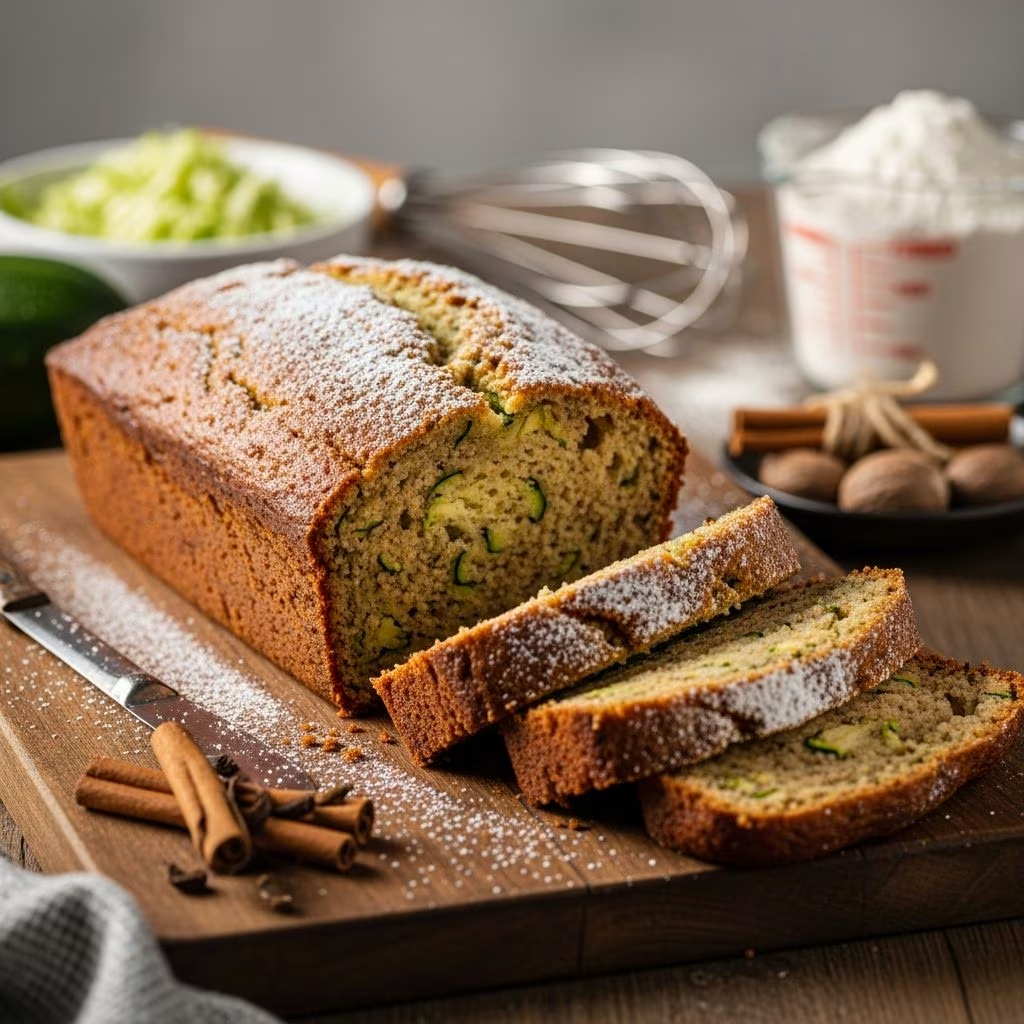
Zucchini bread represents one of the most beloved quick bread recipes in home baking. This versatile treat bridges the gap between dessert and breakfast, offering a moist, tender crumb that appeals to both seasoned bakers and beginners. Whether you’re looking to use up an abundance of summer zucchini or simply crave a comforting slice with your morning coffee, understanding the fundamentals of zucchini bread baking will transform your results from adequate to exceptional.
Understanding the Unique Properties of Zucchini Bread
What makes zucchini bread distinctive among quick bread varieties is its reliance on moisture content for achieving that signature tender texture. Unlike traditional cakes that depend on careful ratios of flour to fat, zucchini bread welcomes the natural water content present in freshly grated zucchini. This moisture acts as a natural hydrator, allowing bakers to create bread that remains soft days after baking, provided it’s stored properly.
The vegetable component adds nutritional value while remaining virtually undetectable in flavor, allowing the warming spices and other additions to shine. This unique characteristic has made zucchini bread a gateway recipe for those seeking to incorporate vegetables into their baked goods without compromising on taste or texture.
Essential Ingredients and Their Functions
Creating outstanding zucchini bread begins with understanding each ingredient’s role in the final product.
Zucchini: The Foundation
Fresh zucchini provides both moisture and structure to your bread. A typical recipe requires approximately three cups of grated zucchini, equivalent to roughly two medium-sized squash. The shredding process is straightforward: use the larger holes of a standard box grater to create uniform pieces that distribute evenly throughout the batter. Importantly, the skin and seeds should remain intact, as they contribute fiber and texture.
A critical mistake many novice bakers make is squeezing excess moisture from the grated zucchini. This practice removes the very component that makes zucchini bread wonderfully moist. Instead, incorporate the zucchini with all its natural liquid directly into your wet ingredients.
Dry Ingredients Working Together
The dry ingredient mixture typically includes:
- All-purpose flour (approximately three cups, properly spooned and leveled)
- Baking soda and baking powder (these leavening agents work synergistically)
- Salt (enhances all flavors and controls yeast activity)
- Cinnamon (provides warmth and depth)
Precision matters when measuring flour. Spooning flour into your measuring cup and leveling it off prevents excess flour from creating a dense, dry result. Alternatively, weighing flour on a kitchen scale ensures consistent results across batches.
Wet Ingredients Creating Richness
The wet ingredient component includes eggs, oil, sugar, and vanilla extract. This mixture creates the tender crumb associated with quality zucchini bread. Oil proves superior to butter in this application because it distributes more evenly throughout the batter, maintaining moisture throughout the baking process and beyond.
The Art of Mixing: Technique Matters
Proper mixing methodology separates exceptional zucchini bread from mediocre versions. The two-bowl method remains the gold standard for achieving optimal texture.
Begin by whisking together all dry ingredients in one bowl, ensuring even distribution of leavening agents and cinnamon. In a separate bowl, combine sugar, oil, eggs, and vanilla, mixing until these ingredients form a cohesive wet base. Add the grated zucchini to the wet mixture, gently folding to incorporate the moisture throughout.
When combining wet and dry components, resist the urge to overmix. Stir just until the dry ingredients disappear into the wet mixture. Overmixing develops gluten, resulting in a tough, dense crumb rather than the delicate texture you’re seeking. A few small flour streaks remaining in the bowl are preferable to thorough mixing.
Optional Add-Ins and Enhancement Options
While classic zucchini bread stands beautifully on its own, strategic additions create interesting variations:
| Add-In | Amount | Effect on Bread |
|---|---|---|
| Chopped walnuts or pecans | 1 cup | Adds textural contrast and nutty flavor |
| Lemon zest | 2 tablespoons | Brightens flavor profile and adds aromatic quality |
| Poppy seeds | ¼ cup | Creates subtle texture and mild nutty notes |
| Crystallized ginger | ⅓ cup, finely chopped | Introduces spicy, warming complexity |
| Shredded carrots | 1 cup | Mimics carrot cake characteristics and adds sweetness |
When adding ingredients beyond the basic recipe, consider their moisture content. Wet add-ins like shredded carrots may require slight flour adjustments, while dry additions like nuts or seeds generally don’t affect the batter’s consistency significantly.
Preparing Your Pans and Oven
Proper preparation prevents sticking and ensures even baking. Most zucchini bread recipes yield enough batter for two standard loaf pans (8×4 or 9×5 inches). Grease each pan thoroughly with vegetable oil, ensuring the bottom and all interior surfaces receive coverage.
Some bakers prefer lining pans with parchment paper, which offers additional insurance against sticking and simplifies removal of the finished loaves. Preheat your oven to 325°F, allowing adequate time for the oven temperature to stabilize before introducing your bread.
Baking Process and Temperature Control
Lower oven temperatures prove more effective for zucchini bread than typical cake temperatures. Baking at 325°F rather than 350°F or higher allows the dense batter to bake through completely while the exterior browns gently. This approach minimizes the risk of burnt tops with uncooked centers.
Baking duration typically ranges from 50 to 60 minutes for standard loaf pans. The bread is done when a toothpick inserted into the center emerges with just a few moist crumbs clinging to it. The top should display a light golden-brown color and spring back slightly when gently pressed.
Cooling and Storage Strategies
Remove the bread from the oven and allow it to cool in the pans for 15 minutes. This resting period permits the structure to set adequately for removal without breaking. After this initial cooling, turn the loaves out onto wire racks and allow them to reach room temperature completely before slicing.
Zucchini bread actually improves after a day or two as flavors meld and the texture becomes even more uniform. Store cooled loaves wrapped tightly in plastic wrap at room temperature for up to four days. For extended storage, wrap cooled bread in plastic wrap followed by aluminum foil, then freeze for up to three months. Thaw frozen bread at room temperature before serving.
Troubleshooting Common Baking Challenges
Understanding what causes common problems helps you avoid repeating mistakes:
- Dense, Heavy Crumb: This typically results from overmixing the batter or measuring flour incorrectly. Ensure you’re using the spoon-and-level method for flour measurement.
- Dry Texture: Paradoxically, this can result from squeezing excess moisture from the zucchini or using too much flour. Trust the recipe measurements and avoid pressing the zucchini.
- Burnt Top, Raw Center: Your oven temperature is likely too high. Use an oven thermometer to verify accuracy and reduce temperature if necessary.
- Bread Won’t Release from Pan: Ensure thorough greasing of all pan surfaces, or consider using parchment paper liners.
- Shallow Rise: Verify that baking soda and baking powder haven’t expired, as these agents lose potency over time.
Creative Variations Worth Exploring
Once you’ve mastered the classic version, consider experimenting with variations that honor the base recipe while introducing new dimensions of flavor.
Citrus-Infused Version: Replace some of the vanilla with fresh lemon juice and add lemon zest to the batter. A simple glaze made from powdered sugar and lemon juice drizzled over the cooled loaf adds visual appeal and bright flavor.
Spiced Variation: Increase cinnamon to three teaspoons and add nutmeg, ginger, and cloves to create a warm spice profile reminiscent of pumpkin bread. This approach is particularly appealing during cooler months.
Combination Bread: Mix shredded zucchini with shredded carrots in equal proportions to create a bread that borrows characteristics from both vegetables, resulting in a slightly denser crumb with enhanced natural sweetness.
Frequently Asked Questions
- Can I substitute whole wheat flour for all-purpose flour?
- Whole wheat flour can replace approximately one-third of the all-purpose flour. Complete substitution typically creates a denser, earthier bread. Use whole wheat pastry flour rather than regular whole wheat for the most tender results.
- What oil works best for zucchini bread?
- Vegetable oil, canola oil, or light olive oil all produce excellent results. Avoid extra-virgin olive oil, which introduces strong flavor that overwhelms the delicate spice profile. Coconut oil adds subtle flavor but works perfectly for those seeking that characteristic.
- Is it necessary to include nuts in zucchini bread?
- Nuts are entirely optional. They add textural contrast and nutritional value, but excellent zucchini bread exists without them. If including nuts, toast them lightly before adding to enhance their flavor.
- Can zucchini bread be made into cupcakes or muffins?
- Yes, zucchini bread batter adapts well to muffin tins and cupcake cups. Reduce baking time to 20-25 minutes depending on size. Mini muffins bake in approximately 12-15 minutes.
- Why does my zucchini bread have a gummy streak down the middle?
- This typically indicates underbaking. The center of the loaf requires slightly longer to set completely than the exterior. Bake an additional 5-10 minutes if you notice this pattern.
Making Zucchini Bread Your Own
The beauty of zucchini bread lies in its forgiving nature and adaptability. The foundational technique remains consistent regardless of variations you choose to incorporate. By understanding the fundamental principles—the importance of moisture, the proper mixing technique, and the value of lower baking temperatures—you’ll develop confidence in creating consistently excellent zucchini bread.
Whether you prefer your loaf studded with walnuts, brightened with lemon, or enriched with subtle spices, zucchini bread offers a canvas for personal preference and creative expression. Each batch you bake teaches valuable lessons about ingredient interactions and technique refinement, gradually developing your intuitive understanding of what creates the ideal texture and flavor profile.
References
- Love and Lemons – Zucchini Bread Recipe — Love and Lemons. Accessed April 7, 2026. https://www.loveandlemons.com/zucchini-bread-recipe/
- Easy and Moist Zucchini Bread Recipe — Natasha’s Kitchen. Accessed April 7, 2026. https://www.youtube.com/watch?v=wwWEyhIN9iE
- The Best Zucchini Bread — Spend With Pennies. Accessed April 7, 2026. https://www.spendwithpennies.com/zucchini-bread/
- Best Homemade Zucchini Bread with Toasted Walnuts — 101 Cookbooks. Accessed April 7, 2026. https://www.101cookbooks.com/zucchini-bread/
- Lemon Zucchini Bread Recipe — Two Peas & Their Pod. Updated April 9, 2020. https://www.twopeasandtheirpod.com/lemon-zucchini-bread/
- 20 Zucchini Bread Recipes — Ask The Food Geek. Accessed April 7, 2026. https://askthefoodgeek.com/zucchini-bread-recipes/