Tomato soup stands as a timeless comfort food, cherished for its rich, tangy profile that warms the soul on chilly days. Yet, achieving the ideal balance where tanginess yields to subtle sweetness without added heaviness can prove challenging, particularly with canned tomatoes’ inherent sharpness. Enter the unassuming hero: baking soda. This pantry staple subtly neutralizes excess acidity, elevating your soup to velvety perfection while preserving the vibrant tomato essence. In this guide, we delve into the chemistry, practical applications, and step-by-step recipes to master this transformative technique.
The Science Behind Baking Soda’s Role
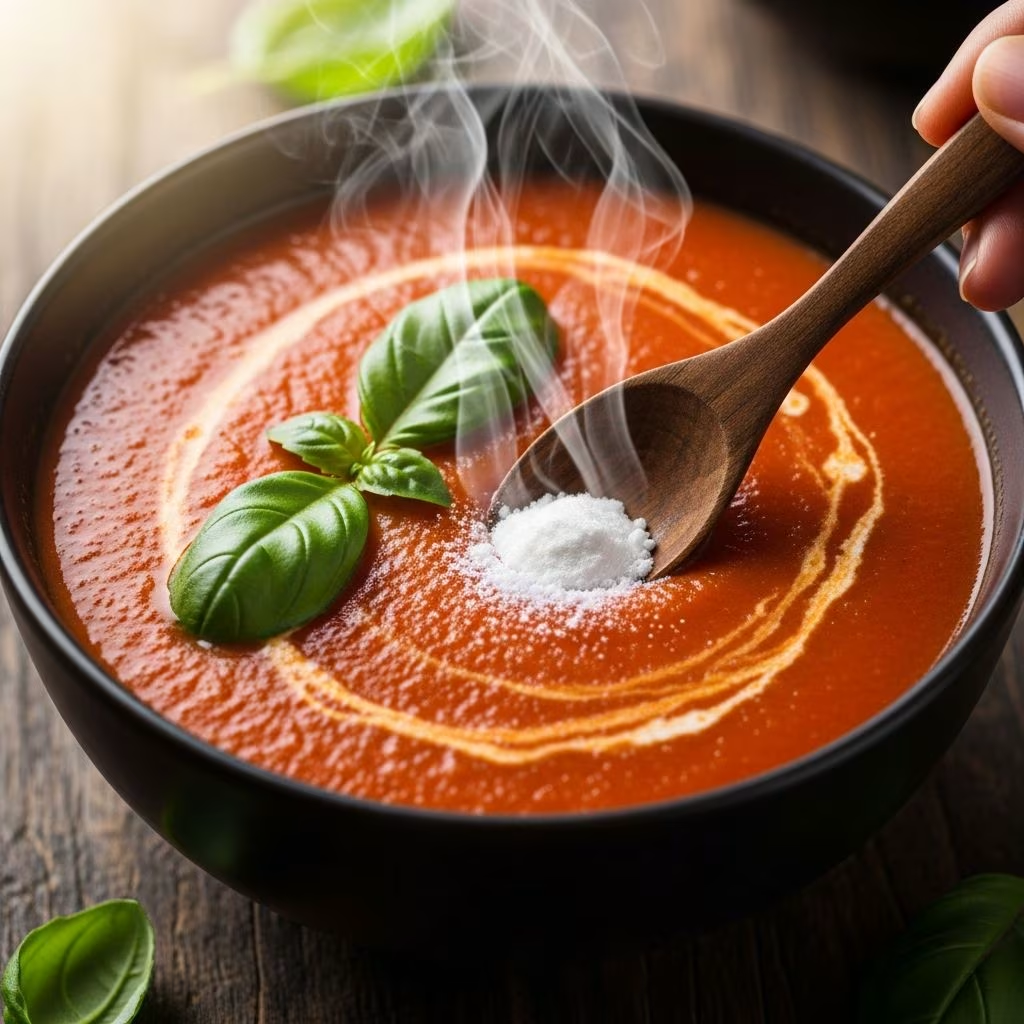
Baking soda, or sodium bicarbonate, acts as a base in culinary applications. Tomatoes register high on the acidity scale due to citric and malic acids, often amplified in canned varieties for preservation. When introduced to an acidic environment, baking soda reacts by producing carbon dioxide gas, water, and salt, effectively raising the pH level. This process mellows sour notes, making flavors more harmonious.
Unlike sugar or cream, which mask acidity by introducing sweetness or fat, baking soda addresses the root cause. A mere quarter teaspoon suffices for most recipes, preventing a soapy aftertaste if used judiciously. This reaction also tenderizes vegetable cell walls, contributing to a smoother puree post-blending. Home cooks report soups that taste fresher, akin to sun-ripened tomatoes rather than processed cans.
Why Your Tomato Soup Tastes Off and How to Fix It
Sourness plagues many tomato soup attempts. Common culprits include high-acid canned tomatoes, reactive cookware like aluminum that leaches metallic flavors, or skipping balancing agents. Without intervention, the soup curdles dairy additions or tastes metallic and harsh.
- High acidity from canning: Processors add citric acid for safety, intensifying tartness.
- Improper dairy pairing: Milk separates in acidic heat without stabilization.
- Overcooking: Prolonged boiling concentrates acids.
The baking soda solution restores equilibrium. It enables milk usage over cream for lighter results and ensures even flavor distribution. Pair it with a touch of sugar to amplify natural tomato sweetness, and salt layered throughout for depth.
Essential Ingredients for Balanced Tomato Soup
Crafting superior soup hinges on quality components. Opt for no-salt-added canned tomatoes to control seasoning. Here’s a foundational list:
| Ingredient | Quantity | Purpose |
|---|---|---|
| Unsalted butter | 4 tbsp | Builds savory base |
| Diced onion | ½ cup | Adds natural sweetness |
| Garlic, minced | 2 cloves | Enhances aroma |
| All-purpose flour | 2 tbsp | Thickens via roux |
| Whole milk or cream | 2 cups | Provides creaminess |
| Canned diced tomatoes | 3½ cups with juice | Core flavor |
| Granulated sugar | 2 tsp | Balances residual acid |
| Baking soda | ¼ tsp | Neutralizes acidity |
| Salt and pepper | To taste | Seasoning foundation |
Fresh basil or herbs elevate the finish. Chicken broth can replace part of the milk for a heartier version.
Step-by-Step Recipe: Creamy Tomato Soup Mastery
Prepare this foolproof version in under 45 minutes. Yields 4 servings.
- Sauté aromatics: Melt butter in a non-reactive pot over medium heat. Add onions with a pinch of salt; cook until translucent, about 6 minutes. Stir in garlic for 1 minute.
- Form roux: Sprinkle flour, whisking constantly for 1 minute to cook out raw taste.
- Incorporate liquids: Gradually whisk in milk to prevent lumps. Add tomatoes, sugar, baking soda, and remaining salt.
- Simmer: Bring to a gentle boil, then reduce to low. Cook 10-20 minutes, stirring occasionally, until thickened.
- Blend smooth: Use an immersion blender for safety, or transfer batches to a standard blender. Puree until silky.
- Season and serve: Taste; adjust with pepper or extra sugar if needed. Garnish with basil or parmesan.
Soup stores refrigerated up to 5 days or freezes for 3 months. Reheat gently to avoid separation.
Advanced Variations to Elevate Your Soup
Once mastered, experiment for diversity.
- Roasted version: Roast tomatoes, onions, and garlic beforehand for caramelized depth. Add baking soda post-roasting.
- Spicy kick: Infuse with red pepper flakes or chipotle during simmer.
- Vegan adaptation: Swap butter for olive oil, milk for coconut milk. Baking soda remains key for acid control.
- Chunky style: Blend partially, leaving texture contrasts.
For grilled cheese pairing, chill soup slightly before serving to contrast hot sandwiches.
Common Mistakes and Pro Tips
Avoid these pitfalls for consistent success:
- Overdoing baking soda: Excess creates foam and off-flavors. Start with ¼ tsp per 3 cups tomatoes.
- Reactive pots: Stick to stainless steel or enamel; avoid cast iron.
- Skipping sugar: It complements baking soda, enhancing tomato’s inherent sugars.
- Rushing blend: Hot soup expands in blenders—vent and cover with towel.
Pro tip: Layer salt—at onions, roux, and finish—for non-bland results. Taste iteratively.
Health Benefits of Balanced Tomato Soup
Beyond taste, this method yields nutritious bowls. Tomatoes deliver lycopene, an antioxidant linked to heart health. Baking soda’s pH adjustment may improve bioavailability. Low-calorie with milk (versus all-cream recipes), it’s versatile for diets. Add spinach or carrots pre-blend for vitamins without altering core flavor.
Pairing Suggestions and Serving Ideas
Transform soup into meals:
- Classic: Dunk buttery grilled cheese.
- Gourmet: Top with burrata, basil oil.
- Light: Serve with avocado toast.
- Winter warmer: Alongside cornbread.
Chill for gazpacho-inspired summer refresh.
Frequently Asked Questions
Can I omit baking soda?
Yes, but expect sharper acidity. Compensate with more sugar/cream, though texture suffers.
Is baking soda safe in savory dishes?
Absolutely, in tiny amounts. It’s a standard in recipes like this.
What if my soup curdles?
Add baking soda next time pre-dairy. If occurred, blend vigorously and reheat slowly.
Fresh vs. canned tomatoes?
Canned work year-round; fresh in season need less balancing.
How to scale recipe?
Double ingredients proportionally; maintain baking soda ratio.
Conclusion: Transform Your Soups Today
Embracing baking soda unlocks professional-quality tomato soup at home. This simple addition bridges science and sensation, turning everyday cans into gourmet bliss. Experiment confidently—your palate will thank you.
References
- Tomato Soup Recipe — Sugar Spun Run. 2023-10-15. https://sugarspunrun.com/tomato-soup-recipe/
- Best Ever Homemade Tomato Soup — Foodess. 2024-02-20. https://foodess.com/best-tomato-soup-recipe/